
NEWS
Osun Decides: Observers witnessed high level of Vote-Buying, Bribery, Compromise of cubicle


The committee of election observers has stated that while the Osun governorship election is still going on, it has been marred by irregularities, including a high level of inducement and compromising of the voting booths.
This announcement was made in separate speeches by Dr. Hussaini Abdu, the board chairman of YIAGA Africa, and Ene Obi, the coordinator of the Situation Room for the Nigerian Civil Society in Osogbo.
YIAGA Africa reports that an election monitoring organization has advised the Independent National Electoral Commission (INEC) to protect ballot confidentiality in the nation’s future elections.
YIAGA Africa Board Chairman Hussaini Abdu emphasized that the electoral umpire should audit the newly established Polling Units and make sure that they are distributed evenly while evaluating the system.
Voter intimidation by All Progressives Congress (APC) thugs was carried out in Iragbiji, according to information from YIAGA Africa’s monitors on the ground, who were watching acts of vote buying in the towns of Akinlalu and Iree.
Additionally, it claimed that thugs from the Peoples Democratic Party (PDP) threatened to sabotage the election in Ogbaagba town.
Abdu made a recommendation regarding the conduct of security officers during the voting on Saturday in relation to their assistance.
Yiaga added that for violations of the electoral legislation, suitable punishments should be applied.
Read Also >> Osun Poll: We’re Hoping For Victory – Bello, Labour Party’s Chair
According to Ene Obi “The BVAS were deployed according to the number of registered voters. In polling units with over 1,000 voters, INEC kept to its promise to deploy two BVAS machines. The machines functioned credibly well. There were issues with the fingerprint verifications, however, the facial capture worked very well recording approximately one minute for accreditation and voting in Osogbo, and in outside areas, it took longer.
“Yiaga Africa received and verified the following critical incident reports:
Voter Inducement/Bribery: Yiaga Africa received reports of acts of vote buying perpetrated by agents of the APC and PDP in some polling units.
“For instance, PU 009, Akinlalu Commercial Grammar School, Ward 01 in Ife North. The party agents strategically positioned themselves by the voting cubicle to see how voters marked their ballots.
“In PU 003 Opp. Olomu Mosque in Osogbo, PDP party agents were seen handing out between N2000 and N5000 to induce voters. Also, in Disu Polling Unit 003, ward 7 in Orolu LGA, APC agents were seen distributing N4000 to voters who voted for the party while PDP party agents were seen distributing N2000 to induce voters.
“There was open negotiation of buying and selling of votes well-coordinated by the polling agents in many of the polling units. There were no complaints from any of them against each other. Codes and coupons were used to extract commitments from voters as opposed to the blatant money exchanging hands observed in the Ekiti State Governorship election.”
However, the organizations applauded the residents of the State of Osun for turning out early to cast their ballots, especially the elderly who patiently waited in lines.
“INEC’s deployment of materials and personnel should also be commended. Vote trading was recorded in most of the areas observed particularly outside Osogbo. As voting continues, we call on all stakeholders to maintain the peaceful atmosphere recorded so far”.









Strategy for unlocking Nigeria’s oil industry investment must focus on access to capital, technology, markets and regulatory certainty, in addition to physical assets.
These views were shared by the Heritage Energy Operational Services Limited (HEOSL) in a goodwill message at the Association of Energy Correspondents (NAEC) Energy Energy Conference 2026, in Lagos, themed: “Access to Assets: Empowering Players and Driving Growth.”
Delivering the message on behalf of the CEO, Ado Oseragbaje, General Manager, Government, Joint Venture & External Relations, Heritage Energy, Ohioze Unuigbe, commended the NAEC for convening what he described as a strategic platform for dialogue on issues shaping Nigeria’s energy sector.
READ ALSO: NCDMB, Renaissance Empower 60 with Oil & Gas Technical Skills
According to him, the conference theme is both timely and strategic at a period when the industry is seeking to increase production and attract investment.
“Access to assets must go beyond physical access to oil and gas resources. It must also include access to capital, infrastructure, technology, markets, skilled talent, regulatory certainty and strong partnerships. These are essential to unlocking investment, increasing production and strengthening Nigeria’s energy security,” he said.
Unuigbe noted that while access to an asset is critical, real value is created by how effectively, safely and responsibly the asset is operated.
He disclosed that Heritage Energy’s Operational Management System (OMS) provides the discipline for responsible operations, by bringing together People, Plans, Processes and Performance to embed operational excellence, strengthen accountability and manage risk.
This, he said, is particularly important in a complex environment such as OML 30, where sustainable performance depends on effective collaboration among staff, partners, regulators, host communities and other stakeholders.
He stressed that sustainable value creation goes beyond production to include safety, environmental stewardship, responsible asset management, local capacity development and meaningful host community engagement, alongside investment in infrastructure, technology and Nigeria’s gas resources.
“No operator can achieve this alone. Government, regulators, investors, operators, partners, host communities and the media all have important roles to play. Trust, transparency and constructive engagement must remain at the heart of these relationships,” he added.
The Heritage Energy GM also lauded the role of the energy media in promoting informed discourse, transparency and accountability, calling for continued collaboration to support accurate and balanced reporting.
“Nigeria’s energy opportunity is significant. Our collective task is to ensure that access to assets translates into access to opportunity, value creation and sustainable growth,” Unuigbe stated.
He reaffirmed Heritage Energy’s commitment to responsible operations, operational excellence and stakeholder collaboration in building a stronger and more sustainable Nigerian energy industry.

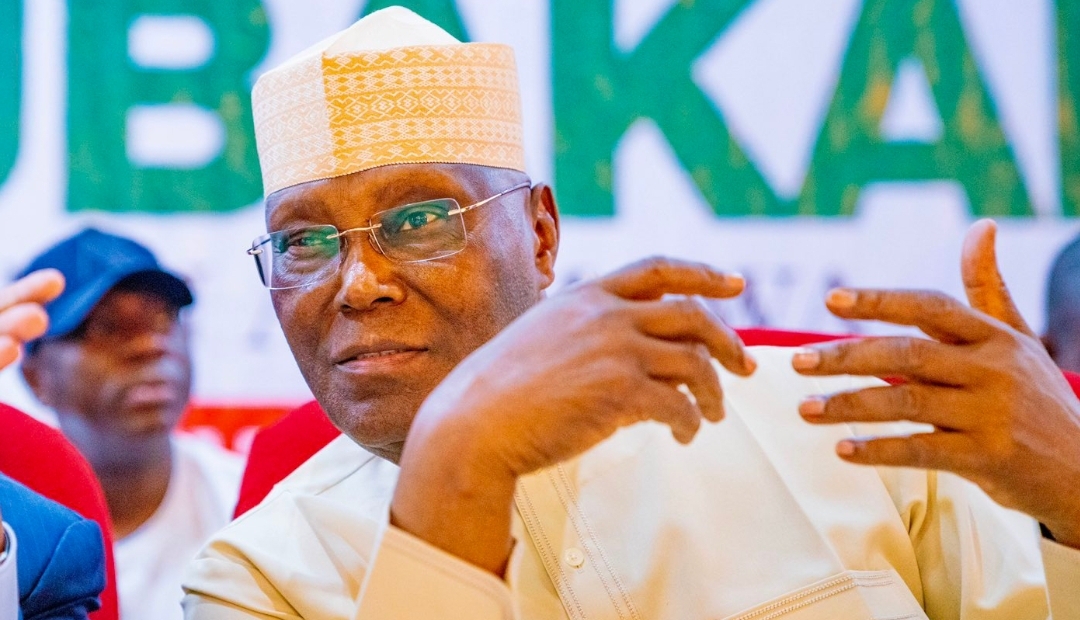
The Presidency has explained why former Vice President Atiku Abubakar’s proposed production subsidy for locally refined petrol could be difficult to implement, arguing that Nigeria lacks sufficient freely available crude oil to sustain the policy.
President Bola Tinubu’s Special Adviser on Media and Public Communications, Sunday Dare, made the position known in a statement issued on Sunday, October 11, 2026, titled “Atiku’s Demagoguery in the Face of Tinubu’s Logical Policies.”
Dare was responding to Atiku’s criticism of the Federal Government’s 30-day petrol discount offered through the Nigerian National Petroleum Company Limited (NNPC) Retail and its proposed fuel price modulation framework.
SEE ALSO: PETROAN Expects Fuel Discount to Combat Inflation
Atiku had described the temporary discount as a publicity stunt, questioning its sustainability and accusing Tinubu of adopting his economic proposal without incorporating the production subsidy he advocated.
However, the presidential aide argued that Atiku’s proposal failed to adequately account for Nigeria’s crude oil production arrangements, existing contractual obligations and the financial implications of subsidising petroleum products.
According to Dare, Nigeria produces approximately 1.8 million barrels of crude oil daily, but the Federal Government does not have unrestricted access to the entire volume.
He said joint ventures and production-sharing contracts, alongside production costs, royalties and profit-sharing arrangements, significantly reduce the quantity of crude available to the state.
“After accounting for these statutory and contractual obligations, Nigeria has fewer than 700,000 barrels per day of unencumbered ‘free crude’ to give away,” Dare stated.
He argued that using crude oil to fund a broad production subsidy without sufficient freely available supplies could undermine government revenues and expose the country to financial risks.
Dare maintained that domestic refineries, including the Dangote Petroleum Refinery, require substantial volumes of crude oil, making it difficult for the government to meet their needs solely from crude available for unrestricted allocation.
He argued that domestic refiners would still need to obtain additional crude through other arrangements, including purchases from international markets.
The presidential aide warned that a production subsidy without adequate crude supplies and clearly defined financial safeguards could recreate some of the problems associated with Nigeria’s former petrol subsidy regime.
He said such a policy could encourage opaque transactions, fraudulent claims and financial losses if its implementation was not properly structured.
Atiku has advocated shifting government support away from subsidising imported petrol towards supporting qualifying domestic refiners through preferential crude oil pricing, with the aim of reducing costs for consumers.
The proposal has become a subject of political and economic debate as Nigerians continue to grapple with high petrol prices and the wider cost-of-living crisis.
Presidency Defends 30-Day Petrol Discount
Dare also rejected the suggestion that NNPC Retail’s decision to forgo its profit margin temporarily amounted to a restoration of the former petrol subsidy.
He said the discount was initially introduced as part of activities marking Nigeria’s 66th Independence anniversary before being extended for another 30 days.
According to him, the arrangement allows NNPC Retail to absorb short-term market pressures without reinstating the previous system of government-funded fuel subsidies.
The presidential aide also defended the proposed N1,350-per-litre ceiling on ex-gantry costs, describing it as a mechanism to moderate sudden increases in fuel prices.
Under the framework outlined in the statement, refiners and importers would absorb temporary cost increases above the ceiling and recover those costs when market conditions improve.
Dare argued that the measure could help reduce the impact of abrupt fuel price changes on transport fares and household expenses.
The presidential aide further defended the administration’s broader economic reforms, including petrol subsidy removal and foreign exchange market reforms introduced in 2023.
He cited the expansion of compressed natural gas infrastructure, direct cash transfers to vulnerable households, support for small businesses and increased federal allocations to states and local governments as part of the government’s response to economic pressures.
Dare maintained that the administration was pursuing a combination of market-based pricing and targeted interventions to manage the effects of international oil market volatility.
He argued that the country needed structural economic measures rather than temporary interventions that could place additional pressure on public finances.
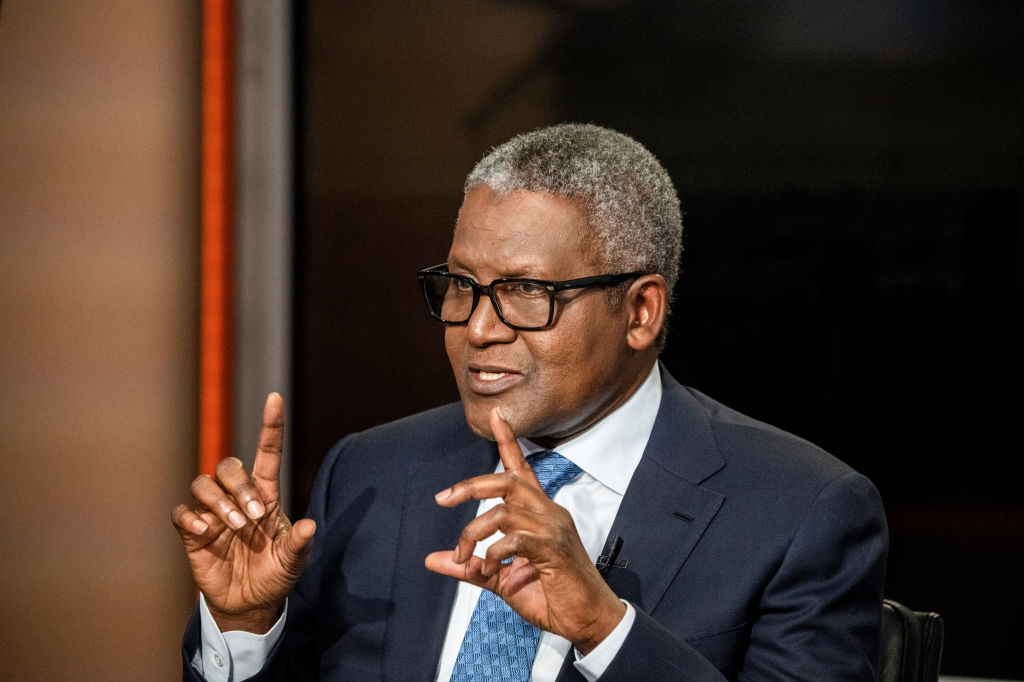
Kenyan presidential candidate Patrick Osoi has warned Nigerian billionaire Aliko Dangote against rushing to establish a proposed $16 billion refinery in Kenya, insisting that local businesspeople can undertake the project.
Osoi made the remarks while addressing supporters at a Lions Movement event, according to a video circulating online.
He said he expected Dangote to return to Nigeria by February 2027, when he anticipates being sworn in as Kenya’s president.
SEE MORE: Ndindi Nyoro Gives Ruto 14 Days to Disclose Dangote Refinery Deal
“I want to tell Aliko Dangote, please don’t rush to start the refinery because, when I’m sworn in as President of Kenya next year, you will be heading back to Nigeria,” Osoi said.
He argued that Kenya had businesspeople capable of establishing a refinery without depending on the Nigerian industrialist.
“We Kenyans have business people who can start the refinery. We also have business people in this country who can do that job. This is what we stand for. This is the home of all movements,” he added.
Osoi’s comments come amid plans by Dangote to establish a $16 billion oil refinery in Lamu, Kenya, with a proposed processing capacity of 700,000 barrels of crude oil per day.
Dangote and Kenyan President William Ruto performed the groundbreaking ceremony for the project on September 30, 2026.
The refinery is expected to take approximately 40 months to complete and serve Kenya and other East African countries, with the aim of strengthening regional refining capacity and reducing dependence on imported petroleum products.
However, the project has encountered opposition from some local residents over land ownership, compensation and environmental concerns.
A Kenyan court has also ordered the maintenance of the status quo in a land dispute involving the development.





Heritage Energy on Ways of Unlocking Oil Industry Investment
NCDMB, Renaissance Empower 60 with Oil & Gas Technical Skills

Fuel Discount: Presidency Explains Why Atiku’s Production Subsidy Proposal May Fail

‘Don’t Rush the Refinery’ – Kenyan Presidential Candidate Warns Dangote

2027 Election: ‘Look Beyond the Noise’ – Showunmi Urges Nigerians to Give Tinubu More Time

NLC Ultimatum: Wage Demands Can Be Resolved in Two Weeks – HR Expert

Trump’s Family Unveils New Cryptocurrency Platform

Senate Denies Receiving Petitions Against Tinubu’s Ambassadorial Nominees

Dangote Cement Lights Up Benue Host Communities With CSR Initiatives

Reps Recommend 3-year Jail Term For Aviation minister

Tems Sets New Record On Billboard Hot 100 Chart
