
Politics
Osun Is Indebted To The Tune Of N407.32 Billion – Governor Adeleke

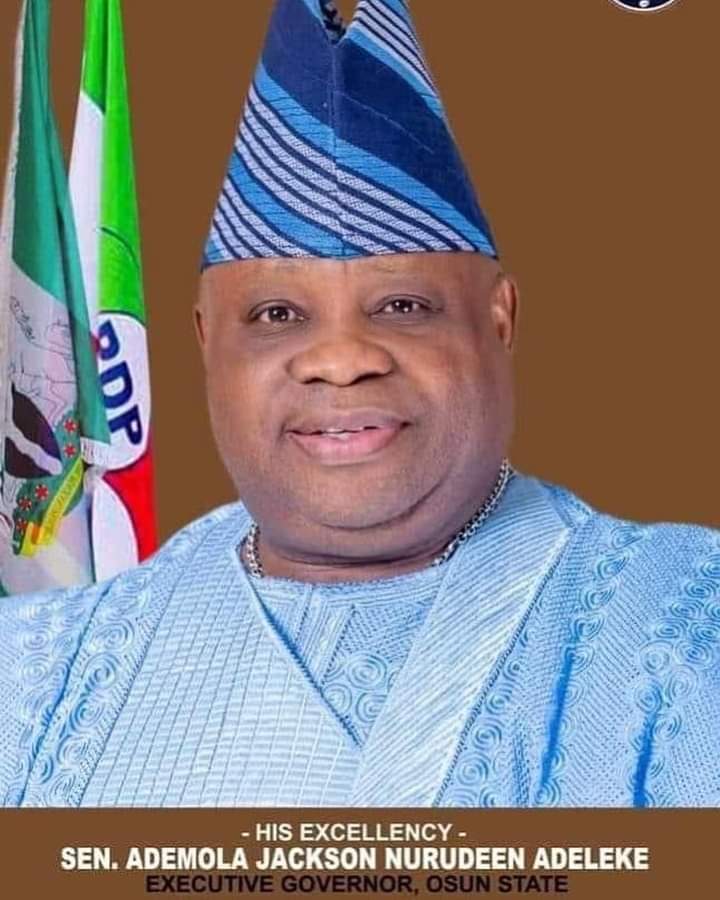
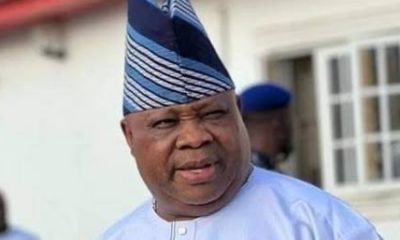
Osun State Governor, Ademola Adeleke has disclosed that the state is indebted to the tune of N407.32 billion.
Briefing traditional rulers at their monthly meeting at traditional rulers chamber inside the State Government Secretariat on Thursday, the Governor said his predecessor must explain why the state is owing salaries and pensions to the tune N76 billion having gotten N50 billion as bail out for salary.
He said the state owed N331.32 billion while salaries and pensions owed workers amount to N76 billion.
Adeleke explained that the repayment period for the loan facilities ranges from 16 months to about 28 years.
“My good people of Osun state, the total loan stock as of today is N331.32 Billion.
“If the N76 billion debt on salaries and pension are added, the state is indebted to the tune of N407.32 billion. The amount owed to contractors is yet to be determined.
“The only fund in government coffers, as of Monday 29th November, was for November 2022 Salary. Otherwise, the state treasury was empty.
“As your governor, I will ask questions on your behalf. And will demand answers,” Adeleke told the traditional rulers.
He added, “Governor Oyetola must explain how the N331 Billion borrowed in the name of Osun State was expended, with no obvious infrastructural development to justify this huge debt.
“Governor Oyetola must explain how the N18 Billion Bridge Loan taken after he lost the election on July 16, 2022, was expended.
“Governor Oyetola must also explain why Osun state is owing salaries and pension to the tune of N76 Billion after collecting a N50 Billion Salary Bail Out Loan from the Federal Government
“The creditors, especially the Commercial Banks must explain why various loans were given to an administration beyond its 4-year tenure. 28 years is equivalent to the tenure of at least four governors. A child that is born today would have earned a Ph.D. at 28 years of age. This is nothing but mortgaging the future of Osun State with nothing to show for it. This is definitely not acceptable.”
According to his statement, while the loans categorized under Budget Support Facility, Salary Bail Out Loan, Restructured Commercial Bank Loans, Excess Crude Account (ECA) Loan, CBN Infrastructure Loan, FGN Intervention Loan, already have a repayment structure plan ranging from 17 months for FGN Intervention Loan, to as much as 27 years and 9 months for the Budget Support Facility loan, the Foreign loans: $86.2m have no repayment plan information and the FGN Bridge Finance Facility took out after July 16th, 2022 to the tune of N18.04 Billion, after the ex-governor had lost his reelection bid, also has no repayment plan.
According to Governor Adeleke, “Not one kobo of these loans were left in Government Coffers, when the Deputy Governor and I resumed work on Monday 29th November 2022. No explanation on how the loan was expended.”




![Davido Drops 4th Album ‘Timeless’ [Video]](https://biztellers.com.ng/wp-content/uploads/2023/03/IMG_20230331_094254_1000_x_800_pixel-400x240.jpg)
![Davido Drops 4th Album ‘Timeless’ [Video]](https://biztellers.com.ng/wp-content/uploads/2023/03/IMG_20230331_094254_1000_x_800_pixel-80x80.jpg)


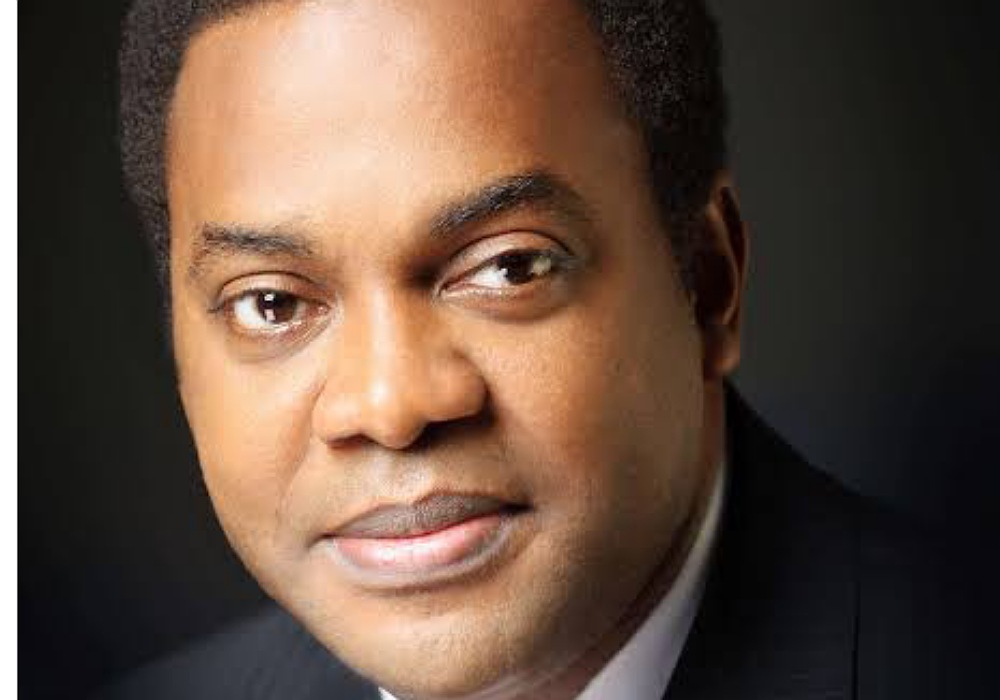
Peoples Redemption Party (PRP) presidential candidate, Donald Duke, has said he would bring the price of petrol down to about ₦300 per litre if elected president in the 2027 general election.
Duke disclosed this on Wednesday while explaining his proposed approach to crude oil production and domestic fuel supply.
ALSO READ: 2027: INEC Must Prove Nigerians Wrong on Election Credibility — Donald Duke
When asked about the realistic price of petrol under his presidency, the former Cross River State governor said his target would be to reduce the pump price to about ₦300 per litre.
“To bring it to about 300 Naira. I’ve told you… it sounds so outlandish, but I’ve given you the arithmetic,” Duke said.
He explained that his proposal would be based on allocating a portion of Nigeria’s crude oil production for domestic consumption and selling the remaining volume.
According to him, if the country’s daily consumption requires 600,000 barrels, that volume would be allocated for domestic use, while the remaining one million barrels would be sold.
“Because I allocate 600,000 barrels if that’s what you consume daily. Allocate that to yourself. The other one million, you can sell,” he said.
His proposal comes as the cost of petrol remains a major issue in Nigeria, with fuel prices having significant implications for transportation, businesses and household expenses.
Duke is seeking the presidency on the platform of the PRP in the 2027 general election.
Peoples Redemption Party (PRP) presidential candidate for the 2027 general election, Donald Duke, has challenged the Independent National Electoral Commission (INEC) to prove to Nigerians that it can deliver a free and fair election.
Duke made the call on Wednesday while speaking about the credibility of Nigeria’s electoral process and public confidence in INEC.
The former Cross River State governor said the onus was on the electoral commission to convince Nigerians that the 2027 election would be free and fair, noting that previous developments had left many citizens sceptical about INEC.
SEE ALSO: 2027: Donald Duke Reveals Why He Wants to Be Nigeria’s President
“INEC has to prove… the onus is on them actually to convince Nigerians that there will be a free and fair election,” Duke said.
He recalled the postponement of the 2019 general election, which was announced just hours before voting was scheduled to begin.
According to him, the development contributed to Nigerians’ growing distrust of the electoral commission.
Duke said INEC had assured the public of its preparedness for the election before the postponement, which was announced around 4am on election day.
He criticised the explanations given for the postponement, saying the commission should have taken responsibility for the situation.
The PRP candidate, who contested the 2019 presidential election on the platform of the Social Democratic Party (SDP), said he was on the ballot at the time but did not participate because his party was involved in court proceedings.
Duke further said the fact that the same electoral institution remains responsible for conducting elections means INEC must now work to restore public confidence.
“That same INEC, the institution still exists, so the onus is on them,” he said.
He added: “The onus is really on INEC. They’ve got to prove the skeptics wrong. But so far, their records in the past, there’s a lot to… expectations are poor.”
Duke also recalled concerns surrounding the Bimodal Voter Accreditation System (BVAS) during the 2023 general election.
“The last election in ’23, the BVAS suddenly stopped working. Now, he says it’s going to work. Let’s see,” he said.
The PRP candidate’s comments come as political parties and candidates intensify preparations for the 2027 general election, with INEC expected to conduct the presidential and National Assembly elections in January 2027.
A member of the Nigerian Civil Society Situation Room, Austin Anigbe, has said the Independent National Electoral Commission (INEC) can deliver a better 2027 general election but must address the pitfalls recorded during the 2023 elections.
Anigbe made the submission on Wednesday during an interview on Channels Television’s The Morning Brief, while reacting to INEC’s world press conference and stakeholders’ meeting on preparations for the 2027 elections.
According to him, INEC has taken note of the various activities leading to the 2027 elections and is making significant progress in its preparations.
SEE MORE: 2027: INEC Tackles Operational Gaps, Sets October 9 For PVC Collection
“From the press statement, from the conversation, I will tell you it is certain that INEC has put out what I call a D-minus plan. INEC has taken note of every event going to the 2027 elections, and INEC is on top of its game,” Anigbe said.
He, however, noted that similar assurances had been given by INEC in previous election cycles.
“But is this kind of thing new? No. We’ve had this kind of assurances in previous times,” he said.
Anigbe said what made the latest development significant was that INEC held a world press conference about 100 days before the election.
“But this is the first time there would be a press conference, a world press conference, 100 days to election that they round on election,” he said.
He said INEC had already achieved almost half of its milestone objectives, describing this as critical to the preparations for the 2027 election.
Anigbe also urged Nigerians to take advantage of the planned display of the voter register to verify their polling units ahead of election day.
“For instance, today is the seventh of October. In two days will be ninth of October, and INEC has said by the ninth of October there will be a display of the voter register at the polling unit level, or the ward level, sorry,” he said.
“So that citizens ought to go to those places now to go verify their polling unit and not get to the day of election, which is always constant with citizens by the time they get to the polling unit, their names are not there, and they start rushing that INEC is not prepared.”
He further urged eligible Nigerians without Permanent Voter Cards (PVCs) to take advantage of the collection exercise.
“INEC has also said by the same ninth there will be PVC collection, not distribution. So citizens should prepare. If you are ready to vote in the 2027 election, you don’t have your PVC, the time is now,” Anigbe said.
Commenting on states with the highest number of registered voters, Anigbe said the figures for Lagos and Kano were not surprising, noting that Lagos had consistently topped the list.
“For the state that topped the registration, this is not new. Lagos has always topped, followed by Kano,” he said.
However, he questioned whether the large number of registered voters would translate into actual participation on election day.
“But what I think is important: can the people in Lagos, Kano, etc. truly vote on election day?” he asked.
Anigbe said the number of registered voters should be considered alongside actual voter turnout, particularly in light of the 2023 elections.
“If Lagos is with the highest number of vote, and the vote that came out in the 2023 election compared to the number of registered voters, you would, I mean, there were a lot of voter suppression,” he said.
He also highlighted the gap between Nigeria’s large voter register and actual participation.
“Beyond just turning out these numbers that we have 103 million registered voters leading democracy numbers in Africa, we are the largest democracy, the largest number of registered voters in an election,” Anigbe said.
“It is that the number must show on the day of ballot, true we don’t have about 25 percent of voters in an election, which is very weird.”
He estimated that about 25 million Nigerians voted in the 2023 elections.
“About 25 million Nigerians voted in the 2023 elections,” he said.
Anigbe maintained that the timing of INEC’s preparations gives the commission an opportunity to improve the electoral process.
“We think that this timing, 100 days to election, gives INEC adequate preparation. And I think INEC can,” he said.
However, he stressed that INEC must learn from the previous election.
“But they have to address the pitfalls of the 2023 election, which is the question I asked. And INEC, rather than focus on the question, focused on something else,” Anigbe said.






‘Dem Dey Use Stick Dey Flog Women’ — Nigerians in India Camp Cry Out

2027: I’ll Bring Petrol Price Down to ₦300, Says Donald Duke
2027: INEC Must Prove Nigerians Wrong on Election Credibility — Donald Duke

‘Military Gets Huge Budgets, Yet Air Crashes Persist’ — Shehu Muhammad

2027: INEC Can Deliver, But Must Fix 2023 Pitfalls — Civil Society Leader

‘NYSC Has Outlived Its Usefulness, Should Be Scrapped’ — Shehu Muhammad

Trump’s Family Unveils New Cryptocurrency Platform

Senate Denies Receiving Petitions Against Tinubu’s Ambassadorial Nominees

Dangote Cement Lights Up Benue Host Communities With CSR Initiatives

Reps Recommend 3-year Jail Term For Aviation minister

Tems Sets New Record On Billboard Hot 100 Chart
