
NEWS
PGGSJ Demands Dele Farotimi’s Release, Calls Arrest An Attack On Nigeria’s Conscience

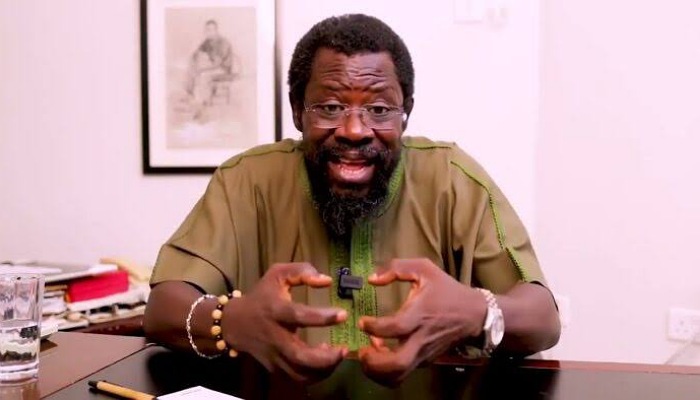
The Professionals for Good Governance and Social Justice (PGGSJ) has strongly condemned the arrest and detention of Dele Farotimi, a prominent human rights lawyer and political activist, calling it an assault on Nigeria’s conscience and a grave violation of fundamental rights.
In a statement released by its Convener/Leader, Dr. Ben Chukwu, the group expressed deep outrage over the timing of the arrest, especially amid the country’s ongoing socio-economic struggles.
Chukwu said, “The abduction of Farotimi at a time when Nigeria is grappling with severe socio-economic challenges is a wake-up call. This act should ignite deep resentment not only among the few vocal guardians of moral integrity but also among the ordinary citizens who form the backbone of the nation.”
SEE ALSO: Messi Named MLS MVP After Historic Season With Inter Miami
The PGGSJ also denounced the actions of the Ekiti State Police Command, accusing them of a blatant disregard for the rule of law.
“The arrest was marked by illegal actions, including the intimidation of lawyers and staff members and the seizure of phones to conceal video evidence,” Chukwu said. “This behavior has severely damaged the credibility of the institution involved.”
Dele Farotimi, known for his unyielding stance against corruption, has been a vocal critic of Nigeria’s political elite.
His activism, which includes bold acts of protest such as refusing to groom his hair and beard in 2020 to oppose the detention of activists Agba Jalingo and Omoyele Sowore, has earned him both admiration and controversy.
Farotimi has consistently spoken out in defense of marginalized communities, earning a reputation as a fierce advocate for justice.
The PGGSJ also targeted Afe Babalola, a Senior Advocate of Nigeria (SAN), who filed the petition that led to Farotimi’s arrest. Chukwu called on Babalola to reconsider his actions and withdraw the petition.
“As a respected lawyer, Babalola has a responsibility to uphold the law and protect the rights of all citizens,” Chukwu said. “Instead, his actions have been used to silence a vocal critic and undermine the democratic process.”
The PGGSJ’s statement emphasized that Farotimi’s arrest is not just a personal attack but an attack on the millions of Nigerians who yearn for change.
“Farotimi has voiced the frustrations and aspirations of the oppressed. His fight is one for a better Nigeria,” Chukwu added.
The group further called for the Nigerian Police Force to protect citizens’ rights and for the Federal Government to intervene and secure Farotimi’s immediate release.
“The government must take immediate action to release Dele Farotimi unconditionally and ensure that his rights are protected,” Chukwu said, warning that failure to act would further damage the government’s public image.
The PGGSJ also urged Nigerians, particularly the youth, to rise in support of Farotimi and demand justice.
“The time has come for Nigerians, especially the youth, to take a stand against injustice,” Chukwu urged. “Farotimi’s fight is our fight, and his arrest is an attack on us all.”
The statement concluded with a call for widespread action, warning that if Farotimi is not released, the nation could face large-scale protests.
“Nigeria will stand still if Dele Farotimi is not freed. The future of this country depends on the courage of its citizens to challenge the present,” Chukwu declared.
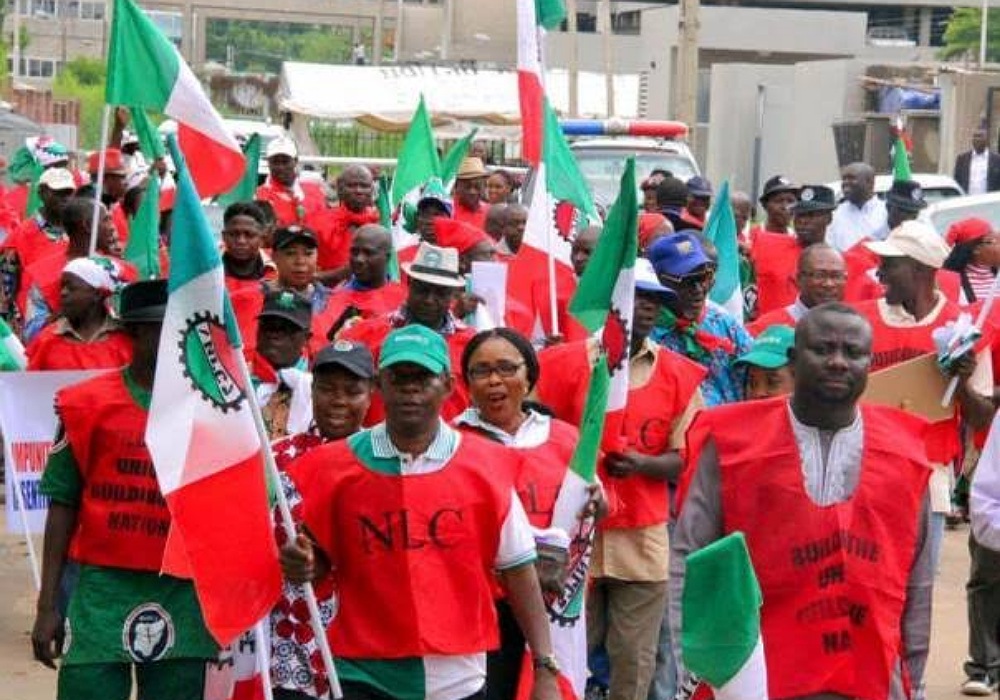
The PGGSJ also called on human rights organizations, the Nigeria Labour Congress, the Nigeria Bar Association, and trade unions to join the call for Farotimi’s release, stressing that the struggle for justice must be a collective effort.





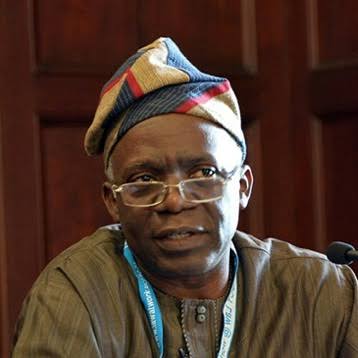


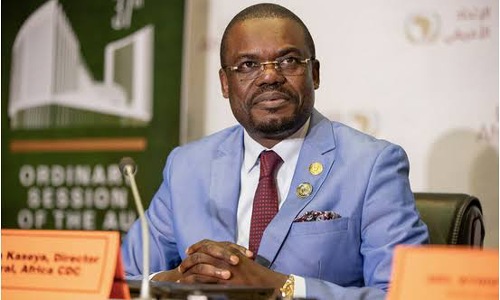
The Director-General of the Africa Centres for Disease Control and Prevention (Africa CDC), Dr Jean Kaseya, has explained why Ebola outbreaks continue to occur in Africa, citing the need for stronger health systems and surveillance mechanisms to prevent and control the spread of infectious diseases.
Kaseya spoke during an interview on Channels Television on Thursday, October 22, while discussing recurring Ebola outbreaks on the continent and the challenges facing public health authorities.
SEE ALSO: JUST IN: Over 3,000 Dead as Ebola Outbreak Ravages DR Congo
He explained that some outbreaks originate from animals and spread to humans through contact with the environment, stressing that effective surveillance and stronger healthcare systems were necessary to address the threat.
“We are in Africa in a specific environment. And as you are saying, this outbreak is coming also from animals to humans. It means we are in contact with our environment,” he said.
“But we can avoid that if we have a strong health system in place, if we have strong surveillance mechanisms in place. And this is what we are working to address.”
The Africa CDC chief also announced plans to convene African health ministers on October 28 to discuss the Ebola Bundibugyo outbreak, which he described as the most geographically widespread outbreak of its kind.
According to Kaseya, three African regions—West, Central and East Africa—have been affected, making coordinated action among countries increasingly important.
“This is why I’m calling even a meeting on the 28th of October of all African ministers, because we see now this outbreak — this Ebola Bundibugyo outbreak — is the most geographically extended outbreak, with three regions in Africa already affected: West, Central and Eastern African regions,” he said.
He also expressed confidence in Africa’s preparedness to respond to public health emergencies, while emphasising the importance of strengthening existing systems to contain outbreaks.
Africa CDC Seeks Cooperation Over Nigeria’s Reported Ebola Case
Kaseya further called for cooperation among Nigeria, Uganda and the Democratic Republic of the Congo (DRC) to clarify the travel history of a woman linked to Nigeria’s reported Ebola case.
He said he had been communicating with health authorities in the three countries to establish the woman’s movements before she returned to Abuja on October 3.
According to him, the woman was born in Uganda and had spent some time there before returning to Nigeria. However, further information was needed to establish whether she had travelled through the DRC or had contact with anyone arriving from the country.
“We are talking to all authorities—with Nigerian authorities, with Ugandan authorities, even to DRC authorities,” Kaseya said.
He urged the woman to provide the relevant information to health officials, noting that it would help authorities determine the circumstances surrounding the case and support the countries involved.
“What we want is collaboration from this person, the lady. She has to tell us, to disclose to the authorities. I need this information, as Nigeria needs this information, because we need also to support Uganda,” he said.
Kaseya added that establishing the woman’s travel history and possible contacts would help prevent misunderstandings between the African countries.
“I think these are the pieces of information we are looking for, and it will help all of us, and it will avoid crisis between African countries,” he added.

A truck carrying grains fell on its side after crashing into a road median at Itowolo, along the Ikorodu axis of Lagos State, early Thursday, occupying the entire Bus Rapid Transit (BRT) lane.
The incident occurred at about 5 a.m. along the route inward Agric and towards Ogolonto, according to the Lagos State Traffic Management Authority (LASTMA), which disclosed the development on Thursday.
SEE ALSO: Lagos: LASTMA Announces Traffic Restrictions Along Route to Toll Gate
The agency identified the vehicle as a white 10-tyre mini truck and confirmed that no casualties were recorded in the accident.
LASTMA said its officers were at the scene managing the situation, while recovery of the fallen vehicle was expected to commence shortly.
Despite the truck occupying the entire BRT lane, the agency said the incident was not affecting traffic flow at the time of its update.
The authority shared the information to alert motorists to the incident and its ongoing response at the scene.

The Commissioner of Police in Ogun State, Bode Ojajuni, has urged the Police Officers’ Wives Association (POWA) to transform its skills acquisition centre in Abeokuta into an industrial hub to promote job creation, entrepreneurship and women’s empowerment.
According to a statement signed by the Police Public Relations Officer, DSP Oluseyi B. Babas eyi, on Thursday, Ojajuni made the call on Monday when he led members of the Ogun State Police Command’s Management Team on an inspection visit to the POWA Skills Acquisition Centre at the Command Headquarters, Eleweran, Abeokuta.
SEE ALSO: Wife Dies in Ogun House Fire as Police Take 56-Year-Old Husband Into Custody
During the visit, the POWA Acting Chairperson, Bolanle Adeoye, and members of the association’s executive received the commissioner and conducted him around the facility, including its photography and make-up studios.
The centre is designed to equip POWA members and members of the public with practical vocational skills, promote entrepreneurship and create sustainable livelihood opportunities, particularly for women and young people.
Ojajuni charged POWA to leverage partnerships with government agencies, private sector organisations, manufacturers, vocational institutions and development partners to transform the facility into a thriving industrial hub.
He emphasised that the centre’s vision should go beyond skills acquisition to include enterprise development, productive ventures and employment generation.
According to the statement, the commissioner stressed the need for the initiative to create opportunities for beneficiaries to become self-reliant and contribute meaningfully to economic growth.
Ojajuni also highlighted the relationship between economic empowerment and crime prevention, noting that sustainable livelihoods could help address socio-economic factors associated with criminal activity.
He stressed that the centre could contribute to public safety through crime-prevention awareness, constructive community engagement and opportunities that encourage women and young people to pursue legitimate and productive ventures.
Commending Adeoye and the POWA Ogun State executive for their commitment to human capital development, the commissioner pledged the command’s support for the centre.
He reaffirmed the command’s readiness to encourage strategic collaboration and partnerships that would advance the facility’s development, expand its reach and strengthen its contribution to empowerment and community safety.
The Ogun State Police Command reiterated its commitment to supporting initiatives that promote productive engagement, strengthen community resilience and advance public safety across the state.






Why Ebola Outbreaks Keep Returning to Africa, Dr Jean Kaseya Explains

Peter Obi Meets UK Officials, Diaspora Stakeholders on Rebuilding Nigeria

Grains-Laden Truck Falls on BRT Lane in Lagos

Ogun Police Chief Urges POWA to Turn Skills Centre into Industrial Hub

Thor Empowers Host Communities with 10 Cassava, Palm Oil Processing Plants

FG Puts Daily Gas Output at 8bcf

Trump’s Family Unveils New Cryptocurrency Platform

Senate Denies Receiving Petitions Against Tinubu’s Ambassadorial Nominees

Dangote Cement Lights Up Benue Host Communities With CSR Initiatives

Reps Recommend 3-year Jail Term For Aviation minister

Tems Sets New Record On Billboard Hot 100 Chart
