
Energy
PIGB: FG proposes single industry regulator

By Yemie ADEOYE
IN an effort to harmoise the controversial Petroleum Industry Governance Bill (PIGB) formerly PIB, and ensure its smooth and prompt passage by the national assembly, the federal government has proposed the concept of a single regulator for the petroleum industry.
The Minister of state for petroleum resources, Dr. Ibe Kachikwu made this known when he appeared for the stakeholder and public hearing hosted by the National Assembly Joint Committee on Petroleum Industry Governance Bill recently.

From left: The Honourable Minister of State for Petroleum Resources, Dr. Emmanuel Ibe Kachikwu; Senior Technical Adviser on Policy and Regulation to the Minister, Mr. Adegbite Adeniji; and Director, Gas Department at the Ministry of Petroleum Resources, Mr. David Hassan at the public hearing today.
According to the Minister what Nigeria needs going forward is a regulator that covers the field, as opposed to dissipated regulatory power amongst agencies. The regulator should cover upstream, midstream and downstream oil, gas and products regulation, as well as technical, economic and HSE regulation. S.8 of the PIGB provides that the Commission will issue regulations in respect of a number of specified matters in order to give proper effect to the Act.
“There needs to be careful calibration of the relationship between the role of the Minister as the institution charged with overall supervision of the industry vis a vis that of the super regulator as the institution responsible for regulation. The calibration must ensure checks and balances on regulatory power through tools such as administrative law; however, it seems essential that the power to issue regulations should at all times reside with the Minister.
This ensures that power to issue delegated legislation is placed in the hands of the appropriate member of the executive with responsibility both to the President and also to the National assembly in terms of oversight. The counter check on this is that the technical issues are handled by the regulator, for consideration of the Minister, who upon approval of the recommendation, will issue the appropriate regulation.
There are several matters in the bill that are not regulatory in nature which will require regulations. It will be an aberration if these matters, which are squarely within the purview of the Minister, to be delegated to the Commission. Minister should issue regulations upon the advice of the Commission.
A core aspect of the reforms that we propose to the effectiveness of the Minister’s powers to issue policies, supervise the industry and manage Nigeria’s petroleum resources, is the need for a well-resourced and solid technical back office. Hence, the National Oil Policy and the National Gas Policy contains proposals for institutional reforms at the Ministry of Petroleum Resources in this regard. It is our position that the PIGB should address this long standing issue legislatively by creating a Petroleum Technical Directorate.”
Kachikwu stated further that S.13 Does not envisage a position for the Minister on the Board of the Commission. We propose that the Minister Chair the Board of the Commission to ensure effective interface between the regulatory and policy making institutions. The PIGB proposes 4 year terms for Commissioners.
“May I respectfully suggest that we accord with best practice by introducing staggered terms for Commissioners this should be considered in order to ensure continuity in the governance of the Commission such that at no time would there be no executive commissioners in office.
Also An essential regulatory tool for a sector that is being liberalized is the need for the Commission to be granted competition regulatory powers, especially in light of the nature of the midstream which is network bound and has several monopoly features that need to be carefully managed, otherwise we will be substituting government monopolies with private monopolies as we liberalise the sector.
Another essential issue, going forward, is the need to establish a registry of records for all the titles to be issued and managed by the commission. This will aid public access to information, and the due diligence reviews by third parties into assets.
The composition of the board of the Commission should ensure linkages to critical and related sectors. As such, non-executive members of the commission should include the representatives from the Ministries of petroleum, power, finance and environment. Experiences from these sectors will no doubt enrich the work of the Commission.
For focus, it is recommended that from the outset the Commission should be constituted with the following departments: Upstream regulation, Midstream and Downstream Oil Regulation, Midstream and Downstream Gas Regulation, Health Safety & Environment.”
Speaking on the Government’s role on the commercial side, the minister noted that “the reforms that we commenced earlier on in the year need to be sustained through legislation. The critical issues here are governance, funding, efficiency and accountability of the commercial entities.”
The Minister further opined that A National Oil Company(NOC) needs to be created as a holding company for an integrated operation that will operate on a fully commercial basis with the following recommendations. “On Funding-A key plank of our reforms is to ensure that the national oil company is able to operate without recourse to the treasury such that funds that could otherwise be sequestrated for our upstream commitments can be deployed by the treasury to meet urgent needs in other social sectors. Ultimately, the National Oil Company needs to acquire an investment grade status if it is ever to achieve these objectives.
This will require a new way of governance and a different type of National Oil Company than currently exists. For one, it must be insulated from political interference in its operations. It must also run commercially and efficiently if it is to be able to attract funding from debt and capital markets. The governance structure and terms of reference must therefore be clearly stated and legislation must provide it a pathway to independently and sustainably raise its own funding, Hence, our recommendation is that there should be an explicit provision in the Bill that clarifies that the National Oil Company shall cease to be funded from the federation account and shall have the power to raise funding for its operations from the debt and capital markets.
The NOC should be structured as a holding company to be chaired by the Minister, The NOC to be an integrated holding company comprising semi – independent upstream, midstream and downstream with their own CEOs and Board of Directors, CEO / GMD of NOC to be appointed by the President upon the advise of the Minister , Position of CEO / GMD of the NOC to be tenured but subject to fulfilment of annual Key Performance Indicators and targets to be set by the board. The CEO / GMD of Holding Company may only be removed for failing to fulfill KPIs and for misconduct.
We have noted that the PIGB requires a lower level of experience than one would ordinarily expect for the membership into the board. We recommend that this be revisited such that the Group Managing Director should have no less than 20 years managerial experience, whilst the executive directors should have a minimum of 15 years senior management experience.
Stock exchange governance rules should apply to the NOC immediately it is incorporated right up till when it is eventually listed, and MDs of each subsidiary to sit on NOC Board.
Following best practice, independent board members should be appointed to the board. As for the subsidiaries, similar rules relating to governance and funding should apply, the main difference being that the Group Managing Director should chair the board of each subsidiary.
We also support the creation of an asset management company that will manage government’s interest in specific upstream assets that will be transferred to the company, whilst leaving the National Oil Company to operate as a refocused integrated company”.


The appetite for improving access to capital for indigenous oil and gas contractors, strengthening the capacity of Nigerian businesses to execute critical energy projects and contribute to the country’s production ambitions, has seen the Renaissance Africa Energy Company Limited (‘Renaissance’) go into a strategic financing partnership with Sterling Bank Limited.
The partnership, formalised through a Memorandum of Understanding (MoU), brings Sterling Bank into the renewed Renaissance Vendor Financing Scheme (RVFS), a structured financing programme designed to address one of the longstanding challenges confronting indigenous service providers in Nigeria’s oil and gas industry: access to timely and affordable funding for contract execution.
READ ALSO: Group Demands Fair Share of NNPC Jobs for Ogoni Oil Exploration
The expanded programme brings together 13 financial institutions with combined financing commitments of $4.1 billion and ₦435 billion, creating a substantial pool of capital to support eligible contractors delivering projects for Renaissance, operator of the former Shell Petroleum Development Company (SPDC) joint venture assets.
Speaking on its participation, Dele Faseemo, Group Executive, Corporate and Investment Banking at Sterling Bank, described the partnership as an important opportunity to connect financial capacity with productive enterprise in one of Nigeria’s most strategically important sectors.
“At Sterling Bank, we believe financing should enable capable businesses to deliver, grow and compete. Our participation in the Renaissance Vendor Financing Scheme reflects that conviction. By providing structured funding to qualified contractors, we are supporting the businesses that keep the energy value chain moving, strengthening Nigerian content participation and contributing to the broader objective of increasing the country’s productive capacity,” Faseemo said.
For many indigenous contractors, securing a major contract represents only the first step towards business growth. The ability to mobilise equipment, procure materials, retain skilled personnel and meet demanding project timelines often depends on access to adequate working capital. Financing constraints can therefore limit the capacity of otherwise qualified businesses to execute contracts, scale their operations and participate more meaningfully in the energy value chain.
Through the RVFS, participating financial institutions will provide structured financing to eligible contractors against confirmed contracts awarded by Renaissance, subject to applicable credit assessment and approval processes. The arrangement is intended to ease funding pressures, improve project execution and strengthen the financial capacity of indigenous service providers.
Tony Attah, Managing Director and Chief Executive Officer of Renaissance Africa Energy Company Limited, highlighted the importance of the financing arrangement to the company’s growth ambitions.
“What we’ve been able to achieve as Renaissance is to go into that partnership with these incredible 13 banks who have come up to support this vendor scheme at over $4 billion and over ₦435 billion funds available for the vendors to be able to support us in our growth agenda,” Attah said.
He further emphasised the financial advantage the scheme offers participating contractors, noting that, “The interest rate that the banks are offering to the contractors is very competitive, and it is certainly better than the vendors going out to the respective banks on their own.”
The Renaissance Vendor Financing Scheme builds on a contractor financing programme established in 2010, which has evolved over the years to support local service providers executing projects across the oil and gas value chain. Its latest expansion comes as Renaissance pursues an ambitious growth strategy, including its aspiration to achieve production of one million barrels of oil equivalent per day by 2030.
Delivering on this ambition will require sustained investment not only in upstream production assets but also in the network of engineering firms, equipment suppliers, logistics providers, technical specialists and other indigenous businesses whose services are essential to operational performance.
With an established presence in corporate banking and energy sector financing, Sterling Bank continues to support businesses operating across critical segments of the Nigerian economy through tailored financial solutions, strategic partnerships and sector-specific expertise.
The collaboration reinforces the Bank’s commitment to supporting indigenous enterprise development, strengthening local capacity and financing productive economic activity, while contributing to efforts to improve Nigeria’s energy security and long-term industrial competitiveness.
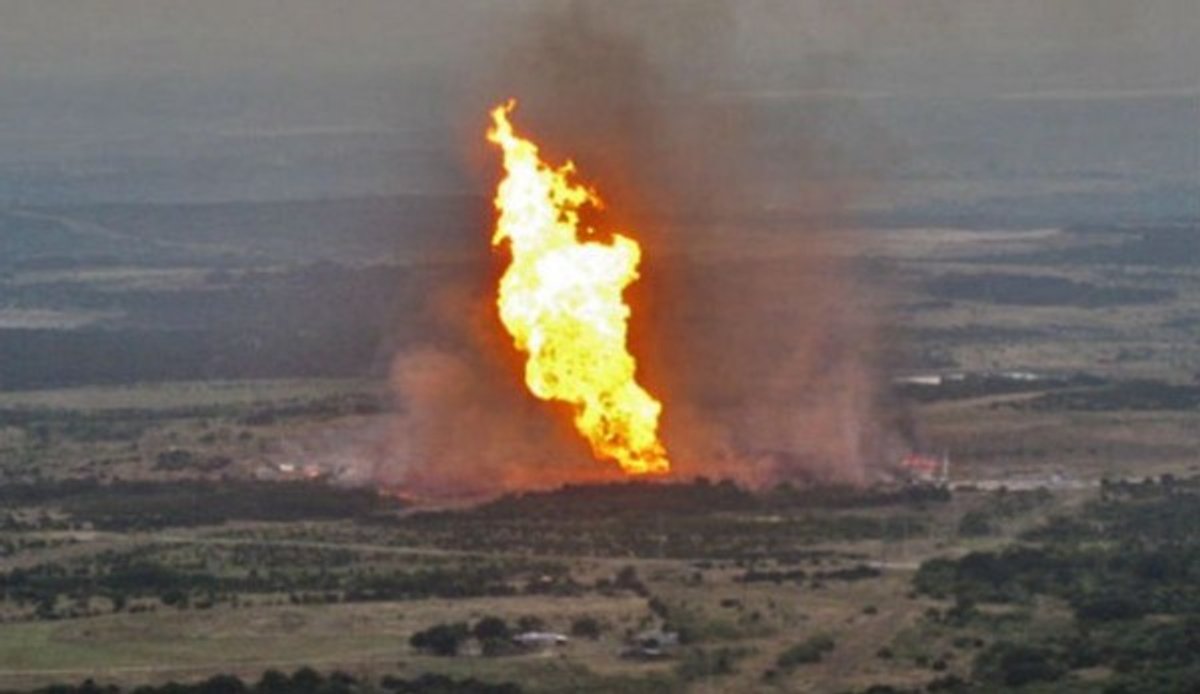
The Niger Delta Youths are primed to assume national responsibilities in critical areas of the economy by protecting vital oil and gas assets in the region.
The United Niger Delta Congress (UNDC) gave the assurance at a media briefing in Abuja, over the weekend, adding that the youths of Niger Delta were ready to work with the federal government in this regard.
The group maintained that youths in the region have shown that such responsibilities, including the security of pipelines, can be entrusted to them.
Speaking at the news conference, Niger Delta Youth activist, Mallam Julius Obi, said the Niger Delta is safer while the nation’s crude is flowing based on the fact that youths in the region are doing the job.
He said that being a youth should not be a disqualification from strategic national assignments but when matched with preparation and character, a national asset.
“We are calling on the federal government to note that Nigeria is full of young men and women who are prepared, disciplined and ready to carry out national responsibilities.
“We urge the federal government to keep opening the doors of strategic national service to young Nigerians who have earned trust the only way it can be earned, by delivery,” Obi said.
READ ALSO: JUST IN: Ex-Delta Governor Emmanuel Uduaghan Is Dead
The group commended President Bola Tinubu for sustaining the security reforms in the oil and gas industry and the the National Security Adviser (NSA), Mallam Nuhu Ribadu, for coordinating the protection of the nation’s pipelines, and the management of NNPCL for providing the enabling environment.

Joseph Ambakederimo, convener of the South-South Reawakening Group, has questioned the accountability of Nigeria’s crude oil forward sales, demanding clarification on the volume of crude lifted, outstanding balances and the use of upfront payments.
Speaking during an interview on Arise TV on Sunday, Ambakederimo expressed concern over the monitoring of crude oil transactions, questioning who was responsible for tracking deliveries and providing feedback on the arrangements.
“We don’t even know who is monitoring and giving us the feedback of the barrels of crude that have been lifted on forward sales basis,” he said.
SEE MORE: South-South Group Opposes Coastal Road Alignment With East-West Road
He challenged the Nigerian National Petroleum Company Limited (NNPC) to provide details of the transactions, including the quantity of crude already lifted, the outstanding balance and whether the agreed deliveries had been completed.
“Today, can we get this from NNPC? How much have they lifted? What is the balance remaining? Have they been completed?” he asked.
Ambakederimo also questioned how the money collected upfront under the arrangements had been spent, demanding an explanation of its use.
“That money that was collected upfront, what was the use of the money? Can you justify it?” he asked.
He argued that Nigeria should make better use of its natural resources to accelerate infrastructure development and improve living conditions.
Citing land reclamation projects in the United Arab Emirates, Ambakederimo said Nigeria could explore similar opportunities to create additional land for residential and other developments.
He recalled seeing a signpost while travelling from Dubai to Abu Dhabi describing a project to reclaim land from the sea, using the example to highlight the development possibilities he believes Nigeria could explore.
The South-South Reawakening Group convener also argued that Nigeria could reclaim land in suitable areas, provided environmental concerns were properly managed.
He called for the country to translate its natural resource wealth into infrastructure and improved living conditions, stressing the need for greater accountability in crude oil transactions.






Renaissance, Sterling Bank Back Indigenous Oil and Gas Contractors Financially
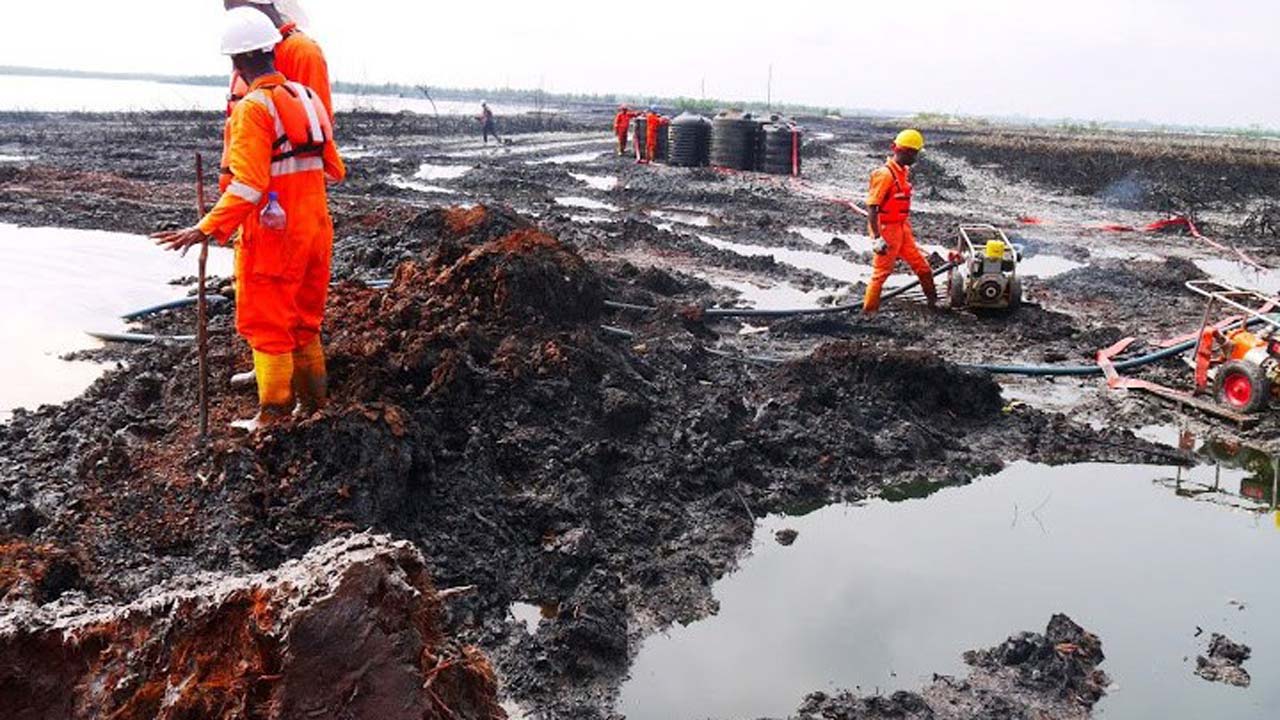
Group Demands Fair Share of NNPC Jobs for Ogoni Oil Exploration

NNPC Ltd Exploration Spending Down 87%
200 Imo Teachers Benefit from NCDMB’s Effective Curriculum Training
FG to Launch National Lead Poisoning Prevention Plan Wednesday

EndSARS Memorial: ‘Nigerians Still Deserve Answers’ – Atiku

Trump’s Family Unveils New Cryptocurrency Platform

Senate Denies Receiving Petitions Against Tinubu’s Ambassadorial Nominees

Dangote Cement Lights Up Benue Host Communities With CSR Initiatives

Reps Recommend 3-year Jail Term For Aviation minister

Tems Sets New Record On Billboard Hot 100 Chart

881946 954715I discovered your weblog website on google and appearance several of your early posts. Maintain up the exceptional operate. I basically extra the RSS feed to my MSN News Reader. Searching for forward to reading much more on your part later on! 135246
67755 942594I identified your blog on yahoo and can bookmark it currently. carry on the nice function. 482060