
International News
Pope Leo XIV Holds First Mass, Urges Peace and Unity

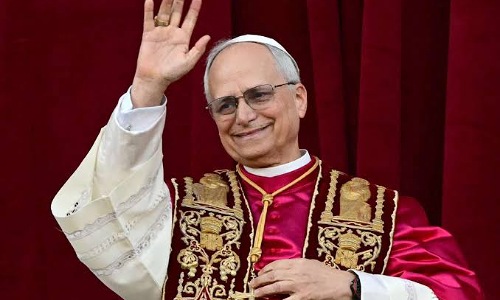
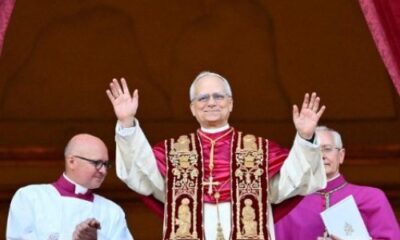
Newly elected Pope Leo XIV, born Robert Francis Prevost, celebrated his first Mass as head of the Catholic Church on Friday in a solemn, private ceremony with cardinals at the Sistine Chapel, marking the start of a new chapter for the world’s 1.4 billion Catholics.
The 67-year-old American, who was elected Thursday as the 267th pope following a swift two-day conclave, will deliver his eagerly awaited first homily later in the day.
Tens of thousands gathered in St. Peter’s Square erupted in applause the previous evening when white smoke signaled his election.
READ MORE: Robert Francis Prevost Becomes First American Pope, Takes Name Leo XIV
Pope Leo then made his first public appearance, humbly addressing the crowd with a call for peace and unity.
“Help us, and each other, to build bridges through dialogue, through encounter, to come together as one people, always in peace,” he said, in a tone reminiscent of his predecessor, Pope Francis. “We must seek together how to be a missionary Church… always open.”
Prevost, a member of the Augustinian order, brings a rich background in missionary work, having spent two decades in Peru.
His down-to-earth approach and service to the poor earned him praise in Latin America, where he was hailed for his simplicity and closeness to the people.
“He was a very simple person who adapted to everything, like any good missionary,” said Bishop Luis Alberto Barrera of El Callao, Peru.
In his native Chicago, where he was born and raised in a working-class South Side neighborhood, locals celebrated his ascension with pride.
The Chicago Tribune described him as “the pride and joy of every priest and nun” at his childhood parish, where he once served as an altar boy.
Pope Leo XIV’s election is being interpreted by Vatican experts as a sign of “gentle continuity” with the late Pope Francis.
Analysts describe him as a moderate consensus figure likely to maintain the Church’s progressive tone without alienating conservative factions.
“He will not alienate conservatives. At least, he has not alienated them,” noted Francois Mabille, a Vatican analyst with the Paris-based IRIS think tank. “This is a posthumous success for Pope Francis.”
World leaders have welcomed the new pope, pledging cooperation with the Vatican on major global challenges.
Despite previous tensions over immigration policy, former U.S. President Donald Trump congratulated him, calling his election a “great honour” for the United States.





Federal agents raided the Washington, D.C., home of Democratic Congresswoman Ilhan Omar early Monday morning as part of an ongoing federal criminal investigation, the United States Department of Justice (DOJ) has confirmed.
Homeland Security Investigations agents arrived at the Minnesota congresswoman’s residence at about 6:00 a.m. Eastern Time, according to a report by Fox News.
SEE MORE: Trump Sparks Outrage With Shock Proposal to Rename New Mexico
The report said both the Department of Homeland Security (DHS) and the DOJ are involved in the investigation.
A DOJ spokesperson confirmed the operation, stating: “Today in the Washington, D.C. area, Homeland Security Investigations executed a judicially authorized search warrant secured by the Department of Justice.”
The spokesperson added: “This enforcement action is part of an ongoing federal criminal investigation.”
Details later……….
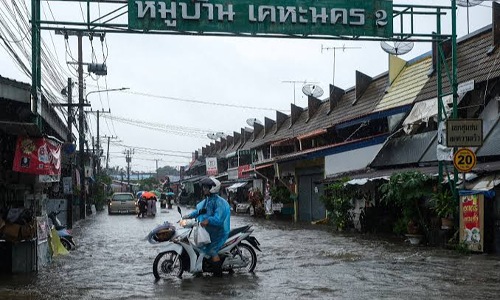
Heavy rains have triggered severe flooding across parts of Bangkok, Thailand, forcing nearly 4,900 residents to evacuate to shelters as floodwaters swept through roads and residential areas.
The flooding has disrupted movement across parts of the Thai capital, with motorists and pedestrians forced to navigate submerged roads and seek alternative routes.
SEE ALSO: NAFDAC Warns Nigerians As Fake Cowbell Milk Floods Market
According to the Bangkok Metropolitan Administration, about 52,000 households have been affected by the flooding, prompting authorities to declare a flood disaster and intensify emergency response efforts.
Emergency teams have been deployed to assist affected communities and move residents from vulnerable areas to safer locations as water levels rise.
Bangkok is accustomed to seasonal heavy rainfall, but intense downpours can overwhelm drainage systems, particularly in low-lying areas, resulting in widespread flooding and disruption.
Authorities are continuing to monitor affected locations while coordinating evacuations and other emergency measures.
For thousands of residents, the immediate priority remains securing safe shelter and protecting homes and livelihoods as authorities work to manage the situation and restore normal activities once the floodwaters recede.
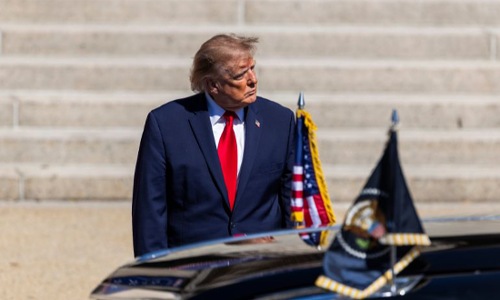
US President Donald Trump has explained his decision to reject Iran’s latest proposal to reopen the Strait of Hormuz, saying Tehran was seeking an agreement because it was losing revenue.
Speaking to reporters at the White House, Trump said Iran wanted to immediately reopen the strategically important waterway but argued that the proposal was not acceptable to his administration.
“They want to make a deal, and I think that’s fine. I like making a deal, too, but that deal would not be acceptable,” Trump said.
SEE ALSO: How the Strait of Hormuz Attack Could Trigger a Fresh Global Oil Shock
According to the US president, Iran’s push to reopen the strait was driven by the economic pressure it was facing.
“What they want to do is immediately open the Hormuz Strait. Do you know why? Because they are dying,” Trump said.
“You know why they’re dying? Because they have no money coming in, because they get their money from the Hormuz Strait.”
Trump also claimed that the US had established an unprecedented naval blockade against Iran, describing it as “a wall of steel.”
“So they outsmarted themselves. We put up the greatest blockade ever in military history. It’s a wall of steel,” he said.
“And guess what? They don’t have any money now because they wanted to close the strait.”
The Strait of Hormuz is a major global energy shipping route, and disruption to traffic through the waterway has significant implications for international oil markets and countries that depend on energy imports.
Trump’s remarks came amid continued tensions between Washington and Tehran over the reopening of the strategic waterway and negotiations involving Iran.





Fears of Fresh US Strikes on Iran Fuels Crude Price Surge

Navy Uncovers 132,000 Litres of Stolen Crude Oil in Bonny

Delta Police Arrest School Bus Driver Over Alleged Kidnap, Rape of 14-Year-Old Student

₦2.3tn Kaduna Rally Claim: APC Accuses Atiku, ADC of Fake News Plot

Dangote Identifies Power, Financing as Possible Keys to Africa’s Industrial Revolution

Dangote Calls for Stronger Protection of Local Industries, Unveils Pan-African Energy Distribution Network

Trump’s Family Unveils New Cryptocurrency Platform

Senate Denies Receiving Petitions Against Tinubu’s Ambassadorial Nominees

Dangote Cement Lights Up Benue Host Communities With CSR Initiatives

Reps Recommend 3-year Jail Term For Aviation minister

Tems Sets New Record On Billboard Hot 100 Chart
