
Aviation
Possible Debris of missing Malaysian jet spotted off Austrialia

SYDNEY – On Thursday, Australian prime Minister, Tony Abbott announced that Australia had spotted two objects possibly related to the search for the missing Malaysian flight MH370 in the southern Indian Ocean.
He told parliament they were sending four aircraft to the area to assess the situation.
The Prime Minister said new satellite images showed two possible objects in the ocean, and new and credible information had come to light in relation to the search.
“Following specialist analysis of this satellite imagery, two possible objects related to the search have been identified.
“We must keep in mind the task of locating these objects will be extremely difficult, and it may turn out that they are not related to the search for flight MH370,’’ Abbott cautioned.
The Australian prime minister said he had informed his Malaysian counterpart, Najib Razak, about the latest development.
Shortly after the announcement, Australia held a press briefing on the latest development on the search for the lost Malaysian plane in Canberra.
An official from the Australian Maritime Safety Authority (AMSA), John Young, gave more details at the briefing about the size of the objects.
He said the biggest object found possibly related to missing Malaysian flight MH370 is 24 metres in size and the other one is smaller.
“The objects are in the vicinity of the search area defined and searched in the past two days, and the assessment of these images was provided by the Australian Geospatial Intelligence Organisation,’’ Young said.
He said it was the best lead they had right now.
“The objects are relatively indistinct. The indication to me is of objects that are of a reasonable size and probably awash with water and bobbing up and down over the surface.
“This is a lead. It is probably the best lead we have right now,’’ the official said.
He also said that they would be difficult to find.
“We need to get there, find them, see them, assess them,’’ Young said.
– NAN


Shell Nigeria Exploration and Production Company Limited (SNEPCo) has welcomed efforts to promote safe helicopter services across Africa in a proposed Regional Action Plan (RAP).
The plan, according to a company statement, is the highlight of a workshop organised in Lagos within the week by the Aviation subcommittee of the International Association of Oil and Gas Producers (IOGP) in partnership with London-based safety advocacy group, HeliOffshore.
Biztellers reports that the two-day Offshore Helicopter Industry Safety Workshop (OHISW) with the theme “Developing a Regional Action Plan,” followed on from a similar session last year which SNEPCo sponsored.
READ ALSO: Ikire Killings: Adeleke Establishes Commission for Coroner Inquiry by Executive Order
It also provided administrative and logistical support for this year’s conference which was sponsored by ExxonMobil. SNEPCo, which pioneered Nigeria’s deepwater production at Bonga in 2005, relies on helicopter shuttles for operations and supports the workshop as part of its contributions towards safe services in Nigeria.
In an address at the opening session delivered by General Manager Contracting and Supply Chain, Charles Oranyeli, Managing Director SNEPCo, Ronald Adams said: “By developing a regional action plan, we can move beyond dialogue to alignment, ensuring that the safety leadership, industry standards, and collaborative approaches championed last year are embedded in a common roadmap for collective improvement. The most effective solutions will come not from isolated efforts, but from partnership, standardization, and coordinated action across the region.”
The workshop was attended by more than 80 representatives from oil and gas companies, the Nigerian Content Development and Monitoring Board (NCDMB), the Nigeria Civil Aviation Authority (NCAA), the Nigerian Safety Investigation Bureau (NSIB), helicopter operators and original equipment manufacturers.
The event concluded with participants deciding action items for the proposed Regional Action Plan including Search and Rescue (SAR) initiatives, implementation of IOGP Report 690 standards and establishment of formal industry leadership forums.
The IOGP has been active for over 50 years, supporting its more than 90 members around the world to promote “excellence in safe, efficient and sustainable energy.”
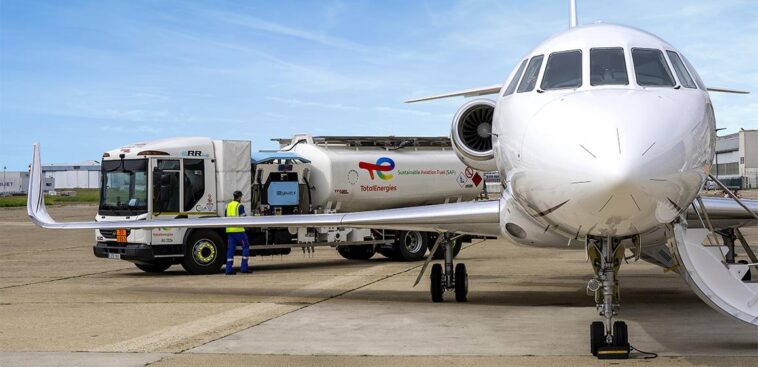
The Airline Operators of Nigeria (AON) has declared that airlines operating in Nigeria have come under financial pressure following a sharp increase in the price of Jet-A1, also known as aviation fuel.
According to the group, the price of aviation fuel, has surged to about N1,800 per litre in many parts of the country, from about N1,000 per litre two weeks ago. This amounts to almost an 80 per cent increase within a short period.
Aviation fuel remains the largest cost component in airline operations, accounting for about 30 to 35 per cent of total operating expenses.
Industry stakeholders have linked the latest spike to the ongoing conflict in the Middle East, which has pushed up global energy prices.
ALSO READ: Shell Completes Turnaround Maintenance on FPSO, Resumes Production at Bonga
Speaking on Channels Television on Friday, the spokesperson for the Airline Operators of Nigeria, Prof Obiora Okonkwo, said the surge had placed airlines under severe financial strain.
According to him, most carriers have so far refrained from immediately transferring the additional cost burden to passengers, despite the pressure on their operations.
“Two weeks ago, we were getting Jet-A1 at about N1,000 per litre, which today is about N1,800, and even more in some stations. We have experienced an increase of about 80 per cent. That’s quite a spike,” Okonkwo said.
He explained that airlines were currently absorbing the losses in order to avoid worsening the economic burden on the travellers.
“We are not in a business where you can easily adjust your ticket price. Right now what we are doing is that we are bleeding. We are taking the blow. We are selling tickets at very non-profitable prices. We are losing a lot of money,” he said.
Okonkwo warned that the situation might not be sustainable if fuel prices continue to rise without government intervention.
“Obviously, adjustments will be expected anytime soon. But again, we are very sensitive to the economic situation of Nigerians and our travellers,” he added.
He noted that developments in the global oil market, particularly the recent release of reserve crude oil, could influence fuel prices in the coming weeks.
Okonkwo also urged the Federal Government to explore engagement with the Dangote Refinery as part of efforts to stabilise aviation fuel supply locally.
“We were more hopeless in a situation where there was no refinery in Nigeria in the last two years. Now that we have a refinery, we are hopeful that we can find a solution around it,” he said.
According to him, if the spike persists, some airlines may struggle to continue absorbing the losses associated with the rising cost of aviation fuel.
Meanwhile, the AON spokesperson also reacted to the decision by the Federal Competition and Consumer Protection Commission to sanction about five airlines over alleged price fixing.
Okonkwo said while the commission has regulatory powers, the aviation sector remains deregulated, making coordinated price fixing unlikely.
“There is no meeting of airlines where they agree to fix prices. Fixing prices would mean operating as a cartel, and that is not the case,” he said.
He explained that airline ticket pricing varies widely because different aircraft types attract different operating costs.
“Each airline determines its fares based on its own operational costs,” he said.
Okonkwo added that airlines must also demonstrate financial viability to regulators as part of the conditions for maintaining their operating licences.
“At every point in time, you must prove to the regulators that you are financially viable and capable of sustaining operations,” he said.
He urged regulators to take into account the fragile nature of the aviation industry when making policy decisions affecting airlines.

An Air Peace flight from Lagos to Port Harcourt has suffered a disruption, after the aircraft was affected by a bird strike on arrival at the Port Harcourt International Airport.
The airline made the disclosure on Thursday in a statement signed by its spokesperson, Osifo-Whiskey Efe.
He added that the incident necessitated safety checks on the affected aircraft and the deployment of another aircraft to convey passengers on subsequent flights.
ALSO READ: Rivers’ CJ Declines Setting Up Panel for Fubara’s Impeachment
“We deeply empathise with passengers affected by this unforeseen incident and are working diligently to minimise disruptions,” Efe said.
The latest incident adds to the growing challenge of bird strikes faced by local airlines.
In December 2025, Air Peace disclosed that it recorded 49 bird strikes across Nigeria between January and September, stressing that even a single strike could ground an aircraft for weeks.
Chairman and Chief Executive Officer of the airline, Allen Onyema, had said on Arise TV that bird strikes constituted a major operational challenge, often leading to costly repairs and serious disruptions to flight schedules.
“One bird strike could cripple your aircraft for the next month. At that moment, there is no two ways about it. These bird strikes often lead to costly delays and serious disruptions in flight schedules,” he said.
He added that losses from such incidents compound other challenges facing Nigerian airlines, including heavy taxation and operational constraints.





Sahara Champions Global Shipping Collaboration for $20m Mercy Ships Healthcare Impact

30 Nigerians Bag Postgraduate Scholarship from NNPC Ltd, Eni

2027: ‘Algorithms Will Not Decide Election Results’, INEC Chairman Declares

Navy Recovers 98,000 Litres of Suspected Stolen Crude in Rivers

DPRP’s Appeal Against Fuel Import Licence Ruling Earns Stakeholder Backing

State Govs, Wike Endorse One-Party State, Join APC Campaign Council

Trump’s Family Unveils New Cryptocurrency Platform

Senate Denies Receiving Petitions Against Tinubu’s Ambassadorial Nominees

Dangote Cement Lights Up Benue Host Communities With CSR Initiatives

Reps Recommend 3-year Jail Term For Aviation minister

Tems Sets New Record On Billboard Hot 100 Chart
