
International News
Romania’s Court Disqualifies Nationalist Candidate Ahead Of Election

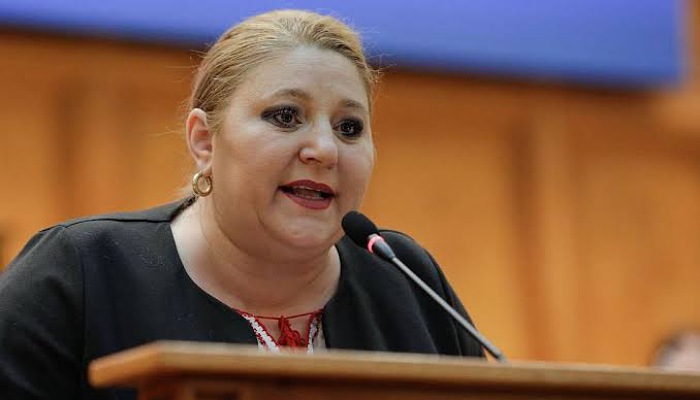
Romania’s Constitutional Court has disqualified Diana Sosoaca, a hardline nationalist with pro-Russian and anti-EU views, from running in the upcoming presidential election, a ruling that has triggered political tensions across the country.
The court’s decision, issued late Saturday and detailed on Monday, removes Sosoaca, leader of the ultra-nationalist SOS Romania party, from the race just weeks before the first round of voting on November 24.
Read Also: JUST IN: Tinubu Deploys Security To Protect R/State Secretariats Amid Unrest
The ruling has sparked concerns from politicians across the spectrum, with some accusing the court of overreaching its authority and undermining democratic principles.
Sosoaca, a European Parliament member known for her eurosceptic, anti-NATO, and pro-Russia rhetoric, was deemed ineligible to run for president due to her public statements, which the court argued conflicted with the presidential oath to respect the Constitution and protect democracy.
In a 5-2 vote, with two judges absent, the court majority, including four judges appointed by the ruling Social Democratic Party (PSD), stated that Sosoaca’s stance on Romania’s membership in the European Union and NATO demonstrated her inability to uphold the country’s constitutional values.
“Her public speeches advocate for the removal of Romania’s fundamental state values, including EU and NATO membership, which makes her unfit to take the presidential oath,” the court’s majority opinion read.
The ruling has ignited a debate over the court’s role, with some politicians warning that it could set a troubling precedent for disqualifying candidates based on their political views.
Laura Iuliana Scantei, one of the dissenting judges, criticized the decision as an overreach of judicial power.
“There is no constitutional or legal basis for the court to introduce subjective criteria for candidacies that are not explicitly stated in the law,” Scantei wrote in her dissenting opinion.
The ruling has also deepened rifts within Romania’s ruling coalition of the Social Democrats and the centre-right National Liberal Party (PNL), both of which have candidates in the presidential race.
The decision has raised questions about the future of the coalition, with analysts suggesting it may not survive the elections.
As Romania heads toward the two-round presidential election and parliamentary elections in between, the disqualification of Sosoaca has become a flashpoint in an already fraught political environment.
Many are now questioning the broader implications of the court’s ruling for Romania’s democracy and its place within the European Union and NATO.










Federal agents raided the Washington, D.C., home of Democratic Congresswoman Ilhan Omar early Monday morning as part of an ongoing federal criminal investigation, the United States Department of Justice (DOJ) has confirmed.
Homeland Security Investigations agents arrived at the Minnesota congresswoman’s residence at about 6:00 a.m. Eastern Time, according to a report by Fox News.
SEE MORE: Trump Sparks Outrage With Shock Proposal to Rename New Mexico
The report said both the Department of Homeland Security (DHS) and the DOJ are involved in the investigation.
A DOJ spokesperson confirmed the operation, stating: “Today in the Washington, D.C. area, Homeland Security Investigations executed a judicially authorized search warrant secured by the Department of Justice.”
The spokesperson added: “This enforcement action is part of an ongoing federal criminal investigation.”
Details later……….
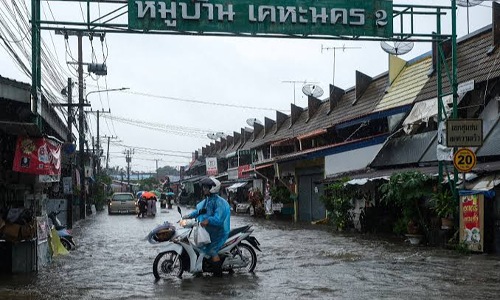
Heavy rains have triggered severe flooding across parts of Bangkok, Thailand, forcing nearly 4,900 residents to evacuate to shelters as floodwaters swept through roads and residential areas.
The flooding has disrupted movement across parts of the Thai capital, with motorists and pedestrians forced to navigate submerged roads and seek alternative routes.
SEE ALSO: NAFDAC Warns Nigerians As Fake Cowbell Milk Floods Market
According to the Bangkok Metropolitan Administration, about 52,000 households have been affected by the flooding, prompting authorities to declare a flood disaster and intensify emergency response efforts.
Emergency teams have been deployed to assist affected communities and move residents from vulnerable areas to safer locations as water levels rise.
Bangkok is accustomed to seasonal heavy rainfall, but intense downpours can overwhelm drainage systems, particularly in low-lying areas, resulting in widespread flooding and disruption.
Authorities are continuing to monitor affected locations while coordinating evacuations and other emergency measures.
For thousands of residents, the immediate priority remains securing safe shelter and protecting homes and livelihoods as authorities work to manage the situation and restore normal activities once the floodwaters recede.
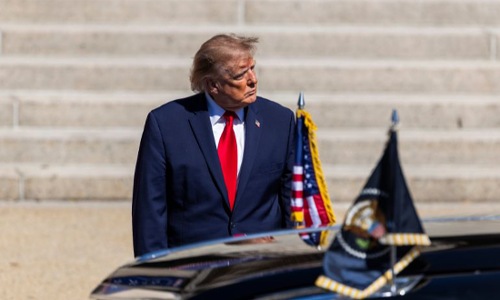
US President Donald Trump has explained his decision to reject Iran’s latest proposal to reopen the Strait of Hormuz, saying Tehran was seeking an agreement because it was losing revenue.
Speaking to reporters at the White House, Trump said Iran wanted to immediately reopen the strategically important waterway but argued that the proposal was not acceptable to his administration.
“They want to make a deal, and I think that’s fine. I like making a deal, too, but that deal would not be acceptable,” Trump said.
SEE ALSO: How the Strait of Hormuz Attack Could Trigger a Fresh Global Oil Shock
According to the US president, Iran’s push to reopen the strait was driven by the economic pressure it was facing.
“What they want to do is immediately open the Hormuz Strait. Do you know why? Because they are dying,” Trump said.
“You know why they’re dying? Because they have no money coming in, because they get their money from the Hormuz Strait.”
Trump also claimed that the US had established an unprecedented naval blockade against Iran, describing it as “a wall of steel.”
“So they outsmarted themselves. We put up the greatest blockade ever in military history. It’s a wall of steel,” he said.
“And guess what? They don’t have any money now because they wanted to close the strait.”
The Strait of Hormuz is a major global energy shipping route, and disruption to traffic through the waterway has significant implications for international oil markets and countries that depend on energy imports.
Trump’s remarks came amid continued tensions between Washington and Tehran over the reopening of the strategic waterway and negotiations involving Iran.





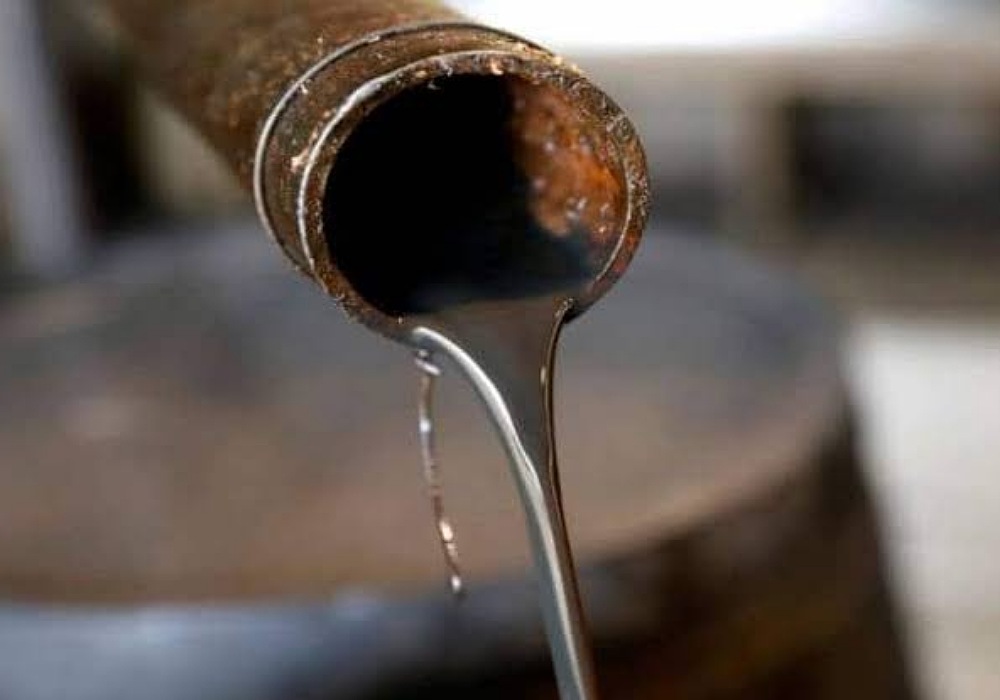
Petrol Price Hike Looms as Oil Hits $110/barrel

NIPCO Gas Licences, NNPC Ltd Management Face Reps Probe
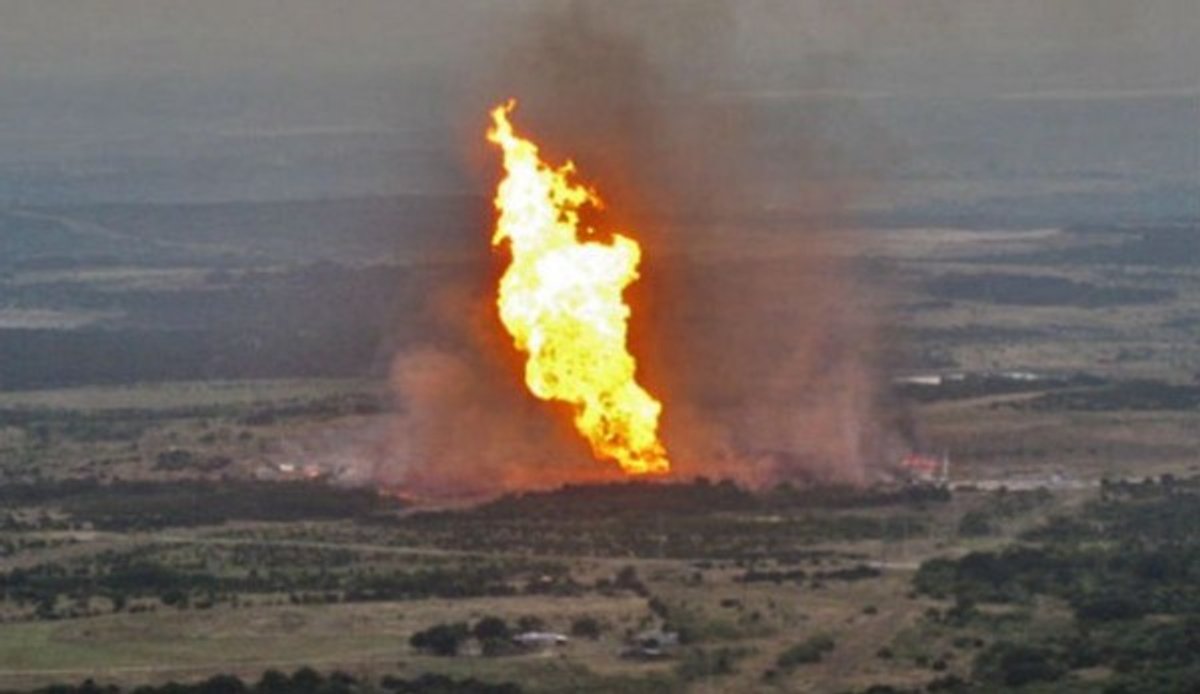
UNDC Assures on Readiness to Protect Oil, Gas Pipelines

JUST IN: Ex-Delta Governor Emmanuel Uduaghan Is Dead

Delta Begins ₦5bn Empowerment Scheme for 100,000 Beneficiaries
Alausa Hails Dangote Foundation’s Plan to Give Four Million Students IPO Shares

Trump’s Family Unveils New Cryptocurrency Platform

Senate Denies Receiving Petitions Against Tinubu’s Ambassadorial Nominees

Dangote Cement Lights Up Benue Host Communities With CSR Initiatives

Reps Recommend 3-year Jail Term For Aviation minister

Tems Sets New Record On Billboard Hot 100 Chart
