
Business
Russian shares fall rapidly after U.S. sanction

MOSCOW – On Friday, Russian shares fell sharply as investors took fright at tougher than expected U.S. sanctions against President Vladimir Putin’s inner circle over Moscow’s seizure of Crimea from Ukraine.
The United States added 20 names to its sanctions blacklist, including Kremlin banker Yuri Kovalchuk and his Bank Rossiya, oil and commodities trader Gennady Timchenko and the brothers Arkady and Boris Rotenberg, who are linked to big contracts on gas pipelines and the Sochi Olympics, as well as Putin’s chief of staff and his deputy, the head of military intelligence and a railways chief.
In one immediate consequence, U.S. credit card companies Visa and MasterCard stopped providing services for payment transactions with Russia’s SMP bank, owned by the Rotenberg brothers, the bank said.
President Barack Obama said Washington was also considering sanctions against key economic sectors including financial services, oil and gas, metals and mining and the defense industry, if Russia made military moves into eastern and southern Ukraine.
Diplomats said the mere mention of such a possibility would chill investment in Russia, charging an immediate price for Moscow’s action in Crimea and serving as a potential deterrent to going further.
The EU also extended its personal sanctions to another 12 middle-ranking Russian and Crimean officials.
Though the MICEX share index lurched about 3 percent lower when trade opened, Putin mocked Obama’s announcement of the visa bans and asset freezes on the money men and security officials who accompanied his rise from the mayor’s office in Saint Petersburg in the 1990s.
But he said Moscow should refrain from further retaliation against the United States for now.
Prime Minister Dmitry Medvedev, however, made clear that Russia would step up financial pressure on Ukraine.
He said the former Soviet republic should repay Moscow $11 billion under a gas supply contact that should be scrapped because it no longer applied.
Medvedev said the Kharkiv agreements under which Russia was to provide cheap gas in return for the lease of the Sevastopol naval base in Crimea were “subject to denunciation”, giving Russia a legal right to sue for money back from Ukraine.
Altogether, Kiev owed Moscow $16 billion, he added.
EU LEADERS MEETING
Russia’s parliament rushed to complete ratification of the annexation of the Black Sea region while European Union leaders met in Brussels to discuss steps to reduce their long-term dependence on Russian energy.
The Federation Council upper house approved a treaty on Friday incorporating Crimea into Russia after the State Duma lower house did so a day earlier.
The 28 EU leaders underlined their support for Ukraine’s new leadership, rejected as illegitimate by Moscow, by signing a political agreement with interim Prime Minister Arseniy Yatseniuk and promising financial aid as soon as Kiev reaches a deal with the International Monetary Fund.
The signing “recognizes the aspirations of the people of Ukraine to live in a country governed by values, by democracy and the rule of law, where all citizens have a stake in national prosperity,” European Council President Van Rompuy said at the ceremony. The accord contained no offer of EU membership.
The IMF is to report next Tuesday on advanced talks with Ukraine on a major loan program that would be linked to far-reaching reforms of the former Soviet republic’s shattered economy.
Polish Prime Minister Donald Tusk said the EU leaders were discussing using their collective bargaining power to stop Russia playing off European countries against each other in gas contacts. Up to now, each EU state has negotiated its own deal with Moscow, and some refuse even to share contract details with the European Commission or EU partners.
“We are working hard to make at least one step forward in the area of making community purchases of energy,” Tusk told reporters on arrival for the second day of an EU summit.
“In fact it is all about making the EU stronger as a whole versus energy exporters, so that we have a bigger bargaining power, so that we can act more as a community. In simple terms, it is about common purchases of energy.”
TUG OF WAR
An East-West tug-of-war has mounted since Russia occupied Crimea, home to its Black Sea fleet and a majority of ethnic Russians, following the overthrow of pro-Russian Ukrainian President Viktor Yanukovich by street protests last month.
Three months of protests were triggered by Yanukovich’s refusal to sign an association agreement with the EU, the political part of which was signed on Friday.
The EU leaders agreed to impose asset freezes and visa bans on 12 more mid-ranking Russian and Crimean officials and to consider wider economic sanctions if Russia further destabilizes the situation in Ukraine.
But they said Europe did not have a legal basis to extend the personal sanctions against Putin associates without proof of their direct involvement in the violation of Ukrainian sovereignty.
“Small measures in the EU are worth more than big measures in the United States,” a senior European official said, noting that EU trade with Moscow was 10 times the U.S. volume.
“It’s about cutting off Russia politically and diplomatically,” the official said, dismissing criticism that EU sanctions looked weaker than the U.S. measures.
Russian Deputy Finance Minister Alexei Moiseev said he expected no big immediate impact from western sanctions on Russia’s financial sector.
He also criticized the downgrading of Russia’s credit outlook by leading ratings agencies, saying there was no basis for the move. On Thursday, S&P and Fitch revised to ‘negative’ from ‘stable’ their long-term outlooks on Russia’s debt.
“Our creditworthiness has not changed, of course. We’re going to have a budget this year that will be better than expected,” Moiseev said.
In one glimmer of diplomatic progress, Russian Foreign Minister Sergei Lavrov said an agreement was near on sending a monitoring mission by the pan-European OSCE security watchdog. The EU had threatened to send its own monitors if Moscow continued to block a mandate at the Organisation for Security and Cooperation in Europe.
– REUTERS

Sahara Energy Geneva has highlighted the power of business collaboration to deliver lasting impact, with Mercy Ships Cargo Day celebrating more than $20 million raised over the past decade to support healthcare interventions in Africa.
More than 500 guests from over 150 shipping and trading companies gathered in Geneva recently for the 10th anniversary Gala of Mercy Ships Cargo Day, celebrating a decade of industry support for the international charity.
David Walker, Head of Chartering at Sahara Energy Geneva and Chairman of the Cargo Day Geneva Committee, joined industry leaders at the event, where he thanked the global shipping community, sponsors, media partners and Cargo Day committees in Geneva, London, Houston, Dubai and Singapore for supporting the initiative.
Cargo Day brings together charterers, shipowners, shipbrokers, and other shipping professionals who contribute through pledges, cargo commissions, and address commissions to support the work of Mercy Ships.
READ ALSO: 30 Nigerians Bag Postgraduate Scholarship from NNPC Ltd, Eni
Kola Motajo, Director, Sahara Geneva said Sahara’s involvement reflects the company’s belief in the ability of enterprise and partnerships to deliver impact beyond business.
“At Sahara, our focus is always on impact and lives transformed. Cargo Day demonstrates what is possible when businesses and individuals unite around a shared purpose. The $20 million milestone reflects the collective commitment of the global shipping community to improving healthcare in Africa. As Sahara looks Beyond XXX, we remain committed to building connections that create lasting value and possibilities for generations to come,” Motajo said.
Reflecting on Cargo Day’s growth, Walker said: “Ten years ago, we raised $300,000 and there were 70 people at the Gala. Today, we have more than 500 people coming from around the world to support such a great cause.”
Cargo Day 2025 raised more than $2.5 million, with 93 companies participating, including charterers, brokers, shipowners, and other partners.
Mercy Ships operates two hospital ships supporting patients in Africa with free life-changing surgeries, while also providing training and mentoring for local healthcare professionals. Cargo Day funding contributes to expenses associated with operating the hospital ships.
The 2026 Cargo Day campaign begins November 4 and will run through November and December, with companies participating through Mercy Cargoes, address commissions and pledges.

Up to 30 Nigerian graduates have bagged postgraduate scholarships to pursue further studies both locally and in the Diaspora.
According to the Nigerian National Petroleum Company Limited (NNPC Ltd) and Italian energy company, Eni have awarded postgraduate scholarships
The beneficiaries emerged from more than 3,000 applicants following assessments of their academic records and performances in a recently conducted computer-based test (CBT).
The awards are under the 2026/2027 Postgraduate Scholarship Scheme of Nigerian Agip Exploration Limited (NAE), an Eni subsidiary, on behalf of the NNPC-NAE Production Sharing Contract (PSC) partners.
In a statement, NAE’s Vice Chairman and Managing Director, Maurizio Pinna, said the initiative was designed to develop local talent and equip young Nigerians with skills relevant to the oil and gas industry. Pinna congratulated the beneficiaries, noting that the scholarships would enable them to pursue their academic ambitions and achieve their career goals.
According to NAE, the programme reflects its commitment to education, innovation and capacity building in Nigeria.
The company urged the beneficiaries to make good use of the opportunity by acquiring valuable knowledge and skills that would contribute to national development, particularly in the energy sector.
Ten of the awardees will undertake postgraduate studies in universities abroad, including Imperial College London, Robert Gordon University in Aberdeen, Newcastle University, the University of Aberdeen and the University of Hull in the United Kingdom.
READ ALSO: Navy Recovers 98,000 Litres of Suspected Stolen Crude in Rivers
The remaining 20 beneficiaries will study at Nigerian universities in fields including engineering, geosciences, petroleum and environmental technology, energy economics, renewable energy and energy transition.
Established in 2007, the NNPC-NAE PSC postgraduate scholarship scheme is part of the partners’ human capital development programme aimed at promoting specialised knowledge and addressing skills shortages in Nigeria’s deep offshore oil and gas operations.
NAE said 380 Nigerian graduates had benefited from the scheme since its inception, gaining knowledge and skills required by the oil and gas industry.
Beyond education, Eni, through NAE, has implemented sustainability initiatives in Nigeria covering healthcare, access to water, infrastructure and community empowerment.
Eni has operated in Nigeria since 1962 and currently has an equity production of about 55,000 barrels of oil equivalent per day. The company also holds a 10.4 per cent stake in Nigeria LNG.
NAE was incorporated in 1996 to manage Eni’s deep offshore exploration and production assets. It became the first oil and gas company in Nigeria to produce oil from the country’s deep offshore when its Abo floating production, storage and offloading (FPSO) vessel began operations in 2003.
The company has interests in nine offshore blocks in Nigeria, either as operator or co-venturer, including PML 102 and PML 103, where the Zabazaba-Etan fields are being developed.
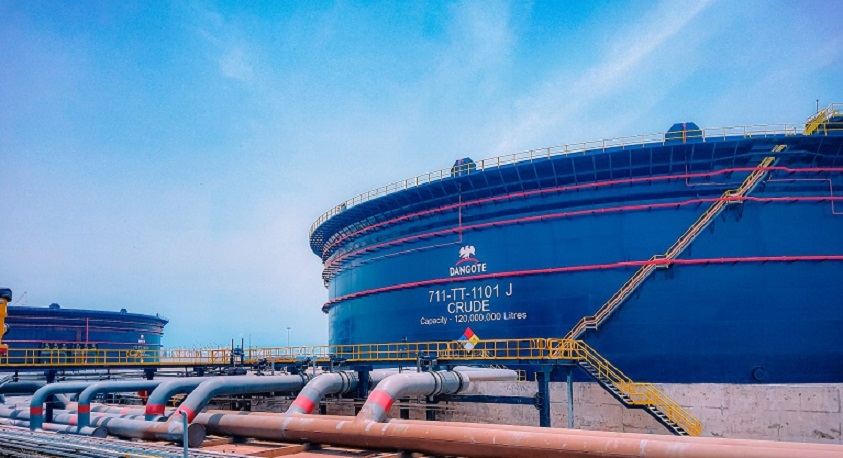
The Dangote Petroleum Refinery and Petrochemicals’ (DPRP) decision to seek leave to appeal a Federal High Court (FHC) judgment directing the Nigerian Midstream and Downstream Petroleum Regulatory Authority (NMDPRA) to continue issuing petroleum product import licences to three major oil marketers is being backed by the Energy Watchdog.
This was detailed in a statement by Martins Tayo, which considers the move as necessary to protect Nigeria’s domestic refining industry and reduce dependence on imported petroleum products.
The judgment, delivered on September 28, 2026, by Justice Inyang E. Ekwo in Suit No. FHC/ABJ/CS/1363/2026, ordered the NMDPRA to continue issuing import licences to Matrix Energy, AA Rano and AYM Shafa.
The Energy Watchdog argued that the ruling undermined the objectives of the Petroleum Industry Act (PIA) and threatened investments in domestic refining capacity.
“We completely reject and condemn in totality the judgment of the lower court. It is a deeply flawed decision that disregards the clear intent of the Petroleum Industry Act and the national interest in building a robust domestic refining industry,” the statement said.
READ ALSO: NNPC Petrol Discount: Oyedele Explains How Lower Margins Could Boost Profits
The group further cited a reported decline in petrol imports in the first quarter of 2026, alongside increased supplies from local refineries, particularly the Dangote facility, as evidence of the country’s growing domestic refining capacity.
It argued that sustaining import licences despite rising local production could undermine efforts to achieve self-sufficiency in refined petroleum products and weaken investor confidence in the sector.
According to the organisation, Dangote Refinery’s decision to seek leave to appeal as an interested party was timely, given the potential implications of the judgment for the future of Nigeria’s downstream petroleum industry.
“The lower court’s decision amounts to a judicial endorsement of continued importation irrespective of local capacity.
“We condemn it without reservation because it threatens to reverse the hard-won gains of the last few years,” Tayo stated
The Energy Watchdog maintained that the Petroleum Industry Act was designed to encourage investment in midstream and downstream infrastructure, warning that allowing the ruling to stand could send a negative signal to investors who have committed substantial resources to domestic refining projects.
The group urged the Court of Appeal to grant the DPRP leave to appeal and ultimately set aside the FHC’s order, describing the case as significant to Nigeria’s energy security and the development of its refining industry.
“Any judgment that forces the continued importation of fuel products when local refineries can supply the market is a setback for Nigeria.
“We condemn the lower court ruling in the strongest terms and fully support the appeal filed by Dangote Refinery,” the statement concluded, “The Court of Appeal must correct this error and reaffirm that the era of automatic import licences is over.”





Sahara Champions Global Shipping Collaboration for $20m Mercy Ships Healthcare Impact

30 Nigerians Bag Postgraduate Scholarship from NNPC Ltd, Eni

2027: ‘Algorithms Will Not Decide Election Results’, INEC Chairman Declares

Navy Recovers 98,000 Litres of Suspected Stolen Crude in Rivers

DPRP’s Appeal Against Fuel Import Licence Ruling Earns Stakeholder Backing

State Govs, Wike Endorse One-Party State, Join APC Campaign Council

Trump’s Family Unveils New Cryptocurrency Platform

Senate Denies Receiving Petitions Against Tinubu’s Ambassadorial Nominees

Dangote Cement Lights Up Benue Host Communities With CSR Initiatives

Reps Recommend 3-year Jail Term For Aviation minister

Tems Sets New Record On Billboard Hot 100 Chart
