
Business
Savannah Energy Reports Strong FY 2024 Unaudited Annual Results


Savannah Energy PLC, has announced its unaudited results for the year ended 31 December 2024.
The FY 2024 Unaudited Results show a Total Income of US$393.8 million, compared to US$289.8 million in FY 2023. This comprises of Total Revenues of US$258.9, compared to US$260.9 million in FY 2023, and other operating income of US$134.9 million, compared to US$28.9 million in FY 2023.
On the results, Andrew Knott, CEO of Savannah Energy, said, “I am pleased to announce our FY 2024 results today, in line with our trading statement released in January 2025, and to announce a 21% increase in 2P Reserves at our flagship Uquo field in Nigeria, bringing the total Reserves increase on the field since acquisition to 81%. This follows our announcement of a 29% increase in 2P Reserves on the Stubb Creek field in May 2025.
ALSO READ: World Environment Day 2025: Chevron Nigeria Limited’s Commitment to Environmental Protection
“2025 continues to be an exciting year for the business and we continue to work towards “ticking-off” the delivery of the nine focus area projects that we outlined at the beginning of the year, being: (1) securing a further increase in our rate of cash collections in Nigeria1; (2) completion of the refinancing of our principal Nigerian debt facilities; (3) completion of the planned acquisition of 100% of Sinopec International Petroleum Exploration and Production Company Nigeria Limited (the “SIPEC Acquisition”) which was achieved during Q1 2025; (4) commencement of the Stubb Creek expansion project; (5) the advancement of our Chad/Cameroon arbitration processes2; (6) the commencement of the safe and successful drilling of our planned Uquo development well and potential Uquo exploration well; (7) the potential advancement of our R3 East development in Niger3; (8) the refinement of our power sector business model; and (9) the delivery of further transformational acquisitions. I would also highlight that we anticipate achieving a strong increase in cash collections in 2025 (even when set against our long-term 13% CAGR4), with significant production capacity growth expected in 2026 once our heavy Uquo field investment programme is completed.”
The results also show that Savannah Energy achieved or exceeded its previously issued financial guidance for the year, with its total revenues as of December 31 2024 standing at US$ 258.9 million, 6% ahead of previously issued guidance of greater than US$245 million.
Likewise, its operating and administrative expenses for the year came to US$71.0 million, 5% below previous guidance of up to US$75.0 million, with its capital expenditure at US$23.1 million, well below the previously issued guidance of up to US$50 million due to the phasing of spend.
The company also reported a record cash collection of US$248.5 million in FY 2024, an over 21% increase on its FY 2023 cash collections of US$206 million. Its cash balances as of 31 December 2024 stood at US$32.6 million, compared to US$107.0 million as of 31 December 2023, and a net debt of US$636.9 million, compared to US$473.7 million by the end of December 2023. In the same vein, its gross debt as of 31 December 2024 was US$669.5 million, of which US$630.6 million (94%) was non-recourse to PLC.
Savannah’s FY 2024 Adjusted EBITDA stood at US$181.2 million, broadly in line with prior year’s US$184.1 million, while maintaining its Adjusted EBITDA margin at 70% which was 71% in FY 2023.
In terms of assets, its Total Group assets increased to US$1.6 billion as of 31 December 2024, compared to US$1.5 billion in 2023.
In terms of operations, the results show that its average gross daily production was 23.1 Kboepd, broadly in line with FY 2023’s 23.6 Kboepd, of which 88% was gas which was 91% in FY 2023.
The highlighted a 21% increase in 2P Reserves at its flagship Uquo field in Nigeria, bringing the total Reserves increase on the field since acquisition to 81%. This follows its announcement of a 29% increase in 2P Reserves on the Stubb Creek field in May 2025.
The report further showed that Savannah agreed and extended three gas contracts with customers in FY 2024 for a total of up to 105 MMscfpd (17.5 Kboepd), and realized an average sales price of US$4.68/Mscfe, an over 4% increase on the prior year average realised price of US$4.51/Mscfe.
Savannah reported that as of 31 December 2024, ₦332 billion of then ₦340 billion term facility signed by Accugas in January 2024 with a consortium of five Nigerian banks had been drawn down, with the resulting funds converted to US$, which, along with cash held, was used to partially prepay the existing Accugas US$ Facility, leaving a balance as at 31 December 2024 of approximately US$212.3 million.
It also reported that it signed a US$60 million debt facility in October 2024 with The Standard Bank of South Africa Limited and Stanbic IBTC Bank Limited to fund the SIPEC Acquisition.




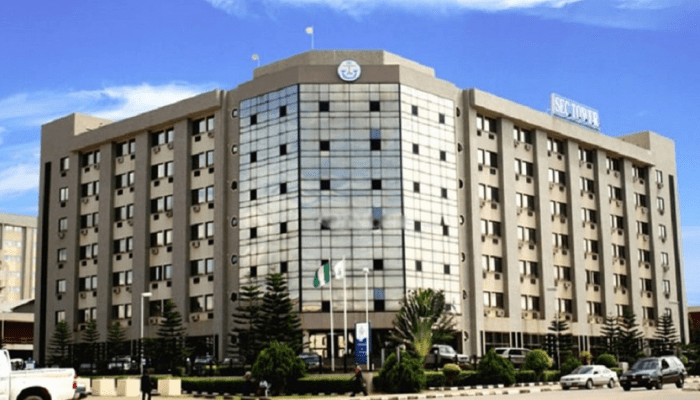
With members of the public showing much zeal to take up the equities made available by the Dangote Petroleum Refinery and Petrochemicals (DPRP), in its Initial Public Offering (IPO), financial institutions have warned against the activities of scammers.
On Tuesday, they counselled investors against disclosing sensitive banking information to parties claiming to facilitate the purchase of the refinery’s shares.
This is coming after the IPO drew about N1.5 trillion in subscriptions within the first 6 hours of trade on the floor of the Nigerian Exchange Limited (NGX), signaling extraordinary investor appetite for what could be one of Africa’s biggest share sales after the likes of MTN.
READ ALSO: Smart Filling Stations: NNPC Ltd Assuages Job-loss Worries
The rush by Nigerians to buy shares in the DPRP overwhelmed some local investment and trading platforms, with investors reporting difficulties accessing the apps as the IPO opened last Monday.
The unprecedented demand followed the commencement of the N2.15 trillion share offer by the Dangote Industries Limited (DIL), which sought to sell 4.1 billion shares in the refinery at N525 per share.
Urging Nigerians to participate, Chief Executive, Dangote Industries Limited, Aliko Dangote, assured investors that the public offering presents a compelling opportunity for strong returns and sustainable wealth creation.
Following the announcement, the Securities and Exchange Commission (SEC) in a public statement, cautioned prospective investors to be vigilant and use only approved channels when subscribing to the IPO.
The Commission confirmed that it had approved the refinery’s public offer and urged investors to ensure that all applications and payments are processed exclusively through authorised receiving agents, approved subscription platforms, and designated channels.
In the same vein, banks urged customers to be particularly careful with unsolicited messages, calls and social-media offers promising access to shares or preferential allocations.
They pointed out that legitimate banks will not request highly sensitive information such as a customer’s full card number, personal identification number (PIN), card verification value (CVV) or one-time password (OTP) through unsolicited calls, text messages or online communications.
In a notification sent to its customers, Access Bank, said, “Buying the Dangote Refinery IPO? Remember, Access Bank will never ever ask for your full card number, PIN, CVV or OTP.
If you have shared the above information with anyone, please dial *901*911# to block your account”.
The warning highlights a familiar tactic used by financial fraudsters: exploiting public interest in a major corporate transaction to make fraudulent requests appear legitimate.
Scammers may present themselves as bank officials, investment advisers, brokers or representatives involved in the share offering. They can use official-looking logos, convincing language and references to well-known companies to persuade potential victims that a transaction is genuine.
Banks are therefore advising customers to independently verify investment opportunities before transferring money or providing personal information. Investors should rely on official communications and established financial channels rather than links or contact details supplied through unexpected messages.
The DPRP, one of Africa’s most prominent industrial projects, has generated significant interest in Nigeria’s capital markets and broader business community. Any potential share offering connected to the company is likely to attract considerable attention from retail and institutional investors.
That visibility, however, also creates an opportunity for criminals.
Financial institutions say customers who have already disclosed sensitive banking information should act immediately rather than wait to determine whether their accounts have been compromised. Promptly contacting the bank and taking steps to block or secure an account can help limit potential losses.
The latest warnings also underscore the wider challenge facing Nigeria’s financial sector as digital banking and mobile transactions become increasingly common. Fraudsters have increasingly sought to exploit moments of heightened public interest, particularly when consumers are eager to participate in investments that appear to offer significant returns.
For prospective investors, the message from banks is straightforward, enthusiasm for an investment opportunity should not override basic security precautions.

In a move perceived as an important milestone in the company’s journey to accelerate its Beyond XXX vision and drive the next phase of growth, innovation, and impact, Sahara has announced the appointment of Chidilim Menakaya as Managing Director.
Menakaya is a seasoned transformation and strategy executive, bringing more than two decades of leadership experience spanning Africa, Asia, Europe, and the Middle East.
Prior to her appointment, Menakaya served as Director of the Sahara Foundation, where she led the company’s sustainability and social impact agenda.
READ ALSO: Olaniwun Ajayi Weighs In on Dangote Refinery IPO
Under her leadership, the Foundation expanded the reach of Sahara’s EXTRApreneurship model, strengthened strategic partnerships, and deepened socio-economic impact across communities in the company’s locations.
Widely respected for her collaborative leadership style, strategic insight, and ability to build high-performing teams, she has consistently demonstrated a commitment to developing people, driving innovation, and delivering measurable outcomes.
Commenting on the appointment, Executive Director, Sahara, Ade Odunsi, said the decision reflects Sahara’s confidence in purposeful leadership and its commitment to building the future from within.
“For over three decades now we have remained committed to our vision of bringing energy to life responsibly. Beyond XXX represents our commitment to shaping the future through bold thinking, innovation, sustainability, and shared value creation. Chidilim’s appointment reflects these aspirations. We are confident that under her leadership, Sahara will continue to expand the frontiers of impact and create sustainable value for stakeholders across our markets.”
Odunsi noted that the appointment signals Sahara’s determination to build a resilient, future-focused enterprise capable of thriving in an increasingly dynamic global environment.
As Managing Director, Menakaya will provide strategic leadership for steering Sahara’s Beyond XXX agenda, enhancing stakeholder value, and positioning Sahara for continued growth and global relevance.
Menakaya holds executive and professional qualifications from leading global institutions, including London Business School, INSEAD, and Manchester Business School. She is also a certified Human Resources Business Partner, Transformation and Reputation Manager, and Prosci-certified Change Management Practitioner.
The Dangote Petroleum Refinery and Petrochemicals FZE (DPRP) Initial Public Offering (IPO), has been described as an important precedent in the Nigerian capital market.
Sharing the view in a statement on Monday, Olaniwun Ajayi LP also expressed its pleasure at having advised on the IPO while acting as Joint Solicitor to the transaction.
According to a Forbes report on Monday, Africa’s richest man, Aliko Dangote, saw his fortune rise to $51.3 billion following the launch of the refinery’s highly anticipated IPO on the Nigerian Exchange (NGX), amid strong investor demand on the opening day.
READ ALSO: DPRP IPO: Dangote Rings Opening Bell at NGX
The transaction was brought to the market by a consortium of professional advisers, including Olaniwun Ajayi LP, which acted as the Joint Solicitors to the issue.
In that capacity, the firm advised Dangote Refinery on the legal aspects of the offer, from transaction structuring and regulatory engagement through to launch
According to the law firm, the transaction is expected to be the largest IPO in both Nigeria and Africa, marking the first public offer of shares by a Nigerian Free Zone Enterprise (NFZE) in Nigeria.
The law firm stated that the transaction matters beyond the deal as it “establishes an important precedent for capital raising by Free Zone Enterprises”, while contributing to the continued development of the Nigerian capital market.
It added that the proceeds are intended to support DPRP’s long-term growth strategy, including the expansion of its refining and petrochemicals capacity.
The law firm stressed that the offer broadens public participation in one of Africa’s most significant industrial assets.





2027: Sowore Disowns Involvement in Utomi-Led Single-Candidate Talks

Chelsea Confirm Major Ownership Change as Clearlake Takes Full Control

EFL Cup Fourth Round: Liverpool Face Chelsea as Arsenal, Newcastle Discover Opponents

EFCC Arrests Enugu Estate MD Over Alleged N128m Land Scam

Borgu: ‘We Must Never Normalise the Killing of Nigerians’ — Peter Obi

Atiku Meets Aisha Buhari, Says Nigeria Must Become Affordable Again

Trump’s Family Unveils New Cryptocurrency Platform

Senate Denies Receiving Petitions Against Tinubu’s Ambassadorial Nominees

Dangote Cement Lights Up Benue Host Communities With CSR Initiatives

Reps Recommend 3-year Jail Term For Aviation minister

Tems Sets New Record On Billboard Hot 100 Chart

Hmm it appears like your website ate my first comment (it was extremely long) so I guess I’ll just sum it up what I submitted and say, I’m thoroughly enjoying your blog. I as well am an aspiring blog blogger but I’m still new to everything. Do you have any tips for novice blog writers? I’d definitely appreciate it.
2if5bm
Outstanding post, you have pointed out some fantastic points, I as well think this s a very superb website.
With havin so much content and articles do you ever run into any problems of plagorism or copyright violation? My site has a lot of exclusive content I’ve either authored myself or outsourced but it appears a lot of it is popping it up all over the web without my agreement. Do you know any techniques to help prevent content from being stolen? I’d certainly appreciate it.
Thanks , I have just been looking for information about this subject for a long time and yours is the greatest I’ve came upon so far. But, what about the bottom line? Are you positive in regards to the source?
This is the right blog for anyone who wants to find out about this topic. You realize so much its almost hard to argue with you (not that I actually would want…HaHa). You definitely put a new spin on a topic thats been written about for years. Great stuff, just great!
Would love to constantly get updated great website! .
Hello! I just wish to give an enormous thumbs up for the great information you may have right here on this post. I will be coming back to your blog for more soon.
I like the efforts you have put in this, appreciate it for all the great posts.
Have you ever considered writing an ebook or guest authoring on other blogs? I have a blog based upon on the same topics you discuss and would love to have you share some stories/information. I know my visitors would appreciate your work. If you are even remotely interested, feel free to shoot me an e mail.
It’s actually a cool and helpful piece of information. I’m glad that you shared this useful info with us. Please keep us up to date like this. Thanks for sharing.
I was suggested this web site by means of my cousin. I’m no longer sure whether this publish is written by him as no one else understand such exact approximately my problem. You’re wonderful! Thanks!
Howdy! Would you mind if I share your blog with my facebook group? There’s a lot of folks that I think would really appreciate your content. Please let me know. Thank you
What i do not realize is actually how you’re not actually much more well-liked than you might be right now. You are so intelligent. You realize thus significantly relating to this subject, produced me personally consider it from so many varied angles. Its like women and men aren’t fascinated unless it is one thing to accomplish with Lady gaga! Your own stuffs nice. Always maintain it up!
I dugg some of you post as I thought they were invaluable extremely helpful
I like this website so much, bookmarked.
Thanks for every other informative website. Where else may I get that type of information written in such a perfect means? I have a project that I’m just now running on, and I have been at the look out for such info.
I haven’t checked in here for some time since I thought it was getting boring, but the last few posts are good quality so I guess I will add you back to my daily bloglist. You deserve it my friend 🙂
Attractive section of content. I just stumbled upon your website and in accession capital to assert that I get in fact enjoyed account your blog posts. Anyway I will be subscribing to your augment and even I achievement you access consistently quickly.
Wow that was unusual. I just wrote an incredibly long comment but after I clicked submit my comment didn’t show up. Grrrr… well I’m not writing all that over again. Regardless, just wanted to say great blog!
This really answered my problem, thank you!
Hello! I just would like to give a huge thumbs up for the great info you have here on this post. I will be coming back to your blog for more soon.
It is in point of fact a great and useful piece of info. I am glad that you just shared this helpful information with us. Please keep us up to date like this. Thank you for sharing.
Very interesting points you have remarked, thankyou for putting up.