
Energy
Senate Approves Abe as Chairman, NUPRC Board

The Nigerian Upstream Petroleum Regulatory Commission (NUPRC) would soon have a new chairman.
Biztellers reports that the Senate on Monday cleared former lawmaker representing Rivers South-East Senatorial District, Magnus Abe, for appointment as Chairman of the Board of the NUPRC.
Abe, a political ally of the Minister of the Federal Capital Territory, Nyesom Wike, was screened by the Senate Committee on Petroleum Resources (Upstream) before receiving the approval of lawmakers.
ALSO READ: NUPRC Shifts Focus to Dormant Oil Licences
The committee, chaired by Senator Eteng Jonah Williams, who represents Cross River Central Senatorial District, screened nominees forwarded by President Bola Tinubu for appointment as chairman and non-executive commissioners of the commission.
In line with the Senate’s tradition for former lawmakers appearing for confirmation, Abe was asked to “take a bow and go,” having served two terms in the National Assembly.
After his appearance before the committee in Room 117, Abe told journalists that the surge in global oil prices triggered by tensions involving Iran and the United States presents both challenges and opportunities for Nigeria.
On the impact of the escalating global crisis on Nigeria’s fuel prices, Abe described the situation as a worldwide challenge rather than a purely Nigerian problem.
“This is a very difficult time for the entire planet. It’s not just a Nigerian challenge; it is a global challenge,” he said.
According to him, while the conflict has pushed up the cost of fuel and created hardship for Nigerians, the increase in oil prices could also translate into higher national revenues.
“You must look at the balancing act. Prices will definitely be affected, but revenues from our oil sales will also be positively affected. There will be some measure of balance in what will happen,” he added.
Abe called for global prayers for an end to the conflict, noting that beyond the economic implications, the crisis was claiming human lives.
“Human beings are actually dying. Our prayers should be that this conflict, which in my opinion is unnecessary and harmful to the entire world, should quickly come to an end so that we can begin to recover,” he said.
The 2023 governorship candidate of the Social Democratic Party, however, urged Nigerians to see the situation as an opportunity to strengthen the country’s energy sector, particularly in gas development and marginal oil field investments.
“If the price of oil is going up, it allows us to invest in marginal fields that otherwise would not have been profitable. If gas supplies are being disrupted globally, this is an opportunity for Nigeria to optimise its own gas production, which will create jobs and new opportunities,” he said.
Abe also expressed gratitude to the president for nominating him to serve on the regulatory body’s board.
“I am sincerely grateful to Mr President, the Commander-in-Chief of the Armed Forces, Bola Tinubu, for considering me and other members of the board worthy of service to this country and me.
“I see it as a great privilege and an opportunity to contribute to the Renewed Hope Agenda,” he stated.
He assured Nigerians that the incoming board would work closely with stakeholders to strengthen the regulatory environment in the petroleum industry.
According to him, the framework provided by the Petroleum Industry Act offers solutions to several long-standing problems in the sector, including oil theft and community agitation.
“With the Host Communities Fund, the host communities themselves are now stakeholders. They benefit from production, and nobody destroys what he is eating,” Abe said.
Earlier during the screening, one of the nominees for non-executive commissioner of the NUPRC board, Paul Jezhi, identified discrepancies in crude oil measurement at custody transfer points as a long-standing challenge in the sector.
He told lawmakers that the deployment of modern metering technology could significantly reduce the problem.
“The discrepancies in crude oil at the custody point have been a long-time issue. But modern meters can now record measurements within a margin of plus or minus one to five, and when such meters are deployed, these discrepancies will largely disappear,” he said.
Jezhi also recommended the adoption of drones and satellite technology to strengthen surveillance against oil theft and pipeline vandalism, particularly in the Niger Delta.
“The deployment of drones and satellite surveillance will also help curb oil theft and pipeline vandalism, especially in the Niger Delta,” he added.
On January 5, 2026, President Tinubu had earlier written to the Senate seeking confirmation of 21 nominees for the boards of the Nigerian Upstream Petroleum Regulatory Commission and the Nigerian Midstream and Downstream Petroleum Regulatory Authority.
In the letter, the president nominated Abe as chairman of the NUPRC board.
Other nominees for the NUPRC board include the past chairman of the Trade Union Congress in Kaduna, Paul Jezhi, and a former deputy director at the defunct Department of Petroleum Resources, Sunday Babalola, which was dissolved following the enactment of the Petroleum Industry Act in 2021.





The Nigeria LNG Limited has inducted 103 trainees into its Vocational Innovation Business and Empowerment Scheme, marking a new cohort in the company’s empowerment programme.
This was revealed in a statement issued in Port Harcourt, Rivers State, on Monday by the NLNG Manager, Corporate Communication and Public Affairs, Anne-Marie Palmer-Ikuku.
The induction, held in Port Harcourt on Monday, marked a significant milestone in the scheme’s ongoing commitment to skills development and sustainable economic empowerment.
The newly inducted trainees will undergo a structured series of capacity-building sessions, culminating in a competitive pitching phase during which the most viable business proposals will be selected based on clearly defined evaluation criteria.
ALSO READ: Senate Approves Abe as Chairman, NUPRC Board
Simultaneously, 26 beneficiaries from the previous cohort successfully completed their training and graduated from the programme, having received grant support in the preceding year.
One year after receiving support, several of the graduates have strengthened their operations, enhanced financial management practices, expanded their customer base, and transitioned from early-stage concepts to more structured, revenue-generating enterprises.
Some have scaled up production and diversified their service offerings, demonstrating measurable business growth and improved operational stability.
During the induction, the General Manager, External Relations and Sustainable Development, Sophia Horsfall, said, “The VIBES programme reflects NLNG’s long-standing commitment to sustainable development in our host communities.
“Through targeted capacity building, access to innovative support, and enterprise development opportunities, we are strengthening the local economy across our host and pipeline communities.
“The graduation of one cohort and the induction of another showcase the continuity of our investment in youth empowerment, innovation, and enterprise development as key drivers of inclusive growth.”
She added that VIBES represented a strategic intervention aligned with NLNG’s broader sustainable development objectives, saying, “The programme is designed to cultivate entrepreneurial capability and strengthen the networks required for emerging business leaders and community change-makers to thrive within their communities.”
Also speaking at the event, the Manager, Community Relations and Sustainable Development, Yemi Adeyemi, described the milestone as rewarding, noting the progress made by the graduating cohort.
Adeyemi said, “When we supported them last year, it was not only with training but also with grants to help strengthen their businesses.
“A year later, we can see the difference — businesses are expanding, ideas have moved beyond the planning stage, and the beneficiaries are more confident in managing their ventures. That is the essence of VIBES: practical support that helps people make real progress.”
It was gathered that VIBES is NLNG’s economic empowerment programme designed to equip young entrepreneurs with the tools, knowledge, and support required to build sustainable livelihoods. Participants receive practical training in financial management, marketing, business strategy, and foundational legal principles, complemented by mentorship and advisory guidance from experienced professionals.
Economic empowerment remains a key component of NLNG’s broader sustainable development efforts, alongside education, infrastructure, and healthcare. Through VIBES, the company aims to support more young entrepreneurs in building viable businesses, creating economic value, and contributing meaningfully to the development of its host and pipeline communities across Rivers State.
The era of oil companies holding on to prospecting licences without developing the assets is over.
Chief Executive of the Nigerian Upstream Petroleum Regulatory Commission (NUPRC), Oritsemeyiwa Eyesan, made the declaration, adding that the regulator is now strictly enforcing the “drill-or-drop” provision contained in the Petroleum Industry Act (PIA), compelling operators to either commence exploration activities or relinquish idle oil blocks.
She made this known while receiving a delegation from the Petroleum Directorate of Sierra Leone at the Commission’s headquarters in Abuja.
ALSO READ: SERAP Asks Tinubu To Probe N5.9bn Spent On NNPC Rebranding
According to her, the enforcement of Section 94 of the PIA has fundamentally changed the landscape of Nigeria’s upstream sector by eliminating the long-standing practice where operators held licences for decades without developing the assets.
She explained that the new regime has begun to attract more serious investors into Nigeria’s upstream sector, particularly in the on-going 2025 licencing round, which is expected to boost the country’s petroleum reserves and unlock new exploration opportunities.
“The PIA has opened opportunities for both small and big players because there is now a drill-or-drop provision in the Act. In the past, we had operators who held licences for as long as 20 years and sat on those assets without doing anything. That era is now over,” Eyesan said.
She noted that the enforcement of the provision has expanded the pool of available assets and strengthened the Commission’s capacity to organise more frequent bid rounds, with the possibility of conducting annual licencing rounds going forward.
Eyesan also expressed satisfaction with the level of interest shown by investors in the 2025 licencing round, describing the number of applicants that participated in the pre-qualification stage as impressive.
She explained that the licensing round offers 50 oil blocks but the guidelines restrict each company, whether bidding independently or as part of a consortium, to a maximum of two blocks, a measure designed to encourage wider participation and promote fairness in the allocation process.
Earlier, the Director-General of the Petroleum Directorate of Sierra Leone, Foday Mansaray, said the delegation came to Nigeria to understudy the country’s petroleum regulatory framework and draw lessons that could help strengthen Sierra Leone’s hydrocarbon sector.
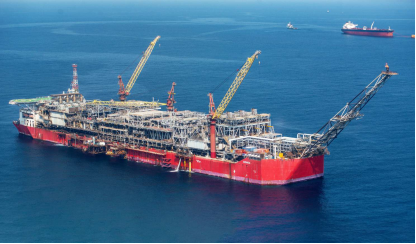
The Shell Nigeria Exploration and Production Company Limited (SNEPCo) has completed the turnaround maintenance on the Bonga Floating Production, Storage and Offloading (FPSO) vessel, leading to resumption of production at Nigeria’s premier deepwater field on March 6, 2026.
Biztellers reports that the project was delivered 11 days ahead of schedule and without any safety incident, reinforcing SNEPCo’s longstanding commitment to operational excellence and asset integrity.
“Completing the turnaround safely and ahead of schedule is a testament to the dedication and professionalism of our Nigerian workforce and the helpful support of our partners,” SNEPCo Managing Director Ronald Adams said. “The achievement not only secures the long‑term integrity of the Bonga FPSO but also positions us strongly for the successful delivery of the Bonga North project, which will leverage the improved reliability of the FPSO.”
The exercise which began on February 1, 2026, highlights SNEPCo’s leading role in advancing deep‑water expertise in Nigeria. Of the 55 companies involved in the execution, 43 were wholly Nigerian. Additionally, eight of the 12 international service providers maintain operational bases in Nigeria, contributing to knowledge transfer and increased local investments.
More than 1,000 personnel worked offshore during the turnaround, with over 95% being Nigerians involved in maintenance, engineering, operations, inspection and construction. Thousands more supported activities from onshore locations, reflecting the depth of Nigerian capability in offshore oil and gas operations.
Adams added: “We acknowledge the support of several stakeholders towards the successful execution of the exercise, including the NNPC Upstream Investment Management Services (NUIMS), the Nigerian Upstream Petroleum Regulatory Commission (NUPRC), the Nigerian Content Development and Monitoring Board (NCDMB) and our partners.”






NLNG Inducts 103 Trainees Into Empowerment Scheme
NCDMB Sponsored Oracle Primavera P6 Training Underway In Rivers State

Senate Approves Abe as Chairman, NUPRC Board

Tinubu Swears in Taiwo Oyedele as Finance Minister

Burna Boy Breaks Record as Africa’s Top-Grossing Concert Artist

BREAKING: Chelsea Hit With £10.75m Fine, Transfer Ban

Trump’s Family Unveils New Cryptocurrency Platform

Reps Recommend 3-year Jail Term For Aviation minister

Dangote Cement Lights Up Benue Host Communities With CSR Initiatives

Senate Denies Receiving Petitions Against Tinubu’s Ambassadorial Nominees

Tems Sets New Record On Billboard Hot 100 Chart
