
NEWS
Senate Passes 2024-2026 MTEF, FSP, Orders Probe Into NNPC’s Fund Allegations

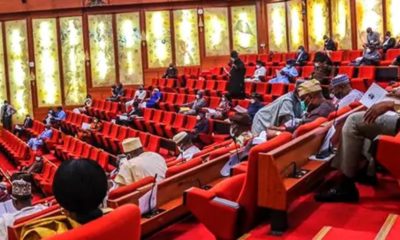
The Nigerian Senate has approved the 2024-2026 Medium-Term Expenditure Framework (MTEF) and Fiscal Strategy Paper (FSP), outlining the Federal Government’s financial blueprint for the coming years.
This followed the presentation of a report by Senator Mohammed Sani Musa (APC, Niger East), Chairman of the Joint Committees on Finance, National Planning, and Economic Affairs.
During the session, the Senate also directed its Committees on Finance and Petroleum, alongside the Gas Committee, to investigate allegations of withheld funds by the Nigerian National Petroleum Corporation (NNPC).
READ ALSO: 26 Injured As Protests Against Georgian Gov’t Intensify
These allegations include NGN 8.48 trillion in petrol subsidies and $2 billion (NGN 3.6 trillion) in unpaid taxes, as highlighted in reports from the Nigeria Extractive Industries Transparency Initiative (NEITI) and the Revenue Mobilization, Allocation, and Fiscal Responsibility Commission.
This move follows confirmation from the Office of the Auditor-General of the Federation, which stated it had received the necessary documentation to verify the N2.7 trillion fuel subsidy claim made by the NNPC against the government.
The Senate also approved a projection of 1,400 Naira to the US Dollar for 2025-2027, with provisions for review in early 2025 based on prevailing economic conditions.
Any surplus from the exchange rate will be directed towards debt servicing.
In his address, Senator Musa also urged the government to reduce petrol prices, pointing to the imminent revival of the Port Harcourt Refinery.
“With the functioning of our refineries, the demand for Forex will drop,” said Senator Adeola Olamilekan (APC, Lagos West), Chairman of the Senate Committee on Appropriations. “With the CNG initiative, Nigerians will have an option. For example, if you leave Benin to Lagos, the cost of fuel is about 130,000 Naira, but with CNG, you can’t use more than 48,000 Naira.”
Senator Olamilekan also highlighted the CNG program as central to reducing foreign exchange dependence, noting its potential to alleviate pressure on the national currency.
Additionally, the Senate raised concerns about the high recurrent-to-capital ratio and emphasized the need to support the country’s manufacturing sector to achieve the MTEF’s projections.
Senator Yahaya Abdullahi (PDP, Kebbi North) echoed these concerns, calling for more attention to the manufacturing industry as a means to drive sustainable economic growth.
The Senate further adopted inflation projections of 15.75% for 2025, 14.21% for 2026, and 10.04% for 2027, as part of its review of the economic outlook.
The proposed 2025 Federal Government budget, according to the MTEF, includes a total expenditure of N47.9 trillion, with N34.82 trillion earmarked for retention.
New borrowings, both domestic and foreign, are estimated at N9.22 trillion. Capital expenditure is set at N16.48 trillion, while statutory transfers are projected at N4.26 trillion, with sinking funds totaling N430.27 billion.



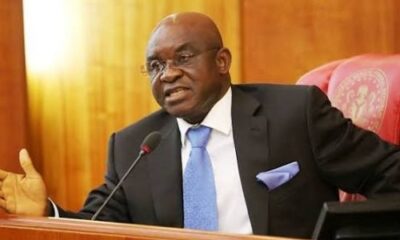




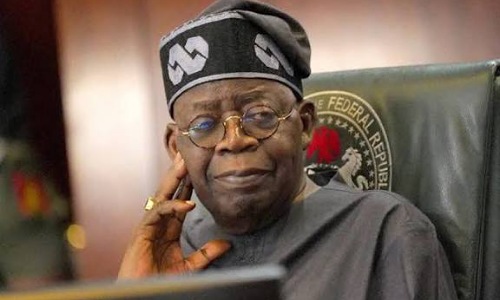
President Bola Ahmed Tinubu has reacted to the death of former Kogi State Governor, Alhaji Ibrahim Idris, who died on Sunday at the age of 77.
Tinubu expressed deep sorrow over the former governor’s death and extended his heartfelt condolences to the Idris family, the government and people of Kogi State, as well as his friends, associates and political colleagues.
The President’s reaction was contained in a statement issued on Monday, September 21, 2026, by his Special Adviser on Information and Strategy, Bayo Onanuga.
SEE MORE: Tinubu Sets October 1 Deadline for Lower Transport Fares Nationwide
Tinubu described Idris’ death as a significant loss to Kogi State and Nigeria, noting that the former governor devoted a substantial part of his life to public service and the development of the state.
Ibrahim Idris served as Governor of Kogi State from 2003 to 2011.
According to the President, Idris’ administration recorded interventions in infrastructure, education, healthcare and other critical sectors.
Tinubu also acknowledged the late former governor’s contributions to Nigeria’s democratic development and his many years of engagement in public affairs.
The President said: “Alhaji Ibrahim Idris was a committed public servant whose years in office formed an important chapter in the political and developmental history of Kogi State.
“His passing is a painful loss to his family, Kogi State and Nigeria. At this difficult moment, we must remember and honour his contributions to the growth of his state and our nation.
“I extend my deepest condolences to his family and the people of Kogi State. May Almighty Allah forgive his shortcomings, accept his good deeds and grant him Aljannah Firdaus.”
Tinubu further prayed that Almighty Allah would grant the deceased’s family the strength and fortitude to bear the loss.

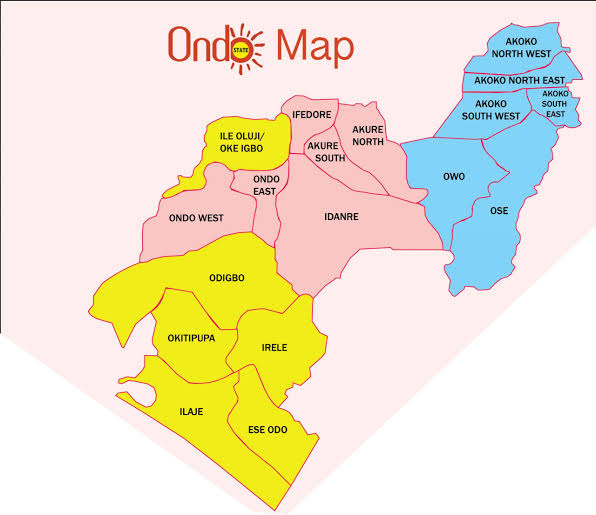
In the bid to promote wealth creation and expose youths to investment opportunities, the Ondo State Government has unveiled plans to buy shares for 500 young entrepreneurs in the state in the Dangote Group.
Ondo State Governor, Lucky Aiyedatiwa, made the disclosure on Saturday at the 2026 ONDEA Entrepreneurs Summit in Akure, with the theme: “Positioning entrepreneurs for emerging opportunities”, where he also launched the Lucky Light Initiative, a programme designed to provide reliable solar power support for 1,000 small businesses across the state’s 18 local government areas.
READ ALSO: NMDPRA Points to PIA for Price Control Lapses
The governor also unveiled an N80 million grant package for 20 entrepreneurs under the Ondo State Entrepreneurship Agency (ONDEA) My IDEA initiative, with each beneficiary receiving N4 million alongside business support, mentorship and international business exposure opportunities.
Aiyedatiwa further promised to purchase shares in the Dangote Group of Companies for 500 young entrepreneurs in Ondo State as part of efforts to expose them to investment opportunities and encourage wealth creation.
He said the initiatives form part of his administration’s vision to transform Ondo from a civil service-driven economy into an entrepreneurship and innovation hub.
According to him, the state is deliberately building an entrepreneurial ecosystem that connects ideas to skills, skills to businesses, businesses to finance and businesses to markets.
“Our fundamental objective is to move from simply producing raw materials to processing, packaging, branding and exporting value-added products. We must build enterprise not only for markets within Ondo State, but other parts of Nigeria and ultimately to the world,” Aiyedatiwa stated.
He said ONDEA has become a strategic platform for opening opportunities for entrepreneurs through business formalisation, training, equipment support and enterprise development.
The governor noted that the number of beneficiaries under the ONDEA My IDEA programme was increased from 10 to 20 to accommodate more innovative entrepreneurs.
On the Lucky Light Initiative, Aiyedatiwa said the programme would provide clean and affordable energy to small businesses to enhance productivity and reduce operating costs.
“Lucky Light is an initiative designed specifically to support 1,000 small businesses with reliable, clean and affordable power. It is not a household electrification programme; it is an economic intervention designed to power businesses across all 18 Local Government Areas of Ondo State,” he said.
While speaking during the summit, the Minister of Finance and Coordinating Minister of the Economy, Mr Taiwo Oyedele, represented by his Special Adviser, Toba Oyedele, said entrepreneurs would be central to the Federal Government’s ambition of building a $1 trillion economy by 2030.
He urged entrepreneurs to take advantage of emerging opportunities created by economic reforms, innovation and investment initiatives.
Speaking on the impact of the summit, the Special Adviser to the Governor on Entrepreneurship, Innovation and Investment, Dr Summy Smart Francis, said the event demonstrated the state’s commitment to entrepreneurship and innovation.
“We received over 2,703 applications. We have three levels of screenings and they get to the final judges where we identify the 20 ideas that have the strategy to be able to add economic impact to the state. Each of them was given N4 million and they are entitled to a business trip outside the country,” Francis said.
Also speaking, media entrepreneur and former Managing Director of TVC Entertainment, Morayo Afolabi-Brown, called for increased investment in the Southwest, saying the region possesses vast opportunities beyond Lagos and should attract greater economic attention.
Domestic pricing of refined petroleum products in Nigeria is strictly controlled by market forces under the Petroleum Industry Act (PIA) 2021.
The Nigerian Midstream and Downstream Petroleum Regulatory Authority (NMDPRA) made the clarification in a statement citing Section 205(1) of the PIA, which provides that wholesale and retail prices of petroleum products shall be based on unrestricted free-market pricing conditions.
The Authority also quoted Sections 205(2)–(4) of the Act, which restrict government intervention in pricing strictly to exceptional circumstances.
READ ALSO: Indonesia’s Pertamina Leads Foreign Interest in Nigeria’s 2026 Oil Licensing Round
However, it added that Section 216 empowers the Authority to prevent anti-competitive practices, price-fixing and the abuse of market dominance.
While acknowledging the financial strain and difficulties many Nigerians are experiencing following the recent rise in Premium Motor Spirit (PMS) pump prices, the Authority expressed concern over the increase in fuel prices and its effect on households, transport workers and businesses across the country.
The statement, which provided clarity on the statutory framework governing its operations and the active steps being taken to protect consumers, stated:
“Pursuant to the Petroleum Industry Act (PIA) 2021, Section 205(1) provides that wholesale and retail prices of petroleum products shall be based on unrestricted free-market pricing conditions. The Authority does not fix pump prices or issue administrative price templates.
“Sections 205(2)–(4) restrict government intervention in pricing strictly to exceptional circumstances where there is formal evidence of declared market failure. No such market failure has been declared. Section 216 empowers the Authority to prevent anti-competitive practices, price-fixing and the abuse of market dominance.
“To address supply stability and curb illegal cross-border product diversion, the Authority is conducting a joint security effort with the Nigeria Customs Service and other relevant security agencies to intensify surveillance along border corridors and prevent product smuggling.
“Deregulation does not exempt operators from regulatory compliance or fair trade standards. Under its formal Memorandum of Understanding (MoU) with the Federal Competition and Consumer Protection Commission (FCCPC), both agencies maintain rigorous joint surveillance to monitor against price-gouging, collusion, under-dispensing and compromised product quality.
“Public Reporting Channels: The Authority is opening dedicated feedback and reporting channels to enable members of the public and industry stakeholders to report irregular pricing or exploitative trade practices directly for immediate regulatory investigation and enforcement.”
The Authority said it remains steadfast in fulfilling its statutory mandate to ensure energy security, foster fair competition and protect consumers within the PIA’s legal framework.






Tinubu Reacts as Former Kogi Governor Ibrahim Idris Dies at 77

Why Ondo is Buying Dangote Shares for 500 Citizens

NMDPRA Points to PIA for Price Control Lapses

Indonesia’s Pertamina Leads Foreign Interest in Nigeria’s 2026 Oil Licensing Round

Ingentia Energies Focused on Exponential Growth

‘Another Oil Shock Is Coming’ — Badenoch Calls for North Sea Drilling Amid Middle East Supply Disruptions

Trump’s Family Unveils New Cryptocurrency Platform

Senate Denies Receiving Petitions Against Tinubu’s Ambassadorial Nominees

Dangote Cement Lights Up Benue Host Communities With CSR Initiatives

Reps Recommend 3-year Jail Term For Aviation minister

Tems Sets New Record On Billboard Hot 100 Chart
