
Other News
Singapore to boost economic ties with Africa


… As Third edition of Africa Singapore Business Forum approach
JOHANNESBURG – Singapore has emerged the largest investor in Africa among the ASEAN countries, according to the latest United Nations’ World Investment Report 2013.
Located strategically in the heart of Southeast Asia, Singapore’s economic ties with Africa have been on the rise. As of end 2012, Singapore’s investments into Africa saw a compound annual growth rate (CAGR) of 11.2% over the previous five years, reaching US$15.9 billion. Singapore-Africa trade has also increased, reaching US$11.1 billion in 2013, achieving a strong CAGR of 11.7% since 2009.
According to International Enterprise (IE) Singapore, the Singapore government agency promoting trade and overseas investments, there are currently over 60 Singapore companies operating in over 50 countries in Africa. Projects span a wide range of sectors from agri-business, food & beverage and oil & gas, to eGovernment services, information & communications technology, and transport & logistics.
Mr G. Jayakrishnan, Group Director for Middle East and Africa, IE Singapore, Said Singapore companies are taking concrete steps to participate more actively in Africa’s growth. Given Africa’s significant development needs, we see an opportunity to collaborate and develop long-term solutions in many areas including urban development & planning, eGovernment, oil & gas, transport & logistics, manufacturing & special economic zones, technical and vocational training, power, water and affordable housing. Singapore can contribute actively as governments across Africa look to diversify growth and improve both business and social infrastructure for their countries.
Despite Singapore’s limited domestic market and lack of natural resources, the country has progressed from a third to first world country and developed into a competitive and dynamic business hub. During its post-independence years, Singapore companies have accumulated extensive experience and capabilities in many sectors including eGovernment, urban planning and development, and oil & gas.
Singapore’s eGovernment journey started in the early 80s with the goal of transforming the small city-state into a world-class user of information technology. Today, Singapore is consistently recognised by international benchmarking studies such World Economic Forum’s Global IT Report and the country’s eGovernment projects have garnered international accolades including the Stockholm Challenge Award and the UN Public Service Award. Sharing its expertise with Africa, CrimsonLogic, a Singapore eSolutions provider, developed an eJudiciary system (Electronic Judiciary) for the Supreme Court and High Courts in Oshakati and Windhoek, Namibia. The new system enabled the judiciary to effectively file court documents and manage case activities electronically, and digitally record court proceedings.
Constrained by land space, Singapore has paid careful attention to the efficient use of land through long-term urban planning since its early stages of development. This has enabled Singapore to manage challenges that many rapidly-growing cities face, such as outages of power and water, insufficient public housing, sanitation and waste treatment, and traffic congestion.
From a water-scarce nation faced with acute housing shortage, Singapore has grown into a world leader in the field of integrated water management with quality homes and living environments. Today, 100% of Singapore’s population has access to drinking water and modern sanitation facilities while over 90% Singaporeans possess their own homes – this is one of the highest rate of home ownership in the world(2). Singapore companies have exported these solutions to Africa, such as Sembcorp Silulumanzi projects in Ballito and Mbombela municipalities, which provide safe drinking water and wastewater treatment.
In the oil & gas sector, Singapore is one of the biggest refining centres in the world and home to many oil & gas equipment manufacturers and distributors. As the world leader in the construction of offshore equipment such as jack-up rigs, semi-submersibles, and floating production storage and offloading services, Singapore companies such as Keppel Offshore & Marine, Sembcorp Marine, RK Offshore, and Pacific Radiance, are presently providing these services to Africa.
For African companies looking to expand into Asia, Singapore can also be the ideal launch pad. We are the world’s easiest place to do business(3) and Asia’s most competitive country(4). Over 7,000 multinational companies have set up in Singapore, with more than 50% using Singapore as their regional headquarters. To date, there are over 10 African companies present in Singapore. For example, African oil company Sonangol, has set up a Singapore office to facilitate its oil trade with Asia, leveraging Singapore’s good geographical location and pro-business environment.
Mr G. Jayakrishnan added that Asia is enjoying a period of upward growth and remains one of the bright spots amid the current global landscape. To tap into this growth, we welcome African companies to partner Singapore companies, leverage Singapore’s position and connectivity to expand into the region.
To help African and Singapore companies to connect and identify joint business opportunities, IE Singapore has been organising the Africa Singapore Business Forum (ASBF). A premier business platform for fostering investment, trade and thought leadership between Asia and Africa, the third edition will be held in Singapore from 27-28 August 2014.
ASBF 2014 will address a wide range of critical issues on Africa’s economic landscape, provide insights into Singapore’s competitive advantages as well as identify opportunities for strategic collaboration between both regions. A highlight of this year’s programme is the keynote panel with Singapore’s Deputy Prime Minister and Minister of Finance, Tharman Shanmugaratnam.


The Social Democratic Party (SDP) and the Inter-Party Advisory Council (IPAC) have disclosed details of their recent closed-door meeting with President Bola Tinubu, explaining that the engagement focused on strengthening Nigeria’s democratic process ahead of the 2027 general elections.
The clarification came amid speculation surrounding the meeting, which took place at the Presidential Villa in Abuja after leaders of several opposition parties attended an Iftar dinner hosted by the president earlier in the week.
ALSO READ: NNPC Secures Tinubu’s Approval for $20bn FID on Bonga Deepwater Project
Speaking during a gathering hosted in Abuja by the SDP’s former presidential candidate, Adewole Adebayo on Friday, the party’s National Chairman, Prof. Sadiq Gombe, said the meeting with Tinubu followed an official invitation from the Presidency and lasted about an hour.
According to Gombe, the discussion centred on the need to strengthen Nigeria’s electoral laws and restore public confidence in the country’s electoral process ahead of the 2027 polls.
He explained that the meeting provided an opportunity for party leaders to remind the president of the importance of conducting transparent, free, and credible elections.
Gombe noted that democracy can only thrive when governments listen to the concerns of citizens and ensure electoral processes that guarantee fairness and accountability.
The SDP chairman also expressed concern over growing voter apathy, pointing to the low turnout recorded in the recent Area Council election in the Federal Capital Territory.
He said the Abuja Municipal Area Council election witnessed only about seven per cent voter turnout, which he described as a clear sign that many Nigerians are losing confidence in the electoral system.
Gombe urged the government and members of the National Assembly to take urgent steps to review electoral laws and rebuild public trust in Nigeria’s democracy.
Also speaking, the National Chairman of IPAC, Dr. Yusuf Dantalle, said political parties used the meeting to raise concerns about aspects of proposed electoral reforms, particularly issues related to indirect primaries and the mandatory electronic transmission of results.
Dantalle explained that the parties appealed to the president to use his influence to encourage legislative review where necessary, noting that reforms should strengthen, rather than complicate, the democratic process.
He expressed optimism that Tinubu would consider the concerns raised and support necessary amendments that would improve the electoral system.
The IPAC chairman also called on the Independent National Electoral Commission (INEC) to strictly adhere to electoral guidelines as preparations for the next election cycle begin.
Earlier in his remarks, Adebayo cautioned political actors against turning the 2027 general elections into a do-or-die contest, stressing that the primary goal of democracy should be the progress and stability of Nigeria rather than personal political victories.
He urged leaders across political parties to encourage citizens to actively participate in the democratic process and ensure that elections are conducted peacefully and transparently.
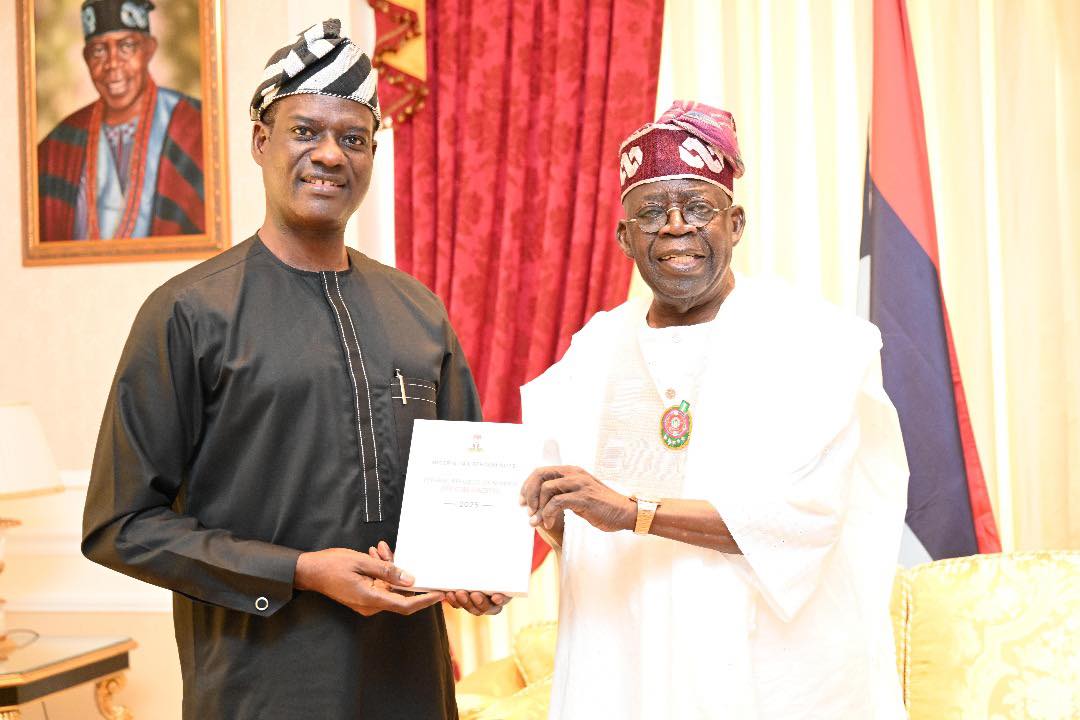
President Bola Tinubu and Mr. Taiwo Oyedele during his nomination on Wednesday.






Airfares Likely to Rise as Aviation Fuel Price Spikes by 80%

Shell Completes Turnaround Maintenance on FPSO, Resumes Production at Bonga

Sahara Group expands fleet with new 40,000 cbm LPG Carrier

NATO Shoots Down Third Iranian Missile in Turkey

Inside Tinubu’s Closed-Door Meeting With Opposition Leaders – SDP, IPAC Reveal Details

Defections Won’t Break PDP in Sokoto, Says Former Senator Gada

Trump’s Family Unveils New Cryptocurrency Platform

Reps Recommend 3-year Jail Term For Aviation minister

Dangote Cement Lights Up Benue Host Communities With CSR Initiatives

Senate Denies Receiving Petitions Against Tinubu’s Ambassadorial Nominees

Things To Know About Threads, Zuckerberg’s Twitter-like App
