
NEWS
Soldiers Groan As Water, Light Scarcity Hit Army Barracks In Lagos

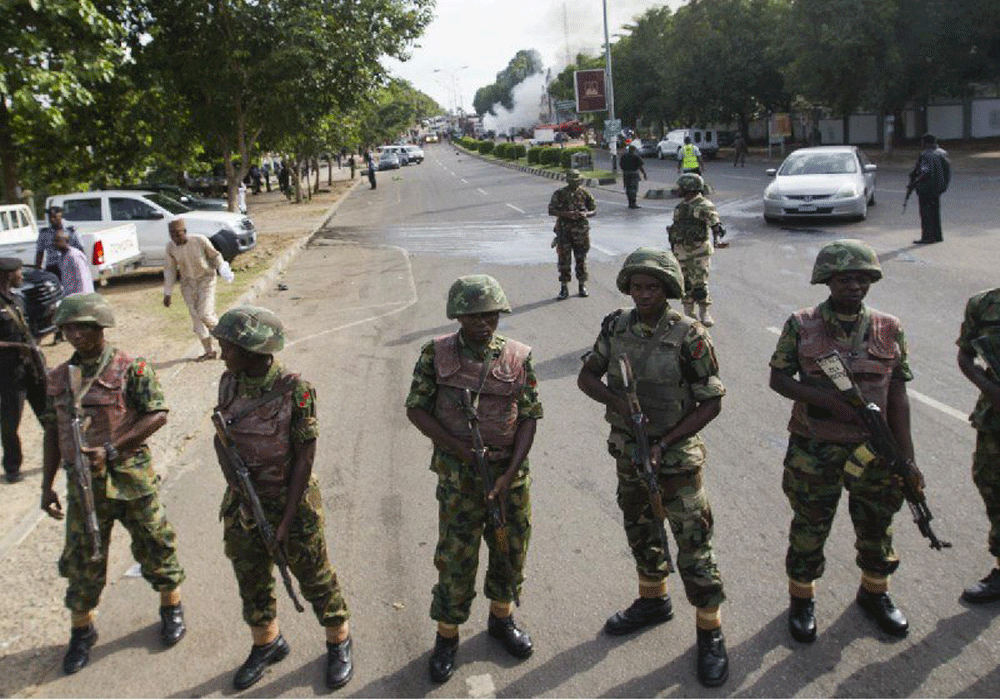
Soldiers in Lagos army barracks have reportedly been suffering due to scarcity of light and water for more than three years.
According to reports, the soldiers have experienced ongoing water shortages for more than three years due to a lack of electricity needed to pump water from the Cantonment’s only borehole, which serves Blocks 1 to 3.
It was discovered that each of these blocks contains 30 flats, meaning the borehole was intended to supply 90 flats with just three hours of electricity each day for water pumping.
Many times, according to some of the soldiers who sent an SOS message to our correspondent, they walk for about a kilometer in search of water without finding any.
They lamented that it was mentally and physically draining for them to return from the day’s task only to go water hunting for long distances inside the barracks, but are rejected by those who have personal boreholes.
“This issue started about three years ago when the system started rationing light from 8 pm to 11 pm, they forgot that there are buildings sharing boreholes. A block consists of 30 flats and we have three blocks sharing one borehole which means 90 flats.
“Imagine light for three hours to pump water for use by 90 flats. If there was light for longer hours, more flats would at least have water for essentials and wait for the next pumping but that is not the case.
“Some will go to mosques, churches, and public borehole points to fetch water. Imagine a single man, after coming back from military duties still carrying jerry cans to look for water in one-kilometre distance inside the barracks,” said a source who pleaded anonymity.
Another soldier told our correspondent that lack of water has been the greatest challenge faced inside the barracks, lamenting that sometimes, they would trek as far as the Army Engineers’ Yard, but would be denied water by those who claimed to be working under instructions.
“Water is as important as food. Imagine me fetching water, and climbing a staircase every day in this modern generation, after going a long distance. It’s exhausting.
“People have their personal boreholes in these barracks and some even sell water because of the situation. So, it is all these challenges that made us, the soldiers, start taxing ourselves to either buy a generator or drill a borehole.
“As soldiers, we do not earn much and so, we cannot afford to do both of them. We are using this opportunity to appeal to the Lagos State Governor, Babajide Sanwo-Olu, our General Officer Commanding (GOC), 81 Division, and well-spirited individuals to come to our aid.
“Please help us drill boreholes, then, we can use the contributions to buy a generator to pump water,” he said.






NEWS
Sanusi Lists Tinubu’s Economic Gains, Reveals What Could Restore Nigeria’s 2005 Living Standards

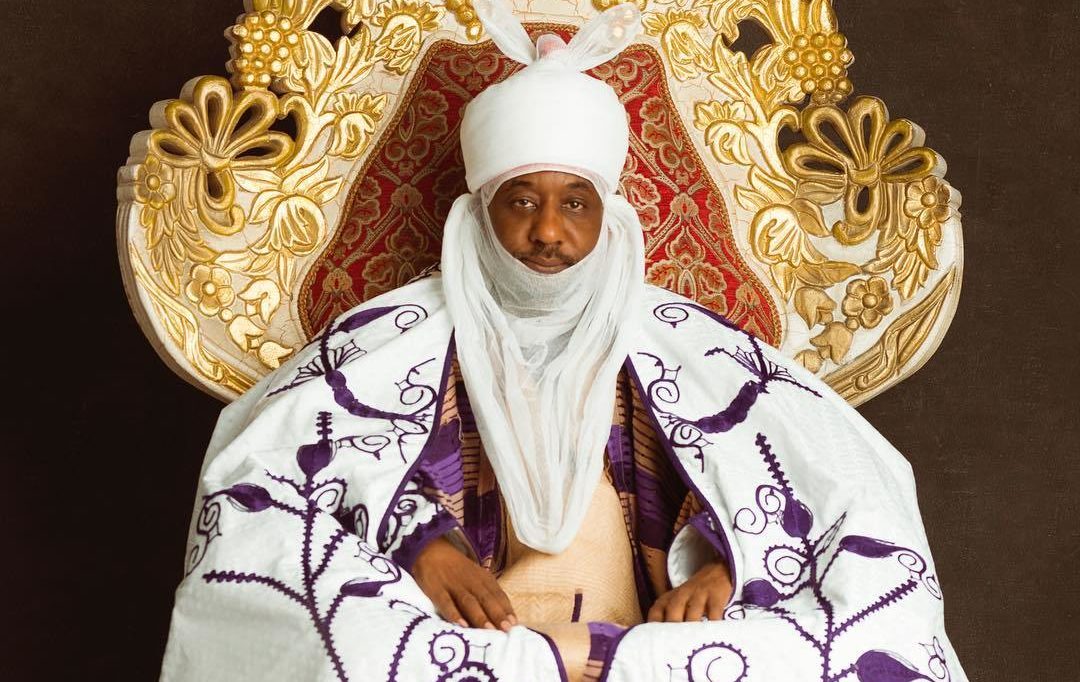
The Emir of Kano, Muhammadu Sanusi II, has highlighted improvements in Nigeria’s economic performance under President Bola Tinubu, saying the administration deserves credit for bringing the country back from the brink of economic collapse.
Sanusi made the remarks at the Oxford Global Think Tank conference, where he assessed the impact of the Tinubu administration’s economic reforms and acknowledged progress in key economic indicators.
SEE ALSO: Dangote IPO Will Spread Wealth Across Nigeria – Emir Sanusi
The former Governor of the Central Bank of Nigeria (CBN) pointed to the country’s 4.48 per cent Gross Domestic Product (GDP) growth in the second quarter of 2026, describing it as an improvement compared with the economic performance recorded during the administration of former President Muhammadu Buhari.
According to him, Nigeria’s economy grew by approximately 0.9 per cent during the Buhari years, while the latest growth figures indicate a stronger economic performance.
Sanusi also highlighted the decline in inflation, saying it had dropped from 30 per cent to 14.6 per cent, with projections indicating a possible reduction to 12.5 per cent by the end of 2026.
He further disclosed that Nigeria’s GDP per capita, measured in dollar terms, had increased by 47 per cent since 2023.
The Emir said sustaining the current growth trajectory could return the country’s GDP per capita to its 2005 level by the end of 2027.
“If we continue at this rate, by the end of next year, GDP per capita will be back to where it was in 2005,” he said.
On the country’s external reserves, Sanusi disclosed that they had reached $55 billion, although he cautioned that a significant portion of the inflows was driven by foreign portfolio investments, which he described as volatile.
He attributed some of the investor interest to high oil prices linked to the conflict around the Strait of Hormuz, alongside the attractive returns available in Nigeria’s financial market.
Sanusi also identified the Dangote Refinery as part of the country’s growing economic diversification, claiming that 20 per cent of Nigeria’s exports were coming from the facility.
According to him, the developments suggest that the country is laying the foundations for economic stability, although more work remains to be done.
“I’m not a fan of politicians, but we need to give credit to President Tinubu’s administration for bringing us back from the brink,” Sanusi stated.
He stressed that the progress recorded should be recognised as an initial step towards stability rather than an indication that Nigeria’s economic challenges have been fully resolved.
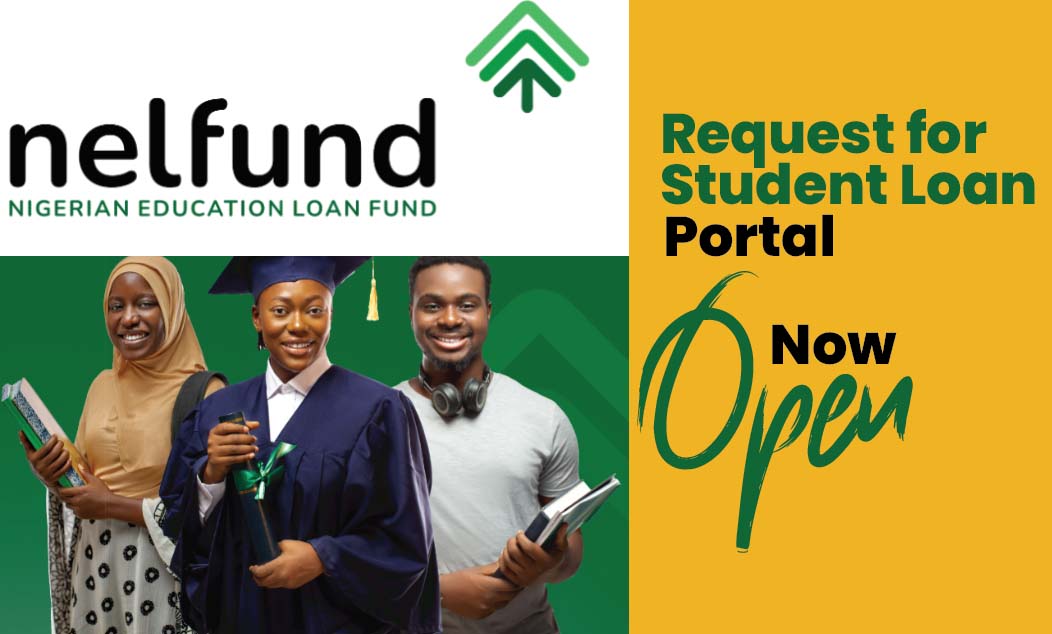
The Nigerian Education Loan Fund (NELFUND) has disbursed a total of ₦375.28 billion to support students across Nigeria, with more than 1.67 million beneficiaries recorded since the commencement of its student loan programme in May 2024.
According to the Fund’s latest Student Loan Disbursement Report, generated on November 4, 2026, a total of 2,372,319 applications have been received since the launch of the programme on May 24, 2024.
The report showed that ₦194.77 billion had been paid directly to 320 beneficiary institutions to cover students’ institutional fees.
SEE ALSO: ‘NELFUND Is Not an Excuse for School Fees Hikes’ – NANS Warns Universities
It also disclosed that ₦180.51 billion had been disbursed as upkeep allowances to students, bringing the cumulative loan disbursement to ₦375,282,425,723.25.
NELFUND further recorded 11,451 applications on November 3, 2026, contributing to the cumulative figure of more than 2.37 million applications received since the programme began.
The latest figures represent an increase in the number of beneficiaries and participating institutions under the Federal Government’s student loan initiative.
The programme, introduced under President Bola Ahmed Tinubu’s Renewed Hope Agenda, is designed to improve access to higher education by providing financial assistance to eligible students facing difficulties paying their academic fees.
Under the arrangement, approved institutional fees are paid directly to students’ respective institutions, while beneficiaries also receive upkeep allowances to support their living expenses.

President Bola Ahmed Tinubu has revealed how his experience working as a taxi driver in the United States shaped his commitment to expanding access to education in Nigeria.
Tinubu said he drove a taxi as a young man after arriving in the US to raise money for his education, adding that he had to postpone starting school for several months to save enough funds.
The President disclosed this while highlighting his administration’s education reforms and investments under the Renewed Hope agenda.
READ ALSO: ‘Becoming Nigeria’s President Is a Divine Blessing – Tinubu
Recounting his struggles, Tinubu said he later worked different jobs after arriving in Chicago to support himself and pay his way through university.
He explained that his personal experience with the financial difficulties associated with pursuing higher education had strengthened his belief that every Nigerian child deserved equal educational opportunities, regardless of their background or their parents’ financial circumstances.
“Those experiences have stayed with me. I know what education made possible in my own life, and I believe every Nigerian child deserves that same opportunity,” he said.
Highlighting his administration’s interventions, Tinubu disclosed that over ₦372 billion had been provided through the Nigerian Education Loan Fund (NELFUND) to support students with institutional fees and upkeep.
He said the initiative was helping young Nigerians remain in school and pursue their educational ambitions.
The President also revealed that the government’s technical and vocational education programme had attracted over 2.8 million applications, while 38 technical colleges had been rehabilitated.
According to him, students in federal and selected state technical colleges now benefit from free school fees, boarding, textbooks and uniforms.
On university education, Tinubu said his administration had reached a new agreement with the Academic Staff Union of Universities (ASUU), providing for a 40 per cent increase in academic staff remuneration and measures to improve stability in the country’s universities.
He stressed that students should be able to complete their academic programmes within the stipulated period.
“A four-year course must take four years. Our young people deserve to complete their education on time and get on with their lives,” he stated.
Tinubu further disclosed that the Federal Government was investing ₦110 billion in the rehabilitation of 24 medical schools.
He said annual nursing enrolment had increased from 28,000 to 115,000, while medical and dental enrolment had risen from 5,000 to 12,000.
The President added that over one million children who were previously out of school had returned to learning.
He also highlighted investments in teacher development, expanded educational opportunities for girls and the implementation of a new national curriculum that restores Nigerian History to classrooms.
Tinubu said the reforms were designed to ensure that Nigerian children understand their country’s history and are adequately prepared to contribute to its future.
He commended the Minister of Education, Dr Tunji Alausa, Minister of State for Education, Professor Suwaiba Sa’id Ahmad, and the entire education team for their contributions to the ongoing reforms.
The President also announced the development of an interactive A–Z of the Nigeria Education Sector Renewal Initiative (NESRI), which brings together information on reforms, programmes, achievements and opportunities across the education sector.
He urged parents, students and teachers to visit edu4pbat.ng to explore available educational opportunities and programmes.
Tinubu encouraged Nigerians to provide feedback on challenges affecting education in their communities, noting that such information would help the government identify problems and address them.
He maintained that a child’s circumstances at birth should never determine the limits of their ambitions, stressing that his administration remained committed to providing every Nigerian child with a fair opportunity to fulfil their potential.






Sanusi Lists Tinubu’s Economic Gains, Reveals What Could Restore Nigeria’s 2005 Living Standards

2027 Election: INEC Uncovers 1.5m Voter Registration Irregularities, Seeks UN Support

2027 Elections: IGP Disu Orders Nationwide Crackdown on Campaign Poster Vandals

NELFUND Disburses ₦375.28bn to 1.67m Students as Applications Hit 2.37m

2027: Shettima Arrives in Lafia to Rally Support for Tinubu’s Re-election

Tinubu Reveals How Taxi Driving in US Shaped His Education Reforms

Trump’s Family Unveils New Cryptocurrency Platform

Senate Denies Receiving Petitions Against Tinubu’s Ambassadorial Nominees

Dangote Cement Lights Up Benue Host Communities With CSR Initiatives

Reps Recommend 3-year Jail Term For Aviation minister

Tems Sets New Record On Billboard Hot 100 Chart
