
NEWS
Suspension: Anyim Accuses PDP of Cowardice

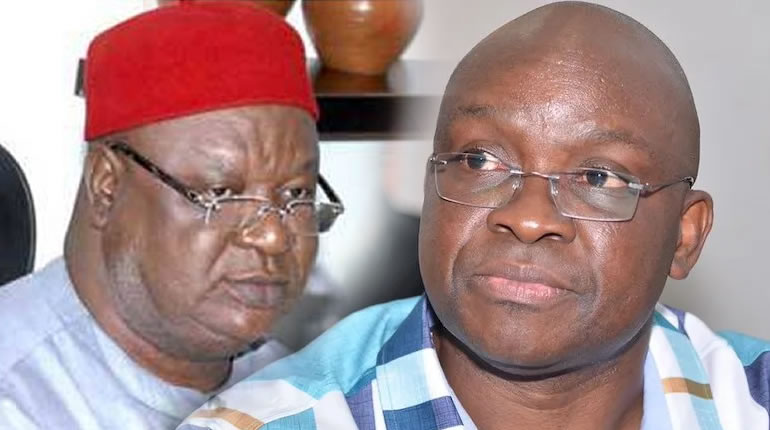
Former Senate President, Senator Anyim Pius, considers the suspension of some leaders of the Peoples Democratic Party (PDP), including himself by the National Working Committee (NWC), an act of cowardice.
The former Secretary to the Government of the Federation reckons that the NWC is paying attention to ‘soft targets’ while revering those who demonise them.
He also pointed out that many members of the PDP, members of the NWC inclusive, intentionally and proudly worked against the party, particularly during the just concluded general elections.
In his words, “It is clear that arising from the leadership style of the NWC, many members, intentionally and proudly, worked against the party including members of the NWC.
“Therefore, it is a display of innate cowardice for NWC to choose soft targets to suspend and fear those that daily demonise them.
Recall the NWC of the PDP suspended the former Secretary to Government of Federation alongside former Ekiti State Governor, Ayo Fayose; Prof. Dennis Ityavyar, Benue, and Dr Aslam Aliyu, Zamfara, among others.
In a similar action, the NWC referred Benue State Governor, Samuel Ortom, to its National Disciplinary Committee over alleged anti-party activities.
Senator Anyim has now taken the position that the NWC would have been courageous enough to undertake a thorough self-examination on why they performed so poorly in the 2023 elections rather than seek to further divide the party by shifting blames.
In his opinion, the action of the NWC is disappointing.
“It smacks of arrogance for the NWC to put up a bold face instead of showing remorse and being sober for leading the party to such colossal loss in the 2023 general elections, thereby dashing the hopes and expectations of party members and indeed Nigerians.
“It is difficult to explain why the NWC is in a hurry to suspend leaders of the party without recourse to a fair hearing, without which their action is null and void,” Anyim added.
On the Ebonyi State governorship election, he accused the NWC of imposing a candidate from the sitting governor’s zone, which contravenes the zoning arrangement in the state.
Senator Anyim maintained that “The NWC imposed a candidate from the sitting Governor’s zone, contrary to the zoning formula in the state. Every effort to let the NWC see reason fell on deaf ears.
“On the day the party’s presidential rally was held in Ebonyi State, I told Dr Ayu that I was boycotting the rally because I cannot support the candidate they imposed on Ebonyi State. Dr Ayu did nothing. He did not care even though I did not attend the Ebonyi rally.”






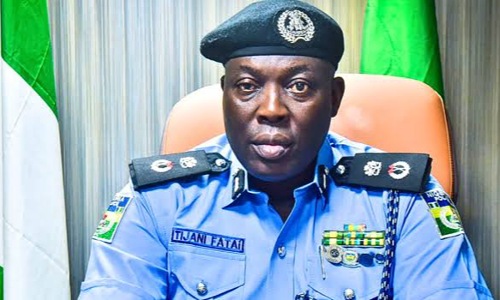
The Lagos State Commissioner of Police, Tijani Fatai, has warned officers against extortion, brutality, unlawful arrests and detention, stressing that any misconduct will attract disciplinary action.
Fatai gave the warning on Thursday, October 22, during a general lecture for officers and men of the Lagos State Police Command at the POWA Hall, GRA, Ikeja.
According to a press release signed by the Lagos State Police Command’s Public Relations Officer, SP Abimbola Adebisi, and released on Friday, October 23, the lecture was held in compliance with the directives of the Inspector-General of Police, Olatunji Rilwan Disu.
SEE MORE: Lagos Police Nab Educational Consultancy Staff Over Fake Visa Fraud
The lecture brought together area commanders, divisional police officers, tactical commanders, heads of departments and other personnel across the command to reinforce professionalism, discipline, accountability and respect for human rights.
Fatai reiterated the Inspector-General’s directives on addressing complaints against police personnel, particularly allegations of brutality, extortion, unlawful arrests and detention.
He warned that officers who engage in misconduct would face disciplinary action, adding that supervisory officers would also be held accountable for the actions of personnel under their command.
The commissioner specifically cautioned tactical teams against extortion, brutality, intimidation, incivility towards members of the public and other dishonest practices.
He directed tactical commanders to ensure that their personnel operate professionally, exercise restraint and respect citizens’ rights.
According to the commissioner, operational responsibilities must not be used as an excuse to exploit or harass members of the public.
Fatai also directed all personnel to comply strictly with the Nigeria Police Force’s Social Media Policy.
He warned that inappropriate online conduct capable of undermining the image of the police would attract sanctions for erring officers and their responsible supervisors.
Lagos CP Prohibits Arrest by Proxy
Addressing the fight against cultism, Fatai urged officers to intensify efforts to tackle the menace while ensuring that all arrests are conducted lawfully and in accordance with due process.
He prohibited arrest by proxy and the arrest of individuals without lawful justification.
The commissioner also emphasised the need to protect the lives and welfare of suspects in police custody, directing officers to maintain close supervision of detainees and ensure they receive humane treatment throughout their detention.
Police Told to Remain Neutral Ahead of 2027 Elections
Ahead of the 2027 general elections, Fatai charged officers to remain neutral and professional in the discharge of their duties.
He directed personnel to closely monitor electioneering campaigns and provide adequate security to maintain peace and public order.
The commissioner further urged officers to stay informed about local and international developments, strengthen their professional capacity and remain vigilant against emerging security threats that could affect Lagos State.
Fatai charged all officers and men of the command to uphold the highest standards of integrity, stressing that public trust must be earned through responsible conduct, impartial enforcement of the law and respect for the rights of every citizen.
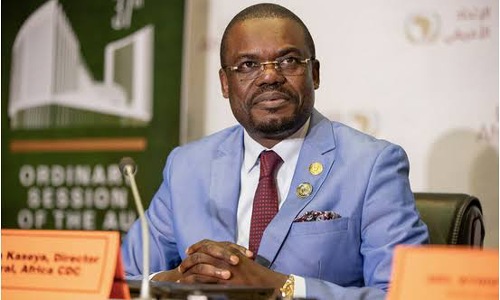
The Director-General of the Africa Centres for Disease Control and Prevention (Africa CDC), Dr Jean Kaseya, has explained why Ebola outbreaks continue to occur in Africa, citing the need for stronger health systems and surveillance mechanisms to prevent and control the spread of infectious diseases.
Kaseya spoke during an interview on Channels Television on Thursday, October 22, while discussing recurring Ebola outbreaks on the continent and the challenges facing public health authorities.
SEE ALSO: JUST IN: Over 3,000 Dead as Ebola Outbreak Ravages DR Congo
He explained that some outbreaks originate from animals and spread to humans through contact with the environment, stressing that effective surveillance and stronger healthcare systems were necessary to address the threat.
“We are in Africa in a specific environment. And as you are saying, this outbreak is coming also from animals to humans. It means we are in contact with our environment,” he said.
“But we can avoid that if we have a strong health system in place, if we have strong surveillance mechanisms in place. And this is what we are working to address.”
The Africa CDC chief also announced plans to convene African health ministers on October 28 to discuss the Ebola Bundibugyo outbreak, which he described as the most geographically widespread outbreak of its kind.
According to Kaseya, three African regions—West, Central and East Africa—have been affected, making coordinated action among countries increasingly important.
“This is why I’m calling even a meeting on the 28th of October of all African ministers, because we see now this outbreak — this Ebola Bundibugyo outbreak — is the most geographically extended outbreak, with three regions in Africa already affected: West, Central and Eastern African regions,” he said.
He also expressed confidence in Africa’s preparedness to respond to public health emergencies, while emphasising the importance of strengthening existing systems to contain outbreaks.
Africa CDC Seeks Cooperation Over Nigeria’s Reported Ebola Case
Kaseya further called for cooperation among Nigeria, Uganda and the Democratic Republic of the Congo (DRC) to clarify the travel history of a woman linked to Nigeria’s reported Ebola case.
He said he had been communicating with health authorities in the three countries to establish the woman’s movements before she returned to Abuja on October 3.
According to him, the woman was born in Uganda and had spent some time there before returning to Nigeria. However, further information was needed to establish whether she had travelled through the DRC or had contact with anyone arriving from the country.
“We are talking to all authorities—with Nigerian authorities, with Ugandan authorities, even to DRC authorities,” Kaseya said.
He urged the woman to provide the relevant information to health officials, noting that it would help authorities determine the circumstances surrounding the case and support the countries involved.
“What we want is collaboration from this person, the lady. She has to tell us, to disclose to the authorities. I need this information, as Nigeria needs this information, because we need also to support Uganda,” he said.
Kaseya added that establishing the woman’s travel history and possible contacts would help prevent misunderstandings between the African countries.
“I think these are the pieces of information we are looking for, and it will help all of us, and it will avoid crisis between African countries,” he added.
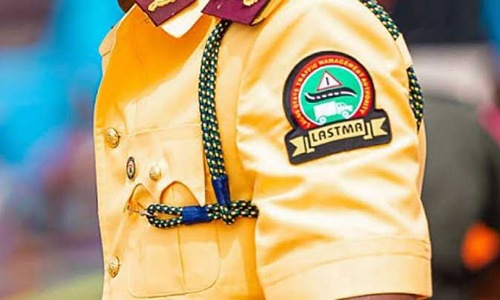
A truck carrying grains fell on its side after crashing into a road median at Itowolo, along the Ikorodu axis of Lagos State, early Thursday, occupying the entire Bus Rapid Transit (BRT) lane.
The incident occurred at about 5 a.m. along the route inward Agric and towards Ogolonto, according to the Lagos State Traffic Management Authority (LASTMA), which disclosed the development on Thursday.
SEE ALSO: Lagos: LASTMA Announces Traffic Restrictions Along Route to Toll Gate
The agency identified the vehicle as a white 10-tyre mini truck and confirmed that no casualties were recorded in the accident.
LASTMA said its officers were at the scene managing the situation, while recovery of the fallen vehicle was expected to commence shortly.
Despite the truck occupying the entire BRT lane, the agency said the incident was not affecting traffic flow at the time of its update.
The authority shared the information to alert motorists to the incident and its ongoing response at the scene.






Lagos CP Warns Officers Against Extortion, Brutality Ahead of 2027 Elections

‘Show Nigerians Where the Money Is’ — ADC Challenges Tinubu Over ₦10bn Ebola Fund

Nollywood Mourns as Veteran Actor Francis Duru Dies at 57

Why Ebola Outbreaks Keep Returning to Africa, Dr Jean Kaseya Explains

Peter Obi Meets UK Officials, Diaspora Stakeholders on Rebuilding Nigeria

Grains-Laden Truck Falls on BRT Lane in Lagos

Trump’s Family Unveils New Cryptocurrency Platform

Senate Denies Receiving Petitions Against Tinubu’s Ambassadorial Nominees

Dangote Cement Lights Up Benue Host Communities With CSR Initiatives

Reps Recommend 3-year Jail Term For Aviation minister

Tems Sets New Record On Billboard Hot 100 Chart
