
Other News
Swiss and Nigerian delegates met for 5th technical committee meeting


BERN – Over three years after Switzerland and Nigeria signed their migration partnership agreement, the delegations of these two countries met today in Abuja for the 5th technical committee meeting.
One of the main points of discussion was Switzerland’s recently launched regional migration and development programme in West Africa, for which Nigeria is one of the main beneficiaries. The meeting also enabled follow-up of the June 2013 joint action plan to counter irregular migration, improve police cooperation and assess progress made in various projects.
Launched in August 2013 by the Swiss Agency for Development and Cooperation (SDC), the regional migration and development programme in West Africa follows the same partnership logic whereby migration is viewed in its entirety and the interests of all stakeholders (Switzerland, the partner country and migrants) are taken into account. With a total budget of CHF 7.5 million for the period running from October 2013 to the end of 2016, the programme seeks in particular to reinforce regional dialogue on migration within the Economic Community of West African States (ECOWAS) and to support implementation of coherent migration policies in Nigeria, Benin and Burkina Faso. The programme also supports the West Africa Network for the Protection of Children, which is coordinated by the Swiss Foundation of the International Social Service.
This 5th meeting of the technical committee for the Swiss-Nigerian migration partnership also enabled partners to take stock of progress made towards implementation of the joint action plan on asylum and return, which was adopted by Switzerland and Nigeria in June 2013. Among other things, this action plan is intended to help find ways to reduce irregular migration towards Switzerland. Last year, the number of asylum applications filed by Nigerian nationals fell considerably. Since 2013, a fast-track procedure has been used to accelerate processing of asylum applications from Nigerian nationals. The two delegations agreed to intensify cooperation in the area of identification of presumed Nigerian nationals as well as in the area of return.
Programme for the exchange of personnel
As far as police cooperation is concerned, two Swiss cantonal police officers were sent to Lagos for two weeks of work with the Nigerian anti-drug agency. Other projects for the exchange of personnel are planned in 2014. These projects will help to intensify police cooperation.
A new project has also been launched to encourage members of the Nigerian Diaspora in Europe to become involved in development programmes in Nigeria. Two volunteers from the Nigerian Diaspora are currently in Lagos to help provide vocational education and training to young Nigerians.
Multilateral cooperation
In addition, Switzerland and Nigeria work together on migration issues within multilateral institutions. At the second High-Level Dialogue on International Migration and Development held in New York in October 2013, Federal Councillor Simonetta Sommaruga and Nigerian Minister of Interior Patrick Abba Moro co-chaired an official roundtable discussion on coherence and partnerships in the area of international migration. This gave them the opportunity to present a concrete example of implementation to illustrate the migration partnership concept to representatives of the international community, numerous international organisations and civil society organisations.
The Swiss delegation in Abuja was jointly led by FOM Director, Mario Gattiker, and the head of the FDFA’s Human Security Division, Ambassador Claude Wild. The Nigerian delegation was led by Ambassador Abdulaziz Dankano, Under Secretary Economic and Consular, Ministry of Foreign Affairs. The next meeting of the technical committee will take place in Bern.
Nigeria was the third main country of origin for asylum seekers in 2013
A total of 1,764 aslyum applications were filed in 2013, making Nigeria the third main country of origin for asylum seekers in Switzerland. The number of aslyum applications from Nigerian nationals fell by 35.8% in 2013 compared to the previous year. Also in 2013, the Swiss authorities accompanied 544 Nigerian nationals to the departure gate for return flights to their country of origin. This was 103 more than the 441 supervised departures reported for 2012


The Social Democratic Party (SDP) and the Inter-Party Advisory Council (IPAC) have disclosed details of their recent closed-door meeting with President Bola Tinubu, explaining that the engagement focused on strengthening Nigeria’s democratic process ahead of the 2027 general elections.
The clarification came amid speculation surrounding the meeting, which took place at the Presidential Villa in Abuja after leaders of several opposition parties attended an Iftar dinner hosted by the president earlier in the week.
ALSO READ: NNPC Secures Tinubu’s Approval for $20bn FID on Bonga Deepwater Project
Speaking during a gathering hosted in Abuja by the SDP’s former presidential candidate, Adewole Adebayo on Friday, the party’s National Chairman, Prof. Sadiq Gombe, said the meeting with Tinubu followed an official invitation from the Presidency and lasted about an hour.
According to Gombe, the discussion centred on the need to strengthen Nigeria’s electoral laws and restore public confidence in the country’s electoral process ahead of the 2027 polls.
He explained that the meeting provided an opportunity for party leaders to remind the president of the importance of conducting transparent, free, and credible elections.
Gombe noted that democracy can only thrive when governments listen to the concerns of citizens and ensure electoral processes that guarantee fairness and accountability.
The SDP chairman also expressed concern over growing voter apathy, pointing to the low turnout recorded in the recent Area Council election in the Federal Capital Territory.
He said the Abuja Municipal Area Council election witnessed only about seven per cent voter turnout, which he described as a clear sign that many Nigerians are losing confidence in the electoral system.
Gombe urged the government and members of the National Assembly to take urgent steps to review electoral laws and rebuild public trust in Nigeria’s democracy.
Also speaking, the National Chairman of IPAC, Dr. Yusuf Dantalle, said political parties used the meeting to raise concerns about aspects of proposed electoral reforms, particularly issues related to indirect primaries and the mandatory electronic transmission of results.
Dantalle explained that the parties appealed to the president to use his influence to encourage legislative review where necessary, noting that reforms should strengthen, rather than complicate, the democratic process.
He expressed optimism that Tinubu would consider the concerns raised and support necessary amendments that would improve the electoral system.
The IPAC chairman also called on the Independent National Electoral Commission (INEC) to strictly adhere to electoral guidelines as preparations for the next election cycle begin.
Earlier in his remarks, Adebayo cautioned political actors against turning the 2027 general elections into a do-or-die contest, stressing that the primary goal of democracy should be the progress and stability of Nigeria rather than personal political victories.
He urged leaders across political parties to encourage citizens to actively participate in the democratic process and ensure that elections are conducted peacefully and transparently.
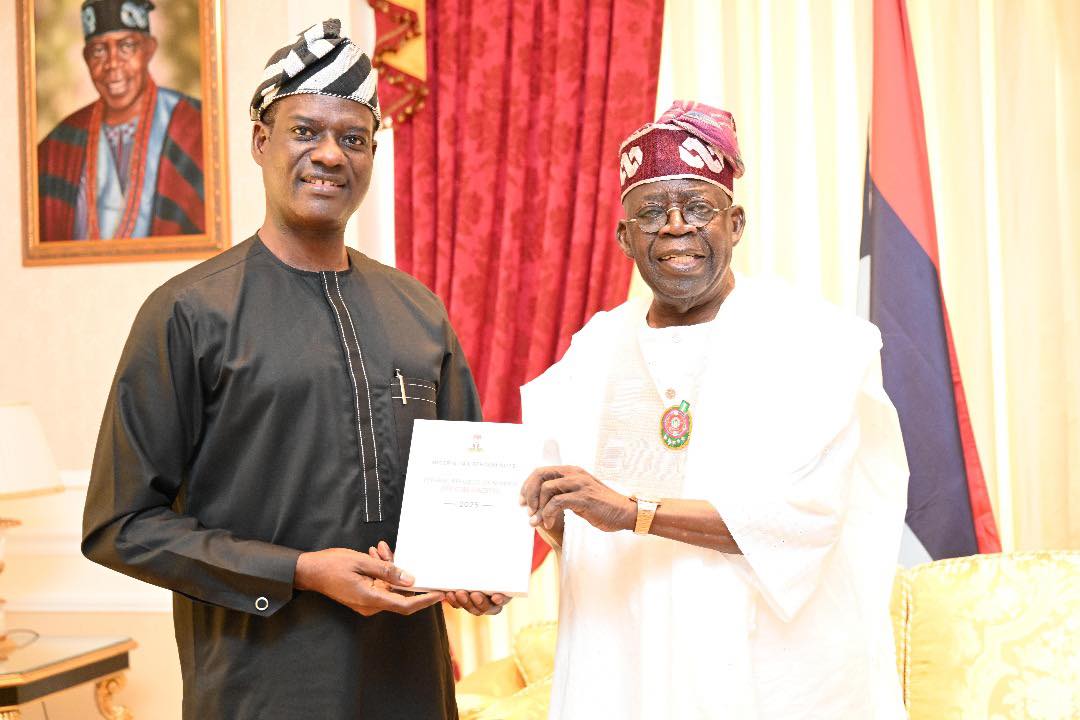
President Bola Tinubu and Mr. Taiwo Oyedele during his nomination on Wednesday.






Airfares Likely to Rise as Aviation Fuel Price Spikes by 80%

Shell Completes Turnaround Maintenance on FPSO, Resumes Production at Bonga

Sahara Group expands fleet with new 40,000 cbm LPG Carrier

NATO Shoots Down Third Iranian Missile in Turkey

Inside Tinubu’s Closed-Door Meeting With Opposition Leaders – SDP, IPAC Reveal Details

Defections Won’t Break PDP in Sokoto, Says Former Senator Gada

Trump’s Family Unveils New Cryptocurrency Platform

Reps Recommend 3-year Jail Term For Aviation minister

Dangote Cement Lights Up Benue Host Communities With CSR Initiatives

Senate Denies Receiving Petitions Against Tinubu’s Ambassadorial Nominees

Things To Know About Threads, Zuckerberg’s Twitter-like App
