
Opinion/Feature
The Pathfinder’s Saddle: Okpebholo Leads Edo’s Renewal Charge

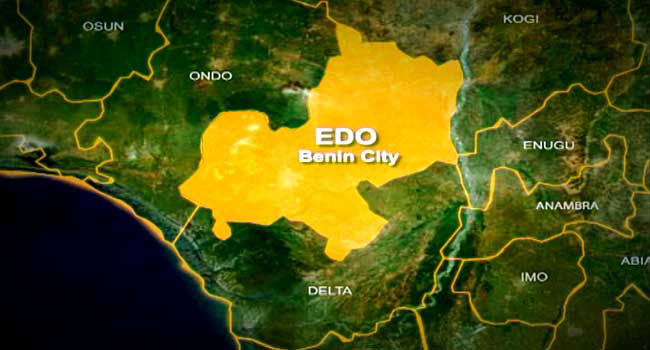
In this perspective, Fred Itua, asserts that, just ten months, a steady captain has charted new pathways in agriculture, education, healthcare, and security, steering Edo toward a horizon of hope.
Ten months is not a lifetime in the history of a people, yet it is long enough for a new rhythm to settle, for the tone of leadership to be felt, and for the stirrings of change to take root.
When Governor Monday Okpebholo assumed office, the mood in Edo was one of cautious expectation.
The people yearned for a leader who would not only carry the title but also embody the responsibility, who would not only sit in Osadebey Avenue but would walk in the streets, listen to voices in the markets, and feel the pulse of rural communities.
Ten months on, the whispers across the state are beginning to converge into a common refrain, that something has shifted, that there is a different kind of leadership in play, and that the new man at the saddle has quietly begun to redefine governance in Edo State.
What strikes the observer is not flamboyance or noise but an unpretentious commitment to work. Governor Okpebholo has, in many ways, refused to be carried away by the trappings of office. He has embraced a style that is disarmingly simple yet firmly effective, one that seeks to connect more than it commands, and listens more than it lectures.
This has endeared him to the ordinary people, those who long ago grew weary of grand promises that ended up as footnotes. In these ten months, he has shown that governance can be stripped of excess drama and redirected toward impact.
Roads that had become nightmares of commuters have been rehabilitated; communities previously left in the shadows are beginning to feel the presence of government; and the focus on critical infrastructure, though far from complete, has started to create fresh conversations about possibilities in Edo.
Perhaps the most captivating part of these ten months is not in the projects themselves but in the spirit they have awakened. There is a sense that government is returning to the people, that leadership is no longer about distance and aloofness but about presence and engagement.
Market women talk about a governor who visits without warning; students speak of opportunities opening up; civil servants describe an environment less stifled by bureaucracy and more motivated by accountability. These are not yet the sweeping transformations of a long tenure, but they are the early signs of a different story being written.
It is in agriculture that the governor made his first bold stroke, and the story is best told not in figures but in images. In Etsako, one sees bulldozers ploughing through overgrown land, transforming bush into vast stretches of farmland ready for cultivation.
In Ovia, clusters of women in wrappers and headscarves gather under trees, discussing how to form cooperatives to gain access to the new 3,000 hectares allotted for farming in each senatorial district.
In Esan, a young farmer who once struggled to rent a small piece of land for cassava now looks out over acres cleared by government tractors, his eyes shining with possibilities. This is not politics as usual; this is agriculture as empowerment, a practical attempt to feed the state, reduce dependency, and give dignity back to rural communities.
Education, long a sore spot for Edo families, was another frontier where the governor rolled up his sleeves. Instead of hiding behind reports, he embarked on a school tour that took him from one community to another, peering into classrooms, sitting on broken desks, and speaking directly to teachers and pupils.
In Benin, a headmistress recalls the shock of seeing the governor walk into her school unannounced, observing leaky roofs and crumbling walls. “For the first time, someone came to see, not just to talk,” she said. From that exercise came the resolve to rebuild and rehabilitate schools, starting with the most dilapidated.
The governor also recalibrated the much-publicised EdoBEST programme of his predecessor. While EdoBEST had won applause abroad, many teachers at home complained of its gaps. Okpebholo doubled down, plugging those gaps, ensuring that children had not just tablets and slogans but also safe classrooms, trained instructors, and learning tools.
Today, in parts of Esanland, children who once studied under trees now sit in newly roofed classrooms, their laughter echoing against fresh walls, a reminder that education is more than policy — it is lived reality.
If agriculture is feeding the future and education is shaping it, infrastructure is the backbone that makes both possible. Governor Okpebholo has not shied away from this reality. In Benin City, commuters now speak with relief about stretches of the Benin–Ekpoma road that once swallowed vehicles in gullies but have since been rehabilitated.
In Auchi, traders note how the resurfacing of inner-city roads has revived night markets once abandoned for fear of accidents. Rural communities in Orhionmwon recall the governor’s intervention in long-forgotten feeder roads that now link farmers to markets.
Even federal roads, long neglected and left to the slow grind of Abuja’s bureaucracy, are receiving attention under his watch. Okpebholo has chosen not to fold his arms while his people suffer.
Instead, he has taken responsibility, deploying resources to fix portions of the Benin–Auchi highway and other federal routes, easing the pains of thousands of daily travellers. “These roads are our people’s lifelines,” he remarked in one community meeting, underscoring that to him, governance is not about excuses but about solutions.
Bridges in Oredo and stormwater projects in parts of Benin are no longer just lines in a budget but works in progress visible to the eye. Streetlights flicker to life at dusk along key arteries, a sign that the city is reclaiming its nights from darkness.
These may not yet be the mega projects of glossy billboards, but for the people who walk, trade, and live along these corridors, they are the foundations of renewal.
Healthcare followed a similar trajectory. The governor ordered a full-scale assessment of all primary health care centres in the state, and what was discovered was sobering: buildings without roofs, centres without medicines, clinics where midwives worked with little more than goodwill.
From that moment, a phased renovation began. In a health centre in Uromi, a nurse who once delivered babies in candlelight now smiles as solar panels power her ward. In Akoko-Edo, elderly villagers speak with gratitude of regular outreach visits and stocked dispensaries.
For mothers in Ovia, the difference is striking: a centre once deserted is now open, clean, and equipped. These are not hospitals meant for ribbon-cutting ceremonies; these are centres where life begins safely, where illness is treated with dignity, where healthcare is restored to the people.
But perhaps nowhere has the governor’s resolve been more tested than in the area of security. Edo has known the scourge of cultism and the menace of kidnapping. These two monsters threatened to steal the shine from the state, casting a shadow over its industrious youth and vibrant communities.
Okpebholo chose to fight back, not with mere rhetoric but with decisive measures. Security agencies were strengthened with new patrol vehicles, motorcycles, and logistical support. Vigilante groups were incorporated into a broader security framework.
Laws were invoked and enforced with unusual firmness. In Benin, young men who once terrorised streets under the cover of cult groups are finding their activities curtailed. In Auchi, a vigilante leader speaks proudly of how police response has improved since the arrival of new patrol vehicles.
In Uromi, families recall a chilling wave of kidnappings now checked by coordinated patrols. Slowly but surely, fear is giving way to confidence, and communities are beginning to reclaim their peace.
Beyond bricks, mortar, and asphalt, Okpebholo has also turned his gaze to the invisible foundations of governance — the rules that determine how money is spent. Procurement, once a murky process riddled with suspicion, is being reshaped into a beacon of transparency.
Anchored on the Edo State Public Procurement Law 2020, the governor has strengthened the Edo State Public Procurement Agency, insisting that every kobo spent must reflect value for the people. Officers with vested interests are now compelled to recuse themselves, eliminating collusion and contract inflation.
Contractor registration is automated, an online portal is underway, and contracts are being broken into smaller lots to give small and medium enterprises a fair chance. In this new order, governance is no longer a closed shop for the well-connected; it is an open marketplace where fairness, accountability, and value-for-money guide the process. Okpebholo has made it clear: corruption will find no hiding place under his watch.
But perhaps the boldest strokes of renewal are being drawn within the civil service itself — the engine room of governance. For decades, Edo workers had known a system where promotions stalled, pensions lingered, and dignity was outsourced.
Okpebholo is changing that story. Within nine months, his administration absorbed over 4,000 EdoSTAR teachers into permanent employment, recruited more than 1,300 health workers, and employed agricultural extension officers to strengthen the backbone of rural development. He went further, ending outsourced cleaning contracts and directly employing 1,000 cleaners into the civil service — an act that restored both job security and human dignity.
Salaries now come promptly on or before the 26th of every month, with a 13th-month wage paid in December, and Edo stands tall among only three states in Nigeria paying a ₦75,000 minimum wage. Pensioners, too, now breathe easier, as ₦300 million is released monthly for gratuities, alongside ₦1 billion dedicated to clearing arrears dating back more than a decade.
For the first time in years, civil servants in Edo speak not of frustration but of pride, as the service regains its identity, complete with a Civil Service Anthem, a new dress code, and an institutionalized Civil Service Week. It is, in every sense, a rebirth of the workforce that powers governance.
What binds all these interventions together is the governor’s leadership style — understated, humble, yet quietly firm. He is not the type to drown his people in speeches. Instead, he walks into markets unannounced, listens to traders, asks farmers about their challenges, and speaks to teachers without protocol.
A market woman in Ring Road once described him as “the governor who doesn’t shout.” Civil servants talk of a work environment less stifled by intimidation, more infused with fairness. Teachers say he listens, farmers say he acts, and health workers say he shows up. This accessibility has become the heartbeat of his administration, bridging the distance between government and governed.
Ten months is not a lifetime, and it is too early to etch legacies in stone. Yet, it is long enough to sense direction. And in Edo today, the direction is unmistakable. It is seen in green farms where bush once grew wild. It is felt in classrooms where children no longer sit on bare floors.
It is lived in clinics where mothers no longer travel hours to deliver their babies. It is heard in communities where gunshots of cult gangs no longer drown out the laughter of youth. It is the story of a governor who, without fanfare, is weaving hope back into the fabric of Edo.
Ten months may be too early to etch legacies in stone, but it is long enough to sense direction. And in Governor Monday Okpebholo, Edo has found a leader who, without theatrics, is charting a course of hope. He is proving that leadership need not be deaf, that politics need not be distant, and that the office of governor can once again feel like the office of the people.
In the years to come, Edo will measure his tenure not just by the kilometers of roads built or the schools rehabilitated, but by this renewed confidence that government can indeed be about service, that leadership can once again inspire trust, and that the covenant between ruler and ruled can still be honoured.
Ten months have passed, and already, the once-cautious expectations are giving way to something sturdier: belief. Belief that the governor’s simplicity is strength, belief that his listening is leadership, and belief that Edo is on the cusp of a story worth telling for generations.
ALSO READ: SON Applauds Dangote Cement for Excellence
The journey is still young, and challenges remain. There will be obstacles ahead, and the true test of leadership lies not only in beginnings but in endurance. But as Edo looks back on the first ten months of Governor Monday Okpebholo, the people see not a man overwhelmed by the saddle but one firmly gripping the reins, guiding the state with calm, clarity, and compassion.
The verdict, whispered in markets and spoken in villages, is already clear: this is governance not for the gallery but for the people, not about noise but about substance. Edo has begun a new chapter, and the story, though still unfolding, is already compelling.
Itua, the Chief Press Secretary to Governor Monday Okpebholo of Edo State, wrote from Benin City






NEWS
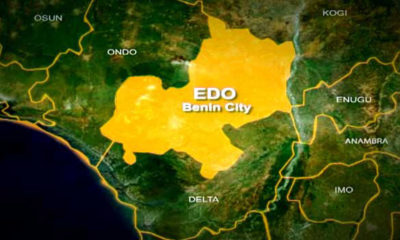
Edo Govt To Raise N160bn For Climate Project While Kidnapping Ravages The State… Is That What The People Need?


As kidnapping and violent crime continue to escalate across Edo State, the government has announced plans to raise N160 billion to tackle ecological challenges, raising serious questions about priorities in the state.
The Executive Chairman of the Edo State Ecological Fund and Management Commission, Blessing Agbomhere, revealed during a press briefing on Wednesday that the funds would be raised through the Ecological/Climate Trust.
According to him, the Okpebholo Green Revolution for Edo is scheduled to launch next week.
SEE ALSO: Edo Cracks Down on Drug Cartels, Arrests Breastfeeding Mother, Six Others
Agbomhere stated that Edo’s three-year budget would not be enough to remediate gully erosion sites across the state.
The over 60 gully erosion sites identified would be addressed in phases, with some remediation projects costing between N5 billion and N20 billion each.
The government also plans to plant one million trees in four years.
He further raised concerns over illegal sand mining, particularly in Edo South Senatorial District, revealing that many operators have no plans to restore the land after their operations, which continues to exacerbate erosion problems.
“A lot of companies are operating in Edo State. After their operation, they will leave the state without remediating the environment. We are calling on them to tell us their plans for remediation when they leave,” Agbomhere said.
While ecological initiatives are undeniably important, the timing and focus of the government are being questioned.
Kidnapping and insecurity are surging across the state, yet attention and resources are being directed toward environmental projects instead of immediate security measures.
At a time when fear dominates daily life for Edo citizens, raising millions for ecological projects while kidnappers roam freely sends a troubling message: are citizens’ lives being sidelined in pursuit of long-term environmental goals?
Biz Tellers raises the concern: shouldn’t security take precedence over climate projects when residents’ lives are under threat? The government insists that addressing ecological challenges is crucial for long-term development, but for many, this does not answer the urgent question of public safety.
As Edo faces both ecological and security challenges, the debate over government priorities intensifies.
The pressing question remains: is this really what the people need right now?
By Fred Itua
Godwin Obaseki’s latest outburst is not a surprise. It is simply the continuation of a pattern that Edo people came to recognize too late. His years in office were marked by intolerance, vindictiveness and a violent streak that constantly simmered beneath the surface. Those who worked closely with him still carry the scars of his temperament. His former deputy, Philip Shaibu, is the most glaring example.
Whatever their disagreement may have been, no rational leader plots the humiliation and removal of a deputy he once described as a brother. Yet Obaseki manipulated every institutional lever available to him to settle a personal score, using the House of Assembly as a pawn to crush a man whose only crime was falling out of favour with the lord of Osadebe Avenue.
In October 2022, Obaseki’s hateful tendencies were expended on those he promised to serve. He supervised the demolition of roughly one hundred homes across Oke-Oroma, Irhirhi-Obazagbon and Ogheghe communities. Residents insisted they held valid documents, including Certificates of Occupancy, yet he pushed ahead in defiance of a subsisting court order that had restrained any action pending the determination of their suit. The result was devastating. Thousands were displaced and property worth billions of naira were reduced to rubble. Such a vindictive man!
Edo people saw the full extent of this violence during the 2024 governorship election when Obaseki stood before cameras and threatened that Edo would burn if his preferred candidate lost. Those words were not the empty rant of a frustrated politician. They came from a man with a history of weaponizing state power, a man whose administration armed loyalists and created networks of political enforcers who blended easily into the criminal elements that then turned their guns on innocent citizens.
ALSO READ: Edo Cracks Down on Drug Cartels, Arrests Breastfeeding Mother, Six Others
It is no coincidence that the early days of the current administration were choked with spikes in kidnapping and armed robbery. These were not random crimes. They were the desperate convulsions of an ecosystem built, funded and empowered by Obaseki himself.
Governor Monday Okpebholo has had to stabilize a state that was deliberately left volatile. Through calm leadership and quiet strength, he has managed to rein in the chaos and restore public confidence. But Obaseki, instead of retreating into reflection, has doubled down.
His recent video in Birmingham reveals a man who cannot bear the reality that Edo people have moved on. He accused Okpebholo of being “stupid”, boasted that he is mobilizing the international community against him and President Bola Ahmed Tinubu, and threatened that the governor “will see”.
These are not harmless statements from an angry former office holder. They are calculated threats from someone who has never hidden his desire to destabilize Edo State whenever power slips from his grip.
He claims that a governor from Irrua cannot dictate to people in Benin. That remark alone exposes the dangerous tribal undertone of his politics. For eight years, he exploited ethnic sentiment to divide communities and isolate opponents. Now, he is attempting to ignite the same divisive flame against a governor who has only focused on governance, inclusiveness and development.
Obaseki’s language in that video is not only reckless, it is incendiary. It hints at an attempt to stir resentment, inflame divisions and rally hostility toward a government that is working hard to rebuild the damage he left behind.
His recent globe-trotting under the guise of “meet and greet” is now clearer for what it is: an effort to secure foreign sympathy, funding and legitimacy for a domestic political battle he has already lost. When a former governor openly brags about mobilizing the diaspora and the global community against the current leadership of his own state, it raises valid questions about intent.
What exactly does he need international pressure for? Why is he desperately trying to create a narrative of crisis where none exists? And who are the people he hopes to recruit from abroad? Edo people have not forgotten that this same man once threatened to burn down Nigeria during an election.
They have not forgotten that his private “security structure” terrorized communities under the cloak of political loyalty. They understand the implications of a former governor seeking global support while trading in fear and hostility.
The uncomfortable truth is that Obaseki’s comments suggest a willingness to collaborate with external actors to undermine the peace of Edo State. A man who once equipped foot soldiers and political enforcers is now boasting about global mobilization.
The link is not far-fetched. His post-tenure travel pattern, sudden desperation and inflammatory rhetoric open the possibility that he is seeking funds or tacit support to revive the political machinery that once served him; a machinery that slipped into criminality after he left office. Edo cannot afford to overlook this. A man who once used threats to bend institutions is now using threats to intimidate a sitting governor.
And yet, despite Obaseki’s attempt to twist reality, Monday Okpebholo has not threatened him. He has not weaponized ethnicity. He has not responded with abuse. All he has done is to remind the public that the records of Obaseki’s misrule are there for anyone to examine.
The refusal to swear in duly-elected lawmakers. The manipulation of the Assembly to serve private interests. The unprecedented decision to withhold the swearing-in of judges recommended by the National Judicial Council. The demolition of the central hospital without providing a viable alternative for ordinary people. These actions were not just bad governance; they were the height of arrogance and indifference to the people he claimed to represent.
It is ironic that Obaseki now accuses others of threatening him when his own record is littered with acts that undermined the wellbeing of Edo people. His fear is not Governor Okpebholo. His fear is accountability. His fear is that the fog of propaganda can no longer cover the damage he inflicted on institutions, communities and public trust. And so he runs abroad to find new allies, hoping that distance will distort the truth.
His attacks on Governor Okpebholo’s loyalty to President Bola Tinubu are even more revealing. By insisting that Okpebholo should not deliver votes to the President, Obaseki exposes the bitterness that comes from losing political relevance. But governance is not about ego. Performance is what earns support. And Okpebholo’s quiet but consistent reforms across infrastructure, security, social welfare and public administration already place him miles ahead of the eight years of stagnation that Obaseki left behind. Edo people are not blind. They know who is working. They know who listens. They know who respects them. No amount of foreign posturing will change that.
Obaseki’s latest rant is a dangerous escalation from a man struggling to remain politically relevant. It is an open threat to peace and a signal that he is willing to drag Edo into conflict just to nurse his bruised pride. Edo people and the federal government must treat this with the seriousness it deserves. A former governor openly encouraging dissent abroad while tribalizing politics at home is a security concern. His record, his words and his behavior suggest that he is not acting alone.
The time has come for security agencies to take Obaseki’s latest comments and conduct seriously. His public threats, global mobilization and divisive rhetoric raise red flags that cannot be ignored. A thorough probe is needed to determine the intent behind his statements and the networks he is attempting to activate.
His known supporters, online loyalists and political enforcers must be properly profiled and monitored to ensure they do not undermine the peace Edo State is currently enjoying. Edo cannot afford to slip back into instability, and every institution responsible for protecting public safety must act decisively before words escalate into something more dangerous.
Fred Itua, the Chief Press Secretary to Governor Monday Okpebholo wrote from Benin City, Edo State

I have received calls, messages and other inquiries regarding the revocation of the CofO of Presco Plc by Governor Monday Okpebholo. The Secretary to State Government, Barr. Umar Musa Ikhilor, has robustly explained the issues.
Unfortunately, some folks, for obvious reasons, are still yearning for more answers. I’ll explain the facts and I hope this helps.
It has been established that the published Revocation Notice didn’t pass through the appropriate channels. Again, the actual number of hectares intended for excision from Presco Plc’s total landholding was grossly misrepresented in the published text.
For clarity, the Edo State Government has not revoked Presco Plc’s Statutory Right of Occupancy. What was under technical consideration was the excision of approximately 20 hectares—a clearly defined area—strictly limited to the portions of land containing strategic crude oil wells.
This excision became necessary because no individual or company can lawfully exercise proprietary rights over land where mineral resources are located, as such resources are vested exclusively in the Federal Government.
Section 44(3) of the Constitution of the Federal Republic of Nigeria (1999, as amended) provides that:
“Notwithstanding the foregoing provisions of this section, the entire property in and control of all minerals, mineral oils and natural gas in, under or upon any land in Nigeria shall vest in the Government of the Federation…”
ALSO READ: Dangote Group Contracts SAIPEM, EIL, others for Fertiliser Expansion in Nigeria, Ethiopia
Section 1 of the Petroleum Industry Act, 2021 similarly states that:
“…the entire ownership and control of all petroleum in, under or upon any lands in Nigeria shall be vested in the State (Federal Government)…”
Section 28 of the Land Use Act (1978) empowers government to revoke rights of occupancy strictly for overriding public interest, which includes matters relating to mineral exploitation.
The Edo State Government advises the general public, stakeholders, and Presco Plc to disregard the notice in its entirety.
Meanwhile, Governor Monday Okpebholo has initiated a formal administrative review to strengthen internal controls to prevent future breaches.
The administration of Governor Monday Okpebholo reiterates its commitment to transparent land administration, orderly engagement with investors, and the protection of public interest, particularly in matters involving national strategic assets such as oil and gas assets.
So, my people, no cause for alarm.
Fred Itua is the Chief Press Secretary to Governor Monday Okpebholo of Edo State.






Ex-FCT Senator Dumps PDP Over Internal Crisis

NCDMB, Renaissance Africa Train Pipeline Engineers

NLNG Inducts 103 Trainees Into Empowerment Scheme
NCDMB Sponsored Oracle Primavera P6 Training Underway In Rivers State

Senate Approves Abe as Chairman, NUPRC Board

Tinubu Swears in Taiwo Oyedele as Finance Minister

Trump’s Family Unveils New Cryptocurrency Platform

Reps Recommend 3-year Jail Term For Aviation minister

Dangote Cement Lights Up Benue Host Communities With CSR Initiatives

Senate Denies Receiving Petitions Against Tinubu’s Ambassadorial Nominees

Tems Sets New Record On Billboard Hot 100 Chart

https://shorturl.fm/S9GpS