
International News
Tragic School Bus Fire In Thailand Kills 23, Investigation Launched


A devastating fire involving a school bus carrying students and teachers during a field trip near Bangkok claimed the lives of 23 people, authorities confirmed on Tuesday.
The bus, which was transporting over 40 passengers, caught fire on the outskirts of the capital.
The fire spread rapidly, leaving little time for escape.
Read More: No Violence In Lagos As Police Distributes Water To Protesters
According to reports, some students managed to flee through the windows, but 23 bodies were later recovered, according to Trairong Phiwpan, forensic science commissioner.
Sixteen students and three teachers were taken to the hospital for treatment, Transport Minister Suriya Juangroongruangkit reported.
Initial investigations suggest the fire may have been caused by a spark from a tire that ignited the vehicle’s gas cylinder.
“We believe the explosion was triggered by a spark that lit the gas cylinder powering the bus,” acting police chief Kittirat Phanphet said. Authorities are investigating whether negligence by the bus company played a role in the incident.
Images shared on social media showed thick smoke billowing from the bus, with firefighters and rescue teams working to extinguish the blaze.
The bus, powered by natural gas, was part of a school trip from Uthai Thani province, approximately 250 kilometers north of Bangkok.
Prime Minister Paetongtarn Shinawatra expressed her sorrow over the incident. “As a mother, I would like to express my deepest condolences to the families,” she said in a post on social media platform X (formerly Twitter).
Authorities have launched a comprehensive investigation to determine the exact cause of the fire and assess the safety protocols followed by the bus company.










Federal agents raided the Washington, D.C., home of Democratic Congresswoman Ilhan Omar early Monday morning as part of an ongoing federal criminal investigation, the United States Department of Justice (DOJ) has confirmed.
Homeland Security Investigations agents arrived at the Minnesota congresswoman’s residence at about 6:00 a.m. Eastern Time, according to a report by Fox News.
SEE MORE: Trump Sparks Outrage With Shock Proposal to Rename New Mexico
The report said both the Department of Homeland Security (DHS) and the DOJ are involved in the investigation.
A DOJ spokesperson confirmed the operation, stating: “Today in the Washington, D.C. area, Homeland Security Investigations executed a judicially authorized search warrant secured by the Department of Justice.”
The spokesperson added: “This enforcement action is part of an ongoing federal criminal investigation.”
Details later……….
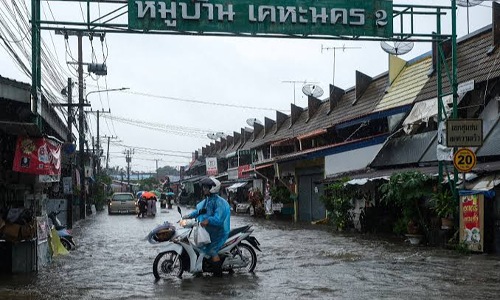
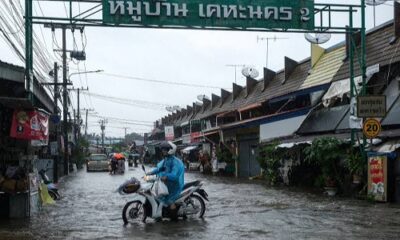
Heavy rains have triggered severe flooding across parts of Bangkok, Thailand, forcing nearly 4,900 residents to evacuate to shelters as floodwaters swept through roads and residential areas.
The flooding has disrupted movement across parts of the Thai capital, with motorists and pedestrians forced to navigate submerged roads and seek alternative routes.
SEE ALSO: NAFDAC Warns Nigerians As Fake Cowbell Milk Floods Market
According to the Bangkok Metropolitan Administration, about 52,000 households have been affected by the flooding, prompting authorities to declare a flood disaster and intensify emergency response efforts.
Emergency teams have been deployed to assist affected communities and move residents from vulnerable areas to safer locations as water levels rise.
Bangkok is accustomed to seasonal heavy rainfall, but intense downpours can overwhelm drainage systems, particularly in low-lying areas, resulting in widespread flooding and disruption.
Authorities are continuing to monitor affected locations while coordinating evacuations and other emergency measures.
For thousands of residents, the immediate priority remains securing safe shelter and protecting homes and livelihoods as authorities work to manage the situation and restore normal activities once the floodwaters recede.
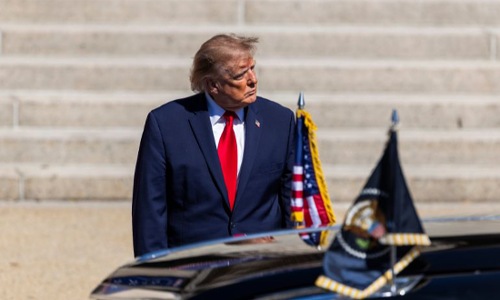
US President Donald Trump has explained his decision to reject Iran’s latest proposal to reopen the Strait of Hormuz, saying Tehran was seeking an agreement because it was losing revenue.
Speaking to reporters at the White House, Trump said Iran wanted to immediately reopen the strategically important waterway but argued that the proposal was not acceptable to his administration.
“They want to make a deal, and I think that’s fine. I like making a deal, too, but that deal would not be acceptable,” Trump said.
SEE ALSO: How the Strait of Hormuz Attack Could Trigger a Fresh Global Oil Shock
According to the US president, Iran’s push to reopen the strait was driven by the economic pressure it was facing.
“What they want to do is immediately open the Hormuz Strait. Do you know why? Because they are dying,” Trump said.
“You know why they’re dying? Because they have no money coming in, because they get their money from the Hormuz Strait.”
Trump also claimed that the US had established an unprecedented naval blockade against Iran, describing it as “a wall of steel.”
“So they outsmarted themselves. We put up the greatest blockade ever in military history. It’s a wall of steel,” he said.
“And guess what? They don’t have any money now because they wanted to close the strait.”
The Strait of Hormuz is a major global energy shipping route, and disruption to traffic through the waterway has significant implications for international oil markets and countries that depend on energy imports.
Trump’s remarks came amid continued tensions between Washington and Tehran over the reopening of the strategic waterway and negotiations involving Iran.






JUST IN: Ex-Delta Governor Emmanuel Uduaghan Is Dead

Delta Begins ₦5bn Empowerment Scheme for 100,000 Beneficiaries
Alausa Hails Dangote Foundation’s Plan to Give Four Million Students IPO Shares

APC Campaign Council Sets Inaugural Meeting for Tuesday Ahead of Kaduna Flag-Off

Renaissance Capital Sees Significant Upside in Dangote Refinery, Lifts Valuation by 33.4%

Dangote Refinery IPO Elicits Participation in 90 Countries Globally

Trump’s Family Unveils New Cryptocurrency Platform

Senate Denies Receiving Petitions Against Tinubu’s Ambassadorial Nominees

Dangote Cement Lights Up Benue Host Communities With CSR Initiatives

Reps Recommend 3-year Jail Term For Aviation minister

Tems Sets New Record On Billboard Hot 100 Chart
