
Business
Transaction Errors: 4.6m Customers Ask for N137bn from DMBs

Six Deposit Banks in Nigeria received 4,595,628 million complaints from their customers within a period of one year with the total amount of refund being claimed hitting N137.62 billion.
This was disclosed in the banks’ audited financial reports for the year 2022 filed with the Nigerian Stock Exchange.
According to The PUNCH, this was derived from an analysis of the banks’ financial reports, which show that over four million complaints were received within the 2022 reporting period.
It added that the figure is separate from the ones carried forward from the previous financial year, 2021.
Compared to the total amount being claimed by customers, which was N137.62bn, the six financial institutions refunded N113.33bn in the year under review.
The banks covered in this analysis include Guaranty Trust Holding Company Plc, Wema Bank Plc, Union Bank of Nigeria Plc, United Bank for Africa Plc, Zenith Bank Plc and the FCMB Group Plc.
The annual financial statements revealed that GTCO reported 1,006,380 complaints in the year with N2.158bn in claimed amount, while Wema Bank reported 404, 179 complaints with N924m in claimed amount involved.
In its 2022 financial statement, Union Bank said that it received a total of 673,709 complaints with N30.27bn involved. United Bank for Africa reported 1, 408, 062 complaints and N54.61bn was recorded as the claimed amount. Zenith Bank recorded 475, 499 complaints with N17.57bn in dispute while FCMB recorded 627, 799 complaints with N152.81m as the claimed amount.
In the year under review, GTCO said it was able to resolve 998,737 complaints and N414.17m refunded as against N363.58m in 2021. At the end of the year, the number of unresolved complaints stood at 9, 248 and N19.17m in amount claimed. The group said that some of the outstanding complaints “include complaints on dispense errors on other bank terminal, failed bill payment, excess charges, etc.”
For Wema Bank, 412, 218 complaints were resolved within the year with N622m refunded, down from N1.24bn refunded in 2021. The number of unresolved complaints as of December 2022 was 13, 642 with N10.27bn in amount claimed involved.







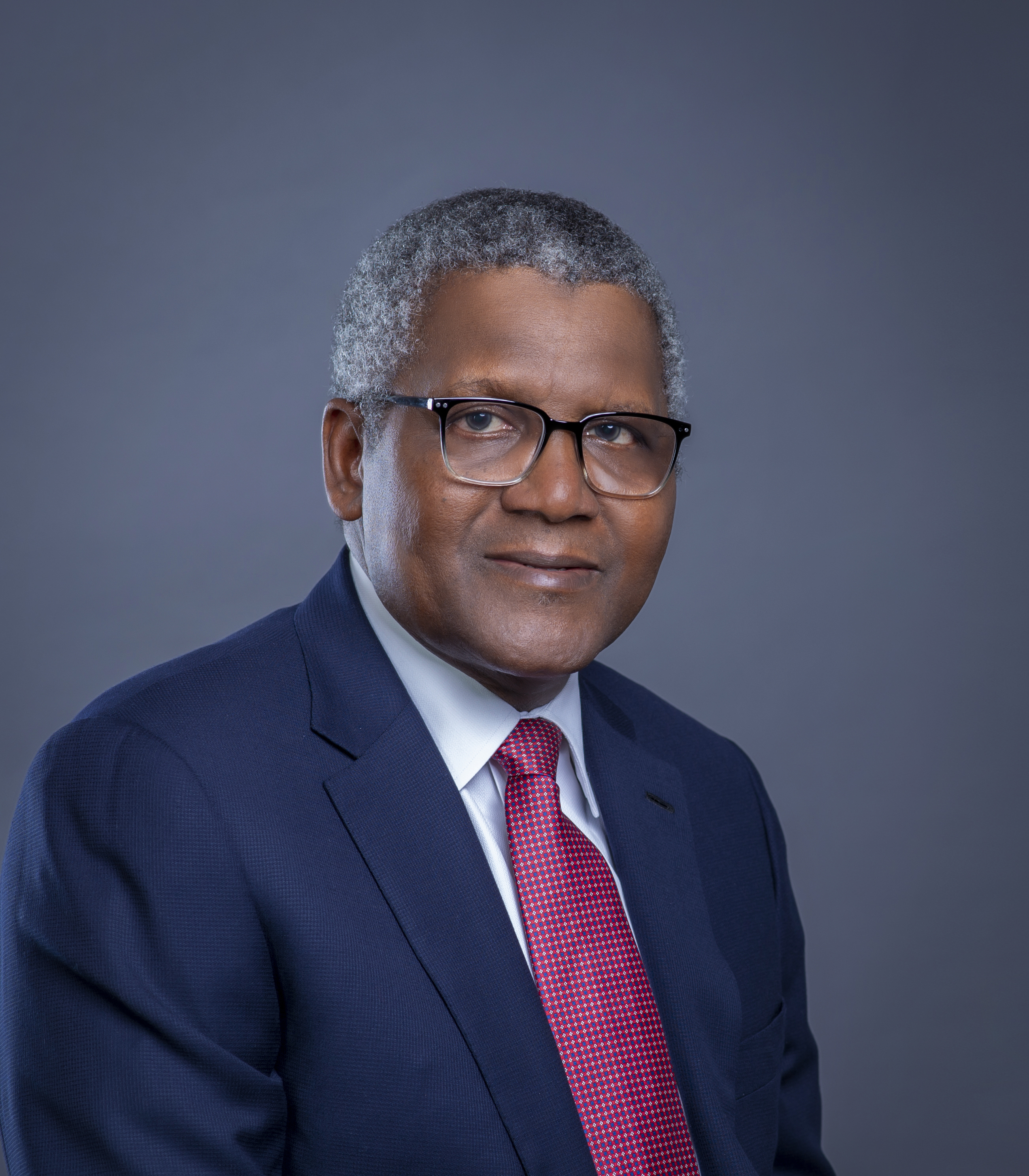
In a bold move to deepen retail participation in Nigeria’s capital market, the Aliko Dangote Foundation (ADF) has unveiled a share grant initiative aimed at helping up to five million tertiary students and two million vulnerable women become shareholders in Dangote Petroleum Refinery and Petrochemicals (DPRP) through its Initial Public Offering (IPO).
Managing Director and Chief Executive Officer of ADF, Zouera Youssoufou, disclosed that the Foundation will match qualifying share subscriptions by eligible beneficiaries. Under the programme, students who subscribe for the minimum 10 shares worth N5,250 will receive an additional 10 shares funded by the Foundation, subject to the approved process and allocation, effectively doubling their holdings to 20 shares.
Speaking during a television interview, Youssoufou said the initiative was designed to turn the refinery’s “People’s IPO” vision into reality by giving traditionally underserved groups a direct stake in one of Africa’s largest industrial assets.
“When Aliko announced the IPO, he described it as the IPO of the people and wanted as many Nigerians as possible to participate,” she said.
READ ALSO: FG Lacks Capacity to Meet Dangote Refinery Crude Demand
According to her, students and vulnerable women were specifically selected because they have historically been underrepresented in the capital market.
The ADF said it is prepared to support up to five million students enrolled in Nigerian tertiary institutions, including universities, polytechnics and colleges of education. Eligible applicants must be at least 18 years old and enrolled in a recognised institution. The Foundation is working with relevant educational authorities to verify beneficiaries.
Youssoufou revealed that about N25 billion has been earmarked for the student component of the scheme, while the broader programme for students and vulnerable women is valued at approximately N40 billion.
She emphasised that the intervention is a grant, not an investment, with all shares ultimately belonging to the beneficiaries.
“The shares end up with the beneficiary. Our goal is to help people who may never have had the opportunity to own shares begin building long-term wealth,” she said.
Beyond students, ADF plans to support up to two million vulnerable women, including widows, women living in extreme poverty, persons with disabilities, and widows of members of the Armed Forces. The Foundation is partnering with state governments, the Ministry of Women Affairs, the Armed Forces and other institutions to identify eligible participants.
According to Youssoufou, the initiative is not only about widening ownership in the refinery but also about promoting financial literacy, encouraging a culture of savings and investment, and helping Nigerians build sustainable wealth through participation in the capital market.
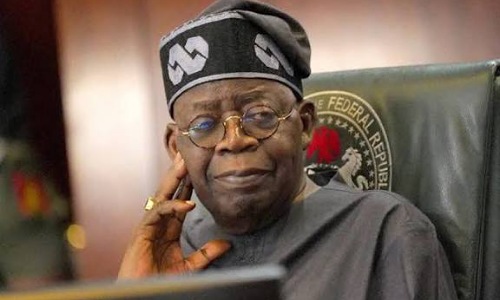
Nigeria’s efforts to increase production and curb crude oil theft still leaves her short of meeting the demands of the 700,000 barrels demand of the Dangote Petroleum Refinery and Petrochemicals (DPRP).
Minister of Finance and Coordinating Minister of the Economy, Taiwo Oyedele, made the disclosure during an interview on Channels Television’s Politics Today at the weekend.
The disclosure comes amid renewed debate over government intervention in the petroleum market, with proposals for production subsidies, the 30-days petrol discount and other measures to support domestic refining and reduce the cost of petroleum products.
READ ALSO: Fuel Discount: Presidency Explains Why Atiku’s Production Subsidy Proposal May Fail
He explained that Nigeria’s total crude oil production does not translate into an equivalent volume available for allocation by the government.
Oyedele said Nigeria’s crude oil production of about 1.8 million barrels per day was shared among parties operating under production-sharing contracts and joint ventures, while production costs, royalties and other obligations further reduced the volume available to the government.
“Under the production-sharing contract and joint venture, they share these things, and the ratios vary. Let’s say roughly 45:55,” he said.
He explained that oil producers first recover eligible production costs through cost oil, while royalties and contractual sharing arrangements also determine the quantity ultimately accruing to the government.
“The long and short of what I’m telling you is whatever is left for Nigeria, we exhaust it almost entirely because of fuel subsidy,” he said.
According to the minister, the situation was particularly severe before President Bola Tinubu introduced the economic reforms in May 2023, when the Nigerian National Petroleum Company Limited (NNPC Ltd), which holds the country’s crude on its behalf, had less than 100,000 barrels of freely available crude remaining.
He said the government had exhausted much of its revenue and resorted to printing money before turning to future crude oil production to secure commitments used to finance present consumption.
“That was a ticking time bomb,” Oyedele said, describing the arrangement under which future oil production was committed to support current fuel consumption.
The minister, however, acknowledged improvements following increased production, efforts to reduce crude oil theft and the renegotiation of some existing commitments that had tied down the country’s crude.
He cited comments by business leader Tony Elumelu, who had previously expressed frustration over the scale of crude oil theft in Nigeria, and subsequently reported an improvement in the situation.
Despite these gains, Oyedele said the country was yet to attain the level of freely available crude required to supply the Dangote refinery with its full daily requirement.
“But we are still not at the point where we can give Dangote 700,000 barrels,” he said.
The minister dismissed proposals for the government to supply the refinery with discounted crude or at production cost, arguing that such proposals failed to recognise the constraints on the volume of oil available for allocation.
“We don’t have enough to service Dangote. Dangote imports crude,” he said.
He added that the naira-for-crude arrangement introduced by the Federal Government had helped provide some stability but had not eliminated the supply constraints.
According to him, sustained increases in crude oil production and the release of additional barrels from existing commitments would eventually enable Nigeria to meet the requirements of Dangote and other domestic refiners.
“As we ramp up production and we free up some barrels, we’ll get to a point where we’ll be able to give Dangote everything he wants and other refiners will be able to get enough,” he said.
Oyedele also expressed hope that Nigeria would eventually refine all the crude oil it produces domestically and export refined petroleum products rather than crude.
The disclosure comes amid renewed debate over government intervention in the petroleum market, with proposals for production subsidies and other measures to support domestic refining and reduce the cost of petroleum products.
Oyedele further maintained that achieving that ambition will depend not only on the expansion of refining capacity but also on sustained growth in crude oil production and the availability of additional volumes for domestic processing.
A partnership of the Nigerian Content Development and Monitoring Board (NCDMB), Renaissance Africa Energy Company Limited, has unveiled a 12-month training program at Nigeria Machine Tools Limited (NMTL), Osogbo, Osun State.
It was gathered that the initiative will equip 60 young Nigerians with specialised expertise in oil and gas engineering as well as other critical technical skills, fostering a new generation of industry-ready professionals.
The programme is on the back of the Nigerian Content Human Capacity Development (NC HCD) Training Programme for Renaissance Africa Energy Company Limited’s EPU Phase 2 Gas Development Project.
READ ALSO: Domestic Flight delays, Cancellations Compound Air Travellers’ Woes
It is designed to equip participants with advanced technical expertise, with the curriculum spanning engineering design, fitter machining, conventional machine tool operations, programming, computer-aided design (CAD), computer-aided manufacturing (CAM), electrical and mechanical maintenance, and document control.
Structured over 12 months, the programme combines six months of intensive classroom instruction with six months of supervised on-the-job training in reputable companies. Graduates are expected to earn internationally recognised certifications upon completion.
During the official launch at the NMTL, Osogbo, Osun State, the NCDMB’s Director of Capacity Building, Engr. Abayomi Bamidele, reaffirmed the Board’s commitment to bridging critical technical skills gaps in Nigeria’s oil and gas industry.
Represented by Tare Bufazi, assistant manager, Human Capacity Development, Bamidele described the initiative as a strategic intervention to address manpower shortages and prepare Nigerians for meaningful participation across the oil and gas value chain.
“The importance of this programme cannot be overstated,” he noted, revealing that the 60 trainees—comprising 33 graduates and 27 vocational trainees—would undergo specialized training tailored to industry needs. He emphasized that NCDMB’s mission extends beyond promoting local participation to building the technical capabilities required to sustain the sector. Human capacity development, he stressed, is central to strengthening local content, creating opportunities, and advancing the Federal Government’s industrialization agenda.
Bamidele urged participants to approach the programme with discipline and commitment, highlighting that it offers more than certificates—it builds practical competence and professional experience for long-term careers. He also acknowledged the contributions of Renaissance Africa Energy Company Limited, Seflam SGL, and the NMTL, whose collaboration made the initiative possible.
On behalf of Renaissance Africa Energy Company Limited, Richard Oyiborhor, Interface and Integration Manager for the NLNG Supply Project, reiterated the company’s dedication to nurturing Nigerian talent and strengthening local capabilities.
He commended the NCDMB’s leadership in advancing Nigerian content and praised the partnership with Seflam SGL and NMTL as a vital step in developing the nation’s industrial workforce.
Senior manager, Business Interface at Seflam SGL, Bisola Agboluaje, congratulated the trainees and traced the programme’s origins to 2024, when NCDMB approved the training plans. She described the initiative as a forward-looking investment in Nigeria’s technical talent pool.
The NMTL’s chief of operating officer, Obehi Ojeagha, welcomed the participants and lauded the collaboration. She emphasized the institution’s 46-year legacy in supporting Nigeria’s industrial development and expressed confidence that the trainees would acquire the skills, discipline, and experience needed to contribute meaningfully to the oil and gas sector.






NNPC’s 30-Day Petrol Discount Is Not a Policy – Sowunmi
2027 Elections: INEC Debunks Fake Notice on Governorship Candidates in Six States

2027: No New Taxes Under My Gov’t If Elected – Sowore Clarifies
ADF Targets 5 Million Students, 2 Million Vulnerable Women

NUPRC Sets Revocation Date for Undeveloped Oil Licences

FG Lacks Capacity to Meet Dangote Refinery Crude Demand

Trump’s Family Unveils New Cryptocurrency Platform

Senate Denies Receiving Petitions Against Tinubu’s Ambassadorial Nominees

Dangote Cement Lights Up Benue Host Communities With CSR Initiatives

Reps Recommend 3-year Jail Term For Aviation minister

Tems Sets New Record On Billboard Hot 100 Chart
