NEWS
Troops Reject N13.7m Bribe From Terrorists During Operation In Plateau – DHQ

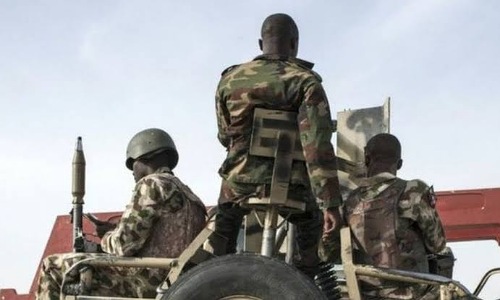
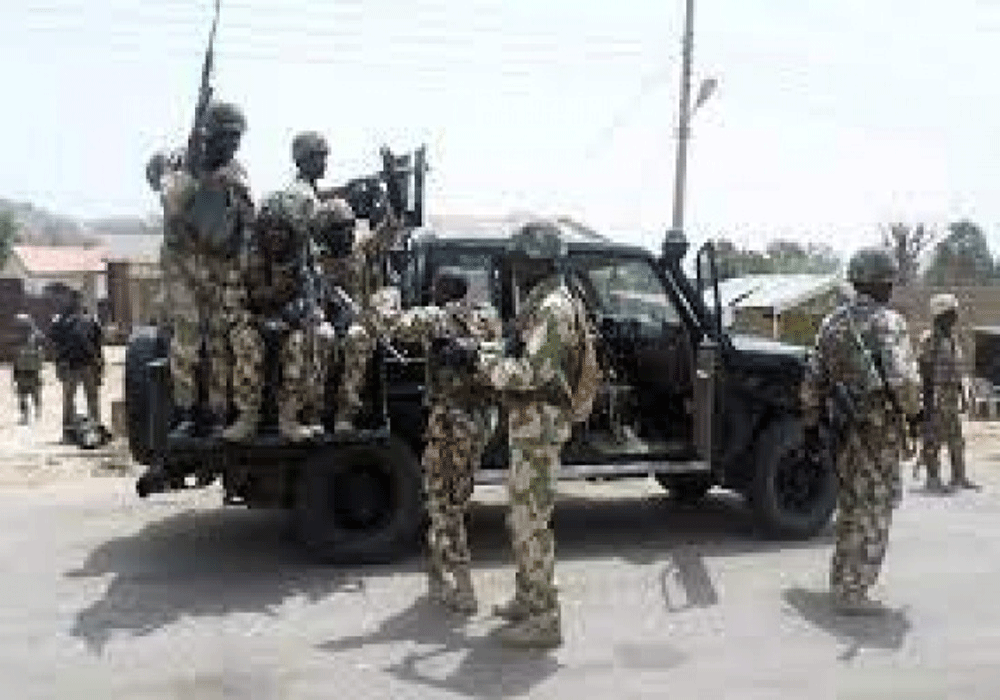
Troops of Operation Safe Haven have thwarted a bribery attempt by terrorists who offered them a staggering N13.7 million to escape arrest during a security operation in Plateau State, the Defence Headquarters (DHQ) has disclosed.
The disclosure was made on Thursday in Abuja by the Director of Defence Media Operations, Major General Markus Kangye, while updating journalists on recent military operations across the country.
According to him, the incident occurred along the Guessing Road after troops responded to a distress call about terrorist activities in the area.
READ ALSO: Nigeria Can Think For Itself – DHQ Replies Turkish Envoy’s Terrorism Allegation
Upon intercepting two suspects, the troops were allegedly offered N13.7 million in cash to let them go, a bribe they firmly rejected.
“On July 9, our gallant troops intercepted a vehicle with bullet holes along Jos, Sanga Road. Suspects attempted to induce troops with monetary gratification, which they declined,” Kangye revealed.
He added that the soldiers went on to arrest the two suspects, recover the cash, as well as seize weapons, ammunition, and the vehicle involved. The recovered items, he noted, are currently in military custody while investigations are ongoing.
In addition to the Plateau operation, troops also intensified counter-terrorism efforts across Bassa, Barkin Ladi, South Wase, Riyom, and Jos East Local Government Areas of Plateau State, as well as Kaura and Sanga LGAs in Kaduna State.
These operations led to the neutralization of several extremists, the arrest of 12 suspects, and the rescue of three kidnap victims.
Troops conducting routine patrols in Barkin Ladi and Jos South (Plateau), Wamba (Nasarawa), and Sanga (Kaduna) also apprehended seven armed militia members and criminals. Seized items included more weapons, ammunition, motorcycles, and illicit drugs.
Commending the troops for their professionalism, Kangye urged Nigerians to support the military by remaining alert and reporting suspicious movements to the authorities.
“As the Nigerian military intensifies efforts to conclude these operations, I urge the public to continue cooperating with security agencies, remain vigilant, and report any suspicious activities to the appropriate authorities,” he said.
He further emphasized the importance of nationwide collaboration: “The support of all Nigerians, including the media, is crucial to the overall success of our mission. We will continue to provide timely updates and ensure transparency throughout the operation.”





Former Deputy Senate President and Delta Central senatorial candidate of the Nigeria Democratic Congress (NDC), Senator Ovie Omo-Agege, has reportedly escaped an assassination attempt after gunmen attacked his campaign team in Uduere, Ughelli North Local Government Area of Delta State.
The attack, which occurred during a campaign tour of the community, allegedly left four people dead, including two members of Omo-Agege’s campaign team, while four others sustained gunshot injuries.
The incident was disclosed in a press statement issued by Sunny Areh, Media Adviser to Omo-Agege, on behalf of the Omo-Agege Campaign Organisation on Monday.
SEE MORE: 2027: Oborevwori, Omo-Agege Trade Fresh Blows Over Tinubu, Obi Endorsements
According to the statement, armed men opened fire at close range on the senator and his entourage while he was addressing residents who had gathered to receive him.
The organisation said Omo-Agege narrowly escaped being hit by bullets, which allegedly passed close to his head during the attack.
The statement identified two of the deceased campaign aides as Moses Anaughe and Akima Efemena Umukoro.
It also named four other persons reportedly injured as Chief Evans Iwuvrie, Chuks Erhire, Tobore Agba and Ayodo Wanogho. Agba was said to have sustained a gunshot wound to the neck.
The injured victims are reportedly receiving medical attention.
The campaign organisation described the incident as a targeted assassination attempt rather than a political disagreement or confrontation.
It quoted eyewitnesses as alleging that the attackers repeatedly shouted, “It’s Omo-Agege we want to kill! It’s Omo-Agege we want to kill!”
The organisation further alleged that the attack was led by Ughelli North Local Government Chairman, Barrister Jaro Egbo, acting on the orders of Delta State Governor, Sheriff Oborevwori.
However, the allegations against Egbo and the governor have not been independently established.
The campaign organisation called for an immediate, transparent investigation into the incident and demanded that all those allegedly involved in planning or executing the attack be brought to justice.
It specifically urged Governor Oborevwori to publicly condemn the attack, ensure the arrest and investigation of those implicated, and guarantee the safety of opposition candidates and political supporters across the state.
The organisation also called on the Inspector-General of Police, the Director-General of the Department of State Services (DSS) and the Delta State Commissioner of Police to intervene.
It demanded that the Inspector-General of Police personally take over the investigation, alleging that officers of the Delta State Police Command were present at the scene with six trucks but failed to prevent the killings.
The campaign organisation also appealed to the Independent National Electoral Commission (INEC), civil society groups and the international community to take note of the incident, warning against the growing threat of political violence in the state.
While mourning the deceased, the organisation extended its condolences to the families of Anaughe and Umukoro, pledging to pursue justice for the victims.
It also urged supporters not to retaliate or take the law into their own hands, insisting that the campaign’s ward-to-ward tour of Delta Central would continue despite the attack.
“Delta State is not a war zone. Campaigning is not a crime. Seeking the votes of the people should not be a death sentence,” the statement declared.
The organisation added: “Enough is enough. Delta must not bleed for politics.”
The reported casualty figures and allegations surrounding the attack are yet to be independently verified. An official account from the police and responses from those accused would be necessary to establish the circumstances of the incident.
The National Economic Council (NEC) has approved an additional ₦130 billion for the rehabilitation of police training institutions across Nigeria, bringing the total funding commitment to ₦230 billion, as preparations gather pace for the proposed establishment of state police.
The Council also endorsed two major development projects requiring a combined $850 million in proposed World Bank financing to strengthen disaster preparedness, climate resilience and early childhood development across the country.
The decisions were reached on Monday, November 23, 2026, during the 162nd NEC meeting, chaired by Vice President Kashim Shettima.
The additional funding followed a presentation by the NEC Ad-Hoc Committee on the rehabilitation of police training institutions, chaired by Enugu State Governor, Peter Mbah.
SEE ALSO: INEC Opens Online Access to Voters’ Register After Public Outcry
The committee disclosed that rehabilitation work was ongoing at 13 locations nationwide, with approximately 30 per cent of the projects completed.
It explained that the additional ₦130 billion would accelerate ongoing work, upgrade training facilities and improve the capacity of police institutions to accommodate increased recruitment and training requirements.
NEC had earlier approved ₦100 billion for the programme following the establishment of the committee in October 2025, on the recommendation of President Bola Ahmed Tinubu.
The intervention is also expected to support preparations for the recruitment of 50,000 police personnel and strengthen Nigeria’s security training infrastructure.
Nigeria’s Economic Indicators Improve
At the meeting, the Minister of Finance and Coordinating Minister of the Economy, Taiwo Oyedele, presented an update on the country’s economic performance, reporting improvements across several key indicators.
He disclosed that Nigeria’s real Gross Domestic Product (GDP) grew by 4.43 per cent in the second quarter of 2026, compared with 4.23 per cent recorded during the corresponding period in 2025.
According to him, headline inflation declined for the fifth consecutive month to 14.06 per cent in October 2026, its lowest level since September 2020.
He also reported that the country’s external reserves stood at $54.87 billion as of November 12, 2026.
Nigeria’s trade surplus increased from ₦10.2 trillion in the first half of 2025 to ₦20.1 trillion during the corresponding period in 2026, while net revenue distributed through the Federation Account Allocation Committee rose by 44 per cent, from ₦15.2 trillion in 2024 to ₦21.9 trillion in 2025.
However, Oyedele cautioned that the improving economic indicators had yet to translate sufficiently into relief for households and businesses.
He identified persistent pressure from food prices, electricity costs, expensive credit and unemployment as major concerns.
Food inflation, he noted, remained elevated at 19.13 per cent in October, while high lending rates and energy costs continued to affect businesses and household incomes.
NEC Endorses $850m World Bank Development Projects
The Council also endorsed two major development initiatives presented through the Federal Ministry of Budget and Economic Planning, headed by Senator Atiku Bagudu.
The first is the proposed $350 million Accelerating Resilience through Investment Systems and Engagement (ARISE-Nigeria) Project, a six-year World Bank-supported programme designed to strengthen Nigeria’s capacity to anticipate, prepare for and respond to natural disasters, including floods, droughts and fires.
The initiative will support improvements in emergency operations centres, early warning systems, weather monitoring and disaster response financing at federal and state levels.
Between five and ten states are expected to participate in the initial phase, with selection based on their exposure to disaster risks, institutional readiness and commitment to emergency preparedness.
The second initiative is the State-Led Early Childhood Development Programme, which is expected to receive $500 million in proposed World Bank financing.
The Global Financing Facility has also indicated potential additional grant support of $30 million.
The programme is designed to improve children’s access to healthcare, nutrition, early learning and protection services across Nigeria’s 36 states and the Federal Capital Territory.
Under the initiative, early childhood development hubs will connect primary healthcare facilities with childcare, preschool education and other essential social services, particularly in underserved communities.
State governors are expected to provide leadership in implementation, resource mobilisation and accountability, while existing institutions will coordinate service delivery.
NEC Calls for Faster National Identity Registration
On the proposed National Identity Management Commission (NIMC) Act 2026, the Council called for stronger collaboration between the commission and state governments to accelerate the registration of Nigerians and improve the integration of the National Identification Number (NIN) into public services.
State governments were urged to fast-track identity registration and data capture to ensure broader coverage of the national identity system.
The initiative is expected to strengthen public service delivery, improve tax administration, eliminate duplicate records and reduce fraud in government payrolls, pensions and social intervention programmes.
Council Pushes Contributory Pension Scheme
The Director-General of the National Pension Commission (PenCom), Omolola Oloworaran, also presented a proposal titled, “Securing the Retirement of Nigerian Workers While Strengthening State Finances.”
The proposal called for the full implementation of the Contributory Pension Scheme across the federation.
NEC approved the proposal and urged state governors to formally adopt implementation timelines for the scheme.
The Council also directed state administrative and finance teams to work with PenCom on the necessary arrangements to ensure implementation.
Shettima Urges Strong Institutions to Sustain Reforms
Earlier in his opening remarks, Vice President Kashim Shettima said the long-term success of President Tinubu’s economic reforms would depend on building strong institutions capable of sustaining their benefits.
He urged federal ministries and state governments to work together, taking into account the people affected by government policies and decisions.
“While His Excellency, President Bola Ahmed Tinubu, GCFR, makes the difficult reforms to stabilise the economy, we must all participate in establishing institutions capable of sustaining the benefits of those reforms,” Shettima said.
“This requires ministries and States to settle practical responsibilities without losing sight of the people affected. To achieve this, we must cooperate.”
The Vice President encouraged state governments to learn from successful practices in other jurisdictions while recognising differences in institutional capacity and circumstances.
He also urged NEC members to consider the needs of Nigerians who would depend on decisions taken by the Council in the years ahead.
On the ARISE-Nigeria project, Shettima said the initiative must be approached with the responsibility of reducing the damage natural disasters and other disruptions could inflict on incomes, businesses and public services.
He stressed that resilience should begin with decisions taken before disasters occur, noting that investments must strengthen the ability of communities and economies to withstand shocks and recover.
“This matters especially where a family or business has little room to absorb another loss. The capacity to recover should never depend entirely on the resources a person already possesses,” he said.
Shettima further emphasised the importance of involving affected communities in shaping development projects, saying their experiences could help identify gaps in proposed interventions.
“The strength of a project rests partly on the institutions and citizens that will carry it,” he added.

Executive Director, Oando Plc and Managing Director, Oando Energy Resources (OER), Dr Ainojie ‘Alex’ Irune, has called on organisations across the energy industry to dismantle structural barriers limiting women’s participation and advancement, stressing that the responsibility for creating an inclusive industry rest with corporate leaders and the institutions they lead.
Irune made the call during the Executive Leadership Fireside Chat II, themed Corporate Leadership and Inclusive Transformation, at the Women in Energy Network (WIEN) Gala & Awards 2026, held at the Metropolitan Club, Lagos.
Responding to a question on the most important advice he would give a capable woman seeking to build a career in the energy industry, Irune directed the focus from what women must do to succeed to what organisations must change to enable their success.
He argued that the industry’s historically male-dominated structures have inadvertently created barriers to women’s participation and progression, adding that organisations must take responsibility for dismantling these constraints.
“Rather than placing the responsibility on women to navigate these challenges, I would instead turn to the industry and ask that we dismantle the structures that make it difficult, or at least slow down the pace of women’s development and advancement,” Irune said.
READ ALSO: Atiku Accuses Tinubu of Seeking Plateau’s Forgiveness Only for 2027 Votes
He further challenged male leaders to take a more active role in driving meaningful change, observing that the energy industry has not fully benefited from women’s capabilities and contributions.
“When you consider an industry like ours that has yet to fully benefit from women’s contributions, it is clear that we are yet to realise the industry’s full potential,” he noted, adding that “as men, we have a significant responsibility to help drive the changes needed to create a more inclusive industry.”
Beyond workplace representation, Irune highlighted the importance of extending inclusion to women’s economic participation through access to business opportunities across the energy value chain. He disclosed that Oando currently has approximately 32 per cent representation of women-owned businesses in its supply chain, with an ambition to increase this to 50 per cent. The target reflects the company’s recognition that advancing women’s participation must extend beyond employment to include enterprise development and access to commercial opportunities. Within its workforce, women currently account for 43 per cent of Oando’s employees, reflecting the company’s progress in building a diverse and inclusive organisation.
Reinforcing the importance of deliberate organisational action, Engr. Adeleye Falade, Managing Director of Nigeria LNG Limited (NLNG), who also participated in the session, identified entry, exposure and performance as three critical components in developing women into leadership positions. He emphasised the need for organisations to build strong talent pipelines and embed diversity into their operating structures through measurable targets and accountability.
“Organisations have to be deliberate about advancing diversity and inclusion. It does not happen by itself. It must be embedded in the organisational ecosystem, with clear targets, measurable outcomes, consistent data tracking and accountability,” Falade said.
A major highlight of the event was the unveiling of the WIEN Diversity, Equity and Inclusion (DEI) Benchmark, developed in partnership with KPMG Advisory Services. The initiative is designed to establish a data-driven baseline for assessing women’s representation and participation across Nigeria’s energy value chain, identify gaps and provide a framework for measuring progress annually.
Oando participated in the Gala as one of its Platinum Sponsors, reaffirming its support for WIEN’s efforts to advance DEI across Nigeria’s energy industry. The company also received a Special Company Recognition Award in acknowledgement of its commitment to advancing DEI across the sector. The recognition reinforces Oando’s position as an active contributor to industry-wide efforts to promote greater representation, expand economic opportunities for women and foster a more inclusive energy sector.

Delta Attack: Omo-Agege Escapes Assassination Attempt as Four Reportedly Killed

EFCC Arraigns Two Over Alleged $6.52m Forgery, Seeks Remand of Defendant
NEC Approves ₦130bn Additional Funding for Police Colleges, Endorses $850m World Bank Projects

Shettima Arrives Maiduguri for Project Commissioning, APC Rally

NMDPRA Commends NLNG, Supports Growth Strategy
Sahara’s MT Asharami Geneva to Boost Africa’s LPG Supply

Trump’s Family Unveils New Cryptocurrency Platform
Senate Denies Receiving Petitions Against Tinubu’s Ambassadorial Nominees

Dangote Cement Lights Up Benue Host Communities With CSR Initiatives

Reps Recommend 3-year Jail Term For Aviation minister

Tems Sets New Record On Billboard Hot 100 Chart