NEWS
Troops Rescue Chibok Schoolgirl Kidnapped In 2014


Troops from Operation Hadin Kai have successfully rescued Mary Nkeki, a Chibok schoolgirl who was abducted back in 2014.
At 27 years old, Mary is now married to a Boko Haram fighter currently on the run.
Mary was saved by the soldiers of the 81 Task Force Battalion Dikwa.
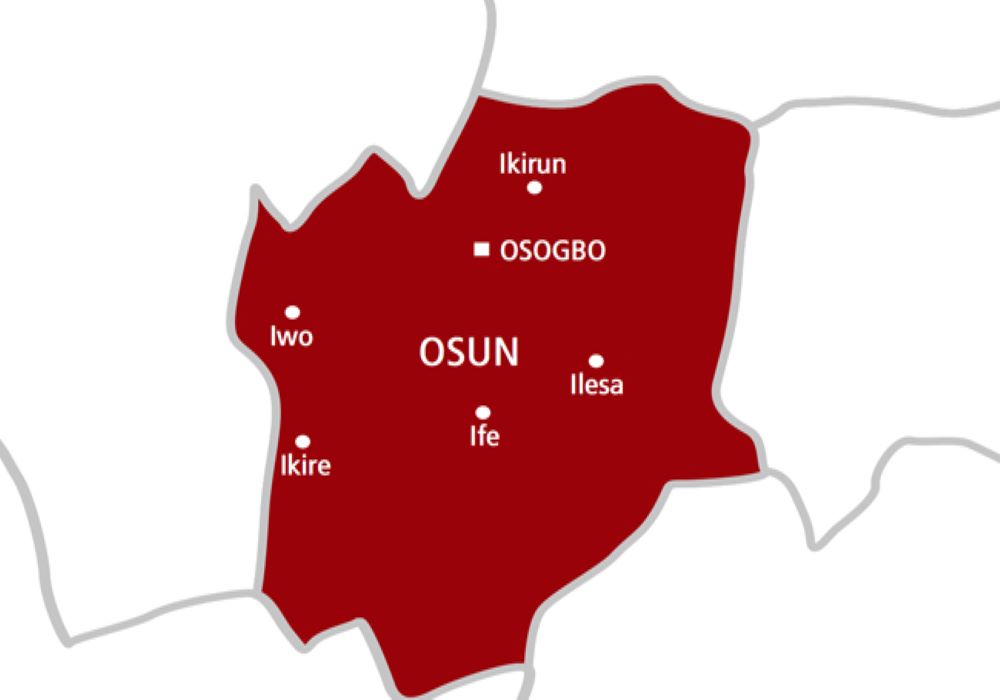
The daring operation took place in the Dikwa general area of Borno central, bringing hope and relief to Mary and her loved ones.
She is on serial number 55 of the abducted Chibok girl list
Now 27 years old Kibaku by tribe,” the Theatre Commander, Operation Hadin Kai, Maj. Gen. Gold Chibuisi told newsmen on Monday, August 21.
“While in captivity, she was forcefully married to one Adam, a Boko Haram terrorist,” Gen. Chibuisi disclosed before handing her over to Borno State Government officials.
“Since her rescue, she has undergone thorough medical examination in our medical facility.
Equally, she has been adequately resuscitated and will be handed over to Borno state,” he said.
Mary told newsmen shortly after she was handed over to the Borno State Ministry for Women Affairs officials that she gave birth to two female children for Adam, who are all deceased.
She said she and her husband, Adam, repented from insurgency and fled the terrorists enclave at the Dikwa axis, and reached a point where the troops rescued both of them.
Adam, who Biztellers gathered, was transported to the rebels’ camp after their rescue, was taken apart from her.
Mary is the 16th young woman whom the military has just saved.










The National Economic Council (NEC) has approved an additional ₦130 billion for the rehabilitation of police training institutions across Nigeria, bringing the total funding commitment to ₦230 billion, as preparations gather pace for the proposed establishment of state police.
The Council also endorsed two major development projects requiring a combined $850 million in proposed World Bank financing to strengthen disaster preparedness, climate resilience and early childhood development across the country.
The decisions were reached on Monday, November 23, 2026, during the 162nd NEC meeting, chaired by Vice President Kashim Shettima.
The additional funding followed a presentation by the NEC Ad-Hoc Committee on the rehabilitation of police training institutions, chaired by Enugu State Governor, Peter Mbah.
SEE ALSO: INEC Opens Online Access to Voters’ Register After Public Outcry
The committee disclosed that rehabilitation work was ongoing at 13 locations nationwide, with approximately 30 per cent of the projects completed.
It explained that the additional ₦130 billion would accelerate ongoing work, upgrade training facilities and improve the capacity of police institutions to accommodate increased recruitment and training requirements.
NEC had earlier approved ₦100 billion for the programme following the establishment of the committee in October 2025, on the recommendation of President Bola Ahmed Tinubu.
The intervention is also expected to support preparations for the recruitment of 50,000 police personnel and strengthen Nigeria’s security training infrastructure.
Nigeria’s Economic Indicators Improve
At the meeting, the Minister of Finance and Coordinating Minister of the Economy, Taiwo Oyedele, presented an update on the country’s economic performance, reporting improvements across several key indicators.
He disclosed that Nigeria’s real Gross Domestic Product (GDP) grew by 4.43 per cent in the second quarter of 2026, compared with 4.23 per cent recorded during the corresponding period in 2025.
According to him, headline inflation declined for the fifth consecutive month to 14.06 per cent in October 2026, its lowest level since September 2020.
He also reported that the country’s external reserves stood at $54.87 billion as of November 12, 2026.
Nigeria’s trade surplus increased from ₦10.2 trillion in the first half of 2025 to ₦20.1 trillion during the corresponding period in 2026, while net revenue distributed through the Federation Account Allocation Committee rose by 44 per cent, from ₦15.2 trillion in 2024 to ₦21.9 trillion in 2025.
However, Oyedele cautioned that the improving economic indicators had yet to translate sufficiently into relief for households and businesses.
He identified persistent pressure from food prices, electricity costs, expensive credit and unemployment as major concerns.
Food inflation, he noted, remained elevated at 19.13 per cent in October, while high lending rates and energy costs continued to affect businesses and household incomes.
NEC Endorses $850m World Bank Development Projects
The Council also endorsed two major development initiatives presented through the Federal Ministry of Budget and Economic Planning, headed by Senator Atiku Bagudu.
The first is the proposed $350 million Accelerating Resilience through Investment Systems and Engagement (ARISE-Nigeria) Project, a six-year World Bank-supported programme designed to strengthen Nigeria’s capacity to anticipate, prepare for and respond to natural disasters, including floods, droughts and fires.
The initiative will support improvements in emergency operations centres, early warning systems, weather monitoring and disaster response financing at federal and state levels.
Between five and ten states are expected to participate in the initial phase, with selection based on their exposure to disaster risks, institutional readiness and commitment to emergency preparedness.
The second initiative is the State-Led Early Childhood Development Programme, which is expected to receive $500 million in proposed World Bank financing.
The Global Financing Facility has also indicated potential additional grant support of $30 million.
The programme is designed to improve children’s access to healthcare, nutrition, early learning and protection services across Nigeria’s 36 states and the Federal Capital Territory.
Under the initiative, early childhood development hubs will connect primary healthcare facilities with childcare, preschool education and other essential social services, particularly in underserved communities.
State governors are expected to provide leadership in implementation, resource mobilisation and accountability, while existing institutions will coordinate service delivery.
NEC Calls for Faster National Identity Registration
On the proposed National Identity Management Commission (NIMC) Act 2026, the Council called for stronger collaboration between the commission and state governments to accelerate the registration of Nigerians and improve the integration of the National Identification Number (NIN) into public services.
State governments were urged to fast-track identity registration and data capture to ensure broader coverage of the national identity system.
The initiative is expected to strengthen public service delivery, improve tax administration, eliminate duplicate records and reduce fraud in government payrolls, pensions and social intervention programmes.
Council Pushes Contributory Pension Scheme
The Director-General of the National Pension Commission (PenCom), Omolola Oloworaran, also presented a proposal titled, “Securing the Retirement of Nigerian Workers While Strengthening State Finances.”
The proposal called for the full implementation of the Contributory Pension Scheme across the federation.
NEC approved the proposal and urged state governors to formally adopt implementation timelines for the scheme.
The Council also directed state administrative and finance teams to work with PenCom on the necessary arrangements to ensure implementation.
Shettima Urges Strong Institutions to Sustain Reforms
Earlier in his opening remarks, Vice President Kashim Shettima said the long-term success of President Tinubu’s economic reforms would depend on building strong institutions capable of sustaining their benefits.
He urged federal ministries and state governments to work together, taking into account the people affected by government policies and decisions.
“While His Excellency, President Bola Ahmed Tinubu, GCFR, makes the difficult reforms to stabilise the economy, we must all participate in establishing institutions capable of sustaining the benefits of those reforms,” Shettima said.
“This requires ministries and States to settle practical responsibilities without losing sight of the people affected. To achieve this, we must cooperate.”
The Vice President encouraged state governments to learn from successful practices in other jurisdictions while recognising differences in institutional capacity and circumstances.
He also urged NEC members to consider the needs of Nigerians who would depend on decisions taken by the Council in the years ahead.
On the ARISE-Nigeria project, Shettima said the initiative must be approached with the responsibility of reducing the damage natural disasters and other disruptions could inflict on incomes, businesses and public services.
He stressed that resilience should begin with decisions taken before disasters occur, noting that investments must strengthen the ability of communities and economies to withstand shocks and recover.
“This matters especially where a family or business has little room to absorb another loss. The capacity to recover should never depend entirely on the resources a person already possesses,” he said.
Shettima further emphasised the importance of involving affected communities in shaping development projects, saying their experiences could help identify gaps in proposed interventions.
“The strength of a project rests partly on the institutions and citizens that will carry it,” he added.

Executive Director, Oando Plc and Managing Director, Oando Energy Resources (OER), Dr Ainojie ‘Alex’ Irune, has called on organisations across the energy industry to dismantle structural barriers limiting women’s participation and advancement, stressing that the responsibility for creating an inclusive industry rest with corporate leaders and the institutions they lead.
Irune made the call during the Executive Leadership Fireside Chat II, themed Corporate Leadership and Inclusive Transformation, at the Women in Energy Network (WIEN) Gala & Awards 2026, held at the Metropolitan Club, Lagos.
Responding to a question on the most important advice he would give a capable woman seeking to build a career in the energy industry, Irune directed the focus from what women must do to succeed to what organisations must change to enable their success.
He argued that the industry’s historically male-dominated structures have inadvertently created barriers to women’s participation and progression, adding that organisations must take responsibility for dismantling these constraints.
“Rather than placing the responsibility on women to navigate these challenges, I would instead turn to the industry and ask that we dismantle the structures that make it difficult, or at least slow down the pace of women’s development and advancement,” Irune said.
READ ALSO: Atiku Accuses Tinubu of Seeking Plateau’s Forgiveness Only for 2027 Votes
He further challenged male leaders to take a more active role in driving meaningful change, observing that the energy industry has not fully benefited from women’s capabilities and contributions.
“When you consider an industry like ours that has yet to fully benefit from women’s contributions, it is clear that we are yet to realise the industry’s full potential,” he noted, adding that “as men, we have a significant responsibility to help drive the changes needed to create a more inclusive industry.”
Beyond workplace representation, Irune highlighted the importance of extending inclusion to women’s economic participation through access to business opportunities across the energy value chain. He disclosed that Oando currently has approximately 32 per cent representation of women-owned businesses in its supply chain, with an ambition to increase this to 50 per cent. The target reflects the company’s recognition that advancing women’s participation must extend beyond employment to include enterprise development and access to commercial opportunities. Within its workforce, women currently account for 43 per cent of Oando’s employees, reflecting the company’s progress in building a diverse and inclusive organisation.
Reinforcing the importance of deliberate organisational action, Engr. Adeleye Falade, Managing Director of Nigeria LNG Limited (NLNG), who also participated in the session, identified entry, exposure and performance as three critical components in developing women into leadership positions. He emphasised the need for organisations to build strong talent pipelines and embed diversity into their operating structures through measurable targets and accountability.
“Organisations have to be deliberate about advancing diversity and inclusion. It does not happen by itself. It must be embedded in the organisational ecosystem, with clear targets, measurable outcomes, consistent data tracking and accountability,” Falade said.
A major highlight of the event was the unveiling of the WIEN Diversity, Equity and Inclusion (DEI) Benchmark, developed in partnership with KPMG Advisory Services. The initiative is designed to establish a data-driven baseline for assessing women’s representation and participation across Nigeria’s energy value chain, identify gaps and provide a framework for measuring progress annually.
Oando participated in the Gala as one of its Platinum Sponsors, reaffirming its support for WIEN’s efforts to advance DEI across Nigeria’s energy industry. The company also received a Special Company Recognition Award in acknowledgement of its commitment to advancing DEI across the sector. The recognition reinforces Oando’s position as an active contributor to industry-wide efforts to promote greater representation, expand economic opportunities for women and foster a more inclusive energy sector.
The Nigerian Upstream Petroleum Regulatory Commission (NUPRC) has opened the registration portal for its 2026 oil and gas licensing round.
Information on the portal, which opened during the weekend, disclosed that the bid commenced on November 20, 2026 and will close on January 15, 2027, for 17 onshore blocks, 14 shallow water and nine deep offshore assets.
Biztellers reports that the bid is offering 40 blocks across onshore, shallow water and deep offshore terrains to prospective investors.
The commission urged interested investors to visit the portal to access the full list of available blocks, bidding guidelines and frequently asked questions, explaining that the platform was designed to provide a seamless experience for prospective bidders.
READ ALSO: Indian Firms to Supply DPRP with $38.94m Pumping Systems
The licensing process, a statement by the commission said, will run through five stages, including registration and prequalification, access to data, submission of technical and commercial bids, technical evaluation and commercial conference.
According to the upstream regulator, the next major activity would be a pre-bid conference scheduled to hold in Lagos on December 16, 2026, stressing that further information and updates would be communicated through the portal and its official social media platforms.
The 2026 licensing round was announced by the Commission Chief Executive, Oritsemeyiwa Eyesan, on October 6, following approval by President Bola Tinubu, who also serves as Minister of Petroleum Resources.
Meanwhile, the commission has pledged to ensure timely delivery of Nigeria’s upstream climate commitments, declaring that its gas flaring and methane reduction targets were regulatory obligations rather than mere aspirations.
It disclosed that metering compliance across flare sites had reached 92 per cent, describing the progress as part of efforts to strengthen emissions monitoring and ensure that climate commitments are backed by verifiable data.
Speaking on behalf of Eyesan at a side event organised by the African Green Economy and Sustainability Institute (AGESI) at the Gabon Pavilion during COP31 in Türkiye, Assistant Director, Remediation and Sustainability, Ibrahim Alhaji, said the commission was moving from estimates to evidence in monitoring emissions.
Under Nigeria’s Nationally Determined Contributions (NDCs) 3.0, the country said it was committed to ending routine gas flaring by 2030 and reducing fugitive methane emissions by 60 per cent.
According to the NURPC, the development has a potential to reduce more than 27 million tonnes of fugitive methane emissions and 2 million tonnes of carbon dioxide equivalent from flaring by 2035.
Eyesan identified transparency, investment readiness and capacity building as the three critical pillars for achieving the targets, stressing that credible emissions data would make climate-related projects more attractive to investors and improve access to climate and blended finance.
The session, convened by AGESI, the Society for Planet and Prosperity and Natural Eco Capital, ended with a follow-up plan focused on partnerships, data disclosure, capacity building and progress reporting beyond COP31.


EFCC Arraigns Two Over Alleged $6.52m Forgery, Seeks Remand of Defendant
NEC Approves ₦130bn Additional Funding for Police Colleges, Endorses $850m World Bank Projects

Shettima Arrives Maiduguri for Project Commissioning, APC Rally

NMDPRA Commends NLNG, Supports Growth Strategy
Sahara’s MT Asharami Geneva to Boost Africa’s LPG Supply

‘Tinubu Must Go’: Sowore Leads Fresh Protest at INEC, Knocks Opposition Aspirants

Trump’s Family Unveils New Cryptocurrency Platform
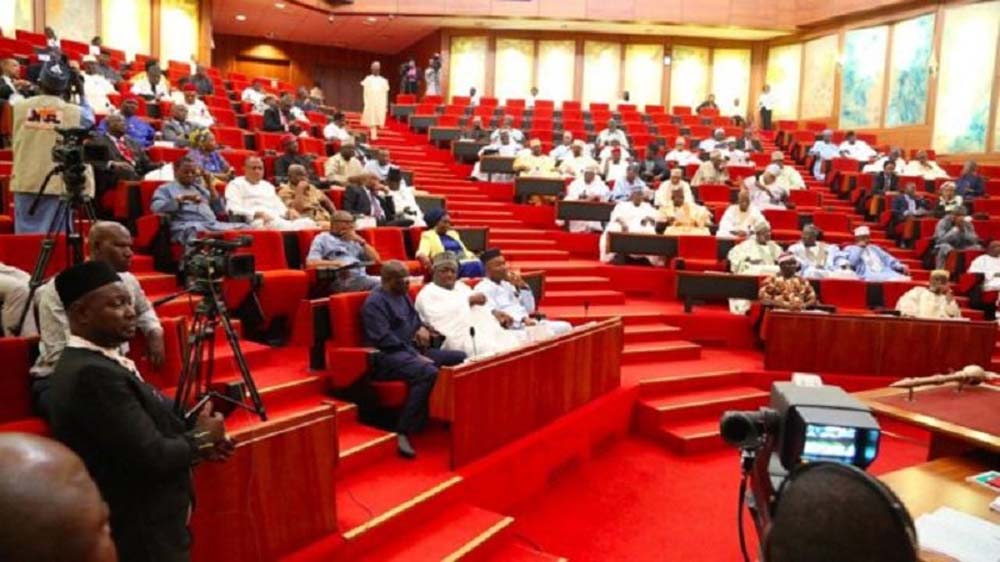
Senate Denies Receiving Petitions Against Tinubu’s Ambassadorial Nominees

Dangote Cement Lights Up Benue Host Communities With CSR Initiatives

Reps Recommend 3-year Jail Term For Aviation minister

Tems Sets New Record On Billboard Hot 100 Chart