
Energy
Trouble looms as Marketers disobey FG’s order, sells petrol at N185 per litre

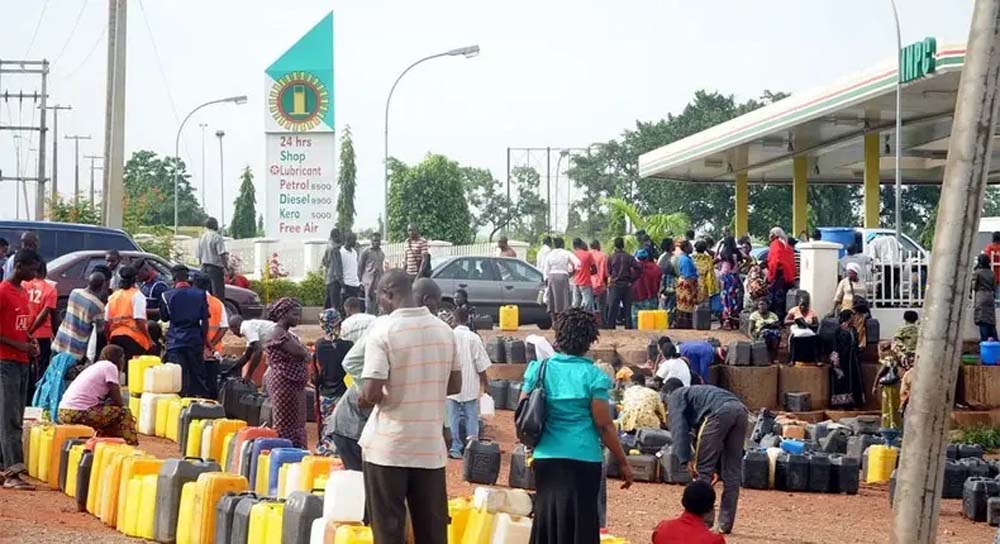
Oil marketers Tuesday unilaterally raised the pump price of petrol from N165 per litre to N185 in disregard to the Federal Government approved pump price of N165 per litre.
The hike which came a day after Major Oil Marketers Association of Nigeria, MOMAN, said the current price was no longer realistic saw the disappearance queues at filling stations around Abuja metropolis.
Checks at some filling stations by Vanguard showed that while some stations raised the price by just N10 per litre, most hiked the price by N20.
At NIPCO filling station in Mabushi District, the price was N175 per litre with few vehicles in the station.
Speaking to Vanguard, a motorist who identified himself as Mallam Ibrahim noted that it was better to buy N175 per litre than to spend four hours on the queue waiting to buy at N165 per litre.
He said: “My friend, is this not better? Why should we spend so much time just to buy petrol? Even though I do not support full deregulation because of its impact on the price of goods, the government should have raised the price a little to accommodate the complaints of the marketers and save people the agony of queuing every time for fuel”.
At Mobil filling station in Karu, the price was N185 per litre without queues also. However, the price remained at N165 per litre at TotalEnergies filling station at Central Business District.
Speaking on the development, the Public Relations Officer, Independent Petroleum Marketers Association of Nigeria, IPMAN, Chief Chinedu Ukadike said it was expected as marketers have to cover their cost of operation.
Ukadike explained that the marketers have been running at a loss these past months, pointing out that most stations closed down because of this.
READ ALSO: UPDATED: Stored petrol aided spread of fire at Bodija Market- Fire Service
According to him, “Abinitio, we have also stated that there is no way marketers will buy products from private depots who are now selling at N170 and some at N167 depending on the area the tank farm is situated. These private tank farms owners have made it clear that they cannot sell at government approved price.
“Marketers cannot buy at N167-N170 and you expect them to sell at N165. This is why marketers have looked at the high cost of logistics because diesel is at N850 per litre now and to transport product from these wet areas to dry areas cost a lot of money.
“If you look at Abuja you will see that it does not have any depot that supplies petroleum products. All petroleum products in Abuja, Kano and other northern areas of the country are being taken from wet areas like Lagos, Calabar and others which have seaports.
“The products are all imported and Nigeria is heavily dependent on imports because the refineries are not working. So the private tank farms are now used to supply petroleum products to marketers. We are now left in their hands and whatever they sell to us, we will mark up our margins and sell to customers, the end users”, he added.
He explained that pump prices would vary from one filling station to another across the country because of where the product was sourced by the marketer.
“While those (marketers) in Calabar might buy at N170 or those in Port Harcourt at N162 or those in Lagos at N163 depending on how the tank farm owner got his product, if you include cost of logistics and the numerous taxes government have imposed on us, then the end result is what you are seeing”, he stated. Vanguard Newspaper









On Tuesday, renewed escalation of the conflict between the United States and Iran pressured oil prices to over $94/barrel.
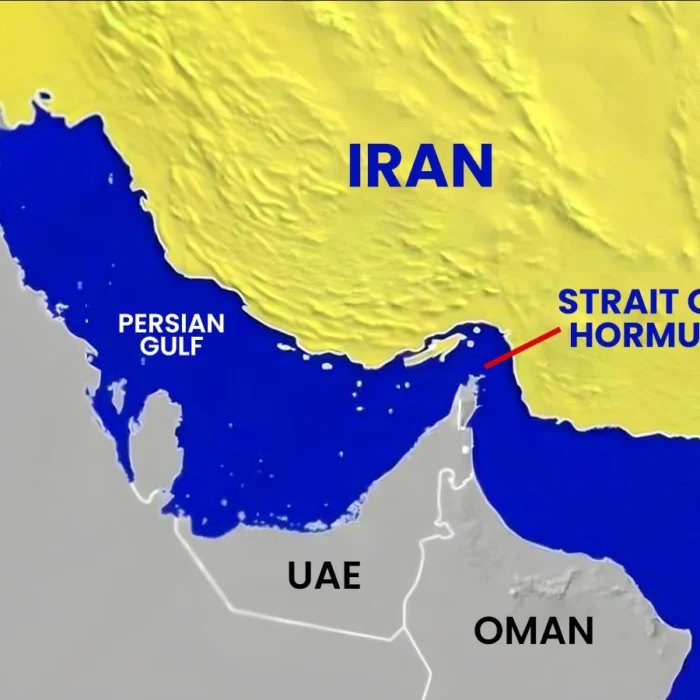
Current hostilities which witnessed American air strikes on Iranian targets and triggered global concerns of disruption to crude supplies through the Strait of Hormuz.
READ ALSO: NLC Decries Lax in Nigeria’s Oil Sector, Inadequate Support for Local Refineries
Brent crude rose $4.06, or 4.49 percent, to $94.55 a barrel, while West Texas Intermediate gained $4.44, or 5.18 percent, to $90.20 a barrel. Murban crude also surged by $7.19, or 7.30 percent, to $105.60 a barrel, according to Oilprice.com.
The rally followed the United States’ fresh strikes on Iran, with Washington saying its forces had targeted the Islamic Revolutionary Guard Corps IRGC).
“Today (Tuesday) at 12 p.m. ET (1600 GMT), US forces began striking Islamic Revolutionary Guard Corps targets in Iran.
“The strikes follow recent attempted attacks by the IRGC against commercial shipping in the Strait of Hormuz and against American service members deployed to the region,” the US Central Command said.
The latest attacks have raised fresh concerns about the security around the Strait of Hormuz, a critical route for global oil supplies. Oil prices had already risen following the exchange of attacks between the two countries over the weekend, while reports of attacks on tankers further fuelled supply concerns.
Reuters reported that two supertankers carrying Saudi oil were struck by unknown projectiles within minutes of each other while travelling outbound through the Strait of Hormuz late on Monday, according to shipping intelligence and tracking firms.
Following the reports, Brent crude futures, which were already up about two percent, jumped by almost another two percent.
Iran has also threatened to prevent oil exports from the Gulf if the US continues its attacks. “If the enemy wants us not to export oil from the Persian Gulf, no one will be able to export oil,” Iranian Parliament Speaker Mohammad Baqer Qalibaf was quoted as saying by Iranian media.
The renewed confrontation has heightened fears that the six-month-old conflict could escalate into a wider war and threaten crude supplies from the oil-rich Gulf region.
The conflict had previously shifted towards sanctions, blockades and economic pressure, but the latest exchange of attacks has raised concerns about a return to sustained military confrontation.
US President Donald Trump warned Iran that it would face a stronger response if it retaliated against the latest American strikes.The US strikes came after Iranian missiles were fired at two US air bases in Jordan in response to an earlier American attack on Iran’s Larak Island.
The latest escalation also coincided with plans by Washington to impose additional economic sanctions on Tehran. US Treasury Secretary Scott Bessent said bank sanctions against Iran were likely to be announced this week and next, while warning that Washington would also target other entities doing business with the Islamic Revolutionary Guard Corps.

The Nigerian Upstream Petroleum Regulatory Commission (NUPRC) has said that 172 Host Communities Development Trusts (HCDTs) have so far been incorporated by oil and gas companies operating across the country.
The chief executive, NUPRC, Oritsemeyiwa Eyesan, disclosed this while addressing the leadership of the Revenue Mobilisation Allocation and Fiscal Commission (RMAFC) in Abuja.
Under the Petroleum Industry Act (PIA), oil and gas companies, referred to as settlors, are required to contribute three percent of their Operating Expenditure from the preceding financial year into a Host Communities Trust Fund for the benefit of communities where they operate.
Eyesan said the NUPRC had been enforcing the provisions of the Act, particularly those relating to host communities and the obligations of operating companies, and had put in place regulations and procedures to streamline the process.
“We have laid out procedures for doing things and we have put regulations in place to streamline the process. So far, we have registered 172 HCDTs and we have been able to manage contributions by settlors,” she said.
READ ALSO: Nigeria Beats 2026 Foreign Reserves Target, Hits $53.1b
She said the trusts had funded the construction of schools, hospitals and other infrastructure, and had contributed significantly to peace and stability in previously volatile communities, which in turn had led to an increase in oil production.
Eyesan, however, admitted that some of the HCDTs had become subjects of litigation over disagreements on the constitution of their Boards of Trustees. She said the Commission had been working to ensure the trusts run smoothly, and that its Alternative Dispute Resolution Centre had played a key role in addressing some of the grievances.
She said that while the RMAFC’s interest in host communities was appreciated, oversight of how the funds are managed remained the exclusive preserve of the NUPRC.
The NUPRC boss also promised to investigate the lingering disagreement between Sterling Oil Exploration and Energy Production Company (SEEPCO) and its host community in Anambra State.
Responding, the chairman of the RMAFC, Dr Mohammed Bello Shehu, commended the NUPRC for overseeing reforms in the oil and gas sector that had contributed to growth in production.
Shehu said the RMAFC regards the upstream oil and gas sector as important, given that it accounts for a large share of revenue accruing to the Federation Account.
He thanked the NUPRC leadership for honouring the RMAFC’s invitation and called for stronger collaboration between the two institutions in the interest of the country.

Data from the Nigerian Midstream and Downstream Petroleum Regulatory Authority (NMDPRA) shows that crude oil imports by domestic refineries rose by 151.5 percent to 5.13 million barrels in July 2026, from 2.04 million barrels in June.
In a related development, domestic crude supply to refineries fell sharply during the month.
According to the NMDPRA’s July 2026 Midstream and Downstream Statistics, local refineries received a total of 17.88 million barrels of crude in July, comprising 12.75 million barrels supplied domestically and 5.13 million barrels imported.
Imported crude therefore accounted for 28.7 percent of total crude receipts by domestic refineries in July, while domestic supplies contributed the remaining 71.3 percent.
The 5.13 million barrels imported in July represented a significant rebound from the 2.04 million barrels recorded in June. It was also higher than the 2.08 million barrels imported in May and 0.41 million barrels in April.
READ ALSO: Host Community Angry at FG’s Political Undertones on Kolmani Oilfield
However, July’s import volume remained below the 9.43 million barrels recorded in March, the highest monthly volume so far in 2026.
The data showed that crude imports stood at 0.71 million barrels in January before rising to 4.25 million barrels in February and peaking at 9.43 million barrels in March.
Imports subsequently plunged to 0.41 million barrels in April, before recovering to 2.08 million barrels in May, 2.04 million barrels in June and 5.13 million barrels in July.
The report also disclosed that domestic crude supply to refineries declined by 25.4 percent month-on-month, falling from 17.08 million barrels in June to 12.75 million barrels in July.
In January, domestic refineries received 8.83 million barrels of domestic crude and 0.71 million barrels of imported crude, bringing total receipts to 9.54 million barrels.
The figure rose to 13.13 million barrels in February, comprising 8.88 million barrels of domestic crude and 4.25 million barrels of imports.
March recorded the highest total crude receipts at 20.92 million barrels, with domestic supply contributing 11.49 million barrels and imports 9.43 million barrels.
Total receipts stood at 18.37 million barrels in April, made up of 17.96 million barrels of domestic crude and 0.41 million barrels of imports.
In May, refineries received 17.92 million barrels, comprising 15.84 million barrels of domestic crude and 2.08 million barrels of imports, while June recorded 19.12 million barrels, made up of 17.08 million barrels of domestic crude and 2.04 million barrels of imports.






Osun Accord, Adeleke Strategise for Legislative Elections

Dangote Credits Tinubu’s Economic Reforms with Driving Nigeria’s Economic Recovery

US-Iran Conflict Sees Oil Exceed $94

NLC Decries Lax in Nigeria’s Oil Sector, Inadequate Support for Local Refineries

Femi Azeez Joins Brighton on Four-Year Deal After Stunning Rise

“OPay Is Going Nowhere” — Firm Seeks DSS, Police Probe Over Shutdown Rumour

Trump’s Family Unveils New Cryptocurrency Platform

Senate Denies Receiving Petitions Against Tinubu’s Ambassadorial Nominees

Dangote Cement Lights Up Benue Host Communities With CSR Initiatives

Reps Recommend 3-year Jail Term For Aviation minister

Tems Sets New Record On Billboard Hot 100 Chart
