
Other News
U.S. Fed nominee Fischer taught Bernanke, fought crises


WASHINGTON – Stanley Fischer, President Barack Obama’s pick to be vice chairman at the Federal Reserve, is a pragmatic policymaker who battled economic crises in Mexico and Asia and steered Israel’s economy safely out of the 2008 global financial meltdown.
He also grew up in a house with no running water, behind the general store his immigrant parents ran in present-day Zambia. Confirmation by the U.S. Senate would propel Fischer, 70, to the No. 2 spot at the world’s most powerful central bank.
In this new role, the former head of the Bank of Israel and the International Monetary Fund’s chief firefighter during the Asian financial crisis would face a fresh challenge: helping incoming Fed chief Janet Yellen manage the wind-down of the central bank’s bond buying without sabotaging the U.S. recovery.
Yellen, who won Senate confirmation on Monday to be the next Fed chair, is set to take the reins from Ben Bernanke once his term ends on January 31.
 On Friday, Obama nominated Fischer to replace Yellen and nominated Lael Brainard, who recently served as the Treasury Department’s top official for international affairs, to serve on the Fed board. The president also nominated Fed Governor Jerome Powell to a new term on the board.
Fischer, who has both U.S. and Israeli citizenship, spent eight years running the Bank of Israel, retiring three years into his second five-year term in June. He was the second-in-command at the IMF from 1994-2001, and before that chief economist at the World Bank.
He taught economics at the Massachusetts Institute of Technology for many years, where his students included Bernanke, European Central Bank President Mario Draghi, and at least half a dozen other well-known economists and policymakers including former Obama adviser Lawrence Summers and Gregory Mankiw, who served as an adviser to President George W. Bush.
“The guy has got a lot of seniority, a tremendous amount of international experience,” said Jerry Webman, chief economist at OppenheimerFunds in New York. “Bringing in the international component … acknowledges there’s a feedback effect with monetary policy, currency (and) foreign monetary policy.”
Fischer’s recent and influential role in a foreign government could raise some eyebrows among the U.S. senators who would need to confirm him before he can take office.
So too could his time in the private sector. He was a vice chairman at Citigroup in the mid-2000s when it was the biggest bank in the world. During the financial crisis, Citi was among the institutions that received a U.S. government bailout.
SEES IT, CALLS IT
Often described as mild-mannered and genial, Fischer can also be prickly and forthright.
Last June, after then-Israeli Finance Minister Yuval Steinitz announced a plan to double Israel’s budget deficit target to 3 percent, Fischer warned the move could weaken the economy and force the central bank to raise interest rates.
“The last time this happened, we had to run to our rich uncle for guarantees,” he chided, referring to U.S. loan guarantees extended to recession-hit Israel in 2003. “But there is a problem with our rich uncle today: He’s not so rich and not as friendly.”
At the Bank of Israel, Fischer’s rate decisions often surprised markets, and sometimes went against the advice of his top officials. His decision in November 2008 to cut the policy rate by half a percentage point, for instance, had the support of only one of the five senior officials who consulted with him on the move.
“He calls it as he sees it,” said Bill Rhodes, former senior vice chairman at Citigroup who worked closely with Fischer when he was at the IMF. “And like everyone else, sometimes he’s wrong, but his policies have worked out very well in that eight-year period at the Bank of Israel.”
FINANCIAL CRISES
Fischer was born in what was then Northern Rhodesia, the son of Latvian and Lithuanian Jewish immigrants. When he was 13, his family moved to what is now Zimbabwe. In his last year of high school, he took a course in economics that hooked him for life.
He went on to study at the London School of Economics and then MIT, where he later became a professor. It was there, in 1977, that he famously argued that monetary policy can effectively boost employment, a hotly contested notion which is still controversial in some circles.
A two-and-a-half-year stint as chief economist at the World Bank whetted his appetite for policy work, and when he returned to MIT, he found it hard to re-adjust to academia.
“I remember going to theory seminars and saying to myself, what difference does it make whether this guy is right or wrong, why should anyone care about that theorem and so forth,” he told Olivier Blanchard, a former student and now the IMF’s chief economist, in a 2004 interview.
In 1994, Fischer got his chance to return to policymaking: Summers, who was then a top U.S. Treasury official, helped recruit him to be deputy managing director at the IMF.
Fischer played a big role in the IMF’s bailout of Mexico after the peso crashed in 1994, and he helped to arrange huge IMF loan packages for South Korea, Thailand, Indonesia and Russia during the Asian financial crisis that began in 1997.
His IMF term ended in 2001, and after a failed bid to lead the IMF, he became vice chairman at Citigroup.
In December 2005, while celebrating his wedding anniversary in the Caribbean, Fischer got a call: would he consider running the Bank of Israel, then-Finance Minister Benjamin Netanyahu asked.
Fischer jumped at the chance to return to the policy world.
Two years into the job, the financial crisis hit, and he responded by cutting the policy rate on October 7, 2008, a day ahead of similar moves by major central banks.
He was also the first central banker to raise rates, in 2009, after the worst of the crisis had passed for Israel.
In 2011, he established a six-person monetary policy committee that would vote on rate decisions that had before then been entirely his call.
But he continued his policy of doing what he thought best until the very end. Last May, at his next-to-last policy-setting meeting, Fischer used his double-vote to break a tie, opting for a smaller cut than half the panel members had wanted.
Israel’s economy has fared better than many since the crisis, in part because the Bank of Israel bought billions of dollars to keep Israel’s shekel currency from strengthening too much when the Fed launched its second round of bond purchases to push U.S. borrowing costs down. That program spurred investors to pour money into emerging economies, driving many of those currencies sharply higher.
But unlike officials in many other emerging economies, Fischer did not chastise the Fed for its super-easy policy; in fact, he called criticism of the U.S. policy “misplaced.”
More recently, Fischer has offered mixed assessments of the Fed’s bond-buying, calling it ugly and dangerous, but also effective and necessary.
“We really need to get back to more normal conditions, more normal monetary policy in the United States,” he said in August.
The Fed took its first step in that direction when it decided in December to reduce its monthly assets purchases to $75 billion from $85 billion, with a view to ending them sometime late in 2014.
Fischer also appears to have conflicting views on the other main tool the Fed is using to influence the economy these days – so-called forward guidance on how long it will keep interest rates at their current near-zero level.
“You can’t expect the Fed to spell out what it’s going to do,” he said earlier this year, “because it doesn’t know.”
– REUTERS

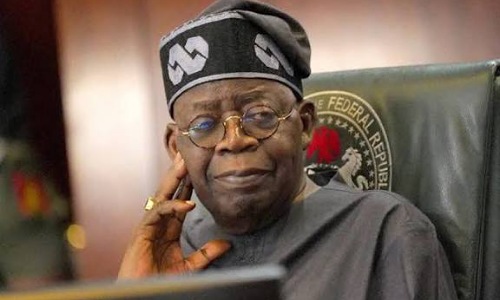
The Social Democratic Party (SDP) and the Inter-Party Advisory Council (IPAC) have disclosed details of their recent closed-door meeting with President Bola Tinubu, explaining that the engagement focused on strengthening Nigeria’s democratic process ahead of the 2027 general elections.
The clarification came amid speculation surrounding the meeting, which took place at the Presidential Villa in Abuja after leaders of several opposition parties attended an Iftar dinner hosted by the president earlier in the week.
ALSO READ: NNPC Secures Tinubu’s Approval for $20bn FID on Bonga Deepwater Project
Speaking during a gathering hosted in Abuja by the SDP’s former presidential candidate, Adewole Adebayo on Friday, the party’s National Chairman, Prof. Sadiq Gombe, said the meeting with Tinubu followed an official invitation from the Presidency and lasted about an hour.
According to Gombe, the discussion centred on the need to strengthen Nigeria’s electoral laws and restore public confidence in the country’s electoral process ahead of the 2027 polls.
He explained that the meeting provided an opportunity for party leaders to remind the president of the importance of conducting transparent, free, and credible elections.
Gombe noted that democracy can only thrive when governments listen to the concerns of citizens and ensure electoral processes that guarantee fairness and accountability.
The SDP chairman also expressed concern over growing voter apathy, pointing to the low turnout recorded in the recent Area Council election in the Federal Capital Territory.
He said the Abuja Municipal Area Council election witnessed only about seven per cent voter turnout, which he described as a clear sign that many Nigerians are losing confidence in the electoral system.
Gombe urged the government and members of the National Assembly to take urgent steps to review electoral laws and rebuild public trust in Nigeria’s democracy.
Also speaking, the National Chairman of IPAC, Dr. Yusuf Dantalle, said political parties used the meeting to raise concerns about aspects of proposed electoral reforms, particularly issues related to indirect primaries and the mandatory electronic transmission of results.
Dantalle explained that the parties appealed to the president to use his influence to encourage legislative review where necessary, noting that reforms should strengthen, rather than complicate, the democratic process.
He expressed optimism that Tinubu would consider the concerns raised and support necessary amendments that would improve the electoral system.
The IPAC chairman also called on the Independent National Electoral Commission (INEC) to strictly adhere to electoral guidelines as preparations for the next election cycle begin.
Earlier in his remarks, Adebayo cautioned political actors against turning the 2027 general elections into a do-or-die contest, stressing that the primary goal of democracy should be the progress and stability of Nigeria rather than personal political victories.
He urged leaders across political parties to encourage citizens to actively participate in the democratic process and ensure that elections are conducted peacefully and transparently.
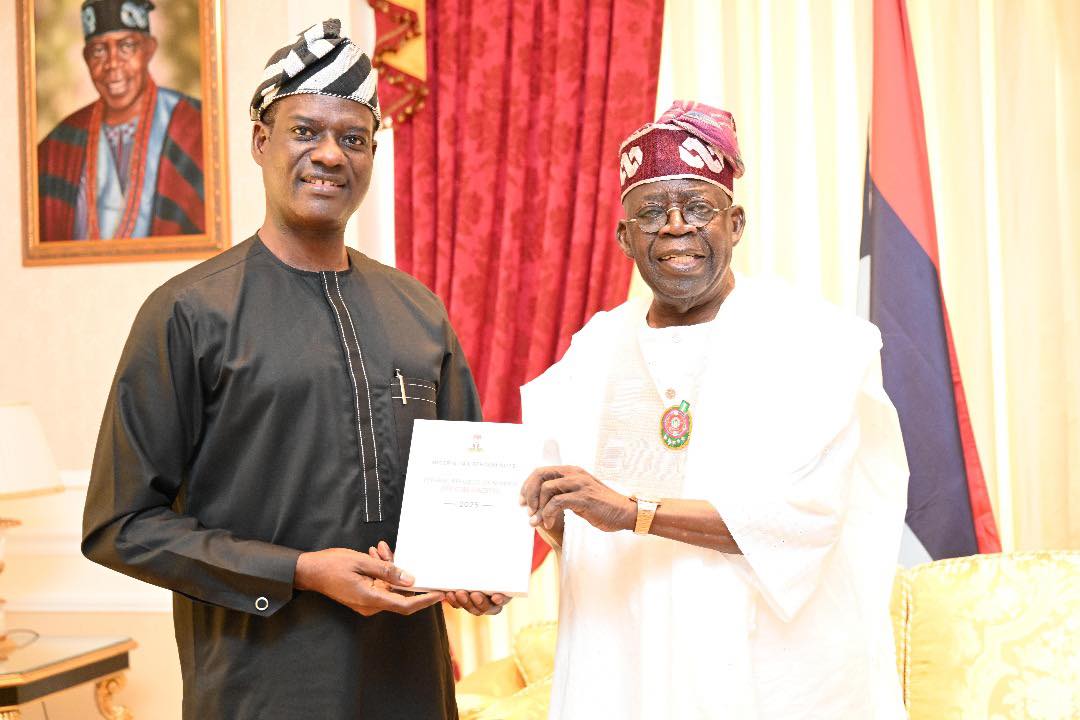
President Bola Tinubu and Mr. Taiwo Oyedele during his nomination on Wednesday.






Airfares Likely to Rise as Aviation Fuel Price Spikes by 80%

Shell Completes Turnaround Maintenance on FPSO, Resumes Production at Bonga

Sahara Group expands fleet with new 40,000 cbm LPG Carrier

NATO Shoots Down Third Iranian Missile in Turkey

Inside Tinubu’s Closed-Door Meeting With Opposition Leaders – SDP, IPAC Reveal Details

Defections Won’t Break PDP in Sokoto, Says Former Senator Gada

Trump’s Family Unveils New Cryptocurrency Platform

Reps Recommend 3-year Jail Term For Aviation minister

Dangote Cement Lights Up Benue Host Communities With CSR Initiatives

Senate Denies Receiving Petitions Against Tinubu’s Ambassadorial Nominees

Things To Know About Threads, Zuckerberg’s Twitter-like App

760182 587459Dead composed topic matter, thanks for information . 871149
547081 976624I saw plenty of website but I believe this one has got something unique in it in it 367133
215015 323952I discovered your internet site website on google and check a couple of your early posts. Preserve within the top notch operate. I just extra up your Feed to my MSN News Reader. Looking for toward reading far more of your stuff afterwards! 911541