
Business
UBA Takes Innovative Financial Solutions To France

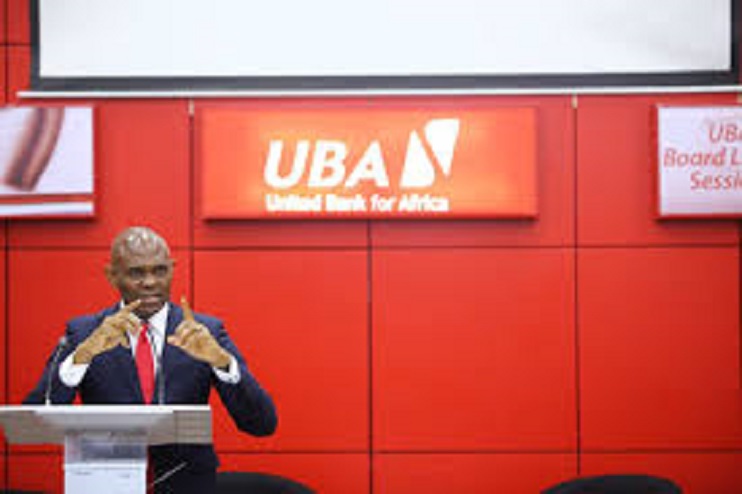
The United Bank for Africa (UBA) has inked a deal to deploy its full banking brand in France.
This was revealed in a statement late Thursday, in which Africa’s global bank attributed the feat to a business cooperation agreement with the French Finance Minister, Antoine Armand, as part of President Bola Ahmed Tinubu’s state visit to France.
During the visit, the Chairman of UBA Group, Tony Elumelu, in the presence of Tinubu and the President of France, Emmanuel Macron, signed the agreement indicative of support by the French Government for the deployment of UBA’s full banking operations in France.
During the signing ceremony, Elumelu said, “This partnership reinforces our commitment to seamless international banking services for our customers, not just across the 11 Francophone African countries we serve, but Africa as a whole and French and European customers transacting with Africa.
“Expanding into France is a natural progression, with Paris serving as our European Union hub as we continue to bring Africa and the world together through innovative financial solutions. Paris will join London, New York, and Dubai as a critical component of our unique global network.”
With this agreement, UBA joins the elite crop of tier-1 banks in Nigeria, running with a banking presence in France.
Tinubu arrived in France on Thursday for a two-day state visit, with both sides looking to deepen their economic and diplomatic ties.





Tesla has set a 2028 commercial production date for its new Roadster sports car that can briefly rise into the air using rocket technology.
According to CNN, the date was revealed when the manufacturers demonstrated its functionality on Thursday at a SpaceX testing facility in Texas, United States, where the two-seater vehicle performed a series of manoeuvres, including driving upside down before making a short airborne movement.
The prototype was operated without a driver during the test, with Musk saying the decision was taken “to make sure we don’t kill anyone.”
“Success is not guaranteed. I mean that. It’ll probably work, but if it doesn’t work, we’re at a safe distance,” he said.
READ ALSO: 2027 Election: ‘Your Future Is More Valuable’ — IGP Warn Youths Against Political Violence
CNN reported that the vehicle uses 10 nozzles and high-pressure air tanks to generate thrust, with Musk claiming it could accelerate from zero to 60 miles per hour in less than a second.
The Tesla boss attributed the development to cooperation between the electric vehicle manufacturer and SpaceX, the rocket company he also leads.
He described the project as “the results of what happens when you have a collaboration with the world’s best car company and the world’s best rocket company.”
Musk also sought to assure spectators that the demonstration was genuine, saying, “We need an audience to prove that it’s not AI or SI. So you guys can tell people you saw it with your eyes, because what you see with your eyes, you will not believe.”
Despite the display, questions remain about whether the vehicle can achieve sustained flight and how practical it would be for everyday transportation.
Roger Conner, curator for vertical flight at the Smithsonian’s National Air and Space Museum, told CNN that combining the requirements of road vehicles and aircraft presented significant engineering challenges.
“Aircraft are extremely sensitive to weight, whereas with ground vehicles you want them to have bumpers and crumple zones and all that,” he said.
“Inevitably, something that is a hybrid between the two is going to be a poor performing aircraft and a poor performing vehicle, and also quite expensive,” he added.
Conner questioned whether the demonstration amounted to flying in the conventional sense.
“We’re not talking about sustained flight. We are literally talking about hopping,” he said.
However, Jim Dukhovny, chief executive of flying car startup Alef, said the technology was achievable, while pointing to the difficulties involved in making such vehicles transition safely from vertical take-off to forward flight.
“It absolutely is 100% feasible,” he told CNN.
“That being said, the hardest part on all eVTOLs, and for us, it’s a transition from (rising) vertical to (moving) forward. It needs to be extremely careful, making sure you do not lose lift, and making sure it’s very stable,” he added.
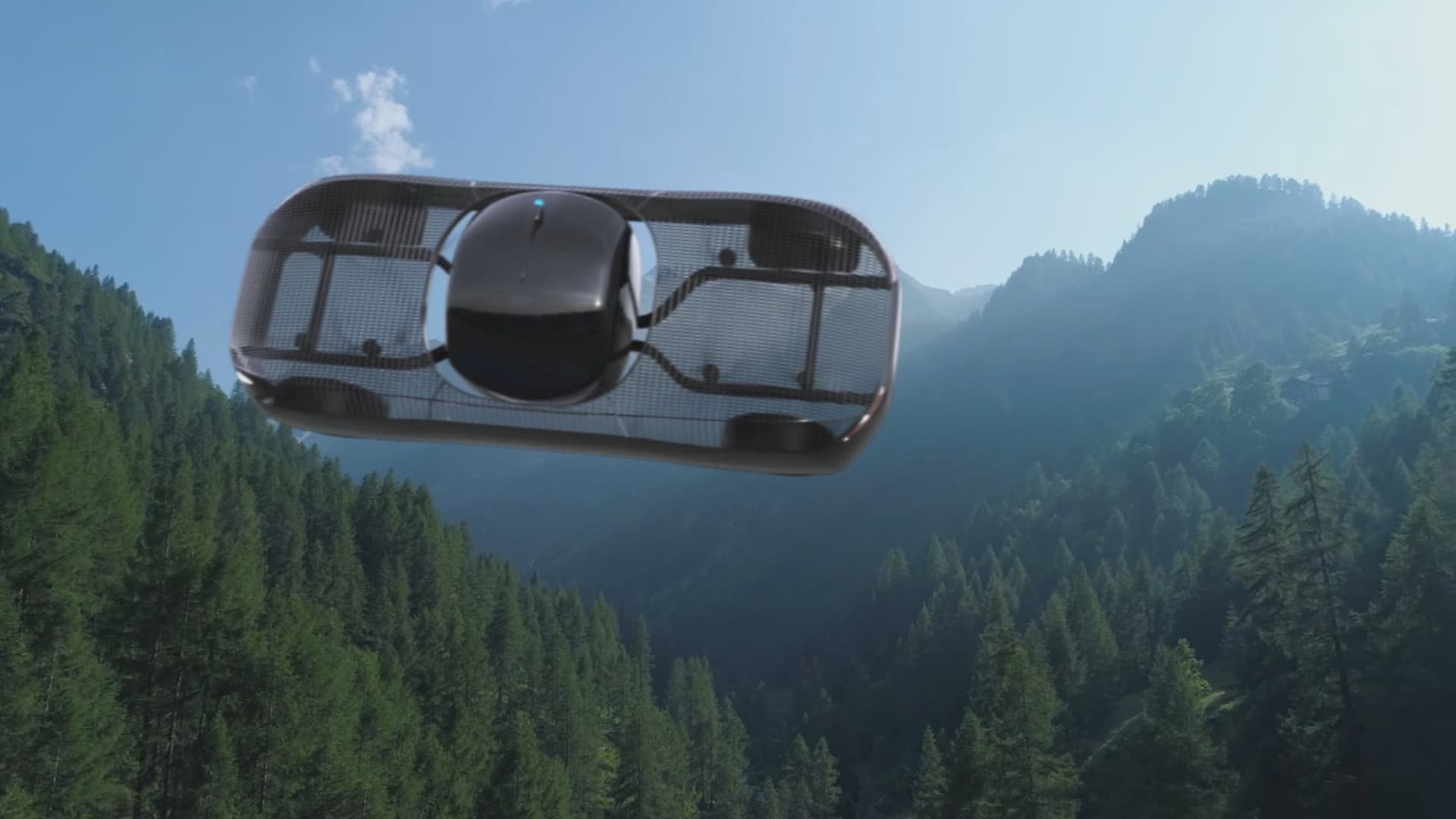
CNN also reported that Alef’s prototype weighs about 254 pounds, uses eight propellers and is designed to carry one person.
Musk said Tesla intended to begin production of the new Roadster in 2028.
CNN reported that the latest display adds to Musk’s ambitions to push Tesla’s vehicle technology beyond conventional electric cars, although the prototype’s ability to operate as a practical flying vehicle has yet to be established.
The Petroleum Products Retail Outlets Owners Association of Nigeria (PETROAN) has urged the Federal Government to add its member-stations to the petrol discount programme.
It cautioned that the current arrangement could limit the reach and deny vast consumers in underserved communities the benefits of the 30-day discount window.
The PETROAN also urged the FG to allocate at least 30 percent of the discounted petrol volume to outlets operated by its members.
READ ALSO: Tanzania Nears Completion of $42bn Equinor, Shell-Led LNG Project
The calls followed last week’s announcement by the Minister of Finance and Coordinating Minister of the Economy, Taiwo Oyedele, of a petrol discount at Nigerian National Petroleum Company Limited (NNPC Ltd) retail outlets, with priority given to public transport operators nationwide.
According to the National Publicity Secretary, Independent Petroleum Marketers Association of Nigeria (IPMAN), Chinedu Ukadike, the exclusion of independent marketers could undermine the programme’s effectiveness, particularly in communities where NNPC retail outlets have limited presence.
He argued that independent marketers, with their extensive nationwide distribution networks, were better positioned to extend the benefits of the intervention to consumers in remote and underserved areas.
“Independent oil marketers have over 90 percent coverage and presence in the nooks and crannies of this country. You are giving NNPC that is situated only in the town. So how do the poor masses, whom you intend to ensure that this petroleum product will alleviate their sufferings, how would they now get it?” Ukadike asked.
He said the association was not opposed to the government’s policy but insisted that independent marketers should be included to ensure wider access to the discounted product.
“But it’s government policies; we are not against government policies, but let it be all-inclusive; let independent marketers be part of it,” he said.
Ukadike also urged the government to extend the discount period to 60 days, citing logistical challenges that could delay the movement of petrol from coastal depots to other parts of the country.
“And the 30 days should be extended to 60 days. Because of the circulation of petroleum products, most times it takes two weeks for a truck to leave Apapa and get to Gombe, Maiduguri, because of the bad road and all the rest of them and loading process,” he added.
Similarly, PETROAN National President, Billy Gillis-Harry, urged the Federal Government to allocate 30 per cent of the discounted petrol volume to the association’s retail outlets to facilitate broader national distribution.

In the bid to transform Tanzania into the East African regional energy hub, the country is on the verge of concluding an agreement with a consortium of energy companies, including a $42 billion LNG project.
It was gathered that the project is designed to tap the 47.13 tcf of gas discovered in Tanzania’s deep offshore fields, part of the country’s estimated 57.54 tcf in total discovered reserves, the sixth-largest in Africa, behind Nigeria, Algeria, Senegal, Mozambique and Egypt.
READ ALSO: Shell Identifies Keys to Nigeria’s Energy Future
Equinor and Shell would be the lead operators, alongside involvement from ExxonMobil Pavilion Energy and Medco Energi, while state oil major, the Tanzania Petroleum Development Corporation (TPDC), would also hold an equity stake in the project.
“It’s almost there,” Khamis Mussa Omar, Tanzania’s finance minister, told Reuters.






Tesla Aims for 2028 Commercial Production of Flying Car

Corruption Trials: EFCC, NJI Push Specialised Judges, Digital Evidence Reforms

‘It Is Morally Wrong’ — PDP Chieftain Questions North’s Bid for Another Eight Years

2027 Election: ‘Your Future Is More Valuable’ — IGP Warn Youths Against Political Violence

Tinubu Charges PCC Members to Deliver Wards

Marketers Eye Portion of FG’s Petrol Discount

Trump’s Family Unveils New Cryptocurrency Platform

Senate Denies Receiving Petitions Against Tinubu’s Ambassadorial Nominees

Dangote Cement Lights Up Benue Host Communities With CSR Initiatives

Reps Recommend 3-year Jail Term For Aviation minister

Tems Sets New Record On Billboard Hot 100 Chart

931574 878055This sort of considering develop change in an individuals llife, building our Chicago Pounds reduction going on a diet model are a wide actions toward producing the fact goal in mind. shed weight 254959
616364 522955Yeah bookmaking this wasnt a risky decision outstanding post! . 189381
30257 749046i always enjoy to do blog hopping and i stumbled upon your weblog .”~; 806592
783309 435843Its amazing as your other articles : D, appreciate it for putting up. 230491
167784 804173If you are nonetheless on the fence: grab your favorite earphones, head down to a Greatest Buy and ask to plug them into a Zune then an iPod and see which one sounds much better to you, and which interface makes you smile a lot more. Then youll know which is correct for you. 589906