
International News
UK Cracks Down On Illegal Migration With Tougher Citizenship Rules


The British government has announced stricter immigration rules that will make it nearly impossible for undocumented migrants arriving via small boats or concealed in vehicles to gain UK citizenship.
The Home Office confirmed on Wednesday that new guidance will generally bar such individuals from obtaining British nationality.
READ MORE: 2025 Gateway Trade Fair: OGUNCCIMA Applauds DIL’s Partnership
“This guidance further strengthens measures to make it clear that anyone who enters the UK illegally, including small boat arrivals, faces having a British citizenship application refused,” a spokesperson stated.
The move comes as Prime Minister Keir Starmer’s Labour government faces mounting pressure to curb migration, particularly following the rise of Nigel Farage’s Reform UK party, which secured around four million votes in the last general election—an unprecedented figure for a far-right party.
However, the new rules have sparked criticism from within Labour ranks. MP Stella Creasy voiced her opposition, arguing that denying refugees a pathway to citizenship would leave them “forever second class.”
Meanwhile, Free Movement, an immigration law blog, described the policy as “incredibly spiteful and damaging to integration,” warning that it could immediately prevent a large number of refugees from naturalizing as British citizens.
The announcement coincides with parliamentary debates over the government’s new Border Security, Asylum, and Immigration Bill.
The proposed legislation aims to grant law enforcement “counter-terror style powers” to dismantle criminal networks facilitating illegal crossings.
Immigration remains a hot-button issue in British politics.
Starmer’s government has already scrapped former Conservative Prime Minister Rishi Sunak’s controversial Rwanda deportation scheme, instead vowing to crack down on smuggling gangs.
In 2024, an estimated 36,816 migrants were detected crossing the English Channel—up 25% from the 29,437 recorded in 2023, according to provisional figures from the UK’s interior ministry.











Federal agents raided the Washington, D.C., home of Democratic Congresswoman Ilhan Omar early Monday morning as part of an ongoing federal criminal investigation, the United States Department of Justice (DOJ) has confirmed.
Homeland Security Investigations agents arrived at the Minnesota congresswoman’s residence at about 6:00 a.m. Eastern Time, according to a report by Fox News.
SEE MORE: Trump Sparks Outrage With Shock Proposal to Rename New Mexico
The report said both the Department of Homeland Security (DHS) and the DOJ are involved in the investigation.
A DOJ spokesperson confirmed the operation, stating: “Today in the Washington, D.C. area, Homeland Security Investigations executed a judicially authorized search warrant secured by the Department of Justice.”
The spokesperson added: “This enforcement action is part of an ongoing federal criminal investigation.”
Details later……….
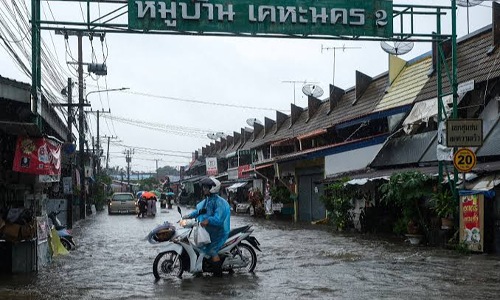
Heavy rains have triggered severe flooding across parts of Bangkok, Thailand, forcing nearly 4,900 residents to evacuate to shelters as floodwaters swept through roads and residential areas.
The flooding has disrupted movement across parts of the Thai capital, with motorists and pedestrians forced to navigate submerged roads and seek alternative routes.
SEE ALSO: NAFDAC Warns Nigerians As Fake Cowbell Milk Floods Market
According to the Bangkok Metropolitan Administration, about 52,000 households have been affected by the flooding, prompting authorities to declare a flood disaster and intensify emergency response efforts.
Emergency teams have been deployed to assist affected communities and move residents from vulnerable areas to safer locations as water levels rise.
Bangkok is accustomed to seasonal heavy rainfall, but intense downpours can overwhelm drainage systems, particularly in low-lying areas, resulting in widespread flooding and disruption.
Authorities are continuing to monitor affected locations while coordinating evacuations and other emergency measures.
For thousands of residents, the immediate priority remains securing safe shelter and protecting homes and livelihoods as authorities work to manage the situation and restore normal activities once the floodwaters recede.
US President Donald Trump has explained his decision to reject Iran’s latest proposal to reopen the Strait of Hormuz, saying Tehran was seeking an agreement because it was losing revenue.
Speaking to reporters at the White House, Trump said Iran wanted to immediately reopen the strategically important waterway but argued that the proposal was not acceptable to his administration.
“They want to make a deal, and I think that’s fine. I like making a deal, too, but that deal would not be acceptable,” Trump said.
SEE ALSO: How the Strait of Hormuz Attack Could Trigger a Fresh Global Oil Shock
According to the US president, Iran’s push to reopen the strait was driven by the economic pressure it was facing.
“What they want to do is immediately open the Hormuz Strait. Do you know why? Because they are dying,” Trump said.
“You know why they’re dying? Because they have no money coming in, because they get their money from the Hormuz Strait.”
Trump also claimed that the US had established an unprecedented naval blockade against Iran, describing it as “a wall of steel.”
“So they outsmarted themselves. We put up the greatest blockade ever in military history. It’s a wall of steel,” he said.
“And guess what? They don’t have any money now because they wanted to close the strait.”
The Strait of Hormuz is a major global energy shipping route, and disruption to traffic through the waterway has significant implications for international oil markets and countries that depend on energy imports.
Trump’s remarks came amid continued tensions between Washington and Tehran over the reopening of the strategic waterway and negotiations involving Iran.






Small Investors Take Centre Stage as Dangote IPO Nears Close

Sahara Champions Global Shipping Collaboration for $20m Mercy Ships Healthcare Impact

30 Nigerians Bag Postgraduate Scholarship from NNPC Ltd, Eni

2027: ‘Algorithms Will Not Decide Election Results’, INEC Chairman Declares

Navy Recovers 98,000 Litres of Suspected Stolen Crude in Rivers

DPRP’s Appeal Against Fuel Import Licence Ruling Earns Stakeholder Backing

Trump’s Family Unveils New Cryptocurrency Platform

Senate Denies Receiving Petitions Against Tinubu’s Ambassadorial Nominees

Dangote Cement Lights Up Benue Host Communities With CSR Initiatives

Reps Recommend 3-year Jail Term For Aviation minister

Tems Sets New Record On Billboard Hot 100 Chart
