
International News
UK Imposes Sanctions On Businesses Linked To Sudan Conflict

Britain has taken a decisive stance against the escalating conflict in Sudan by announcing sanctions targeting businesses associated with the warring factions.
Since the outbreak of fighting between rival generals on April 15 last year, the situation has deteriorated drastically, resulting in thousands of casualties and forcing approximately 1.8 million people to seek refuge in neighboring countries.
Aid workers on the ground have painted a grim picture of the humanitarian catastrophe unfolding in the country, with civilians enduring starvation, sexual violence, ethnic killings, and executions.
The UK’s Foreign Office has underscored the severity of the situation, emphasizing that “strict measures” will be implemented, including asset freezes on companies with ties to the Sudanese Armed Forces (SAF) and its rival, the paramilitary Rapid Support Forces (RSF).
British foreign minister David CameronCameron said “We continue to see appalling atrocities against civilians, unacceptable restrictions on humanitarian access and an utter disregard for civilian life.
“The businesses that support the warring parties must be held to account, alongside those responsible for human rights abuses. The world must not forget about Sudan. We urgently need to end the violence.
The sanctions target specific entities, including Alkhaleej Bank, implicated in financing the RSF, and Al-Fakher Advanced Works, a holding company facilitating gold exports for the organization, with proceeds funnelled into weapons acquisition.
Additionally, Red Rock Mining, known for providing funds to the SAF, faces sanctions. The company’s close ties to Defence Industries System, the economic and manufacturing arm of the SAF, further solidify its inclusion in the sanctions, as stated by the Foreign Office.
France, currently hosting an international conference on Sudan, is urging for aid contributions and heightened global attention to address what officials describe as a crisis overshadowed by ongoing conflicts in Ukraine and Gaza.
Will Carter, Sudan country director for the Norwegian Refugee Council, emphasized the dire conditions faced by civilians in the region, including starvation, widespread sexual violence, ethnic massacres, and executions.
According to the UN, over 8.5 million people have been displaced since the onset of the conflict.
The World Health Organization has issued warnings about the country’s collapsing health system, citing acute shortages of medical staff and essential medicines as pressing concerns.




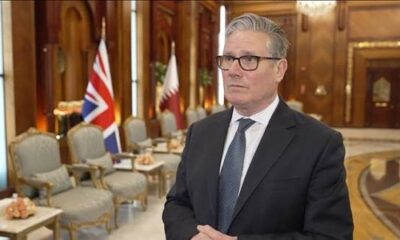




Federal agents raided the Washington, D.C., home of Democratic Congresswoman Ilhan Omar early Monday morning as part of an ongoing federal criminal investigation, the United States Department of Justice (DOJ) has confirmed.
Homeland Security Investigations agents arrived at the Minnesota congresswoman’s residence at about 6:00 a.m. Eastern Time, according to a report by Fox News.
SEE MORE: Trump Sparks Outrage With Shock Proposal to Rename New Mexico
The report said both the Department of Homeland Security (DHS) and the DOJ are involved in the investigation.
A DOJ spokesperson confirmed the operation, stating: “Today in the Washington, D.C. area, Homeland Security Investigations executed a judicially authorized search warrant secured by the Department of Justice.”
The spokesperson added: “This enforcement action is part of an ongoing federal criminal investigation.”
Details later……….
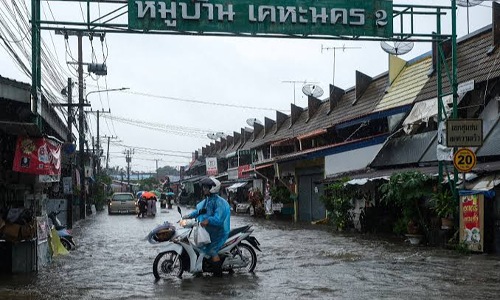
Heavy rains have triggered severe flooding across parts of Bangkok, Thailand, forcing nearly 4,900 residents to evacuate to shelters as floodwaters swept through roads and residential areas.
The flooding has disrupted movement across parts of the Thai capital, with motorists and pedestrians forced to navigate submerged roads and seek alternative routes.
SEE ALSO: NAFDAC Warns Nigerians As Fake Cowbell Milk Floods Market
According to the Bangkok Metropolitan Administration, about 52,000 households have been affected by the flooding, prompting authorities to declare a flood disaster and intensify emergency response efforts.
Emergency teams have been deployed to assist affected communities and move residents from vulnerable areas to safer locations as water levels rise.
Bangkok is accustomed to seasonal heavy rainfall, but intense downpours can overwhelm drainage systems, particularly in low-lying areas, resulting in widespread flooding and disruption.
Authorities are continuing to monitor affected locations while coordinating evacuations and other emergency measures.
For thousands of residents, the immediate priority remains securing safe shelter and protecting homes and livelihoods as authorities work to manage the situation and restore normal activities once the floodwaters recede.
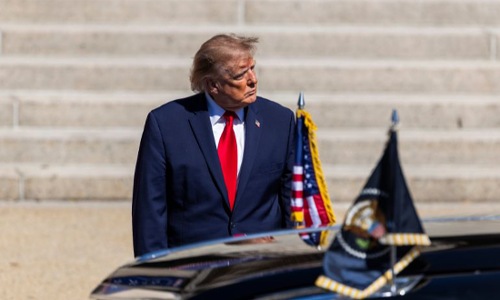
US President Donald Trump has explained his decision to reject Iran’s latest proposal to reopen the Strait of Hormuz, saying Tehran was seeking an agreement because it was losing revenue.
Speaking to reporters at the White House, Trump said Iran wanted to immediately reopen the strategically important waterway but argued that the proposal was not acceptable to his administration.
“They want to make a deal, and I think that’s fine. I like making a deal, too, but that deal would not be acceptable,” Trump said.
SEE ALSO: How the Strait of Hormuz Attack Could Trigger a Fresh Global Oil Shock
According to the US president, Iran’s push to reopen the strait was driven by the economic pressure it was facing.
“What they want to do is immediately open the Hormuz Strait. Do you know why? Because they are dying,” Trump said.
“You know why they’re dying? Because they have no money coming in, because they get their money from the Hormuz Strait.”
Trump also claimed that the US had established an unprecedented naval blockade against Iran, describing it as “a wall of steel.”
“So they outsmarted themselves. We put up the greatest blockade ever in military history. It’s a wall of steel,” he said.
“And guess what? They don’t have any money now because they wanted to close the strait.”
The Strait of Hormuz is a major global energy shipping route, and disruption to traffic through the waterway has significant implications for international oil markets and countries that depend on energy imports.
Trump’s remarks came amid continued tensions between Washington and Tehran over the reopening of the strategic waterway and negotiations involving Iran.






Why Ebola Outbreaks Keep Returning to Africa, Dr Jean Kaseya Explains

Peter Obi Meets UK Officials, Diaspora Stakeholders on Rebuilding Nigeria

Grains-Laden Truck Falls on BRT Lane in Lagos

Ogun Police Chief Urges POWA to Turn Skills Centre into Industrial Hub

Thor Empowers Host Communities with 10 Cassava, Palm Oil Processing Plants

FG Puts Daily Gas Output at 8bcf

Trump’s Family Unveils New Cryptocurrency Platform

Senate Denies Receiving Petitions Against Tinubu’s Ambassadorial Nominees

Dangote Cement Lights Up Benue Host Communities With CSR Initiatives

Reps Recommend 3-year Jail Term For Aviation minister

Tems Sets New Record On Billboard Hot 100 Chart
