
NEWS
Umahi Vows To Tackle House Scrutiny On N15tn Lagos – Calabar Coastal Highway Project

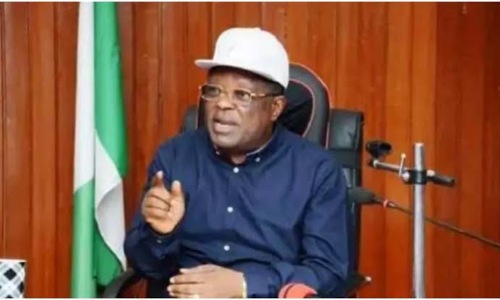
Senator David Umahi, the Minister of Works, has announced his firm commitment to face the House of Representatives’ scrutiny regarding the contentious N15 trillion Lagos-Calabar Coastal Highway road project.
Umahi also revealed plans to broadcast the proceedings live on television, ensuring transparency and accessibility for all Nigerians.
Emphasizing the project’s integrity, Umahi affirmed that he and the Ministry of Works meticulously adhered to proper procedures, securing all requisite approvals and documentation prior to project initiation.
He said, “I am ready to face the National Assembly to defend the project. I will not want to say anything now till I meet with the Senators and House of Reps members. It will be live so you will also hear it. It will be live so that Nigerians will see it.
“When people say the project is on personal interest, there is a contradiction there. This is because Atiku Abubakar said the Jonathan administration wanted to do that project which would have cost about $12bn or so. So, whose interest was that administration promoting in trying to do that project?
“I have a design from the NDDC (Niger Delta Development Commission) on that project. The NDDC designs are quite bulky. When I was implementing this current project, I had to call for the design.
“There is no personal interest in this project. The idea of that project came from the ingenuity of Mr President (Bola Tinubu) when he was governor; he was the one who procured the right of way within the Lagos corridor and gazetted it.
“The reason for the project taking off now is all about how we can inject some activities into the economy. If we want to come out of inflation, we have to look at investments in infrastructure and that is what this project is addressing. It is addressing a lot of elements of return on investments. There is no personal interest associated with that.
“It is quite petty to ask why it is starting from Lagos and not Calabar. The name of the project is ‘Lagos-Calabar Coastal Road’ and not the other way around. This means there is a zero point, which happens to be at Ahmadu Bello Way, which coincides with the Eko Atlantic.”
On status of the project he opined “That is pure coincidence. We have started the project already and it is progressing. As of today, I can tell you that about 80 per cent of the first 1.3km is completed.”





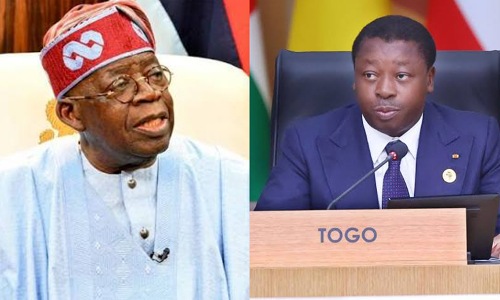
Nigeria is preparing to increase electricity exports to Togo through the Niger Delta Power Holding Company (NDPHC), even as many Nigerians continue to experience power shortages at home.
The move comes as Togo seeks to meet rising domestic electricity demand.
The Managing Director/CEO of NDPHC, Jennifer Adighije, confirmed the development following discussions with Togo’s national electricity utility, Compagnie Energie Electrique du Togo (C.E.E.T).
SEE MORE: How Nigerians Can Resolve Electricity Complaints – NERC Explains
The visiting C.E.E.T delegation was led by its Director-General, Débo‑K’mba Barandao, who described the talks as productive and aimed at strengthening regional energy cooperation.
Barandao said C.E.E.T currently imports about 75 megawatt-hours of electricity from NDPHC under a bilateral arrangement.
“The imported electricity has played a significant role in sustaining stable power supply and economic activities across Togo,” he noted.
He added that rising electricity demand, especially in the industrial and commercial sectors, alongside government efforts to expand national access, has prompted the utility to seek additional supply.
According to Barandao, Nigerian electricity imports help maintain reliable and affordable power for households, businesses, and public institutions across Togo.
He commended NDPHC for its consistency, saying the partnership has strengthened Togo’s national grid and regional energy cooperation.
Responding, Adighije reiterated NDPHC’s readiness to deepen cooperation and sustain electricity exports to neighboring countries.
She emphasized that the company operates multiple plants under the National Integrated Power Project, with sufficient capacity to support increased regional supply.
She added that expanding electricity exports would require bankable and sustainable commercial arrangements between both parties.
“A reliable payment framework will safeguard NDPHC’s interests and enable continued support for regional energy stability through power exports,” Adighije said, highlighting the need for credible financial guarantees and structured payment mechanisms to reduce risks associated with cross-border electricity trade.
Both parties reaffirmed their commitment to developing workable frameworks for increased electricity supply from Nigeria to Togo.
Industry analysts say this reflects a growing effort among West African countries to deepen regional electricity trade and address persistent power shortages.
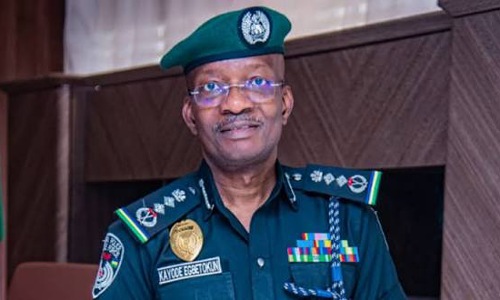
Former Inspector-General of Police, Kayode Egbetokun, has explained why he believes his retirement from the leadership of the Nigeria Police Force came at the perfect time, describing it as the fulfilment of God’s divine plan.
Egbetokun made the remarks during a retirement thanksgiving service held in his honour at the Force Headquarters Chapel in Abuja.
The event also featured the inauguration of the Police Chaplaincy building and was attended by senior police officers, clergy and other worshippers.
SEE MORE: Adeleke Urges IGP to “Call Osun CP to Order“
Reflecting on his appointment as Inspector-General in 2023, the former police chief revealed that he never expected the role when it came.
According to him, the first thing he did after entering his office was to pray.
“I was not expecting the appointment when it came. The first thing I did when I entered the office alone was to pray,” he said.
Egbetokun disclosed that after assuming office, he made three personal prayers to God.
He said he prayed for wisdom to effectively lead the police institution, the grace to complete his tenure successfully, and the ability not to remain in office beyond the time divinely allotted to him.
“My first prayer was for wisdom to run the office, the second was for grace to end well, and the third was not to stay a day longer than God permits. I believe God has answered those prayers,” he added.
The retired police boss also reflected on his career journey, noting that faith played a significant role in his rise from his early days after graduating from the police academy to eventually becoming Nigeria’s top police officer.
He further recounted a dream he had before joining the force, in which he saw himself as a Deputy Inspector-General of Police travelling in a police vehicle bearing the registration number “NPF02.”
According to him, the experience later taught him that life can unfold in unexpected ways.
Egbetokun added that throughout his career he remained conscious of how his actions could influence public perception of the police, a reality he said guided his conduct while in office.
“I knew whatever I did would affect the image of the force, so I made it my duty to remain professional and uphold integrity, transparency and fairness,” he stated.
In his remarks, the Force Chaplain, Joshua Omoyele, commended Egbetokun for completing the Police Chaplaincy building project during his tenure, describing it as a lasting legacy.
Omoyele also praised the former police boss for his strong commitment to Christian service even before his appointment as Inspector-General, noting that he maintained that devotion throughout his time in office.
He further highlighted Egbetokun’s past roles in the police force, including his tenure as Commissioner of Police in Kwara State and Assistant Inspector-General in Zone 7.

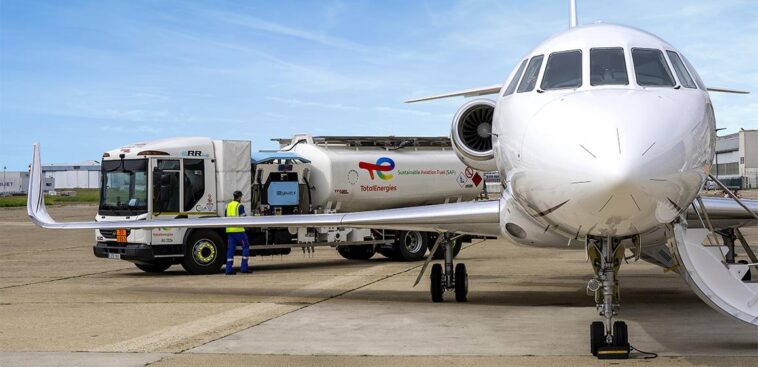
The Airline Operators of Nigeria (AON) has declared that airlines operating in Nigeria have come under financial pressure following a sharp increase in the price of Jet-A1, also known as aviation fuel.
According to the group, the price of aviation fuel, has surged to about N1,800 per litre in many parts of the country, from about N1,000 per litre two weeks ago. This amounts to almost an 80 per cent increase within a short period.
Aviation fuel remains the largest cost component in airline operations, accounting for about 30 to 35 per cent of total operating expenses.
Industry stakeholders have linked the latest spike to the ongoing conflict in the Middle East, which has pushed up global energy prices.
ALSO READ: Shell Completes Turnaround Maintenance on FPSO, Resumes Production at Bonga
Speaking on Channels Television on Friday, the spokesperson for the Airline Operators of Nigeria, Prof Obiora Okonkwo, said the surge had placed airlines under severe financial strain.
According to him, most carriers have so far refrained from immediately transferring the additional cost burden to passengers, despite the pressure on their operations.
“Two weeks ago, we were getting Jet-A1 at about N1,000 per litre, which today is about N1,800, and even more in some stations. We have experienced an increase of about 80 per cent. That’s quite a spike,” Okonkwo said.
He explained that airlines were currently absorbing the losses in order to avoid worsening the economic burden on the travellers.
“We are not in a business where you can easily adjust your ticket price. Right now what we are doing is that we are bleeding. We are taking the blow. We are selling tickets at very non-profitable prices. We are losing a lot of money,” he said.
Okonkwo warned that the situation might not be sustainable if fuel prices continue to rise without government intervention.
“Obviously, adjustments will be expected anytime soon. But again, we are very sensitive to the economic situation of Nigerians and our travellers,” he added.
He noted that developments in the global oil market, particularly the recent release of reserve crude oil, could influence fuel prices in the coming weeks.
Okonkwo also urged the Federal Government to explore engagement with the Dangote Refinery as part of efforts to stabilise aviation fuel supply locally.
“We were more hopeless in a situation where there was no refinery in Nigeria in the last two years. Now that we have a refinery, we are hopeful that we can find a solution around it,” he said.
According to him, if the spike persists, some airlines may struggle to continue absorbing the losses associated with the rising cost of aviation fuel.
Meanwhile, the AON spokesperson also reacted to the decision by the Federal Competition and Consumer Protection Commission to sanction about five airlines over alleged price fixing.
Okonkwo said while the commission has regulatory powers, the aviation sector remains deregulated, making coordinated price fixing unlikely.
“There is no meeting of airlines where they agree to fix prices. Fixing prices would mean operating as a cartel, and that is not the case,” he said.
He explained that airline ticket pricing varies widely because different aircraft types attract different operating costs.
“Each airline determines its fares based on its own operational costs,” he said.
Okonkwo added that airlines must also demonstrate financial viability to regulators as part of the conditions for maintaining their operating licences.
“At every point in time, you must prove to the regulators that you are financially viable and capable of sustaining operations,” he said.
He urged regulators to take into account the fragile nature of the aviation industry when making policy decisions affecting airlines.






Nigeria Wants to Export Electricity to Togo While Citizens Face Outages

Leadership Shakeup: ADC Kicks Off Nationwide Elections

‘Why My Retirement Came at the Perfect Time’ — Ex-IGP Kayode Egbetokun

Airfares Likely to Rise as Aviation Fuel Price Spikes by 80%

Shell Completes Turnaround Maintenance on FPSO, Resumes Production at Bonga

Sahara Group expands fleet with new 40,000 cbm LPG Carrier

Trump’s Family Unveils New Cryptocurrency Platform

Reps Recommend 3-year Jail Term For Aviation minister

Dangote Cement Lights Up Benue Host Communities With CSR Initiatives

Senate Denies Receiving Petitions Against Tinubu’s Ambassadorial Nominees

Tems Sets New Record On Billboard Hot 100 Chart
