
Politics
Unease As N’Assembly Rubber Stamps Budget

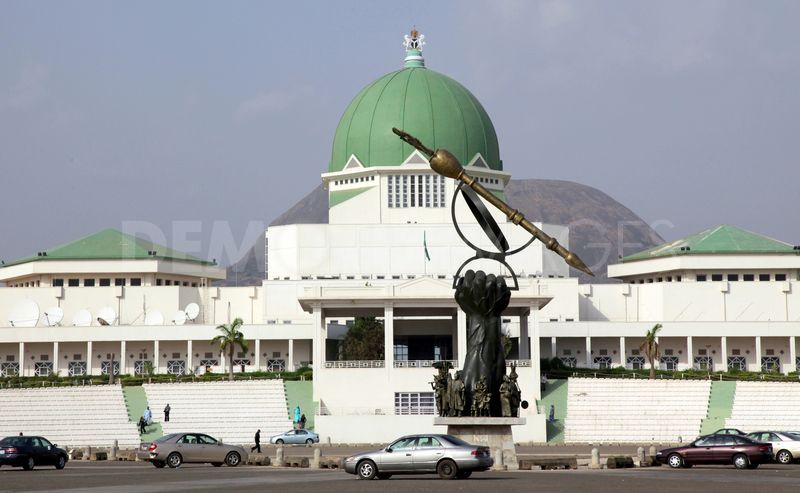
. . . Enveloping system of budgeting is a cesspool of corruption – Senator Moro
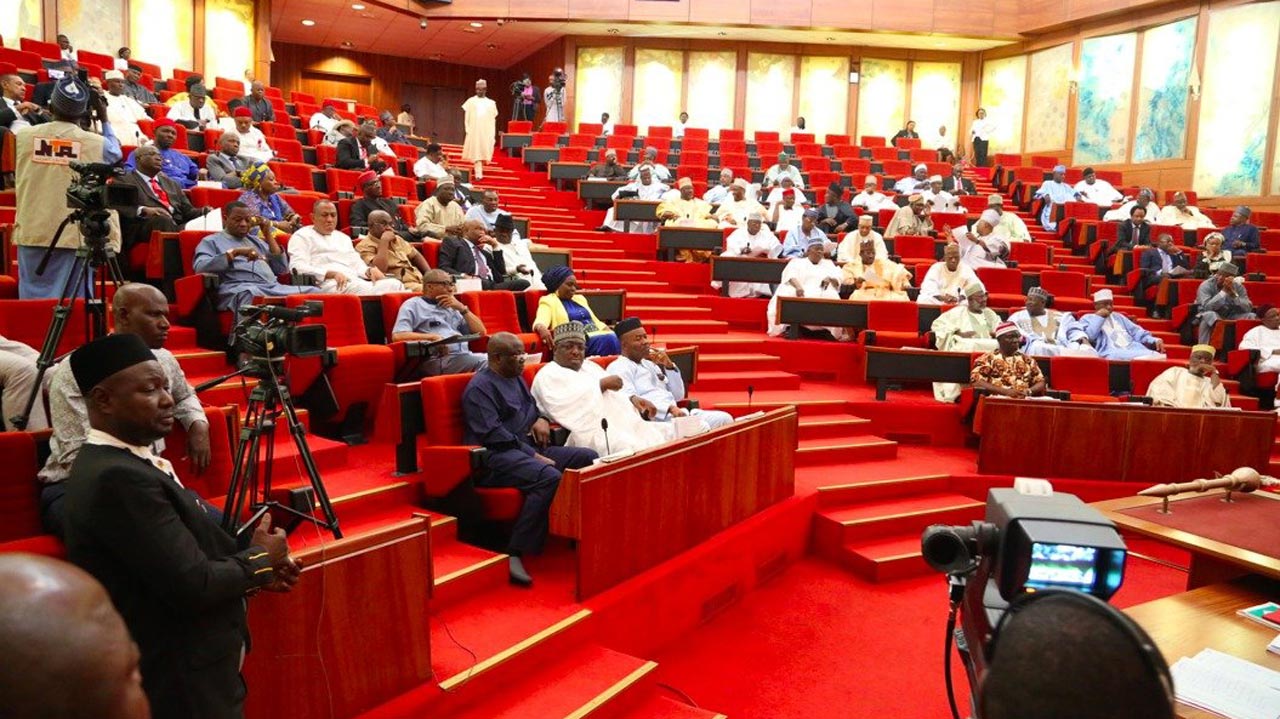
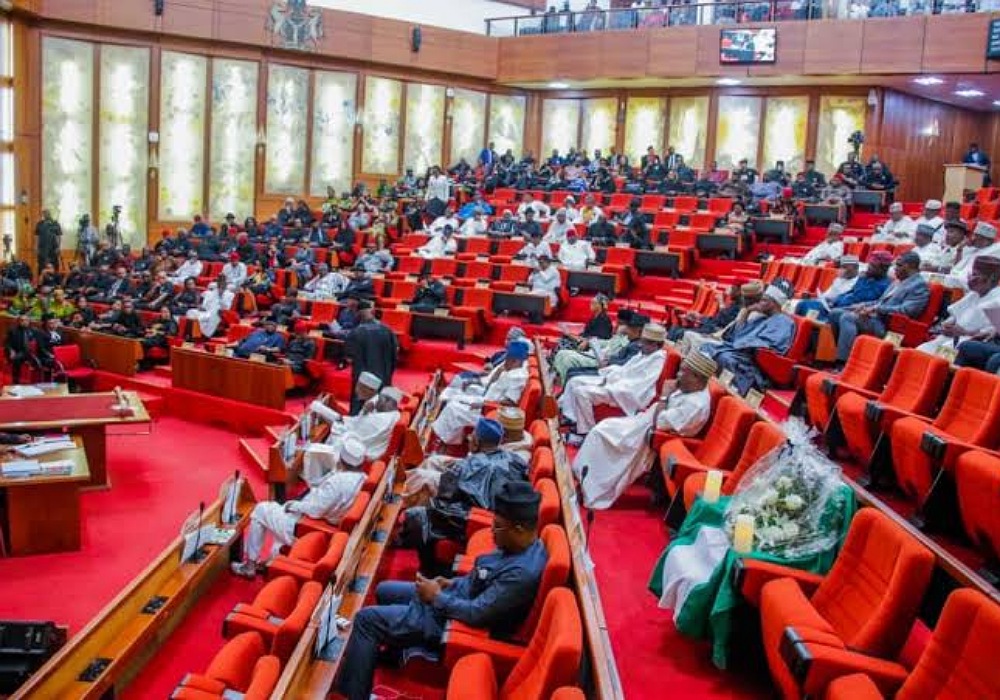
There are clear signals that the National Assembly would be underlining the widely held perception that it is an appendage of the executive by rubberstamping the 2024 Appropriating Bill before embarking on end-of-year break.
This is despite heavy apprehension from informed sources and concerns being voiced even in the National Assembly.
Recall that popular economist, Bismarck Rewane had cried that the masses were more interested in cost of living indices, instead of high-sounding rhetoric.
Emerging facts show that the legislators are aware that they by passing the budget, they are taking a plunge into the dark, yet, they cannot help themselves, as they must endorse it before going on break.
According to The PUNCH, indications emerged on Friday that the National Assembly would pass the 2024 Appropriation Bill of N27.5tn on Tuesday, December 19.
The Senate and the House of Representatives had earlier on Friday passed the ‘Renewed Hope’ budget for second reading.
The Deputy Senate President, Jibrin Barau, hinted during the plenary that the budget might be passed by the lawmakers on December 19 before embarking on their Christmas and New Year break.
During deliberations on Friday, senators applauded President Bola Tinubu for his good intentions for the country, but some lamented the failure of the executive to provide the details of the budget.
The budget was passed for second reading and referred to the Committee on Appropriations after being put to a voice vote by Barau, who presided over the session.
“The budget is hereby referred to the Committee on Appropriations and the committee is mandated to submit the report to this chamber on December 19,” Barau stated.
The President had on Wednesday presented to a joint session of the National Assembly the budget, which he named, ‘Budget of Renewed Hope’.
Tinubu pegged the budget deficit for the 2024 fiscal year at N9.18tn.
He said the deficit would represent 3.88 percent of the country’s total Gross Domestic Product.
Tinubu stated, “The N9.18tn deficit is lower than the N13.78tn deficit recorded in 2023, which represented 6.11 percent of the GDP.
“The deficit will be financed by new borrowings totalling N7.83tn; N298.49bn from privatisation proceeds and N1.05tn drawdown on multilateral and bilateral loans secured for specific development projects.”
He added that his administration would limit the inflation rate to 21.4 percent in 2024, adding that tax and fiscal policies were currently being reviewed.
“Our target is to increase the ratio of revenue to GDP from less than 10 percent currently to 18 percent within the term of this administration,” the President added.
To fund the budget, he stated that fresh loans would be collected, while the government would also explore public-private partnership arrangements to finance critical infrastructure.
Commenting on the budget, Minister of Finance and Coordinating Minister of the Economy, Wale Edun, said it would be financed with less deficit than the situation in the past.
He said, “So, there will definitely be fresh loans, and if those loans are maturing, they will be financed.
“And as always, you’re not going to be financing all the loans from the revenue; so, they will be fresh loans.
“There will be continuous reliance on loans, but less so. The important thing is that the size of the budget that is being relied on from borrowing is downsized.”
Contributing to the debate on Friday, Senator Babangida Hussaini (All Progressives Congress, Jigawa North West), raised the issue of insecurity in the country, tracing it back to a lack of unemployment for citizens.
According to him, it is a necessity to work on the skills of unemployed youths and create jobs for them.
“Unemployment is a common problem in this country; we must find jobs for these youths. Sometimes there are jobs but no skills, so we should step up to look into the skills of these youths. We must also step up our legislative functions of oversight,” Hussaini stated.
Senator Tahir Monguno (APC, Borno North) said, “There is a saying that an idle mind is a devil’s workshop. There is a need for us to create and generate employment, which will ease the issues of insecurity in the country.”
Senator Sadiq Umar (APC, Kwara North) expressed worry over the continuous rise in debt servicing, which he noted had been a trend since 2015.
“The debt servicing (figure) is worrisome but we will look forward to how this will be managed. The recurring expenditure is very high as well and the capital expenditure is an increase over that of last year, and there has been a gradual increase since 2015”
In his contributions, Senate Chief Whip, Ali Ndume (APC, Borno South), responded to the issue of borrowing, stating that it would be worthwhile when Nigerians began to see the developments the loans were being used for.
Ndume said, “The capital expenditure has now gone up, which is the first in the country. The deficit is also commendable.
“Once Nigerians see the reason why we are borrowing; it will be worthwhile. What we need to do is allow the President to give us a renewed hope.”
Senator Aliyu Kabiru said the basis of the 2024 budget was rational.
“The oil price benchmark is rational; the exchange rate is also rational. However, I think we are beginning to see fiscal discipline in our budget framework. Projection around the revenue is also achievable and it is important to have a realistic bill and that will benefit the common man,” he submitted.
Senator Eyinnaya Abaribe (All Progressives Grand Alliance, Abia South), complained that the budget did not capture the state of the power sector despite being an important element driving the economy.
Abaribe said, “How do we create jobs if the issue of power failure in Nigeria is not addressed? Aside from the government, all the self-employed people from manufacturing industries to business centre owners, need electricity to power their enterprises and remain in business.
“At the committee level, we need to look around the projections and proposals made in the budget for required organisations, for what Nigeria and Nigerians need, or else if we leave it as it is, it is garbage in, garbage out.”
Senator Abba Moro in his contribution said the seven percent of the budget proposal earmarked for the education sector was too small and a far cry from the 26 percent recommended by the United Nations Educational Scientific and Cultural Organisation.
He added that the enveloping system of budgeting would not make the yearly budget impactful in terms of implementation.
“The Enveloping system of budgeting is a cesspool of corruption. We need to seek alternatives because we cannot continue doing things the same way all the time and expect different results,” Moro added.
Senator Francis Fadahunsi (PDP, Osun), expressed the hope that funds moved by President Tinubu from votes for infrastructure in the 2023 budget to the recently passed N2.17tn supplementary budget for palliatives would be reflected in the 2024 budget.
He specifically mentioned the Ibadan-Ife-Ilesha-Akure road as part of the projects that suffered from such budgetary votes’ removal.
Others who made contributions were senators Benson Kombowei (PDP, Bayelsa Central), Ede Dafinone (APC, Delta Central), Jide Ipinsagba (APC, Ondo North), Seriake Dickson (PDP, Bayelsa West), and Victor Umeh (LP, Anambra Central).
During the debate on the budget on Thursday, lawmakers raised concerns over the lack of details for deliberations.
Some of the senators lamented that they were working based on assumptions and projections made on revenues and expenditures in the proposals by Tinubu.
The first to object was Senator Kawu Sumaila (New Nigerian People’s Party, Kano South), who stated that it was an aberration for lawmakers to debate the budget without seeing the details of what they were to consider.
Sumaila said, “We cannot be considering a budget whose details we have not seen. We don’t have the sectoral breakdown; how do we know if we are doing the right thing? I don’t think we should be debating the budget now.
“How are we sure that the interests of our constituents were captured in the budget?”
Kawu was, however, countered by the Deputy Senate President, Jibrin Barau (APC, Kano North), who said that the bill was passed for second reading based on the merits and demerits of the principles.
“The merits and demerits of the appropriation bill have been stated by the President and the same has been repeated by the Senate Leader in his presentation of which copies have also been released to all lawmakers present,” he said.
This was followed by Senator Mohammed Onawo (PDP, Nasarawa South), who said he did not have the details of the budget, but based on a presentation made by the President, the projections and assumptions were realistic.
Senator Garba Medoki (Kebbi South) said, “We can’t thoroughly debate this budget without the details. And I am speaking from the point of view that the past administration was not fair to us in Kebbi State.
“I need to see the details to be sure that this administration will be fair to my people.
“I am speaking on good authority that we the people of Kebbi don’t want the palliative that the President is giving; we want it converted to capital roads and used to fix our roads so that our people can earn a living.”
Senator Eta Williams (Cross River Central), said the budget was a paradigm shift from the previous ones.
He said, “I saw a diversion in the 2024 budgetary proposal presented by President Tinubu from what we used to have in the past.
“The projections and proposals made are realistic and realisable, and in fact, clearly show that the mantra of renewed hope is for real.”
Senator Olalere Oyewumi (PDP Osun West), said the budgetary proposals as presented by the President indicated a paradigm shift from previous ones.
According to Senator Natasha Akpoti-Uduaghan (PDP Kogi Central), the country is on the path of economic growth as shown by the assumptions and projections made in the N27.5tn budget.
However, in his contribution, Senator Binos Dauda Yaroe (PDP Adamawa South) accused President Tinubu of boxing the National Assembly into a tight corner regarding the passage of the 2024 budget.
“The budget proposals were supposed to have been presented in September or early last month for thorough and diligent consideration,” the senator stated.
The Senate thereafter adopted the votes and proceedings of the presentation and adjourned the plenary till December 23.
The various committees within that window will meet with various Ministries, Departments and Agencies for their budget defence.
The Senate will reconvene on December 12 and consider and pass the budget on December 19.
House Considers Proposals
The House of Representatives on Friday passed for second reading the N27.5tn budget for next year.
Continuing the debate on the general principles of the budget on Friday, the member representing the Kosofe Federal Constituency of Lagos State, Kafilat Ogbara, described the 2024 Appropriation Bill as a people-centric budget aimed at bettering the lives of Nigerians.
However, members took turns to ask for an upward review of the allocations to education and health, among others.
A member of the Labour Party representing the Isiala Ngwa North/ South Federal Constituency, Abia State, Obinna Ginger, said, “From what was presented by Mr President, the education sector is not fully represented. Let us look at upgrading the allocation to education because we still have less than 26 per cent of the UNESCO benchmark.”
Ginger, while calling for a holistic implementation of the budget, lamented what he called the continuous marginalisation of the South-East geo-political zone in the national scheme of things.
“The 1999 Constitution as amended provides for the federal character principle, but I must say here that the South-East cannot continue to shout marginalisation and nobody is listening. There are no motorable federal roads in the South-East. Let us allocate more resources to the South-East so that our people can have a sense of belonging,” he pleaded.
The debate offered opposition lawmakers an opportunity to call the attention of the All Progressives Congress-led government to the realities in their communities and the need to intervene through adequate budgetary allocations to alleviate their constituents’ plight.
A member of the Peoples Democratic Party from Bayelsa State, Frederick Agbedi, lamented the plight of residents of rural areas, noting that they had been suffering untold hardship since the removal of subsidy on petrol.
“Since the removal of fuel subsidy, life has become extremely difficult for our people. No effort is being made to address the effect of subsidy removal on our people, who are expending much to convey their goods and services. We would like to appeal that in considering this bill, effort is made to address this so that the riverside areas can be part of this budget,” he said.
Applauding the allocation to security, a Peoples Democratic Party lawmaker from Kaduna State, Bashir Yusuf, drew the attention of the Federal Government to the imperative of private sector involvement in the implementation of the budget. He however warned that only a safe environment would attract needed private sector investment.
“Private sector involvement in the economy of any nation is only possible in a secure environment. As we look at diversifying our economy, the solid minerals sector needs to be given top priority. This is one way we can grow our non-oil revenue,” he said.
Although he commended the focus on agriculture in the proposed budget, Yusuf noted that the allocation to the sector still fell short of the Maputo Declaration.
“We are still short of the Maputo Declaration, which requires 10 per cent of the national budget to be spent on agriculture. To actualise this, we need the input of development partners,” he added.
In his contribution, a member of the All Progressives Grand Alliance representing the Aguata Federal Constituency, Anambra State, Ifeanyi Okafor, called on lawmakers to double their oversight function, particularly as it concerned defence and security.
“It is not enough to allocate huge resources to security agencies and there is nothing to show for it. Some of the people who are into kidnapping do so because of unemployment,” Okafor stated.
For Cyril Godwin, (PDP, Rivers State), 45 per cent of the revenue projection is expected to come from the oil sector, noting however that despite this reality, there had been no investment in the sector in the past 10 years.
“In the past 10 years, the multi-national oil companies refused to carry out any critical investment in oil production. We need oil revenue to diversify the economy into other sectors. We need safer schools, particularly in the North,” he said.
Also speaking, the lawmaker representing the Nkwerre/Isu/ Nwangele/Njaba of Imo State, Ugbonna Ozurigbo, said while effort was being made to pass the budget in record time, the Federal Government should increase revenue allocation to the Presidential Amnesty Programme given its role in ensuring peace and security around oil installations and facilities.
Meanwhile, a mild drama played out on the floor of the House when in his contribution, Mr Sani Madaki, a political ally of a former Kano State governor, Rabiu Kwankwaso, faulted the ‘Renewed Hope’ title of the 2024 budget even as he slammed the government of former President Muhammadu Buhari.
“There is hunger and insecurity everywhere. So, what are you renewing? It should have been a budget of hope not renewed because in the past eight years, there was nothing to be hopeful about,” he stated.
His contribution elicited prolonged laughter among lawmakers even as Alhassan Doguwa, a member of the APC, made futile attempts to stop him through a point of order.
Joining the debate, the member representing the Ebonyi/Ohaukwu Federal Constituency, Ebonyi State, Nwachukwu Eze (APC), urged his colleagues to improve their oversight of the budget for public primary schools.
“You don’t find children in our public primary schools anymore. There is no oversight in our constituencies because the public schools there are not over-sighted,” Eze added.
‘We’re taking budget defence seriously’
Meanwhile, the Chairman, House Committee on Judiciary, Oluwole Oke, has said the 10th House will not engage in business as usual with heads of Ministries, Departments and Agencies in the defence of the 2024 budget.
Following the passage of the N27.5tn Appropriation Bill, the Speaker, Tajudeen Abbas, adjourned the plenary to December 12, 2023.





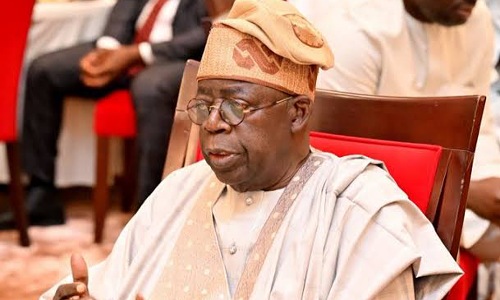
All zones in Northern Nigeria have made up their minds to support President Bola Tinubu in the 2027 presidential election, according to All Progressives Congress (APC) chieftain, Sola Ebiseni.
Ebiseni made the claim during an appearance on Channels Television’s Politics Today, where he argued that Northern political interests were already looking beyond the 2027 election towards 2031.
According to him, the North has effectively conceded the next presidential election to Tinubu and is looking ahead to the possibility of power returning to the region in 2031.
SEE MORE: ‘Tinubu Has Procured Proxies’ — Sam Amadi on President’s 2027 Campaign Strategy
“As I tell you from our own research, every zone of the North is looking forward to 2031. They’ve conceded 2027 to Tinubu, the Southwest, of course,” Ebiseni said.
When asked about the basis of his assertion, Ebiseni maintained that the North had settled on supporting the President.
“The entire North has made up its mind for Tinubu,” he said.
During the discussion, Ebiseni was confronted with a contrasting projection that at least 10 of the 19 Northern states would support Tinubu, but he maintained that the entire North had made up its mind in favour of the President.
Ebiseni defended his position, saying it was based on research conducted by organisations to which he belonged, although he did not provide specific details of the research during the interview.
He also argued that Northern Nigeria should not be treated as a politically uniform region, pointing to differences between the Middle Belt, Northwest and Northeast.
“The destiny of the Middle Belt is different from the destiny of the Northwest. It’s different from the destiny of the Northeast, where the current Vice President comes from. And that is going to play out in 2027,” he said.
Ebiseni identified security as a major consideration for voters in Northern Nigeria, arguing that the establishment of state police would strengthen internal security arrangements.
He acknowledged that security efforts under the Tinubu administration could never be sufficient on their own, but maintained that state police would give individual states greater capacity to address security challenges.
“One of the efforts is state police, so that each state will have the capacity for internal security,” he said.
He also questioned the positions of other presidential aspirants on state police, asking how many had openly expressed support for the proposal.
Ebiseni further criticised proposals to restore fuel subsidies, questioning the economic implications of returning to the policy.
His comments come amid political mobilisation ahead of the 2027 general election, with parties and political figures seeking to consolidate support across Nigeria’s geopolitical zones.
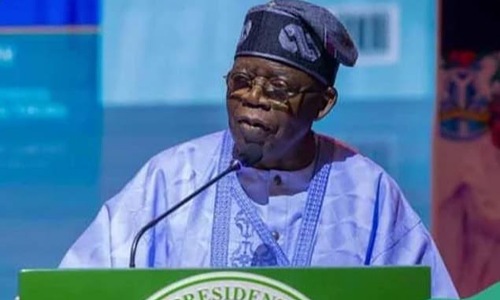
Dr Sam Amadi, Director of the Abuja School of Social and Political Thought, has questioned President Bola Tinubu’s approach to the 2027 presidential election, saying the president appears to be relying on state governors to make his case to Nigerians.
Amadi made the remarks during an appearance on Arise News Prime Time, where he discussed Tinubu’s political strategy, the challenges facing the country and the expected intensity of campaigns ahead of the 2027 general election.
ALSO READ: Tinubu Charges PCC Members to Deliver Wards
According to him, Tinubu’s apparent decision to limit his travels across the country may be a calculated political strategy, but he argued that it raises questions about governance and the president’s engagement with Nigerians.
“No doubt about it, this president’s age, frailty, we’ve seen that happen before, even in governance, he has not traveled across the country, he has not visited sites where there are tragedies,” Amadi said.
He added that the president’s approach could be understood as a strategy designed around his perceived strengths and weaknesses.
“I think, first, it’s a question of strategy, and strategy builds on your strength and weakness,” he said.
Amadi argued that the country’s economic situation makes it important for political leaders to explain their records to voters, regardless of their party affiliations.
“For example, just this week, the World Bank says we have the highest number of multidimensional poor people. So anyhow you look at it, whether you’re APC, PDP, or NDC, the facts are that this is a bad time in terms of economic outcomes,” he said.
Tinubu Relying on Governors, Says Amadi
The political analyst said second-term presidents typically travel across the country to defend their records and explain their policies to voters as they seek another mandate.
He suggested that Tinubu’s approach differs from that expectation because of the apparent reliance on political allies, particularly state governors.
“So in second term presidents usually go, you know, the whole course, they go down the road, they are hitting the road, making their case. Give explanations. And this president, you know, has procured proxies. You know, if you have 37 state governors, you’ve got good proxies,” Amadi said.
He added: “So tactically, he withdraws. That’s what it looks. The alibi around or the excuse around the weight of governors.”
Amadi maintained that governing and campaigning are not mutually exclusive, arguing that a president can continue to discharge official responsibilities while also engaging voters ahead of an election.
“Of course, presidents, as I say, you can chew gum and walk. Presidents govern. That’s why they have the cabinet, but they also make sure they campaign,” he said.
Amadi Raises Questions Over Opposition Campaigns
Amadi also discussed how political parties could approach the 2027 election, suggesting that their campaign strategies would be shaped by their respective strengths and weaknesses.
He said the ruling party would have to consider the intensity of the campaigns expected from opposition figures, including those associated with the African Democratic Congress (ADC), Atiku Abubakar and Peter Obi.
“So each party will carve out strategy around how can we minimize our weakness, which is essentially that is the president who doesn’t have the energy to do this round, you know, round three,” he said.
Amadi further warned that the debate over Tinubu’s public appearances could become more consequential if opposition parties continued to raise questions about his engagement with voters.
He suggested that the issue could extend beyond nationwide campaign tours to include presidential television debates and opportunities for Nigerians to hear directly from the president.
“That’s where the strategy might be a bad one, because if the opposition, I suspect, drag this matter out, the question will now be, can the president also turn up for television debates? Can the president also willingly engage?” he asked.
Responding to the suggestion that television debates would not require extensive travelling, Amadi said direct engagement with voters could help address concerns about the president’s limited physical campaigning.
“So if he can get involved in actively talking to voters and answer their concern, that may compensate for less energy,” he said.
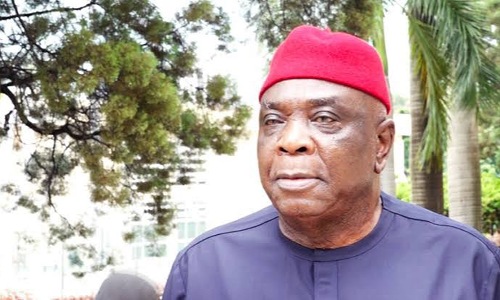
A chieftain of the Peoples Democratic Party (PDP), Dan Ulasi, has questioned the moral justification for another eight-year presidential tenure for northern Nigeria following the completion of former President Muhammadu Buhari’s two terms in office.
Ulasi argued that although the Constitution does not prohibit another northern president from serving after Buhari, such an arrangement would be morally wrong in view of the informal power rotation between the northern and southern parts of the country.
SEE ALSO: Nigerians Must Rise, Reject Inducement and Intimidation at Polls — PDP Chairman
He made the remarks on Arise News’ The Morning Show on Friday, October 16, 2026, during a discussion on opposition politics and the political calculations ahead of the 2027 general elections.
According to the PDP chieftain, Nigeria’s political leadership has traditionally been shaped by an informal understanding that presidential power should alternate between the North and the South to promote fairness and a sense of inclusion.
He argued that the North having completed eight years under Buhari should be a consideration in determining the region that produces the next president.
“So if Buhari just finished eight years, I don’t see how nothing will again come out to run eight years. It is morally wrong. It is not constitutionally wrong, but it’s morally wrong. It is wrong,” Ulasi said.
His comments came as the discussion turned to the challenges confronting opposition parties and their preparations for the 2027 presidential election.
During the interview, Ulasi also addressed the role of religion in Nigerian politics, dismissing the suggestion that religious identity should determine political support.
He said he had never considered religion a decisive factor in his political discussions, stressing that the character and quality of individuals seeking public office should matter more.
“For me, they are Nigerians. Religion has never been part of my discussion in politics. Absolutely not,” he said.
The PDP chieftain maintained that Nigerians should be assessed as citizens regardless of their religious backgrounds.
When the discussion shifted to ethnicity, Ulasi acknowledged that ethnic identity was an undeniable part of Nigerian society but cautioned against using it as an instrument of political division.
He explained that a person’s name or ethnic background did not diminish their status as a Nigerian, arguing that national identity should remain central to political participation.
Ulasi also criticised opposition parties for failing to make sufficient use of Nigerians’ economic grievances against the ruling All Progressives Congress (APC).
He cited inflation, rising food prices and other economic difficulties as issues opposition parties could use to present alternative policies to voters ahead of the 2027 elections.
However, he questioned whether opposition figures were doing enough to engage Nigerians and explain how they would address the country’s challenges.
Ulasi said opposition parties should organise town hall meetings across the geopolitical zones to communicate their programmes and engage citizens directly.
He added that he had not seen the level of nationwide engagement he expected from opposition leaders.






‘The Entire North Has Made Up Its Mind for Tinubu’ — APC Chieftain

‘Tinubu Has Procured Proxies’ — Sam Amadi on President’s 2027 Campaign Strategy

Tesla Aims for 2028 Commercial Production of Flying Car

Corruption Trials: EFCC, NJI Push Specialised Judges, Digital Evidence Reforms

‘It Is Morally Wrong’ — PDP Chieftain Questions North’s Bid for Another Eight Years

2027 Election: ‘Your Future Is More Valuable’ — IGP Warn Youths Against Political Violence

Trump’s Family Unveils New Cryptocurrency Platform

Senate Denies Receiving Petitions Against Tinubu’s Ambassadorial Nominees

Dangote Cement Lights Up Benue Host Communities With CSR Initiatives

Reps Recommend 3-year Jail Term For Aviation minister

Tems Sets New Record On Billboard Hot 100 Chart
