
NEWS
US Court Backs French Court’s Affirmation Of $70m Arbitration Award Against Nigeria


A U.S. Appeal Court court has granted Zhongshan Fucheng Industrial Investment Co. Ltd. permission to enforce a $70 million arbitration award against Nigeria.
In a 2-1 decision on August 9, the court upheld a previous ruling by the U.S. District Court for the District of Columbia, affirming the enforceability of the award.
In January 2023, Judge Beryl Howell, who presided over the lower court, rejected Nigeria’s claim that the court lacked jurisdiction due to its status as a sovereign state.
Read Also: French Court Orders Seizure Of Nigerian Presidential Jets
Howell ruled that the court does have jurisdiction, noting that the United Kingdom, where the arbitration award was issued, is a signatory to the New York Convention, which governs the enforcement of international arbitration awards.
In 2010, Zhongshan Fucheng Industrial Investment Co. Ltd., through its Chinese parent company, Zhuhai Zhongfu Industrial Group Co. Ltd., secured rights to develop a free trade zone in Ogun State, Nigeria.
By the following year, Zhongshan established Zhongfu International Investment (NIG) FZE, a Nigerian entity, to manage the project with the approval of the Ogun State government.
However, in July 2016, tensions arose when the investor accused the state government of abruptly attempting to terminate its role and replace it with a new manager for the free trade zone.
In response, Zhongfu initiated an investment treaty arbitration against Nigeria under the bilateral investment treaty (BIT) between China and Nigeria.
The arbitrators concluded that Nigeria had violated its obligations under the China-Nigeria BIT and awarded Zhongshan approximately $70 million in compensation.
In January 2022, the Chinese company filed a case to enforce the $70 million arbitration award.
Nigeria argued for state immunity, but Sara Cockerill, a UK high court judge, dismissed the plea, stating that Nigeria had misused the time allowed for appealing arbitral awards.
In its majority judgment, the U.S. appellate court ruled that the arbitration award is enforceable under the New York Convention, as the dispute involves “persons” engaged in a legal commercial relationship.
The court further determined that the arbitration exception under the Foreign Sovereign Immunities Act (FSIA) nullified Nigeria’s claim to sovereign immunity in this case.
“For the foregoing reasons, we hold that the final award is enforceable under the New York convention because it arose out of differences between ‘persons’ that share a legal, commercial relationship,” the majority judgment reads.
“The district court therefore has jurisdiction over this case under the FSIA’s arbitration exception. The judgment of the district court is affirmed.”
The majority judgment was written by Judges Patricia Millett and Julianna Childs.
In his dissenting opinion, Judge Gregory Katsas argued that the term “persons,” as understood when the New York Convention was drafted, did not include sovereign nations.
He also asserted that the actions of Ogun State should not be imputed to Nigeria, noting that the arbitration award stems entirely from Nigeria’s sovereign acts under public international
Katsas said, “Text, legal context, and drafting history all indicate that the word ‘persons,’ as used in the New York Convention, does not include signatory nations acting as sovereigns. I respectfully dissent.
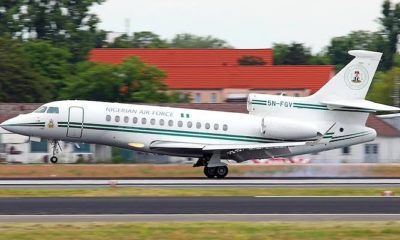
Just three days after the U.S. appeal court’s ruling, a Paris court in France ordered the seizure of three jets owned by the Nigerian government in connection with the $70 million arbitration award owed to the Chinese company.
In 2023, a UK court of appeal also held Nigeria liable for the same arbitration award in favor of the Chinese firm.
This outcome means Nigeria has now lost arbitration award cases related to the dispute in France, the U.S., and the UK.
The Nigerian government has accused the Chinese firm of trying to use deceptive tactics to gain control of the country’s offshore assets.








The Federal Ministry of Finance has challenged reports that Federal Government interest payments reached 124 per cent of revenue in the first half of 2026, describing the figure as misleading because it does not fully account for the scope of government debt obligations and revenue.
The ministry’s position comes in response to recent analysis citing the World Bank’s October 2026 Nigeria Development Update, which reported that interest payments exceeded federal revenue during the first six months of the year.
In a press release on Sunday and dated October 18, 2026, the ministry argued that the calculation compared interest payments that included obligations serviced on behalf of other tiers of government with federal revenue alone.
SEE ALSO: Nigeria Lands Fresh $1.25bn World Bank Loan to Drive Jobs, Reforms
According to the ministry, this approach overstates the ratio because the debt obligations and revenue used in the calculation should cover the same level of government.
“The interest figure includes debt the Federal Government services on behalf of other tiers of government, including external loans to states,” the ministry said.
It added that the revenue figure used in the calculation was incomplete because it excluded independent revenue earned by government agencies and enterprises but not yet remitted to the Treasury.
The ministry also explained that government revenue typically increases in the second half of the year because of the statutory timing of certain tax payments.
Citing the 2025 figures, it said the debt-service-to-revenue ratio stood at 156 per cent in the first half of the year but fell below 60 per cent on a full-year basis.
The ministry said the ratio had declined from 97 per cent before the current administration’s reforms, describing the figures as evidence of progress in the government’s fiscal position.
Revenue Growth Outpaces Interest Payments
The ministry also highlighted the changes in federal revenue and interest payments between the first halves of 2025 and 2026.
According to the statement, federal revenue increased by 72 per cent, rising from ₦3.6 trillion in the first half of 2025 to ₦6.2 trillion in the corresponding period of 2026.
Interest payments, meanwhile, rose by 38 per cent, from ₦5.6 trillion to ₦7.7 trillion over the same period.
“Revenue is therefore growing almost twice as fast as interest costs,” the ministry said.
It added that the interest-to-revenue ratio fell by 32 percentage points, from 156 per cent to 124 per cent, while the gap between interest payments and revenue narrowed from ₦2 trillion to ₦1.5 trillion.
The ministry maintained that the figures reflected the impact of the government’s reforms rather than evidence of fiscal distress.
Ministry Cites Full-Year Debt Projection
On debt sustainability, the ministry argued that a six-month snapshot should not be used as the sole measure of the country’s debt position.
It said the World Bank’s report projected Nigeria’s full-year 2026 debt service, covering both interest and principal payments, at 46 per cent of revenue.
“Debt sustainability is assessed on a full-year basis, not over six months,” the ministry stated.
It described the projected full-year figure as the appropriate benchmark for assessing the country’s debt-service position.
Finance Ministry Defends Government Borrowing
The ministry also defended the legality of the Federal Government’s borrowing, stating that all borrowing fell within the limits approved by the National Assembly under the 2026 Appropriation Act and the approved borrowing plan.
According to the statement, borrowing activities comply with the Fiscal Responsibility Act 2007 and the Debt Management Office (Establishment) Act 2003.
It added that borrowing information is published regularly by the Debt Management Office.
The ministry said it welcomed scrutiny of public finances but urged analysts and commentators to ensure that figures were compared on a consistent basis.
“We encourage analysts and commentators to apply the same rigour they seek to hold the government to: compare like with like, read figures in context, and seek clarification where the data is unclear,” the statement said.
The South-South Reawakening Group has opposed plans to align the proposed coastal road with the East-West Road, insisting that both projects should be constructed side by side.
The group’s convener, Joseph Ambakederimo, stated this during an interview on Arise TV on Sunday, arguing that the coastal road should be delivered as a separate infrastructure project rather than diverted to the existing East-West Road.
Ambakederimo said the coastal road had remained on the drawing board for many years and questioned why the project was now being considered for alignment with the East-West Road.
SEE ALSO: BREAKING: Joseph Boakai Takes Oath As Liberia’s President
“I posted on my LinkedIn handle when somebody posted the minister’s briefing. I said no. Mr. Minister, we want to see the coastal road side by side the East-West Road,” he said.
“We want to see that happen, not to do any alignment. Alignment of what? To where? We need that coastal road, and that road has been on the drawing board for so many years. So many, many years.”
He urged engineers to revisit their plans and address potential environmental challenges associated with constructing the road through the South-South region.
“I believe the feasibility of that road has been done. We know the processes of building roads, infrastructure all over the world. Pure and concrete feasibility would have been done. So let the engineers go back to the drawing board,” Ambakederimo said.
His comments come amid concerns over the proposed route of the coastal road and calls for the Federal Government to reconsider its approach to the project.
Ambakederimo maintained that the coastal road should be constructed alongside the East-West Road rather than aligned with it, stressing the importance of delivering the long-awaited infrastructure project to the South-South region.

The Nigeria Police Force has rescued an abducted farmer, Nafi’u Abubakar Sarki, as security operatives continue efforts to locate 10 other farmers abducted by armed bandits in Maru Local Government Area of Zamfara State.
The rescue operation followed the abduction of 11 farmers at Kamfanin Madam Village, according to the police operational update issued on Sunday, October 18, 2026.
The police said tactical teams, working alongside local vigilantes, traced the escape route used by the suspected bandits in an effort to locate the victims.
SEE ALSO: Two Suspected Bandits in Police Net in Katsina
“Police Tactical Teams and local vigilantes successfully traced the escape route of armed bandits who abducted 11 farmers at Kamfanin Madam Village, Maru LGA,” the statement said.
It added that “one of the abducted victims, Nafi’u Abubakar Sarki, was safely rescued unharmed, while operations continue for the rescue of the remaining victims.”
The police identified the State Criminal Investigation Department (SCID) in Gusau as the unit investigating the incident.





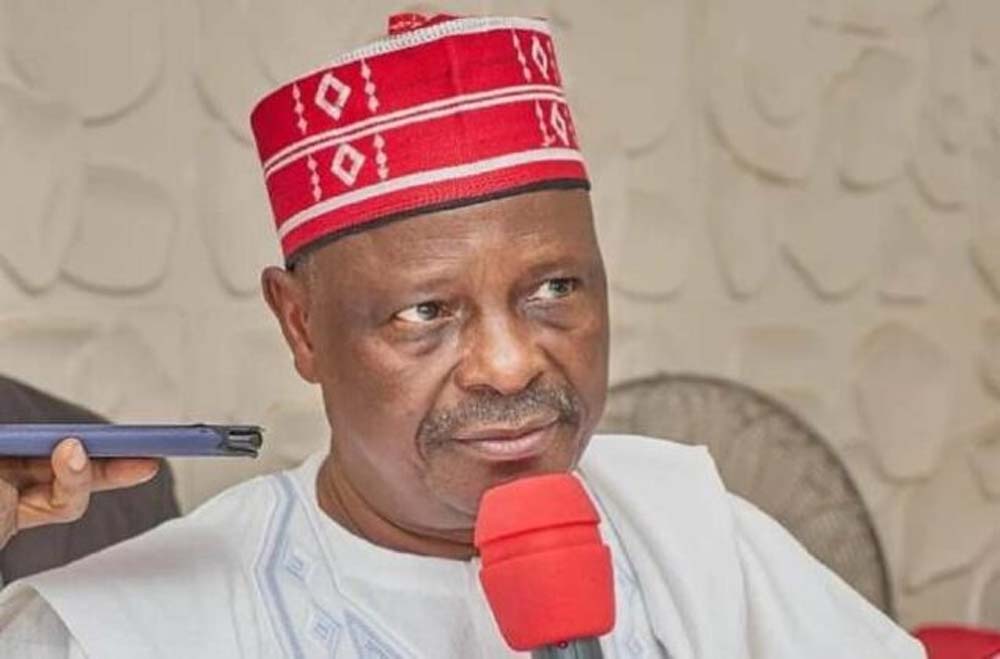
Kwankwaso Rejects ADC Claims, Says NDC Won’t Withdraw From 2027 Race
‘World Bank’s 124% Debt Interest Figure Misleading’ – Finance Ministry Insists

‘Election Rulings Have Diminished Nigeria’s Judiciary’ – Utomi

NDLEA Arrests 85-Year-Old Woman With 179kg of Cannabis in Edo

Ambakederimo Questions NNPC Over Crude Oil Sales, Upfront Payments
South-South Group Opposes Coastal Road Alignment With East-West Road

Trump’s Family Unveils New Cryptocurrency Platform

Senate Denies Receiving Petitions Against Tinubu’s Ambassadorial Nominees

Dangote Cement Lights Up Benue Host Communities With CSR Initiatives

Reps Recommend 3-year Jail Term For Aviation minister

Tems Sets New Record On Billboard Hot 100 Chart
