
Business
Waltersmith Doubles Refining Capacity to 10,000 Bpd

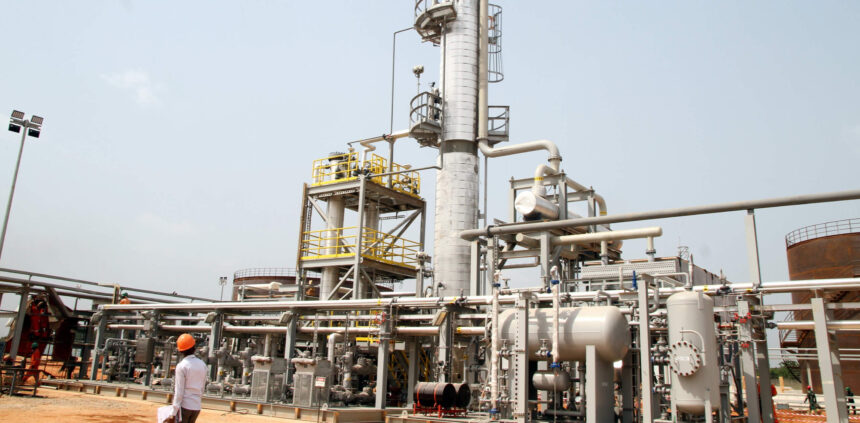
One of Nigeria’s domestic refineries, Waltersmith Petroman Oil Limited, has marked a major milestone in the drive for local energy self-sufficiency, with the successful expansion of its refinery’s capacity to 10,000 barrels per day (bpd).
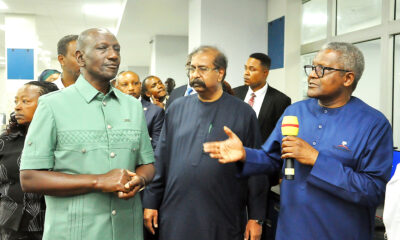
The achievement was highlighted during an official inspection visit by the Nigerian Midstream and Downstream Petroleum Regulatory Authority (NMDPRA) and the Nigerian Content Development and Monitoring Board (NCDMB) to the company’s Phase 2 facility at Ibigwe, Imo State, at the weekend.
The delegation led by NMDPRA’s Authority Chief Executive, Saidu Mohammed, alongside representatives of the NCDMB, assessed the operational readiness of the upgraded facility. The Phase 2 expansion effectively doubles Waltersmith’s refining capacity from 5,000 to 10,000 bpd, positioning the company as a key contributor to Nigeria’s domestic refining ambitions.
“What WalterSmith has accomplished is no small feat. This is a powerful demonstration that Nigerians have both the capability and responsibility to take charge of the midstream sector which is the true engine room of our economy,” NMDPRA’s Mohammed said.
Besides, the NMDPRA highlighted the company’s compliance with the Petroleum Industry Act (PIA) 2021 and praised its operational standards.
Chairman of Waltersmith, Abdulrazaq Isa, emphasised that the expansion reflects both technical discipline and alignment with national energy policy objectives while maintaining strict adherence to regulatory standards, particularly those set by the NMDPRA.
“We are moving Nigeria beyond an extractive oil economy to one focused on value creation. By refining locally, integrating upstream resources, and building an industrial hub, we are laying a sustainable foundation for long-term economic growth,” Isa said.
ALSO READ: Dangote Donates ₦550m Students’ Hostel to FUTO
The upgraded facility introduces an expanded product slate, including Premium Motor Spirit (PMS) and Aviation Turbine Kerosene (ATK). These additions are expected to improve supply reliability for Nigeria’s transportation and aviation sectors, while reinforcing the broader goal of transitioning from a crude-export-dependent economy to one focused on value addition.
Regulatory approval is nearing completion, Waltersmith said, with the visit serving as a final assessment ahead of the issuance of a Licence to Operate (LTO) for full commercial operations of Phase 2.
Looking forward, Waltersmith said it plans to expand beyond refining through the development of the Waltersmith Industrial and Innovation Park, a Free Trade Zone (FTZ) anchored by gas-to-power infrastructure.
The initiative, it stressed, aims to attract petrochemical and manufacturing companies, supporting Nigeria’s “Decade of Gas” strategy and fostering long-term industrial growth.
“As we enter this next phase, our continued collaboration with the Authority is critical. We are not just building a refinery; we are building a self-sustaining industrial city that contributes meaningfully to Nigeria’s energy security and regional economic development,” Isa emphasised.
A defining feature of the Waltersmith project, the organisation said, is its partnership with the NCDMB, which holds a 30 per cent equity stake.
NCDMB’s Executive Secretary, Felix Ogbe, represented by the Director of Legal Services, Naboth Onyesoh, said the investment has not only catalysed a scalable refining operation but has also created substantial jobs for Nigerians.
“Our partnership with WalterSmith underscores the power of collaboration in driving local content development. This investment has not only catalysed a scalable refining operation but has also created substantial jobs for Nigerians and strengthened our collective capacity to reduce dependence on imports while improving national living standards,” he stated.
The project, Waltersmith stressed, also has strong financial backing, combining private investment with institutional funding from the Africa Finance Corporation (AFC) and the Bank of Industry (BoI). This blended financing approach, it explained, highlights the viability of public-private partnerships in advancing large-scale energy infrastructure.





Africa’s ambition of becoming a global industrial powerhouse hinges on its ability to mobilise long-term financing, deliver reliable electricity and adopt policies that turn its vast natural resources into manufactured products.
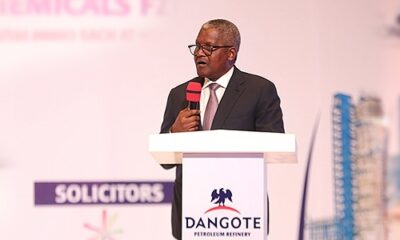
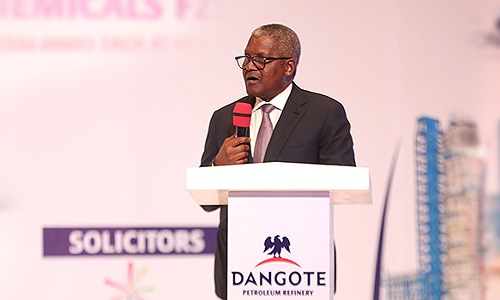
The President/Chief Executive, Dangote Industries Limited, Aliko Dangote expressed these views in London at the Financial Times Africa Summit during a conversation with David Pilling the Africa Editor of the newspaper.
Dangote, who has outlined a $50 billion investment programme for 2026 to 2030, said the continent must build stronger financial institutions capable of funding large-scale industrial projects, expand electricity infrastructure and establish policies that encourage domestic manufacturing, value addition and economic diversification.
The industrialist maintained that Africa possessed the natural resources, population and investment opportunities required to become a global manufacturing powerhouse, but needed stronger institutions and infrastructure to translate those advantages into sustainable economic prosperity.
Responding to a question on why Africa had produced relatively few industrial enterprises of global scale despite its enormous economic potential, Dangote stressed the need for deliberate policies and institutions capable of supporting long-term industrial investment.
READ ALSO: Thor Empowers Host Communities with 10 Cassava, Palm Oil Processing Plants
The Africa Summit by the FT is a prestigious platform for Africa’s most influential leaders and this year’s Summit lived up to its billing convening leading policymakers, business leaders, financiers and visionaries to explore how Africa can contribute meaningfully to shape the next era of global development.
Dangote said, “I think the number one thing that the continent has to concentrate on doing is having very strong financial institutions, their own financial institutions, and also to have very strong agricultural policy, and also industrial policy”.
He maintained that infrastructure development was equally important but singled out electricity as perhaps the most urgent requirement for unlocking Africa’s industrial potential, adding; “For Africa, what we need the most today is actually power,” he declared.
Dangote explained that inadequate electricity supply continued to undermine Africa’s ability to process its mineral resources locally, forcing countries to export raw materials rather than capture the greater economic value associated with manufacturing and processing. He cited the mining industry as a particularly striking example, noting that companies frequently identified unreliable electricity supply as a major reason for their inability to establish processing facilities close to extraction sites.
According to him, approximately 650 million Africans remain without access to electricity, a deficit he described as fundamentally incompatible with the continent’s industrial ambitions.
He argued that resolving the power crisis would transform Africa’s manufacturing prospects, encourage investment in mineral processing and create substantial employment opportunities.
The industrialist also drew on his experience developing the Dangote Petroleum Refinery and Petrochemicals (DPRP) in Lagos to illustrate how Africa’s financing environment could frustrate even commercially promising projects.
He disclosed that the Group had been compelled to finance the refinery against its own balance sheet rather than depend on conventional project financing, which he described as extremely difficult to secure for major African industrial investments.
He explained that prolonged financing negotiations could undermine the viability of industrial projects by delaying execution, increasing costs and exposing investors to changing economic conditions.
For the Dangote Group, the decision to proceed with the refinery without conventional project finance involved extraordinary financial risks, compounded by severe currency depreciation and the enormous cost of developing supporting infrastructure. Dangote said the exchange rate moved from approximately ₦136 to the dollar to as high as ₦1,800 during the refinery’s development, while about 90 percent of the Group’s revenue was denominated in naira.
Dangote said the Group’s proposed $50 billion investment programme was designed partly to encourage other Africans to recognise the opportunities available across the continent.
“The legacy we are trying to set up is how do we industrialise our continent?” he said.
He explained that the Group intended to expand its investments between 2026 and 2030 to demonstrate that African businesses could execute large-scale projects and encourage other investors to participate in developing the continent. The ambition, he stressed, extended beyond the growth of one conglomerate to creating a wider industrial ecosystem capable of supporting businesses, generating employment and retaining more economic value within Africa.
Dangote also challenged African governments to reconsider their approach to industrial protection, warning that allowing cheap imported products to undermine domestic manufacturing could permanently weaken the continent’s productive capacity. He argued that emerging African industries required appropriate policy support to compete against established international manufacturers, particularly where imported products were sold at prices that discouraged investment in local factories.
He, however, distinguished industrial protection from restrictions on trade between African countries, advocating a regional approach that would strengthen manufacturing while preserving the objectives of the African Continental Free Trade Area. He maintained that African economies should trade more freely among themselves while establishing a common framework to protect their industries against unfair external competition.
The industrialist also questioned why Africa continued to experience widespread poverty despite its extensive agricultural land, mineral resources and youthful population.
He cited the continent’s natural endowments as evidence that Africa’s economic challenges were not principally the result of inadequate resources but of insufficient productive investment and industrial capacity. “Why should we remain poor?” he asked.
Dangote expressed confidence that the continent was entering a period in which African governments, entrepreneurs and investors were becoming increasingly determined to develop their own productive capabilities.
Business
Dangote Calls for Stronger Protection of Local Industries, Unveils Pan-African Energy Distribution Network
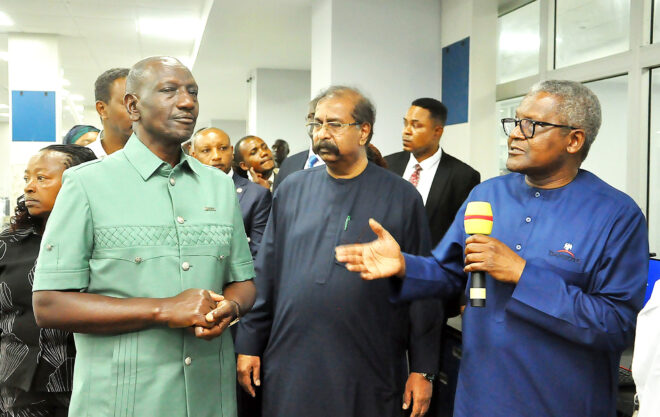
President and Chief Executive of Dangote Industries Limited (DIL), Aliko Dangote, has urged African governments to adopt policies that protect domestic industries and accelerate industrialisation.
He made the call in London, during the FT Africa Summit where he vented plans to establish an extensive petroleum distribution network across Africa through strategic investments in pipelines, storage facilities and supply corridors.
According to Dangote, the Group is aggressively expanding its petroleum logistics and distribution infrastructure across East, Central and Southern Africa as part of efforts to strengthen energy security, improve access to refined products and eliminate longstanding supply bottlenecks across the continent.
During a wide-ranging interview with Financial Times Africa Editor, David Pilling, the industrialist disclosed that the Group recently acquired a 25 percent stake in a petroleum products pipeline network in Kenya and is pursuing additional infrastructure projects connecting Djibouti and Ethiopia, alongside investments in Cameroon and Namibia.
READ ALSO: NMDPRA Issues Updates on Q3 Crude Supplies to Domestic Refineries
According to him, Africa’s aspiration for economic transformation will remain difficult to achieve without significant investments in infrastructure combined with industrial policies that promote local manufacturing, preserve productive capacity and create sustainable employment opportunities.
“Allowing imports to displace local production means we are exporting our jobs out of the continent and importing poverty into the continent,” Dangote said.
Dangote explained that the expansion forms part of a broader strategy to develop an interconnected African energy supply system capable of linking major refining centres with underserved markets that have historically depended on imported petroleum products and fragmented distribution channels.
“We are very aggressive with that,” he said, in response to questions about the Group’s plans for petroleum depots, pipelines and logistics infrastructure.
He revealed that the acquisition of a 25 per cent stake in Kenya’s petroleum pipeline network was achieved with the support of the Kenyan government and would significantly enhance the movement of refined petroleum products within the East African region.
“Just let me tell you, yesterday, with the support from the President of Kenya, we bought 25 percent of the pipeline network for the distribution of petroleum products,” Dangote disclosed.
The Group is also developing a major petroleum distribution corridor linking Djibouti and Addis Ababa, complete with storage terminals and tank farms designed to facilitate the efficient transportation and storage of refined products.
He added that another strategic project in Cameroon is nearing completion, while Namibia has been identified as a critical hub in the Group’s plan to penetrate Southern African markets.
Dangote described Namibia as a particularly attractive location because of its strategic proximity to the Dangote Petroleum Refinery and Petrochemicals (DPRP) in Lagos.
“From our refinery to Namibia is just about four days of steaming,” he noted.
According to him, refined products from the Lagos refinery will be transported to Namibia and distributed across interconnected markets, including Botswana and South Africa.
The Group is also examining other supply corridors extending into Zimbabwe and Zambia as part of its broader objective of developing a continental network supported by strategically located storage and transportation infrastructure.
The petroleum distribution expansion complements plans to establish another refinery in Lamu, Kenya, with a projected refining capacity of approximately 700,000 barrels per day.
Dangote noted that East Africa’s growing economies, vibrant mining sector and increasing energy demand make the region an attractive destination for refining investments.
He explained that the proposed refinery would source crude oil from multiple markets rather than depend exclusively on supplies from Kenya or Uganda, ensuring greater flexibility and long-term operational sustainability.
According to him, technical assessments identified Lamu as the preferred location because of its deep-water access, marine infrastructure and availability of critical resources required for large-scale refining operations.
Dangote revealed that the investment decision was concluded within four months, although he alleged that vested commercial interests attempted to delay the project through legal proceedings shortly before its public announcement.
Beyond energy infrastructure, Dangote strongly advocated policies aimed at protecting domestic industries from unfair competition, arguing that industrialisation cannot thrive if emerging African manufacturers are exposed to unrestricted imports from more established economies.
He questioned why African countries should be discouraged from supporting local industries when developed economies increasingly deploy similar measures to strengthen domestic manufacturing and employment.
Drawing parallels with recent developments in major global economies, he argued that industrial protection remains a legitimate and widely accepted economic strategy.
“If America is now saying, no, we are going to protect our industries, who are we in Africa not to protect our own industries?” he asked.
Dangote also disclosed that the Group has earmarked approximately $50 billion for investments between 2026 and 2030, describing the programme as part of a broader mission to demonstrate that African businesses can successfully execute transformative industrial projects at scale.
“The legacy we are trying to set up is how do we industrialise our continent?” he said.
According to him, the investment programme is designed not only to expand the Group’s operations but also to inspire other African entrepreneurs and investors to pursue ambitious industrial ventures capable of reshaping the continent’s economic future.
Looking beyond the energy sector, Dangote identified inadequate power supply, weak financial systems and underdeveloped industrial policies as major challenges constraining Africa’s economic growth.
He described electricity as a fundamental requirement for industrialisation, particularly in manufacturing, mining and mineral processing, where reliable power is essential for value addition.
With an estimated 650 million Africans still lacking access to electricity, he stressed that addressing the continent’s energy deficit would unlock significant opportunities for job creation, industrial development and economic diversification.
Questioning why a continent blessed with abundant natural resources, vast arable land and a young population continues to grapple with poverty, Dangote insisted that Africa possesses all the ingredients necessary to become a major industrial powerhouse.
Expressing optimism about the continent’s trajectory, he maintained that Africa’s industrial awakening has already begun.
“The journey has started,” Dangote declared. “But now we’re awake, and we will make it happen.”
Some motorists and commuters in FCT have expressed mixed reactions to the N66-per-litre petrol discount offered by the Nigerian National Petroleum Company Ltd. as the Oct. 31 deadline approaches.
Speaking with the News Agency of Nigeria on Thursday, some of them commended the initiative while others expressed reservations about its impact.
NAN reports that the Federal Government announced a 30-day discount on petrol sold by the NNPC Ltd., with public transport operators to receive priority under the arrangement.
The Minister of Finance and Coordinating Minister of the Economy, Mr Taiwo Oyedele, said the arrangement was not a return to petrol subsidy.
READ ALSO: Thor Empowers Host Communities with 10 Cassava, Palm Oil Processing Plants
The minister said the government was also negotiating a ceiling of N1, 350 per litre on the ex-gantry or landing cost of petrol in an effort to reduce sharp fluctuations in pump prices.
NAN reports that Dangote Petroleum Refinery cut its gantry petrol price by N25 per litre from N1,350 to N1,325.
Mr Abubakar Saidu, a motorist who resides in Wuse, commended the Federal Government for the discount offered at NNPC Ltd. retail outlets.
Saidu stated that he purchased petrol through the app but sometimes had to wait in long queues before accessing the product.
He said that many Nigerians were unable to benefit from the discount due to network challenges.
“I downloaded the app and followed the procedure before buying the petrol at N1,339 per litre,” he said.
Another commuter who resides at Nyanya, Mr Obi Anyawu, said the intervention had not translated into lower transport fares.
Anyawu said the intervention had failed to ease the burden of high transportation costs on Nigerians.
According to him, commuters are still struggling to afford daily transportation to work.
“The transportation fare keeps increasing, and there has not been any difference,” he said.
Mrs Stephanie Okoro, a commuter who resides at Karu, said commuters were still struggling to afford daily transportation to work.
“I have not benefited from the intervention, and I have not seen any positive impact it has, even among the transporters.
“Commuters continue to face difficulties accessing affordable transportation, with many stranded at bus stops due to high fares,” she said.
Mr Jide Oyetola, a motorist who resides in Bwari, called for a comprehensive review of the intervention and the introduction of additional measures to alleviate the hardship faced by Nigerians.
Oyetola urged the government to explore alternative measures to reduce transportation costs and ease the economic burden on citizens.
“My secretary recently complained that her salary can no longer cover her transportation expenses.
“She said she might not be able to come to work five days a week because her salary can no longer cover her transportation costs.
“Even if she waits for a cheaper bus every morning, the situation will still not be manageable. You cannot blame her. I am sure she is not alone in that plight,” he said.
He said it forced her to consider reducing the number of days she would report to work.
Mrs Nonye Obanla, a commuter who resides at Dutse, urged the government to explore alternative measures to reduce transportation costs and ease the economic burden on citizens.
Courtesy – NAN






INEC Opens Online Access to Voters’ Register After Public Outcry

ADC Replies Alake, Says APC’s ‘Falsehood’ Cannot Hide Tinubu’s Failures

‘How Did Tinubu Graduate Before School Existed?’ – ADC Challenges Shettima Over Atiku

Tinubu Congratulates Lula on Re-Election, Seeks Stronger Nigeria-Brazil Ties

Ebola: IGP Warns Nigerians Against Contact With Suspected Patients’ Body Fluids
‘Nigeria Cannot Do What China Did’ – Oxford Economist Warns

Trump’s Family Unveils New Cryptocurrency Platform

Senate Denies Receiving Petitions Against Tinubu’s Ambassadorial Nominees

Dangote Cement Lights Up Benue Host Communities With CSR Initiatives

Reps Recommend 3-year Jail Term For Aviation minister

Tems Sets New Record On Billboard Hot 100 Chart
