
NEWS
We Aim To Have Zero Gas Flares By Q4 2024 – Dumo Lulu- Briggs

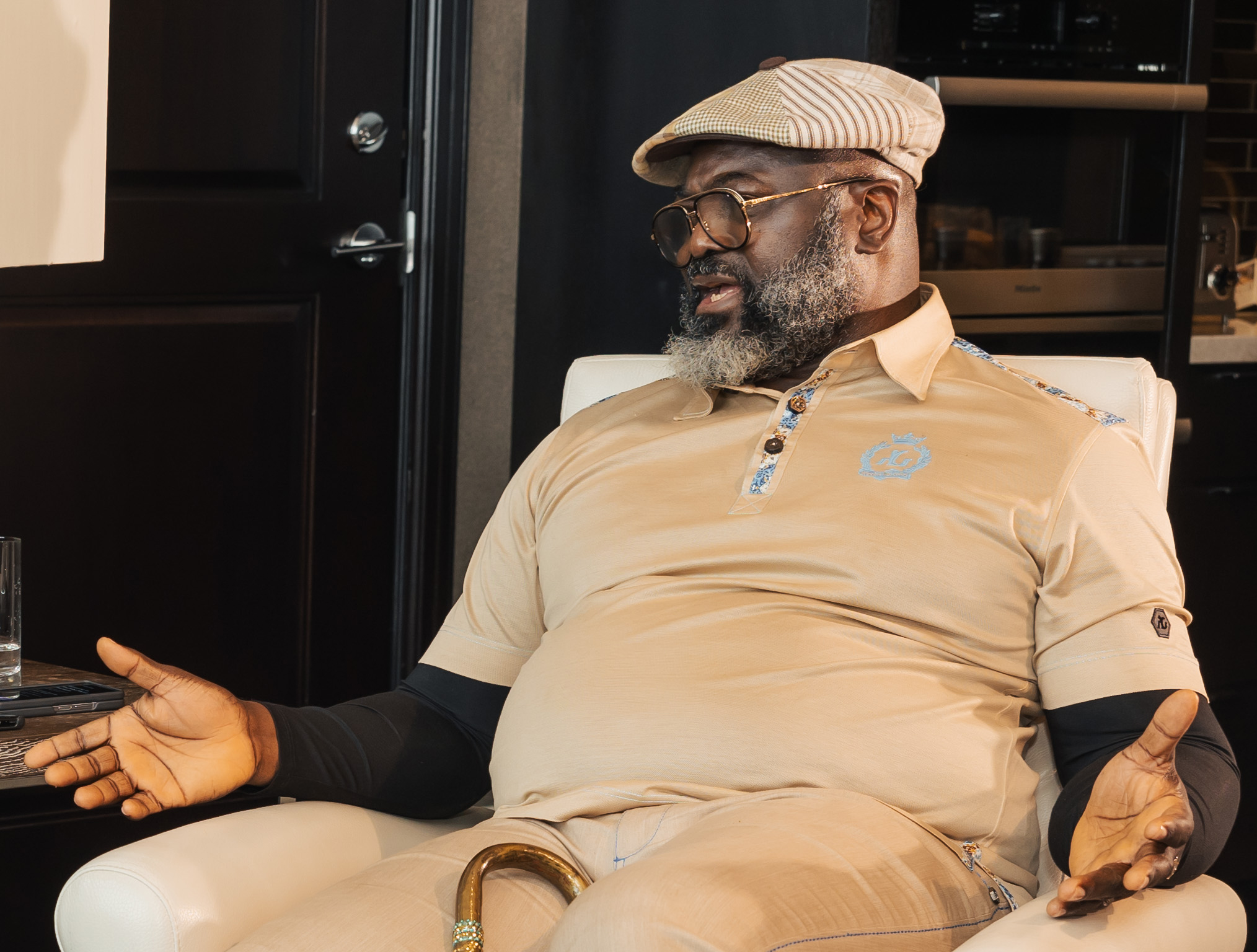
Chief Dumo Lulu-Briggs, Lawyer, Philanthropist, and Nationalist is the Chairman of Platform Petroleum, on the sidelines of the just concluded Offshore Technology Conference, OTC, in Houston Texas, USA, shared his experience on his early days and foray into the oil and gas industry, his challenges, and success story of growing a small indigenous oil company into a household name in Exploration and Production. Excerpts;
Kindly give an overview of your journey into the petroleum industry and how it dovetailed into your current position as the chairman of Platform Petroleum.
After earning a Law degree from Ahmadu Bello University and a Masters from the University of London, I attended law school in Nigeria and briefly practiced law in Lagos.
Drawn to politics, I moved to Port Harcourt, where I tried local politics and ran a pub, displeasing my father. To satisfy him, I co-founded a law firm. Later, my father encouraged me to join his oil business, despite my lack of experience. I was initially interviewed for a legal adviser role but was appointed General Manager instead.
Recognizing unfavorable agreements with our foreign partners, I sought advice from Austin Avuru, who became a key advisor.
Avuru’s expertise led us to establish Platform Petroleum, gathering a team of experienced Nigerian professionals. We started with His Royal Highness Edmund Daukoru as our first chairman and Prof. Sylvester Adegoke as our Vice Chairman, then I came onboard just as a shareholder.
In 2004, former President Olusegun Obasanjo appointed Daukoru as Adviser first then later as a Minister and that was how he left Platform Petroleum. That was how Prof. Sylvester Adegoke became Chairman, and I became the Vice Chairman.
In 2011/2012, I became chairman, and I am the chairman till date.
Our strategic partnerships and renegotiated agreements helped us thrive. We began with minimal resources but secured investments and funding through innovative financial strategies. By 2007, we commenced oil production, achieving significant success from our small field.
My collaboration with Avuru was pivotal, transforming our company into a strong indigenous player in Nigeria’s oil industry. That is how I got into the oil and gas industry which I had no prior knowledge on. This journey, though initially reluctant, became deeply fulfilling and impactful.
Can you elaborate on the collaboration with New Cross and its impact on Platform Petroleum?
Our relationship with New Cross was a game changer and quite mutually beneficial.
Having JV partners like New Cross makes operations smoother for marginal field operators. With 100% collaboration and transparency, we quickly earned New Cross’s confidence, leading to minimal questioning from them. We worked together on many projects, including setting up the Ase River crude evacuation pipeline, a crucial 24-kilometer infrastructure to the Brass Terminal.
We proposed a 50/50 JV with New Cross, diverging from the typical 60/40 arrangement, and successfully built the pipeline, benefiting our cluster partners and generating additional revenue through tariffs.
Our partnership with New Cross extends to both upstream and midstream ventures, including PNG Gas Limited, a significant LPG player in Nigeria, producing 30,000 tons of LPG and 30,000 million standard cubic feet of gas. This collaboration has been incredibly rewarding, marked by open, meaningful conversations and mutual understanding, ensuring we always move in the same direction without conflict.
What have been the challenges and key milestones achievement during this journey?
We were the smallest in 2004 but we were the first to bring our field on-stream and we have been producing that small asset. We have increased our oil production from 2,000 to over 3,000 barrels. Today, we have been able to extract at least some 12.3 million barrels and 118 billion standard cubic feet (SCF) of gas from that small asset and we are still on. We aim for 10,000 barrels, having expanded into three additional marginal fields.
From the start, we decided to run Platform as a family, treating everyone with importance and fostering a highly motivated workforce. We address issues affecting our staff, ensuring their welfare, and maintaining a supportive environment. This familial spirit extends to all stakeholders and communities, with a commitment to exceeding expectations in community spending. Our journey has been both rewarding and challenging.
Do you have a timeline for the 10,000bpd target?
We aim to bring all marginal fields into production by 2025, targeting 10,000 barrels of oil and at least 50 billion standard cubic feet of gas per day. To mitigate the volatility of the oil and gas industry, we have diversified into non-E&P ventures. As a small company, price fluctuations can significantly impact us unlike larger players like Seplat.
So, we have invested in real estate, building a 19-story Towers, and expanded into logistics and leasing. We are involved across the entire value chain; upstream, midstream, and downstream, operating service stations in Lagos, Warri, and Port Harcourt, and exploring refining opportunities.
Despite our size, we have achieved significant success and efficiency, proving that a small company can accomplish big things effectively.
Do you plan to take advantage of the upcoming licensing bid rounds?
We are very ambitious because we want to become a tier-1 company like the IOCs or a tier-2 company like Seplat. Interestingly, Seplat originated from Maurel & Prom, Shebah Petroleum, and Platform. We capitalized on the first divestment, and today, Seplat is a major player. This demonstrates that Platform can also grow significantly.
We have planned a roadshow in London this June 2024 to explore opportunities arising from various divestments. Although we were unsuccessful in the 2020 marginal field rounds, our contributions to the industry are substantial. We have three fields set to start production by 2025. We funded these projects, provided expertise, and identified promising assets. Successfully bringing these fields to production will boost national output and validate our efforts.
We believe Platform deserves recognition and more assets. Our roadshow aims to attract equity partners and prepare for future opportunities. We are targeting a billion-dollar investment, engaging equity players, junior debt providers, and international banks. We seek partners ready to invest in Nigeria’s oil and gas potential.
We emphasize Nigeria’s vast opportunities and actively bring investors to showcase the country’s potential. The current government is proactive, understanding the need for economic growth. Platform is prepared to leverage every opportunity in the oil and gas industry to contribute to this expansion.
Platform Petroleum played a prominent role at the Nigerian Pavilion during 2024 OTC here in Houston, does it align with the company’s strategic growth?
Yes, it does. The Offshore Technology Conference (OTC) is a ritual, and everyone knows Nigeria has vast potential. With the shift from fossil fuels and the IOCs divesting from onshore assets, it is crucial to promote Nigeria as a significant market. Partnering with the Petroleum Technology Association of Nigeria (PETAN) at OTC is key to attracting investment. To grow Platform, we need investor confidence and funding.
While we support net zero gas flaring, we emphasize Nigeria’s energy needs and our unique perspective to the global community. This approach can open financial opportunities.
At the OTC through PETAN, our aim was to boost investor interest, recognizing PETAN’s pivotal role. Their events have drawn significant attention, indicating growing interest in our message. For Platform, we have always allowed the optimism of our will to triumph the pessimism of our intellect.
Challenges may seem insurmountable, but we believe in our inner strength. My father’s experience in the oil industry exemplifies this spirit. Despite initial setbacks and risks, his faith and determination led to success.
Through professional support and renegotiated agreements, our business became profitable. We will continue to channel this resilience, promoting Nigeria’s energy sector and seeking the right investment mix for future growth.
What is the long-term vision of Platform Petroleum and how can it contribute to energy security and economic development of Nigeria?
As I mentioned earlier, we are conducting a roadshow in London. We are efficiently producing our assets, upgrading flow stations, increasing capacity, and achieving nearly zero emissions. Currently, we have about one percent gas flare, and by the last quarter, we aim to have zero gas flares, becoming the first indigenous company to commercialize our gas. We are aligned with government aspirations, supporting their targets, and preparing to attract a billion-dollar investment to help achieve 30 billion standard cubic feet of gas production.
Nigeria is a big market, and we must think big. This government’s plans, like the Lagos-Calabar coastal line, reflect that mindset.
We should have faith in our country. At Platform Petroleum, we are readying ourselves for divestment opportunities to become a tier-2 player. We are in talks with some IOCs.
Platform’s contribution to Seplat’s success is notable; Mr. Avuru, our former MD, was seconded to Seplat, which highlights our capability. We aim to take Platform to the next level, building on the strong foundation we have established.
Seplat has set a precedent, and we are poised to follow.


Nigerian national Ekene Chukwuma has said he returned to Nigeria with assistance linked to Oseni Rufai rather than the Nigerians in Diaspora Commission (NiDCOM), while renewing allegations against the commission’s chairperson, Abike Dabiri-Erewa, over his travel documents.
Chukwuma made the remarks in an interview in which he explained how he returned to Nigeria after spending months at a deportation camp in India.
RELATED NEWS: Rufai Oseni Row: NiDCOM Breaks Silence on Nigerians Detained in India, Addresses Ekene’s Case
“My name is Kenneth Chukwu, from Enugu State,” he said, introducing himself before explaining how he returned to the country.
“I came back here with the assist of Osini Roufai, a good friend of him,” he said.
Chukwuma denied that NiDCOM facilitated his return, alleging that the commission had published false information about his case.
“NiDCOM made a lots of false, uh, news acquisition against me, which is still in Abike Dabiri handle in Twitter,” he said.
He also accused Dabiri-Erewa of sharing his expired international passport and a travel certificate he claimed was issued six months after he entered the detention camp.
“He also, she also posted my international passport that expired. He also, she also posted my TC that issued after 6 months,” he said.
His comments renew questions surrounding the handling of his case and the circumstances under which he obtained the documents needed to return to Nigeria.
Chukwuma’s detention in India previously sparked a public disagreement between ARISE News presenter Oseni Rufai and Dabiri-Erewa over NiDCOM’s response to reports of his situation.
Oseni raised concerns about Chukwuma’s detention and the commission’s handling of the case, while Dabiri-Erewa defended NiDCOM’s position and explained the process for submitting information to the commission.
NiDCOM subsequently issued its account of Chukwuma’s detention, stating that he had been arrested in India over a visa overstay and addressing the circumstances surrounding his travel documents.
The differing accounts prompted public debate about the commission’s response to Nigerians facing immigration difficulties abroad.
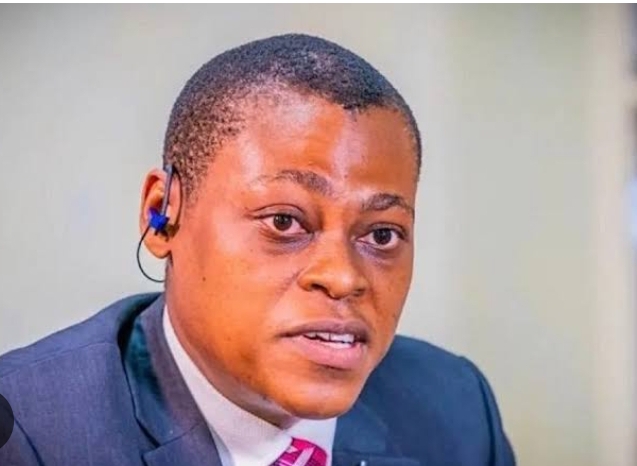
Rufai Oseni has challenged political analyst Olabode Sowunmi over the Federal Government’s 30-day petrol discount, questioning whether the intervention amounts to a return of fuel subsidy despite claims that the discount is being borne by the Nigerian National Petroleum Company Limited (NNPC).
The exchange occurred during an edition of The Morning Show on Arise News, where Oseni questioned Sowunmi about the financial implications of the petrol discount and other measures introduced to cushion the impact of fuel prices.
Oseni argued that several elements of the government’s intervention could be regarded as forms of subsidy, insisting that NNPC’s ownership structure must be considered when determining who ultimately bears the cost.
SEE MORE: ‘Another Speech to Tell Us, It Is Well’ — Oseni Rufai Reacts to Tinubu’s Address
“No matter how you try to explain it away, a subsidy is a subsidy,” Oseni said.
He challenged the argument that the discount should not be classified as a government subsidy simply because NNPC was responsible for providing it.
“We’re talking like NNPC is not owned by [the government] and heavily equity-based by the Ministry of Finance Incorporated,” he said.
Oseni identified the 30-day discount, forward sales of crude oil to domestic refineries, a proposed price ceiling, the removal of road levies and the consideration of an excess-profit tax among the measures he believed could amount to different forms of subsidy.
He argued that forward sales of crude oil to domestic refineries, with increased volumes as production grows, could help shield petrol pump prices from fluctuations in the international market.
Oseni also questioned the proposed negotiation of a price ceiling of ₦1,350 on landing and ex-country costs, arguing that government intervention to moderate prices contradicted the principle of allowing market forces to determine them.
“You are not supposed to come in to do this. Let me go back to your words: forces of market supply and demand should do this, but you have now come in to do this. That’s another form of subsidies,” he said.
He further cited the removal of road levies and cooperation with state governments under new tax laws as part of the measures requiring scrutiny.
After listing the interventions, Oseni demanded that Sowunmi explain their financial implications and identify who would ultimately pay for the petrol discount.
“But tie this with the most important question, actually, that you skipped: How much will this cost NNPC, and who pays for it? Don’t evade that question. Tell us the cost item and how much, who will pay for it,” Oseni said.
Sowunmi Defends His Position
In his response, Sowunmi argued that a government subsidy should be determined by whether the government bears the difference between the total cost of a product and its selling price.
He explained that a subsidy occurs when the government assumes the financial burden created by the gap between the cost of a product and the price at which it is sold.
“In the case of the discount that has been announced, it is borne by NNPC. So that cannot be…” Sowunmi said before Oseni interrupted.
Oseni challenged the distinction, insisting that NNPC’s ownership made it necessary to establish whether the cost could ultimately be linked to the government.
“Wait, not—who owns NNPC? Please answer. No, no, a straight question, and you can go ahead. Who owns NNPC?” Oseni asked.
Sowunmi responded that he had been invited to contribute to the discussion and should be allowed to complete his explanation.
“You asked, you asked NNPC because you believe—you asked me a question because you believe I have something to say. You cannot—you cannot tell me how to talk, so just be…” he said.
Oseni subsequently repeated his question about NNPC’s ownership, prompting Sowunmi to urge him to exercise patience.
“Basically, you need to be a bit patient and just…” Sowunmi responded.
The available transcript ends during the exchange, with no further explanation of the financial arrangements or conclusion to the discussion provided.
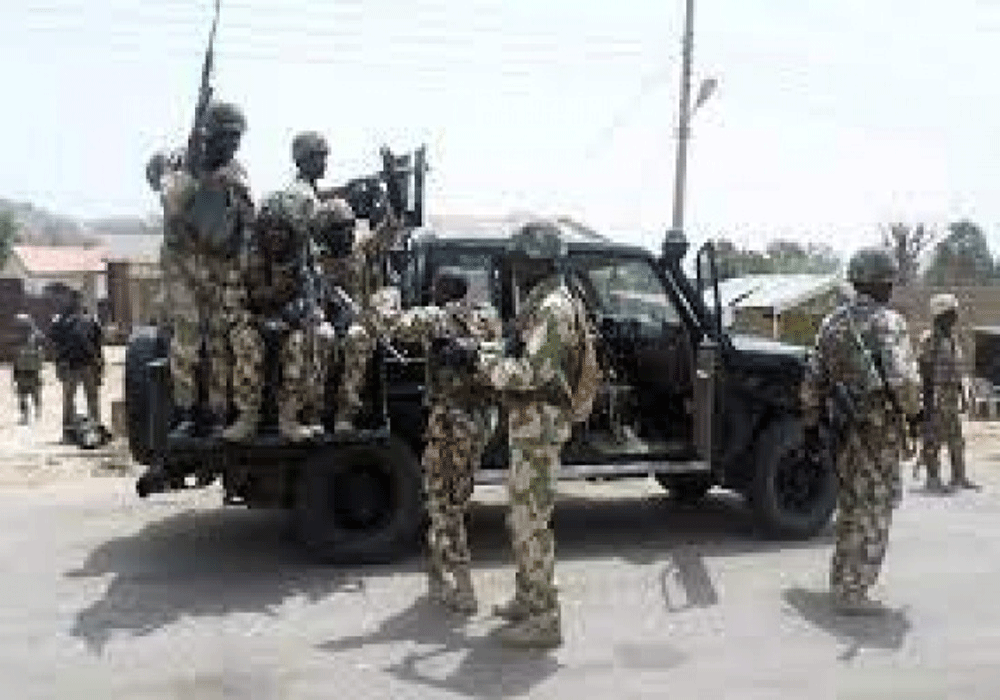
Human rights defender and Amnesty International volunteer, Lawrence Zongo, has been released from the custody of the Nigerian Army in Jos, Plateau State, after spending 10 days in detention.
His release comes after Amnesty International and the Take-It-Back (TIB) Movement demanded his immediate release, raising concerns over his alleged incommunicado detention at the Nigerian Army’s 3 Division headquarters in Jos.
ALSO READ: How Troops Forced Kidnappers to Abandon Abducted Army Lieutenant Colonel in Enugu
“Zongo is out,” a source privy to the information said on Thursday.
Zongo was arrested on October 5 while visiting relatives receiving treatment at a military hospital within Maxwell Khobe Cantonment, Rukuba Barracks, the headquarters of the Army’s 3 Division.
He had reportedly gone to the facility to assist family members who were attacked by gunmen in Meyango, Bassa Local Government Area of Plateau State, on Sunday night.
Sources familiar with the incident said one of Zongo’s first cousins died from injuries sustained in the attack before he arrived at the hospital late Monday morning.
Following his arrest, sources alleged that Zongo was held without charge and denied access to his lawyers and family members.
Sources also claimed that he was wearing Ray-Ban Meta smart glasses when he visited the military facility, suggesting that this might have contributed to the soldiers’ decision to detain him. However, the claim had not been independently verified.
On October 8, Amnesty International raised the alarm over what it described as the arbitrary and incommunicado detention of its member, demanding that the military either release him immediately or hand him over to the appropriate civilian authorities.
The organisation said efforts to gain access to Zongo had been unsuccessful and called on the Army to clarify the circumstances surrounding his arrest and detention.
On October 13, the Take-It-Back Movement’s Plateau State chapter also demanded his release, alleging that he remained in military custody without a clear explanation.
The movement said its members and executive committee representatives had discussed the matter during an appearance on JayFM Jos, insisting that the military should disclose the offence Zongo was suspected of committing and provide evidence justifying his continued detention.
The group also called for respect for Zongo’s fundamental rights and urged the Army to follow established legal procedures if there were allegations against him.
His release comes after days of pressure from rights advocates and activists over the circumstances surrounding his arrest and detention.
The Nigerian Army’s reasons for detaining Zongo and the circumstances surrounding his release were not immediately available.






‘The Entire North Has Made Up Its Mind for Tinubu’ — APC Chieftain

‘Tinubu Has Procured Proxies’ — Sam Amadi on President’s 2027 Campaign Strategy

Tesla Aims for 2028 Commercial Production of Flying Car

Corruption Trials: EFCC, NJI Push Specialised Judges, Digital Evidence Reforms

‘It Is Morally Wrong’ — PDP Chieftain Questions North’s Bid for Another Eight Years

2027 Election: ‘Your Future Is More Valuable’ — IGP Warn Youths Against Political Violence

Trump’s Family Unveils New Cryptocurrency Platform

Senate Denies Receiving Petitions Against Tinubu’s Ambassadorial Nominees

Dangote Cement Lights Up Benue Host Communities With CSR Initiatives

Reps Recommend 3-year Jail Term For Aviation minister

Tems Sets New Record On Billboard Hot 100 Chart
