
Other News
WHO and partners scale up the response to the Ebola outbreak

CONAKRY – The efforts to control the outbreak of the deadly Ebola virus in Guinean capital Conakry are being intensified. More resources were mobilised and WHO and partners are streamlining their coordination of different components of the response.
To strengthen contact tracing in Conakry, the World Health Organization (WHO) organized an intensive training today for a first group of 70 trainees. They will go into the communities to follow up on specific persons who had close contacts with patients with a confirmed Ebola infection.
Training for health workers on infection control has started yesterday in different departments of the Donka national teaching hospital and will also take place in other health facilities in coming days.
Simultaneously, WHO is setting up an operation centre for alert and response within the Guinean Ministry of Health (MoH) in order to centralize the coordination of all activities linked to detection, search, transportation, hospitalisation and burial of suspect cases.
WHO clinicians continue to support Medecins Sans Frontieres (MSF) and MoH in providing clinical management at Donka isolation ward.
According to the latest figures, 157 people, including 101 deaths, have been infected with the Ebola Virus Disease in Guinea. As of today, sixty-six cases have been confirmed by laboratory analysis.
Spread across 6 districts of the country including Conakry, this Ebola outbreak represents a particular challenge that requires the mobilization of different resources from national and international partners to put in place the necessary response measures.
WHO has more than 50 people on the ground supporting the Ministry of Health and other partners to provide clinical management of patients, contact tracing, disease surveillance, laboratory work, logistics, as well as information-sharing and social mobilization and communication.
New outbreak management software developed by the US Centers for Disease Control (CDC) is presently being updated with data from the field, and will soon be used as the primary database tool by all partners. The CDC software package Epi-Info aggregates various types of outbreak data into a single database that produces statistical and visual reports on the outbreak.
Ebola can have a case fatality rate of up to 90%, and is a severe acute viral illness. It is characterized by sudden onset of fever, intense weakness, muscle pain, headache, nausea and sore throat. This can be followed by vomiting, diarrhoea, impaired kidney and liver function, and in some cases, both internal and external bleeding.
No vaccine is available, nor is there any specific treatment. Severely ill patients require intensive supportive care. Patients are frequently dehydrated and require oral rehydration with solutions containing electrolytes, or intravenous fluids. 8 patients in Guinea have so far recovered.
Raising awareness of the risk factors for infection and the protective measures that should be taken is the only way to stop transmission and subsequent deaths.
Close unprotected physical contact with Ebola patients should be avoided and those who have died from the disease should be promptly and safely buried.


The Lagos State Traffic Management Authority (LASTMA) has alerted motorists to traffic delays along Ogunnusi Road towards Ojodu-Berger due to ongoing rehabilitation work.
LASTMA disclosed this in a post on its official X account on Sunday, stating that the road rehabilitation was being carried out by the Lagos State Public Works Corporation (LSPWC).
According to the agency, “The ongoing work is affecting traffic flow, with vehicles moving at a slower pace in both directions.”
ALSO READ: Chaos On Lagos-Ibadan Expressway As LASTMA Shuts Otedola Bridge
To ease the situation, LASTMA said a contraflow arrangement had been introduced for motorists travelling from Omole Junction towards Vis Junction.
“A contraflow arrangement is in place for vehicles coming from Omole Junction towards Vis Junction to facilitate the movement of traffic,” the agency stated.
LASTMA added that its personnel had been deployed to manage traffic and ensure the continuous movement of vehicles around the affected area.
“Our personnel are on ground managing the traffic situation and ensuring the continuous flow of vehicular movement,” the agency said.
The traffic management authority advised motorists to remain patient and exercise caution while the rehabilitation work continues.
“Motorists are advised to exercise patience and drive with caution while the rehabilitation work continues,” LASTMA stated.

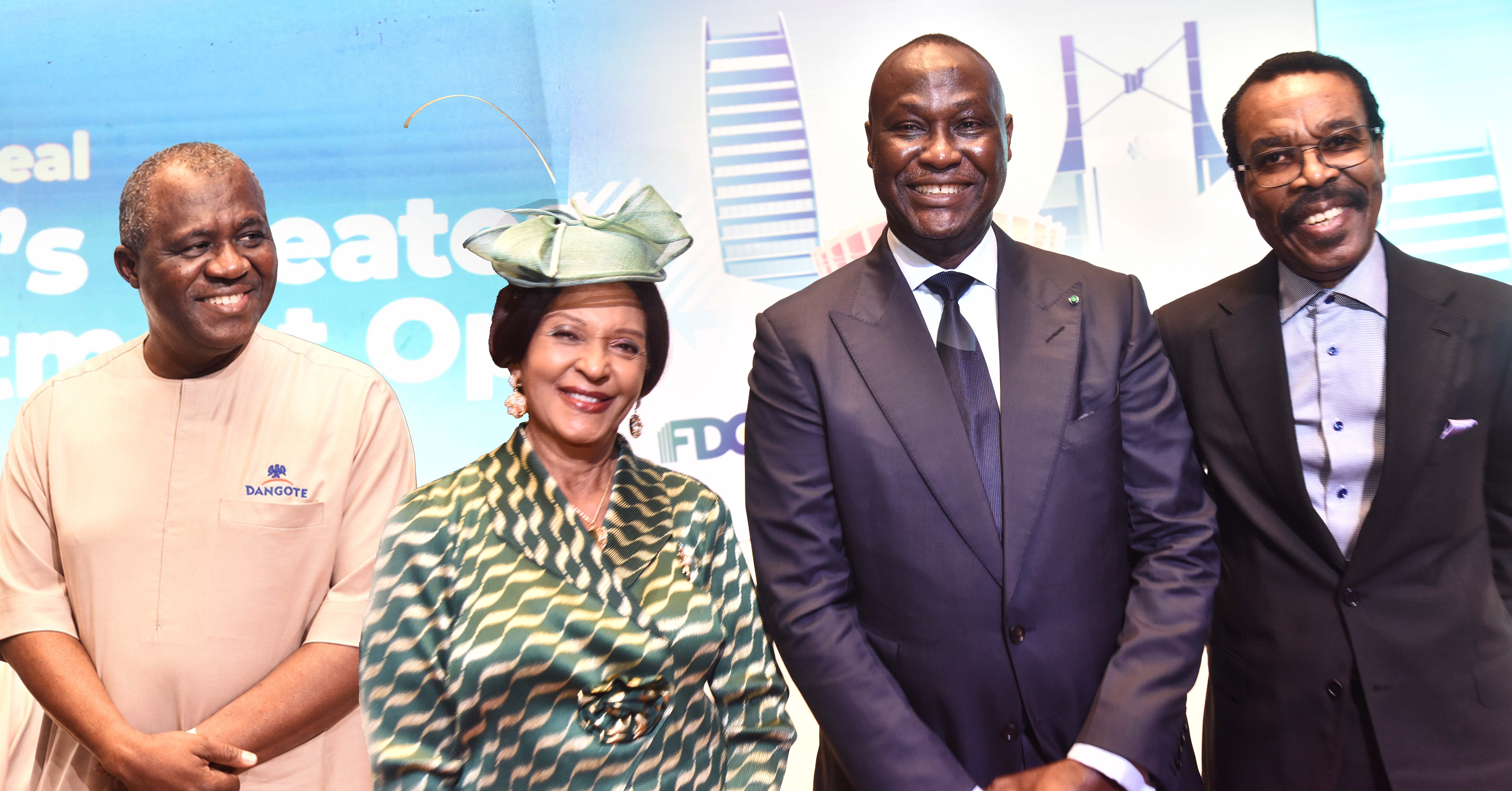
Leading economists, financial experts and industry stakeholders have described the Dangote Group’s investments as major drivers of industrialisation and economic transformation across Nigeria and Africa.
The experts cited the Group’s impact on job creation, import substitution, foreign exchange conservation and economic competitiveness.
They voiced their thoughts at the Lagos Economic Summit themed “The Real Deal: Africa’s Greatest Investment Opportunity,” where they urged governments to implement policies that strengthen local industries and accelerate economic diversification.
President and Chief Executive Officer of the Africa Finance Corporation (AFC), Samaila Zubairu, commended the Dangote Group’s sustained investments across Africa, describing them as critical to unlocking the continent’s economic potential.
He noted that while recent economic reforms have improved foreign exchange stability, strengthened reserves and eased inflationary pressures, the focus must now shift to growth in industry, productivity and employment.
READ ALSO: NMDPRA Shares July Domestic Cooking Gas Supply Details
Also speaking, Chief Executive Officer of the Centre for the Promotion of Private Enterprise (CPPE), Muda Yusuf, said industrialisation remains the most effective path to sustainable economic development.
He called for better alignment of trade and industrial policies, stressing that local manufacturers require strategic support to compete effectively and drive broader economic benefits.
Founder and CEO of Nairametrics, Ugodre Obi-Chukwu, said Africa’s growing population presents a significant industrial opportunity, noting that investments such as the Dangote Refinery are helping to retain capital within the continent while strengthening local production capacity.
In his keynote address, Managing Director of Financial Derivatives Company Limited, Bismarck Rewane, said Nigeria is gradually transitioning from a consumption-led economy to one driven by investment and production.
He added that sustained investments in productive sectors will continue to stimulate growth, create jobs and improve living standards.
Participants at the summit also advocated stronger credit infrastructure, improved national identification systems and increased investment in skills development to enhance the productivity and global competitiveness of Africa’s growing youth population.
Photo Caption: From Left – Chief Economist, Dangote Industries Limited, Dr. Hassan Mahmud; Lady Maiden Alex-Ibru; Chairman of Occasion/Special Guest of Honour, Samaila Zubairu; Key Note Speaker Session 1, Bismarck Rewane; during the Real Deal: Africa’s Greatest Investment Opportunity, Sponsored by Dangote Industry Limited in Lagos on Thursday 3, September 2026.
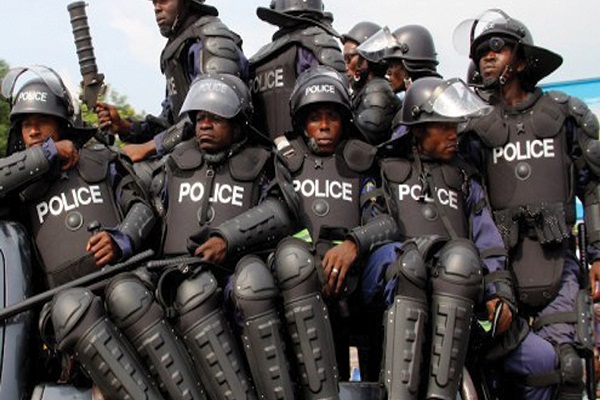
Social media critic Martins Vincent Otse, popularly known as VeryDarkMan (VDM), has released what he described as his first piece of evidence after the Nigeria Police Force challenged him to substantiate his allegations that some police officers allegedly collaborate with kidnappers.
VDM released a video on his Instagram handle on Thursday, August 27, 2026, shortly after the police invited him to provide evidence supporting the claims he made at the 66th Annual General Conference of the Nigerian Bar Association (NBA) in Port Harcourt.
SEE MORE: ‘Provide Evidence’ — Police React to VDM’s Explosive Kidnap Allegation
The activist captioned the video: “My evidence number 1.”
Recalled that VDM, who was a panellist at the NBA conference on Tuesday, had alleged that some police officers manning checkpoints along major highways provide kidnappers and bandits with information about travellers.
According to him, the officers allegedly relay details about the identities and movements of travellers to criminal groups, thereby facilitating abductions for ransom.
The allegation triggered a response from the Nigeria Police Force, which denied the claim and challenged VDM to substantiate his allegations.
The police invitation came as the force sought evidence to support the serious claims made by the social media critic.
In response, VDM released the video, describing it as his “evidence number 1”, signalling that he may provide further material to support his allegations.
The development has continued to attract attention, with the controversy placing renewed focus on allegations of possible collaboration between security personnel and criminal groups involved in kidnapping and banditry.






2027 Election: ‘Your Future Is More Valuable’ — IGP Warn Youths Against Political Violence

Tinubu Charges PCC Members to Deliver Wards

Marketers Eye Portion of FG’s Petrol Discount

Tanzania Nears Completion of $42bn Equinor, Shell-Led LNG Project

IEA Puts UAE’s Oil Output at 5.3mbpd for September

Africa’s Energy Security Conversations Pull Industry Executives Together

Trump’s Family Unveils New Cryptocurrency Platform

Senate Denies Receiving Petitions Against Tinubu’s Ambassadorial Nominees

Dangote Cement Lights Up Benue Host Communities With CSR Initiatives

Reps Recommend 3-year Jail Term For Aviation minister

Tems Sets New Record On Billboard Hot 100 Chart
