
Politics
Why Tinubu Must Douse Political Flames In Rivers State

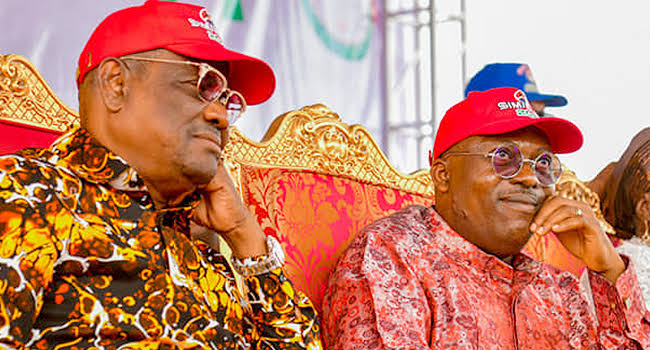
Besides former governor of Rivers State, Nysom Wike ensuring the emergence of Siminalayi Fubara as his successor, not much was in the public space about the two before the firing of rockets on Sunday night.
However, no one can deny knowledge of the fact that the game is politics. The aim is fortune and fame, while the ammunition for political ambitions are the peoples blood and their well-being.
If a civil conflict of political gladiators was teed-off with rockets at the Rivers State House of Assembly (RSHA) Complex, it is left for the public to imagine what could follow.
In less than 24 hours, the warlords have demonstrated a level of desperation that serious countries cannot ignore.
Recall that the people of Rivers State and indeed Nigeria had gone to bed, hoping to wake up to a peaceful working week, before the political hawks struck with the salvo of a bomb.
A bomb, heralding a civil conflict?
However, before the public could place the warfare properly, many thought it was mere accident, within 12 hours, members of the RSHA, said to be numbered 24, had removed the majority leader, Edison Ehie and served an impeachment notice on Gov Fubara.
The move, now being interpreted as being the script of the Minister of the Federal Capital Territory (FCT), Nyesom Wike, had one objective, conquer and annex Rivers State to Wike’s political empire.
Those behind the firebomb would have been taken aback that men of the Rivers State Fire Service were able to douse the flames from the bomb on Sunday.
Undeterred, the legislators met early Monday morning and signed an impeachment notice against the governor.
It was gathered that the anti-Fubara lawmakers, led by Speaker, Martin Amaewhule, met at about 6am on Monday, to perfect the impeachment notice.
In addition to removing the majority leader, Hon Ehie, other legislators opposed to the impeachment of the governor were suspended.
Among the lawmakers suspended were Hon Sokari Goodboy Sokari, representing Ahoada West, Hon Adolphus Oruibienimigha, representing Opobo/Nkoro and Hon Victor Oko Jumbo, representing Bonny.
From the notice of impeachment, made public by Hon Sylvanus Nwankwo, the member representing Omuma constituency, the notice was brought pursuant to section 188 of the Constitution of the Federal Republic of Nigeria as amended.
According to him, the impeachment notice was predicated on “gross misconduct in the performance of the functions of the office of the governor.’’
The public is sending grave danger, not just for Rivers State, but the entire Niger Delta, the national economy and the peace of Nigeria.
They point to how hostilities in the Niger Delta crippled Nigeria’s economy until late President Umoru Yaradua came up with the amnesty initiative.
They also note that the economic muscle of Rivers State is such that whoever is governor can impact the steering of the political ship of the Nigerian state.
The roles of Rotimi Amaechi in ousting Goodluck Jonathan, which aided Muhammadu Buhari into office, and that of Wike in enthroning Tinubu are fresh in the minds of political watchers.
Probably for these reasons, elder statesman and the leader of the Pan-Niger Delta Forum, Chief Edwin Clark, has urged President Tinubu to call Wike and the security forces in Rivers State to order.
Chief Clark expressed great concern over the political fireworks witnessed in Rivers State between Sunday and Monday.
He said, “I have been reliably informed that there is a plot to unlawfully remove Governor Siminalaye Fubara of Rivers State, who has spent only about five months in office.
“I understand the sad episode is being orchestrated by the immediate past governor of Rivers State and the Minister of the Federal Capital Territory, Mr Nyesom Wike.
“And that the intention is to remove the governor, force his deputy, Professor Ngozi Odu to resign, and install the Speaker of the House of Assembly, another Ikwerre person, as the governor of the state. Let me warn strongly, we won’t allow that to happen!
“President Bola Tinubu must call Nyesom Wike and the security agencies in Rivers State to order, to avert any untold crisis in Rivers State.”
Recounting what has transpired in the melodrama, Chief Clark noted, “Last night, the hallowed chamber of the Rivers State House of Assembly was burnt in what apparently is part of the plot to destabilize the state.
“The governor was tear-gassed and was even threatened with being shot at when he visited the assembly complex after the incident to assess the level of damage.
“We are not in a barbaric state where people can do whatever they like; we are in a democracy and the tenets of constitutional democracy must be upheld by all.’’
On the larger picture, the elder statesman cautioned against fomenting political crisis in Rivers State which could have wider implications for the Niger Delta region.
“Rivers people have suffered enough political crises. The state should not be allowed to degenerate again into its dark past, and the Niger Delta region by extension.
“The consequences would be dire for the stability of the region and the national economy.
“What has Governor Fubara done wrong? Refusing to be further ‘remote controlled’?
“Mr Nyesom Wike was governor for eight years, nobody hassled him. He governed Rivers State like an emperor, he did not show any iota of respect and regard to anyone, not even those who imposed him on Rivers people in 2015.
“President Tinubu must act fast and avert the unfolding crisis in Rivers State in the interest of his administration, the nation’s democracy, and the country at large. A word is enough for the wise.”




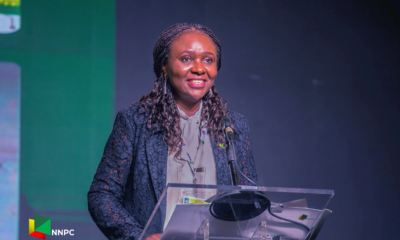


The Chairman of the Independent National Electoral Commission (INEC), Prof. Joash O. Amupitan, SAN, has declared that algorithms will not determine the outcome of Nigeria’s 2027 General Elections, insisting that the sovereign will of the Nigerian people must remain the basis for choosing their leaders.
Amupitan made the declaration while speaking at the Artificial Intelligence and Democracy Forum 2026 in Abuja, themed “Safeguarding the 2027 General Elections in the Age of Artificial Intelligence.”
“Algorithms will not, and must never, decide the 2027 vote,” he said.
ALSO READ: 2027 Elections: INEC Debunks Fake Notice on Governorship Candidates in Six States
“The choice of who leads Nigeria belongs exclusively to the Nigerian people. Algorithms may predict patterns; they may optimise routes, and they may even suggest preferences. But they do not have a conscience, they do not have a country, and they do not have a vote.”
The forum, co-convened by INEC and Yiaga Africa, brought together electoral officials, members of the diplomatic corps, political party leaders, civil society organisations, media executives, security agencies, technology companies, international development partners and members of the academic community.
Participants also included the Chairperson of the ECOWAS Network of Electoral Commissions and Chairman of Senegal’s Electoral Commission, Mr Abdoulaye Sylla, alongside heads of electoral management bodies across Africa.
Amupitan acknowledged that artificial intelligence would significantly influence the information environment ahead of the 2027 elections, as well as electoral logistics and the strategies employed by democratic actors and those seeking to disrupt the electoral process.
“While algorithms will not decide the vote, AI will undeniably shape the information environment in which citizens form their choices, influence the speed and security of electoral logistics, and alter the tactics of both democratic actors and anti-democratic disruptors,” he said.
The INEC chairman described the 2027 General Election as the largest democratic exercise on the African continent and one of the most complex administrative undertakings in the world.
According to him, the election will involve more than 103 million registered voters and 176,846 polling units spread across 774 local government areas, with elections covering the presidential, National Assembly, governorship and state assembly positions.
He disclosed that INEC had completed 10 of the 14 major operational milestones stipulated by the Electoral Act 2026.
The commission has also procured additional Bimodal Voter Accreditation System (BVAS) units, digitised candidate nominations through the INEC Candidates Nomination Portal (ICNP), which is processing more than 15,000 nominations across 22 political parties, and introduced online voter registration for the first time in Nigeria.
Amupitan identified several areas where artificial intelligence could improve election administration, including predictive logistics and route optimisation, automated assistance with result audits, biometric database management, multilingual voter engagement through Natural Language Processing, and AI-driven cybersecurity defence.
However, he stressed that the adoption of AI would not replace human responsibility in critical electoral processes.
According to him, no critical electoral decision, result collation, voter accreditation or candidate qualification would be fully automated or delegated to an autonomous system.
“Human accountability, statutory oversight, and judicial review will remain paramount at every stage of the electoral chain,” he said.

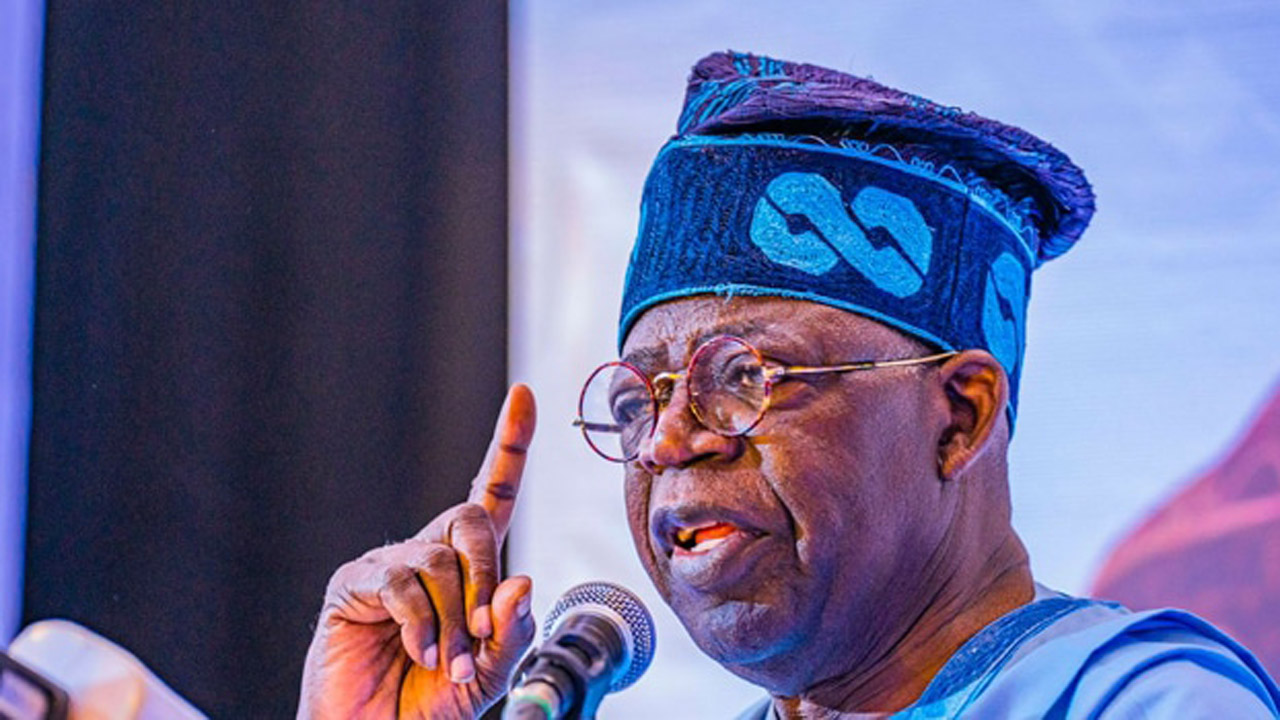
Two sitting state governors of other political parties and an influential minister, also of an opposition party have teamed up with the ruling All Progressives Congress (APC) in the push to help President Bola Ahmned Tinubu retain his seat come 2027.
Biztellers reports that Osun State Governor, Senator Ademola Adeleke (Accord Party) and his Anambra State counterpart, Prof Charles Soludu (All Progressives Grand Alliance (APGA)) have joined the Minister of Federal Capital Territory (FCT), Nyesom Wike (Peoples Democratic Party, (PDP)) in backing Tinubu’s re-election bid and would be serving in the revised Presidential Campaign Council (PCC).
Tinubu is the presidential candidate of the ruling APC.
According to a notice signed by the National Secretary of the APC, Senator Ajibola Basiru, the inauguration of the Council is scheduled for Wednesday at the Banquet Hall, Presidential Villa, Abuja by 11:00 a.m.
In a move signifying that politics is ticker than blood-relationship, Adeleke, a member of the Accord Party in Osun state was preferred to the President’s cousin and the Minister of Marine and Blue Economy, Gboyega Oyetola, who is the leader of the APC in the state.
With the Presidential candidate of the African Democratic Congress (ADC), Atiku Abubbakar, and Candidate of the National Democratic Congress (NDC) giving APC and Tinubu a good fight, the ruling party is leaving nothing to chance, hence, its decision to leverage on the popularity of friendly governors in opposition parties such as Adeleke to garner more support for Tinubu in Osun.
READ ALSO: 2027: Tinubu Will Beat Atiku, Obi by Wide Margin, Says Bwala
Also, Soludo, a member of the APGA has never hidden his desire to work for the re-election of President Tinubu in the January 16, 2027 presidential election. Soludo is Obi’s home state Governor.
Even before the ruling party released the revised campaign list, Wike, a member of the PDP had named himself the campaign coordinator for the FCT. So, it was no surprise that he was drafted into the campaign council of the APC.
Vice President Kashim Shettima would serve as Vice Chairman I, while the National Chairman of the APC, Prof. Nentawe Goshwe Yilwatda is Vice Chairman II. Senate President Godswill Akpabio, House Speaker Tajudeen Abbas and Kwara Governor AbdulRahman AbdulRazaq are Deputy Vice Chairmen.
Former Zamfara State Governor, Senator Abdulaziz Yari remains the Director General of the Campaign Council.
The Deputy Director-Generals of the PCC are: Yobe State Governor, Mai Mala Buni (North I), Senator Opeyemi Bamidele (South I), Deputy Senate President Barau Jibrin (North II), Deputy Speaker Benjamin Kalu (South II), while Senator Adams Oshiomhole will head Mobilization.
Also on the list is the Chief of Staff to the President, Hon. Femi Gbajabiamila who will serve as the Head of Administration, Hon. James Faleke is Deputy Director General in charge of Election Planning, Hon. Ibrahim Masari is in charge of Logistics and Operations, Hon. Aminu Masari heads Parliamentary Mobilisation, and Minister of Works, Engr. David Umahi heads Infrastructure Mobilization and Sensitization.
Imo State Governor, Hope Uzodimma is Secretary of the Council, while Basiru is Deputy Secretary and Hadiza Bala Usman is Assistant Secretary.
The Zonal Campaign Coordinators include Governor Babajide Sanwo-Olu for South-West, Governor Peter Mbah for South-East, Senator Bassey Otu for South-South, Governor Umar Bago for North-Central, Governor Uba Sani for North-West and Senator Ali Modu Sheriff for North-East.
The list also shows state coordinators made up of serving APC governors, past governors, National and State Assembly members and other critical stakeholders.
Key directorates in the council are: Finance/Treasury to be led by Delta State Governor, Sheriff Oborevwori, Fund Raising by Ogun State Governor, Dapo Abiodun, Policy and Manifesto by Minister of Budget and Economic Planning, Atiku Bagudu, and Legal Directorate by Muiz Banire, SAN.
The Directorate of Media and Strategic Communications has Minister of Information, Idris Malagi as Coordinating Director I, while Dele Alake is Presidential Campaign Spokesperson I. Other spokespersons include; Bayo Onanuga, Lere Olayinka, Ajuri Ngelale, Ayobami Oyalowo, Kemi Asekun-Shitu, Bala Ibrahim, Hon. Adamu Fanda and Mohammed Garba.
The Directorate of Security and Intelligence would be headed by Gen. Sarki Yaki, Data Management by Dr. Bisoye Coker, while the Directorate of Support Groups is headed by H.E. Silas Agara.
The party said all members are expected to be present at the inauguration.
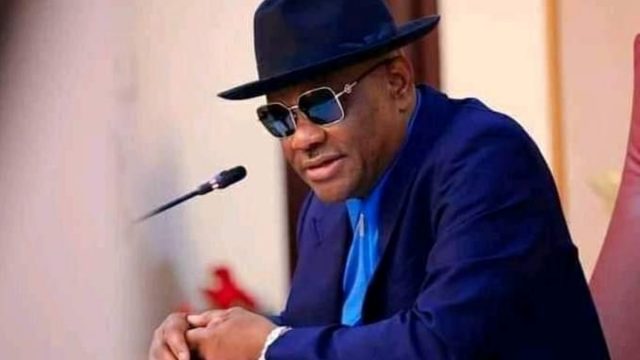
Minister of the Federal Capital Territory, Nyesom Wike, has urged opposition politicians to acknowledge President Bola Tinubu’s performance, insisting that political differences should not prevent them from recognising what he described as the President’s achievements.
Wike made the remarks during his media chat on Tuesday while speaking about the political atmosphere ahead of the 2027 general elections and criticism of the Tinubu administration.
ALSO READ: 2027 Election: Wike Sets Resignation Date If Tinubu Loses Rivers, FCT
He said some politicians publicly support the President at the national level but take a different position at the sub-national level because of their desire to maintain control of their states.
“I know that sometimes, some people will come out publicly, will support you at the national level, but at the sub-national level, forget it,” Wike said.
He added that such politicians believe the President should win at the national level while they retain control of their respective states.
“But this time around I came out open because of the period we are in,” he said.
According to Wike, several politicians have been making statements about the 2027 general elections, with some claiming that Tinubu has done nothing since assuming office.
He argued that opposition parties should not dismiss the President’s performance simply because they want to take over power.
“You have to check the governor of Bauchi, who is a member of PDP, who has a presidential candidate, came out to say, ‘Look at television, that Mr. President has done well,’” he said.
Wike also urged Nigerians to consider the state of the economy before and after Tinubu assumed office.
“See what I was telling you about Bauchi. See what he has done. See what our economy is before, see what it is now,” he said.
The FCT minister maintained that political opposition should not prevent politicians from acknowledging what they consider positive developments in the country.
“You know, time has come, not because you’re an opposition party, and then you just say the man who is the chief of affairs of the country has done nothing either for the sake of, I mean, opposition, that is not fair,” he said.
He further argued that politics should not be treated as a do-or-die affair, adding that the desire to win elections should not prevent political actors from recognising the performance of their opponents.
“For us, and whether anybody likes us or not, Mr. President has done well,” Wike said.
He accused the opposition of focusing on its ambition to take over power while failing to acknowledge the administration’s performance.
“That’s something, it’s just that the opposition wants to take over power,” he said.
Wike added that opposition parties would continue to criticise the administration even if it achieved results, because they wanted to replace it.
“But the way the opposition is going now, it’s a bit of concern to us, who are saying, ‘No, no, no, no, these people are not telling Nigerians the truth,’” he said.
He called on politicians in other parties who believe the opposition is misrepresenting the situation to speak out and offer their own account of events.
“Let those of us who are also in other political parties tell Nigerians, ‘No, this is not truth, this is what is happening, and that what is, you know, going on,’” he said.
Addressing the issue of political loyalties and godfatherism, Wike said people should be willing to acknowledge good work regardless of their party affiliations.
“So, the issue of godson, the issue of whatever you may call it, I don’t, I’m not a, I’m not a party to, to read, but when you see something that will help your country, when you see somebody who is doing good, come out and say it,” he said.
He added: “It doesn’t matter whether you’re in opposition or not.”






Small Investors Take Centre Stage as Dangote IPO Nears Close
Sahara Champions Global Shipping Collaboration for $20m Mercy Ships Healthcare Impact

30 Nigerians Bag Postgraduate Scholarship from NNPC Ltd, Eni

2027: ‘Algorithms Will Not Decide Election Results’, INEC Chairman Declares

Navy Recovers 98,000 Litres of Suspected Stolen Crude in Rivers

DPRP’s Appeal Against Fuel Import Licence Ruling Earns Stakeholder Backing

Trump’s Family Unveils New Cryptocurrency Platform

Senate Denies Receiving Petitions Against Tinubu’s Ambassadorial Nominees

Dangote Cement Lights Up Benue Host Communities With CSR Initiatives

Reps Recommend 3-year Jail Term For Aviation minister

Tems Sets New Record On Billboard Hot 100 Chart

664823 902909Although youre any with the lucky enough choices, it comes evidently, although capture the fancy of the particular coveted by ly folks other helpful you you meet could possibly well have hard times this specific difficulty. pre owned awnings 202399
314622 926992Largest lover messages were made to share it together with your and gives honour of the bride and groom. Quite sound systems facing unnecessary throngs of individuals should take into account each of our valuable concept of all presenting, which is ones trailer. greatest man toasts 355383