
Finance
World Bank to ensure Africa’s growth translates to low poverty


world bank
Excerpts of the President of World Bank Group press briefing at the Annual IMF/World Bank Group Annual Meetings
I’ve got three topics that I’d like to talk about and then I’ll take your questions. I’ve just come from a meeting focused on the Ebola epidemic and we had an extremely productive discussion. We had president Konde from Guinea with us and we had President Johnson Sirleaf and President Koroma on video conference.
They not only addressed us, they made extremely specific requests based on what they need now in the countries to focus the response. The crisis we know could have an enormous impact. Just yesterday we gained a better understanding of the potential economic damage from the outbreak.
The World Bank Group released a new economic impact assessment that said if the epidemic is not quickly contained and if it spreads to neighboring countries the two year regional financial impact could reach US $32.6 billion by the end of 20-15. That would be catastrophic for the people of the West Africa region.
One of the things that Secretary of State of the Department for International Development of the United Kingdom, Justine Greening, pointed out was that every day that we don’t invest, every day that we don’t put money into stopping the crisis, is many, many more dollars and pounds that we’re going to have to use later.
It is an extremely good investment right now to prevent this kind of loss, to put all the money on the table right now, to get the response going. The World Health Organization just estimated that Liberia alone, for example, needs 360 foreign medical staff today to treat those infected.
Now, one of the sticking points of getting foreign medical staff into these three countries has been the lack of medical evacuation. We heard this morning from the European Commission and from the United States that both of those groups have now committed to medically evacuating health workers and other workers, the responders.
This has been a major road block and now with the announcement this morning, I think that we’re on a much better path to be able to staff the response.
Second subject –- and I’d be happy to talk more about the other outcomes of that meeting. The second subject involves infrastructure.
Today I’ll be launching a new partnership initiative, the Global Infrastructure Facility, which is aimed at mobilizing the private sector to help tackle the massive infrastructure deficit now facing developing countries in emerging markets. We estimate that these countries need $1 trillion a year in extra investment through 2020.
The global infrastructure facility known as the GIF, represents a unique collaboration among the private sector, especially institutional investors, donor nations, multilateral development banks, and the World Bank Group to help unlock billions of dollars for infrastructure projects in developing and emerging economies.
With public purses stretched it’s significant that the heads of some of the world’s leading institutional investors will be signing up as partners in the GIF.
Institutional investors have deep pockets. Insurance and pension funds have some 80 trillion in assets, but less than 1 percent of pension funds are allocated directly to infrastructure projects and the bulk of that is in advanced countries. We’ve been hearing loud and clear that the money’s out there.
The real challenge is not a matter of money but a lack of bankable projects, a sufficient supply of commercially viable and sustainable infrastructure investments.
The GIF is a new concept that can be piloted quickly and does require tens of billions of new resources. The aim is to crowd in the tens of billions or more potentially that’s now sitting on the sidelines waiting for good investments. We can bring those investments off the sidelines by addressing issues like risk.
My third topic involves the fight against cholera in Haiti. Today the World Bank Group is pledging $50 million to help improve access to safe water and sanitation for all Haitians, aimed at preventing water borne diseases. Later I’ll be chairing a conference with the United Nation’s secretary General, Ban Ki-moon, with the objective of raising even more donor funds.
What is your comment on AIIB’s business model compared to the existing institutions such as the World Bank and the ADB? And do you think the AIIB can cooperate effectively with ADB and World Bank, but to also avoid fragmentation?
Well, my understanding
is that the AIIB, the business model, is still being discussed. There are many different issues that are still to be worked out. I’ve made it very clear from the very beginning of discussions around AIIB that we think that we can be a very, very strong partner for AIIB. For example, we have 70 years of experience doing project preparation, helping with implementation, supervision, and also we think that the safeguards that we bring to the table in any project will be helpful in reducing risk for investors. I mean this is really a major concern of all investors that they do not want to suffer the reputational damage that will happen if environmental and social safeguards are not respected. So I think that we’ve already been in very close discussions with leaders in both AIIB and the new development bank, the BRICS Bank, and our intention and our expectation is that we’ll be working very closely. At the World Bank Group our enemy is poverty. Just as I have said, there is such a need for more investment in infrastructure that any organization that’s focused on investing in infrastructure to fight poverty is our friend.
The World Bank has progressively withdrawn for infrastructure a very long period and a great deal of the expertise that used to exist in the bank in everything from engineering to finance presumably is no longer there.
So does this mean that the bank is now going to staff up again with the kind of people who specialize in infrastructure?
Well, we still actually do have quite a large portfolio in infrastructure projects. I think it’s a relatively smaller proportion of the overall portfolio than it was say decades ago. On the other hand, we did over $60 billion in business last year. As we scale up our global practices, our groups that are specifically focused on particular areas, if we need to bring in more experts on roads and energy and transport, we’ll do so. But we are already doing quite a bit of work in infrastructure. The platform, though, is very important in a new sense. As we start putting projects together, it will be people from the World Bank who have expertise. But we’ll also be able to draw on expertise from the other multilateral development banks and importantly also from the private sector.
So this is a platform to bring together the expertise to take what we know are bankable projects, but that without the kind of project preparation that will make it clear that they’re bankable projects, investments won’t flow. So we’re looking forward to drawing on expertise from all over the world, but also from inside the World Bank Group.
For some time Africa is predicted to grow at about 5 percent with some countries like Nigeria growing at 6 percent. We know too well that a whole lot is passing on. I don’t know to the extent the growth rate is important on the efforts of World Bank to encourage countries to end extreme poverty.
What I’m saying is given the impressive growth rate in sub-Saharan Africa, to what extent is it important on the efforts to end object poverty?
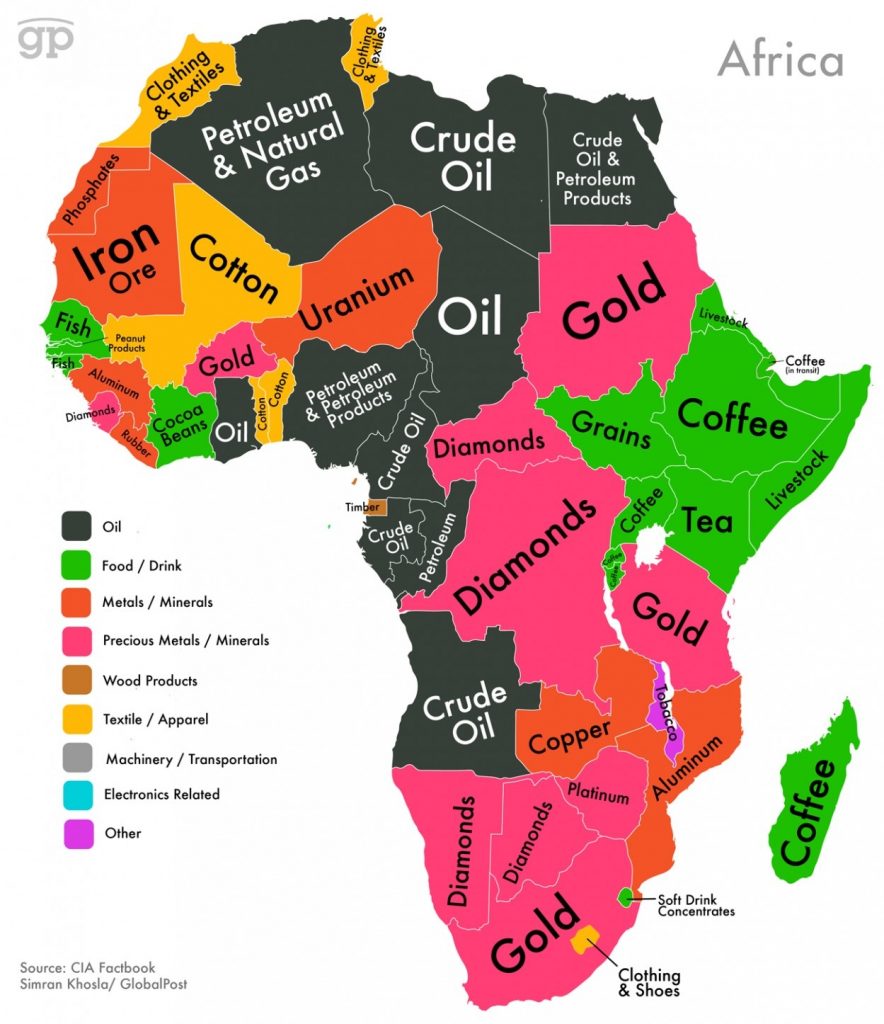
The question is to what extent does the growth rate in Africa impacting poverty? Okay. This is an important question. You know, in 1990, the number of people living in extreme poverty in East Asia and in Africa was about the same, 55 percent or so. In East Asia that has dropped tremendously over that period of time to less than 10 percent. But in Africa, it’s remained at 46 percent. And so, one of the things that has been a bit of a disappointment is that poverty rates have remained high despite high growth rates. And so, very specifically, in Africa, we’re working with countries to ensure that these high growth rates are translated into lowering levels of extreme poverty. For example, many African countries have had new discoveries of natural resources minerals, oil, for example. And what we know, in so many cases, these discoveries don’t lead to direct benefits for the poorest. And so, this is one of our most important priorities. We want to ensure that we work with African countries to take these new, wonderful, important discoveries of mineral wealth, of oil wealth and translate that into reduced levels of poverty.
I can tell you that every one of the Ministers of Finance I speak with in Africa are very committed to reducing extreme poverty and making sure that prosperity is shared. We need to just provide the kind of technical expertise; the solutions from around the world that will help them do that.
In your opening remarks you mentioned the new assessment of the financial impact regionally. I wonder can you elaborate more on that and also, in which aspect you see there might be spillover effects over the world?
So one of the things we did, our economists were looking at what were the impacts economically in previous epidemics and one of the ones we looked at was SARS. And what we learned is that the impact of SARS which was a tragic outbreak, 800 deaths, but the overall economic impact was far greater than just the impact of the virus. It was $46 billion. And the impact, 80 to 90 percent of the economic impact is not from the virus itself. It’s from the aversion behavior, the fear factor, that surrounds an outbreak. Now, what we know is that the one thing that will stop that aversion behavior and lessen the economic impact is to have systems in place so that responses are quick and effective.
So one of the things we talked about this morning is that we now know exactly what it will take not only to stop the virus but stop the aversion behavior that leads to this huge economic impact. And that’s really good news in a sense, that doing the right thing, you know, not only identifying cases, doing safe burials, but providing treatment for the people who are ill and doing it, even at the community-based level which is what was called for today, all those things are the right thing to do for the Liberian, Ghanaian and Sierra Leonean people. It’s the right thing to do to prevent the spread from a public health perspective and it’s also the right thing to do to stop the fear that causes the enormous economic impacts. So this morning what we did was everyone redoubled their commitment to acting right now to get those adequate treatment prevention identification systems in place, on the ground in those three countries.
And this is a point that we
really want to make. Are there other spillover effects? Well, we are hearing that with the two workers who died in Spain, plus there may be one or two new infections that have happened, that we’re already seeing an economic impact. That the stock value of travel companies, of airlines have already taken a hit.
And I can tell you that that will continue unless we get the adequate response in place in those three countries. You have to stop these epidemics at the source. Trying to block your borders or isolating those countries somehow is not going to work. So I was encouraged this morning but there’s still a lot of work to do and one of the messages that came out very strongly is if anybody, any country, any private sector group would like to make a contribution, they should do it now. Not wait two or three weeks because the price tag goes up every day that we delay.
Can you just clarify the 32.6 billion, what geography that covers? Does that cover Western Africa?
Yeah, it’s Western Africa. It’s Western Africa and the surrounding countries. I can give you a list of exactly what countries, you know, Ghana, Senegal, Cote d’Ivoire and it’s looking at what will happen if the cases begin to spread. And the thing — the point that we were making is that right now as long as it’s not under control, as long as — let me put it this way. So right now, because we don’t have adequate treatment services, and you know, when — if you think about it from the perspective of a person from Guinea, Sierra Leone or Liberia, right, the public health imperative is to stop the spread. But the human imperative, the individual human imperative, is to get treatment.
So the incentive right now is to go wherever you need to go to get treatment so you can live. Right now, we don’t have the services in place so that the first thought of the people from those three countries is I need to go to my local clinic because I know they’ll take care of me effectively. So that’s what we need to do.
Now, the presumption of the 32.6 billion is that things get delayed and delayed and delayed and the people inside those countries do the rational thing for themselves and try to find care elsewhere.
That’s where the real impact is going to happen. If we see this kind of impact already with two, maybe four, maybe four cases in Spain, we know that historically this aversion behavior, this fear factor can spread very quickly.
Do you have a global figure at this point?
Not yet, not yet.
Dr. Kim, on Tuesday you held a sort of improvised town hall meeting to hear concerns and questions from staff about the ongoing reforms at the World Bank Group.
What was your biggest take away from that meeting and do you expect that it will lead to any concrete changes in either the implementation or communication of your reforms? And then — sorry, just a quick second question.
You’re undergoing a strategic staffing exercise to map staff to the global practices. How do you know where expertise will be required before you’ve seen demand for your services under the new organizational structure?
First of all, you know, we’re undergoing the most thorough, the most ambitious reorganization in close to 20 years. So it’s not a surprise to me that there’s anxiety, that there’s concern.
More than anything what the staff were saying was that they wanted to talk to me directly, they wanted to tell me, you know, what the problems are that they were seeing.
And I was aware of some of them, there were some that were new to me, but we had an extremely good discussion. And my take away from that, the most important takeaway and the thing that kept coming up is that they want to talk to me more. So we’ll have another town hall next week and do as many as we need until people feel that they’re being heard.
Now this is what happens when you try to reorganize a multilateral institution. I’ve done reorganizations before but the complexity of this institution is just enormous.
There’s 188 member governments, we work in many, many different languages, we work in so many different countries. So on the one hand I’m not surprised, but I would also point out look at all the things that we’ve already gotten done. For example we have been able to double the capacity for our lending to middle income countries, we’d had a record IDA replenishment last year.
Already the global practices are providing information and support, for example to Prime Minister Modi in India that caused him to Tweet out immediately after my meeting that they don’t need our money but we’re going to be there information bank and the reason is because we were able to provide him such interesting insights into how we can bring solutions to his problems.
So there are a lot of good things about it already, but anytime you undertake something this enormous you’re going to have these kind of problems.
Now in terms of a strategic staffing we know a lot from what we’ve already been doing. So we have some ideas about the kinds of staff that we will need and we won’t need, but what I would like to stress is that the expenditure review we’re going through, strategic staffing, all this is stuff that you have to do as an organization no matter what and we haven’t done it, we haven’t been doing it for quite a few years.
So when you start the process of asking questions like so what are we spending on different things, are we spending the same amount to do something here as we’re doing over there?
When you’re asking those questions for the first time it is really tough to go through, but it’s just something that everything organization should go through.
Every organization should ask itself do we have the right staff and are we fit for purpose for what we’re trying to do? I am glad that we’ve done it and we will continue. And the good news is that we’re almost done; we’re going to be finished soon.
On the Chinese economic slowdown it has now almost been a year after the Chinese government carried out a slew of measures in order to make the country’s economy more stable, so what is your evaluation on those reforms that has been carried out so far and how would you integrate the slowdown? Do you take them as cyclical changes or do you take them as the changes brought by those reforms?
So China is trying to undergo a massive change in their growth model. And this is something my predecessor, Bob Zoellick, I think worked truly brilliantly with the Chinese government over several years to put together a plan called “China 2030”.
So if you’re intention, you know — China going from some of the highest investment rates that we’ve ever seen, you know, 46 percent of GDP, and then to try to pivot to a growth strategy that’s much more focused on consumption and services to try to sort of move up the value chain if you will in terms of economic productivity, this is a very difficult thing to do.
And so we have been watching very carefully and there has been a slowdown from tradition rates of, you know, very high growth rates of 10 percent. And I think the important thing as we watch is that China continues to be committed to that reform process. We believe in that reform process and moving toward a different growth model is what China needs to do. And so it’s a very delicate balance.
They have to on one hand be ready to move to a different growth model, but on the other hand try to keep growth rates up because you need the growth for new jobs, new entrance on the market. We have faith in the Chinese leadership. We think that they very clearly understand these trade-offs and we will continue to work very closely with them.
For example, one of the things that after the China 2030 report the Chinese government has continued to ask us to help them solve their most difficult problems.
So last year we launched a report on urbanization and as an example of what our global practices now are able to do, our many different global practices got together and said what are the best models in the world and in China for how China can handle the next 300 million people who are coming into the cities?
China will be the first country in the world that has one billion urban dwellers. And so we looked at everything from how to reform the hukou system, how to provide health and education in the cities, how to provide clean energy, how to increase the density of cities so that we lower the carbon footprint, and China’s now already undertaking the recommendations that we came together jointly to provide.
Right now we’re working on an assessment and a plan for their healthcare system. China spends already five percent of GDP which is a huge amount, but are not happy with the amount of health improvement that they’re getting for these expenditures. This is so healthy for a country to be able to say we want to do better in a particular area.
And we think that if we can help them to make the most of their current expenditures and make those expenditures as efficient as possible so that we actually have healthier people that this will be an also way to spur economic growth.
So it’s difficult for many people to watch China have lower growth rates, but we feel that they’re doing it in a way that’s very much with tremendous awareness of what they’re trying to accomplish.
– See more at: http://www.vanguardngr.com/2014/10/world-bank-ensure-africas-growth-translates-low-poverty/#sthash.QcEQjvpW.dpuf
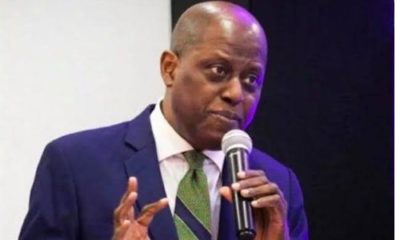


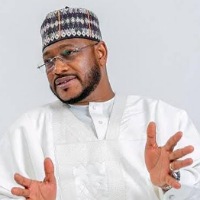


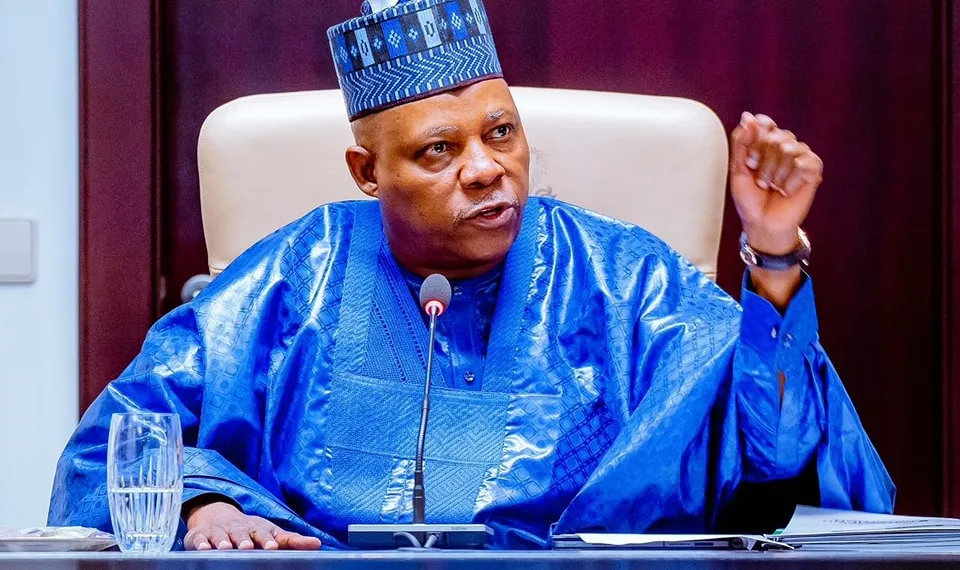
Nigerisa’s Vice President Kashim Shettima
By Modupe Asudo
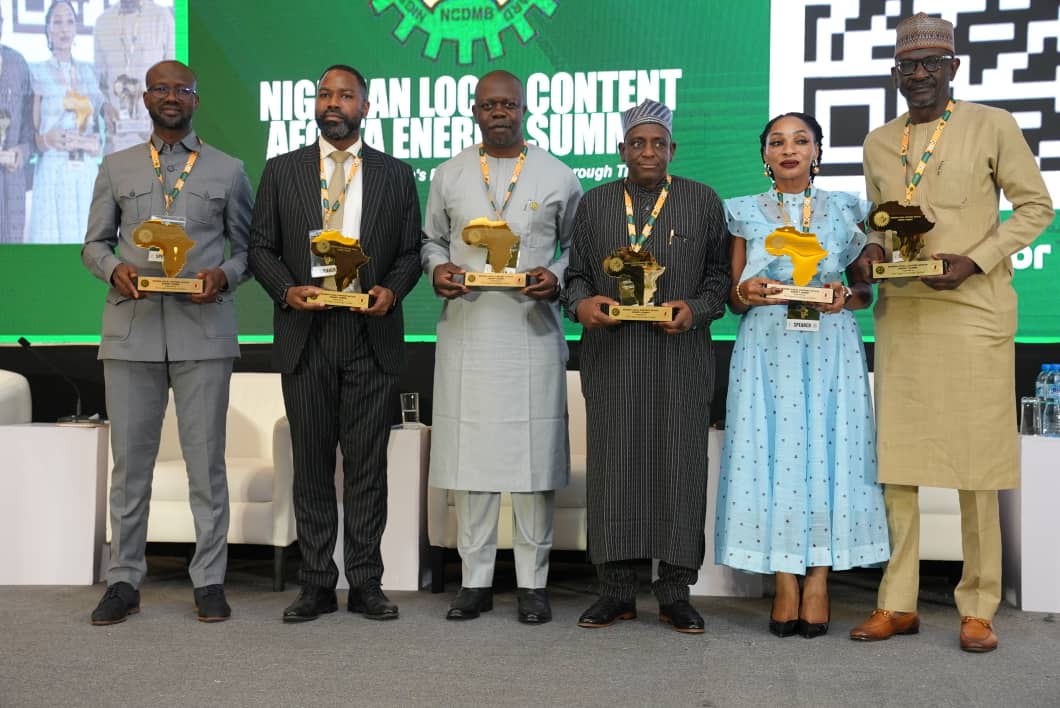
The 2026 edition of the African Continental Free Trade Agreement (AfCFTA) Summit got underway in Lagos on Monday with regulatory agencies, project promoters, and financial institutions focused on deepening intra-Africa trade, a unified code of standards for professional qualifications and manufactured goods, and expansion of the frontiers of technological development and innovation.
Critical questions addressed include how AfCFTA’s 1.4 billion population and $3.4 trillion economy could achieve “a strategic shift from fragmented economies towards a globally competitive supply chain system”; how Africa could leverage its vast mineral resources, including copper, iron ore, petrochemical, for domestic production of hardware such as Christmas tree (an assembly of valves, fittings on top of a wellhead to control oil production), and how, hypothetically, Tema Shipyard in Ghana could be designated the vessel construction, assembly and repairs hub for Africa.
Related questions were how cables manufactured in Nigeria, hypothetically, could benefit from favourable trade terms in Angola; what compliance requirements a sacrificial anode producer in Nigeria would have to meet in regard to the rule of origin requirement to export anodes to Algeria for protection and longevity of pipelines, storage tanks, offshore platforms, etc., and what other support levers would be required to achieve energy security for Africa besides expanded refining capabilities in Dangote Refinery, laying of continental gas transmission pipelines, and establishment of industrial parks and other support infrastructure.
In a keynote address at the event, the Executive Secretary of the NCDMB, Engr. Felix Omatsola Ogbe, represented by the Director, Corporate Services, Dr. Abdulmalik Halilu, disclosed that Nigeria’s oil and gas industry embraced AfCFTA and developed a framework for domesticating the policy in 2022.
According to him, implementing AfCFTA in the industry was anchored on three broad pillars, namely, Opportunities Identification, Capacity Development, and Capacity Exportation. In regard to opportunities, he said Nigeria’s strength lies in formidable supply chain in oil field services, refining capacity, oil field logistics base, gas supply pipelines, and a pool of qualified oil field technical workforce.
On capacity development, he pointed out that Nigeria’s oil and gas industry, through the local content law, has developed capabilities in the oil and gas value chain spanning marine vessel asset ownership, fabrication, assembly and installation of production systems, including Christmas trees, pressure vessels, and pumps.
What remains unresolved, described by the Executive Secretary as “the next frontier and the reason for convening the Summit,” is capacity exportation. He posited for consideration a unified work permit and visa that would enable, say, “a welder in Senegal to be engaged in Arlec Engineering Works, Johannesburg, South Africa, for fabrication of heat exchangers, storage tanks, pressure tanks, pressure vessels, etc.”
In examining the importance of achieving continental economic integration, Engr. Ogbe explained that strong regional supply chains would shift Africa from exporting raw materials to producing high-value goods. For pathways to integration, he listed regional value chains, infrastructure connectivity, regulatory harmonization, industrial clusters, and small and medium scale enterprises (SME) inclusion.
He assured industry stakeholders and participants maximum support by the NCDMB.
By Modupe Asudo
The Nigerian Content Development and Monitoring Board has outlined a practical framework for positioning Nigeria’s energy sector to access the African Continental Free Trade Area, following a strategic webinar focused on meeting rules-of-origin requirements for continental trade.
The Board held a pre-conference webinar on Wednesday ahead of the Nigeria Local Content AfCFTA Energy Summit scheduled for Monday, February 9, 2026.
The engagement was attended by stakeholders from the oil and gas, power and renewable energy sectors, and they addressed how Nigerian products and services can qualify for preferential market access across 54 African countries with a combined gross domestic product of $3.4tn and a population of about 1.4 billion people.
 Entitled ‘Meeting AfCFTA Origin Requirements in Energy Trade’, the webinar focussed on one of the major barriers facing Nigerian exporters under AfCFTA — structuring production and operations to meet origin requirements that determine eligibility for duty-free and preferential trade.
The initiative was supported by the Executive Secretary of NCDMB, Engr. Felix Omatsola Ogbe, and the Acting Director of Planning, Research and Statistics, Mr. Ene Ette, as part of preparations for the forthcoming Nigeria Local Content AfCFTA Energy Summit, with the theme ‘Unlocking Africa’s Energy Future through AfCFTA: Trade, Innovation and Regional Integration’.
Speaking during the session, a communications analyst, Joseph Nwokedi, representing the Acting National Coordinator of Nigeria’s AfCFTA Coordination Office, Mrs Patience Okala, stressed the central role of energy in Africa’s economic integration under AfCFTA.
He urged Nigerian companies to shift their focus from Nigeria’s domestic market of about 200m people to the wider continental market of 1.4bn consumers.
“Without energy, there’s no industrialisation. Without energy, regional value chains remain aspirational,” Nwokedi said. “With AfCFTA, energy transforms from a domestic infrastructure issue into a tradable, investable and exportable sector within an integrated African market.”
He noted that even one per cent penetration of the African market translates to about 14m consumers, underscoring the scale of opportunity available to Nigerian energy firms.
The webinar identified four key pathways through which Nigeria’s energy sector can participate in AfCFTA-enabled trade. First, Nigeria’s Electricity Act of 2023 allows independent power producers to supply electricity directly to industrial clusters and export processing zones, positioning power generation as a foundation for trade-ready manufacturing.
Second, the country has submitted commitments under AfCFTA that enable professionals such as engineers, electricians, geophysicists and energy auditors to export services across Africa, subject to mutual recognition of qualifications.
Third, refined petroleum products, gas derivatives, electricity and renewable energy components can be traded across borders under preferential tariffs, provided they meet AfCFTA rules of origin.
Fourth, AfCFTA’s investment protocol, combined with recent domestic reforms, including the Presidential Directives on Investment Incentives for 2024–2025, strengthens Nigeria’s credibility for attracting cross-border investments in power generation, transmission, renewable energy and storage infrastructure.
Delivering a technical presentation, Assistant Comptroller of Customs, Burhan Sulaiman, explained that AfCFTA would eliminate tariffs on 90 per cent of goods traded within the bloc over five to 10 years, with an additional seven per cent liberalised over 13 years. However, he stressed that these benefits were conditional on meeting origin requirements.
“Companies lose benefits because origin was treated as an afterthought,” Sulaiman said. “You must build in origin compliance from the beginning, not while already running your project. Origin determines whether you export duty-free or pay full tariffs.”
He clarified that origin is determined by where economic production takes place, not by company ownership or registration. Foreign-owned companies producing in Nigeria can export as Nigerian origin, while Nigerian companies importing finished goods cannot claim AfCFTA preferences.
Sulaiman explained that products qualify for preferential access through two routes. “Wholly obtained” goods are entirely produced within AfCFTA member states, such as crude oil and natural gas extracted in Nigeria, as well as locally generated electricity regardless of fuel source.
The second route, “substantial transformation”, applies where foreign inputs are used and requires compliance with one of three tests: a change in tariff classification; a value-addition threshold limiting foreign content to between 30 and 60 per cent of ex-works price; or completion of specific prescribed processes such as distillation, cracking or reforming for petroleum products.
He provided sector-specific guidance, noting that in oil and gas, locally extracted crude and gas qualify, just as refined petroleum products that meet processing requirements. However, simple blending, basic distillation operations and modular refineries using imported crude without substantial transformation do not qualify.
In the power sector, he explained, locally generated electricity and regionally manufactured equipment with deep component transformation qualify, while installation-only activities, imported turbines, transformers and switchgear mounting do not.
“For renewables, regional solar cell and battery cell manufacturing with deep component processing qualify,” he said, adding that panel installation alone, simple module assembly and packaging imported batteries do not meet the thresholds.
Sulaiman warned that without regional manufacturing accumulation, power equipment exports fail origin tests.
According to him, the Nigeria Customs Service applies a five-step verification process for origin claims, including confirming accurate HS codes, reviewing production records, testing for minimal operations, verifying African input origins and ensuring consistency across certificates, production records and cost documentation.
“Weak documentation kills origin claims. Even genuinely originating products can be denied if documentation is incomplete or inaccurate,” he noted.
Both speakers emphasised that origin compliance should be treated as a core business strategy rather than a regulatory formality.
“Origin is not paperwork; it is strategy,” Sulaiman said. “It shapes where you locate facilities, how you source inputs, and where you sign regional contracts. Treat it as strategic from day one.”
Nwokedi urged Nigerian firms to act early. “AfCFTA is happening now. Early movers will shape supply chains, standards and partnerships. Are you going to lead, or simply follow?”
Officials also provided updates on AfCFTA implementation, noting that 92 per cent of rules of origin had been agreed, with negotiations ongoing in the textiles and automotive sectors.
An online dispute resolution mechanism has been established to coordinate Customs authorities, standards bodies and complainants.
Nigeria has deployed a fully operational electronic certification system for paperless trade, while Nigerian Customs is introducing risk-management frameworks that could allow exporter self-certification on commercial invoices.
Following a five-year implementation review led by the Minister of Industry and Investment, Dr Jumoke Oduwole, government sensitisation efforts have intensified through partnerships with the Nigerian Association of Chambers of Commerce, Industry, Mines, and Agriculture; Women’s Chambers of Commerce; zonal outreach programmes and ‘P3 engagements’ involving the press, private sector and public institutions.
“The government will not trade under AfCFTA — our exporters will,” officials said. “If they win, we win.”
Nigerian Customs also reiterated its open-door policy for pre-export origin verification to help businesses avoid delays and additional costs at the border.
The webinar highlighted Nigeria’s potential as a regional energy and transition-fuel hub, building on frameworks such as the West African Power Pool to support cross-border electricity trade.
Key recommendations included structuring projects for origin compliance from inception, forming regional joint ventures, aligning with continental standards and leveraging AfCFTA service commitments to export Nigerian energy expertise.
The session ended with confirmation that the webinar was a technical precursor to the Nigeria Local Content AfCFTA Energy Summit, which will convene policymakers, industry leaders and trade experts to develop strategies for maximising Africa’s energy potential under the AfCFTA framework.





Fuel Price Shock: Nigerians May Soon Pay ₦1,500 Per Litre – Marketers Warn

Political Earthquake in Zamfara as Gov Lawal Dumps PDP for APC

Court Pushes Malami, Son’s Terrorism Financing Trial to April 15

African Club Football Gets Major Financial Boost as CAF Hikes Prize Money

Abramovich Clashes with UK Gov’t Over £2.35bn Chelsea Sale Funds

Global Crisis: Attacks on Schools Skyrocket 166% – UN Sounds Alarm on Children’s Safety

Trump’s Family Unveils New Cryptocurrency Platform

Reps Recommend 3-year Jail Term For Aviation minister

Senate Denies Receiving Petitions Against Tinubu’s Ambassadorial Nominees

Dangote Cement Lights Up Benue Host Communities With CSR Initiatives

Things To Know About Threads, Zuckerberg’s Twitter-like App
