NEWS
115 Nigerian Trafficking Victims Repatriated From Ivory Coast
The Federal Government has successfully repatriated 115 Nigerian nationals, identified as victims of human trafficking, from Abidjan, Ivory Coast.
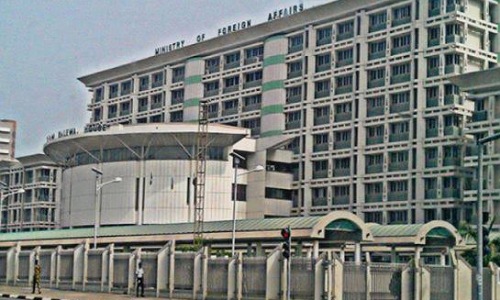
This was disclosed in a statement issued on Saturday in Abuja by Kimiebi Ebienfa, spokesperson for the Ministry of Foreign Affairs.
According to the ministry, the returnees were flown into Lagos aboard a special Air Peace flight, which landed at the Murtala Mohammed International Airport at approximately 3:00 p.m. Nigerian time.
READ MORE: Ex-Belgian Footballer, Radja Nainggolan Arrested In Cocaine Trafficking Probe
“The Ministry wishes to inform that one hundred and fifteen (115) Nigerian nationals that are victims of trafficking will be repatriated from Abidjan, Ivory Coast to Nigeria today via a special flight operated by Air Peace at no cost to the Nigerian Government,” the statement read.
This humanitarian flight follows a recent pledge by Air Peace Chairman, Allen Onyema, to support the rescue and reintegration of Nigerian underage girls trafficked to the West African country.
In a statement posted on the airline’s official X (formerly Twitter) handle, Onyema decried human trafficking, calling it “inhumane, callous, and ungodly.”
“We should discourage trafficking of any kind. It is inhumane and a good example of man’s inhumanity to man,” Onyema said. “We, at Air Peace, are ready to bring our fellow citizens back home free of charge.”
Beyond the free repatriation, Onyema announced additional support for the returnees, including comprehensive medical examinations and treatment at Duchess International Hospital in Ikeja, Lagos.
He also called on the Federal Government to ensure the victims receive proper rehabilitation and education while working to reunite them with their families.
The Ministry of Foreign Affairs expressed gratitude to all parties involved in facilitating the safe return of the victims and reiterated Nigeria’s commitment to combating human trafficking and protecting its citizens abroad.

NEWS
Oil Sector Attracts $460,000 in Three Months – NBS
Nigeria’s oil and gas sector recorded a 283.3 per cent increase in foreign capital inflows in the first quarter of 2026, but the industry continued to attract only a negligible share of total investments entering the country, official data have shown.
Figures obtained from the latest Capital Importation Report released by the National Bureau of Statistics and analysed by our correspondent on Friday showed that the oil and gas sector attracted just $0.46m in foreign capital during the review period, compared to $0.12m recorded in the corresponding period of 2025.
Although the year-on-year growth represents a significant percentage increase, the actual value of investments flowing into the industry remained extremely low when compared to the overall capital imported into the Nigerian economy.
The NBS report indicated that total capital importation into Nigeria rose to $10.37bn in the first quarter of 2026 from $5.64bn recorded in the same period of 2025, representing an increase of 83.83 per cent.
The oil and gas sector’s inflow of $460,000 accounted for virtually zero per cent of the total capital imported during the quarter, highlighting persistent investor caution towards an industry that remains the backbone of Nigeria’s economy and the country’s largest source of export earnings.
Further analysis of the data showed that the sector’s performance improved from the $120,000 recorded in the first quarter of 2025 but remained significantly below the levels required to support large-scale upstream, midstream and downstream investments.
ALSO READ: NUPRC, NNRA to Sync Regulations, Improve Industry Safety
The industry attracted $9.50m in the second quarter of 2025 before inflows declined to $4.60m in the third quarter and $3.76m in the fourth quarter. Cumulatively, the sector received $17.98m throughout 2025.
The latest figures suggest that despite ongoing reforms aimed at reviving investor confidence, foreign capital inflows into the oil and gas industry remain weak relative to the size and strategic importance of the sector.
In contrast, the financial services industry emerged as the biggest beneficiary of foreign investments during the period.
According to the report, the banking sector attracted $7.55bn, representing 72.79 per cent of total capital imported into Nigeria in the first quarter. This was followed by the financing sector, which received $2.43bn, or 23.42 per cent of total inflows.
The production and manufacturing sector attracted $152.27m, accounting for 1.47 per cent of total capital imported into the country.
The report also revealed that portfolio investments continued to dominate foreign capital inflows, accounting for $9.86bn, or 95.09 per cent of total investments recorded during the quarter.
Other investments contributed $374.48m, representing 3.61 per cent, while foreign direct investment, often regarded as the most stable form of capital, stood at just $135.08m, accounting for 1.30 per cent of total inflows.
The report read, “In Q1 2026, total capital importation into Nigeria stood at US$10,371.90 million, higher than US$5,642.07 million recorded in Q1 2025, indicating an increase of 83.83 per cent. In comparison to the preceding quarter, capital importation increased by 60.97 per cent from US$6,443.48 million in Q4 2025.
“Portfolio Investment ranked top with US$9,862.34 million, accounting for 95.09 per cent, followed by Other Investment with US$374.48 million, accounting for 3.61 per cent. Foreign Direct Investment recorded the least with US$135.08 million, representing 1.30 per cent of total capital importation in Q1 2026.”
A breakdown by source country showed that the United Kingdom retained its position as Nigeria’s largest capital importation partner, accounting for $5.08bn, or 49.01 per cent of total inflows.
The United States followed with $3.18bn, representing 30.69 per cent, while South Africa contributed $983.83m, or 9.49 per cent of the total capital imported during the quarter.
The report further showed that Standard Chartered Bank Nigeria Limited handled the largest share of capital inflows into the country, receiving $4.41bn, or 42.56 per cent of total imported capital.
Stanbic IBTC Bank Plc followed with $2.78bn, accounting for 26.79 per cent, while Rand Merchant Bank received $930.82m, representing 8.97 per cent of the total.
The latest capital importation data come despite repeated assurances by government officials that Nigeria’s oil and gas sector is witnessing a major investment rebound driven by reforms under the Petroleum Industry Act and efforts to attract fresh investments into the petroleum sector through the award of new oil and gas assets.
Speaking at the 2026 Nigeria International Energy Summit in Abuja, the Minister of State for Petroleum Resources (Oil), Heineken Lokpobiri, disclosed that Nigeria secured 28 new Field Development Plans valued at $18.2bn in 2025, with the projects expected to unlock about 1.4 billion barrels of crude oil reserves. The minister said the approvals signalled renewed investor confidence in Nigeria’s upstream sector after years of declining investments and production.
Lokpobiri also noted that four of the seven major Final Investment Decisions announced across Africa between 2024 and 2025 were recorded in Nigeria, which he attributed to policy clarity, improved governance and reforms aimed at making the country’s petroleum industry more competitive.
According to him, the approvals represented evidence that Nigeria had once again become a preferred destination for oil and gas investments on the continent.
The minister further argued that the implementation of the Petroleum Industry Act, fiscal incentives for upstream operators and the resolution of long-delayed International Oil Company divestments had helped restore investor confidence and attract fresh capital into the sector.
Similarly, the Group Chief Executive Officer of NNPC Limited, Bashir Bayo Ojulari, recently said reforms championed by the Nigerian Upstream Petroleum Regulatory Commission had unlocked more than $24bn in investments across the upstream oil and gas industry, with an additional $10bn investment pipeline under consideration.
Ojulari stated that the investments were the result of targeted interventions to resolve legacy disputes, unlock stalled Final Investment Decisions and improve the operating environment for investors.
He expressed confidence that the inflows would support Nigeria’s ambition of raising crude oil production to three million barrels per day over the medium term.
However, the National Bureau of Statistics data paint a different picture regarding actual foreign capital imported into the sector during the first quarter of 2026.
Despite the government’s announcement of multi-billion-dollar commitments and project approvals, the oil and gas industry attracted only $460,000 in capital importation during the period, accounting for virtually zero per cent of the $10.37bn that entered the Nigerian economy.
This suggests that while investment commitments and project approvals may be rising, many of the anticipated inflows have yet to fully translate into recorded foreign capital entering the sector.
The sharp contrast between the sector’s strategic importance and its share of foreign capital inflows is likely to intensify concerns about the pace of investment recovery in an industry that generates the bulk of Nigeria’s foreign exchange earnings and government revenues.
The Punch
NEWS
NNPC Boosts Orthopaedic Healthcare, Donates MRI Equipment at Kano
The NNPC Foundation, the Corporate Social Responsibility arm of NNPC Ltd, has commissioned and handed over a fully installed state-of-the-art 1.5 Tesla Magnetic Resonance Imaging system to the National Orthopaedic Hospital, Dala, Kano State.
This was revealed in a statement on Friday by the Chief Corporate Communications Officer of NNPC Ltd, Andy Odeh.
The intervention, which is in furtherance of NNPC Ltd’s commitment to improving healthcare access and strengthening medical infrastructure across Nigeria, is expected to enhance the diagnosis and treatment of orthopaedic, neurological, trauma, musculoskeletal, and gynaecological conditions.
“Before the intervention, patients needing advanced MRI diagnostic services often faced challenges of travelling long distances, longer waiting times, and delays in care due to high cost and availability,” the statement partly read.
During the ceremony at the hospital’s premises in Kano on Thursday, the Group Chief Executive Officer of NNPC Ltd., represented by the Managing Director of NNPC Foundation, Mrs Emmanuella Arukwe, said the donation is part of a wider corporate goal and focus to contribute strategically to national healthcare development.
“At NNPC Limited, we are intentional about ensuring that our social investments are impactful, sustainable, and beneficial to the communities we serve. Through the NNPC Foundation, we will continue to implement interventions that create measurable social value across Nigeria,” he said.
He described the intervention as timely and necessary, noting that it presents an opportunity to strengthen Nigeria’s healthcare system amid challenges of infrastructure deficits, equipment limitations, and increasing demand for specialised services.
ALSO READ: Dangote Refinery Hits 700,000bpd Output, Eyes Global Leadership
Also speaking, the Executive Vice President, Business Services, NNPC Ltd., Mrs Sophia Mbakwe, represented by the Executive Director, Programme Management at the NNPC Foundation, Mrs. Rose Okonkwo, said NNPC Limited goes beyond crude oil production to impact lives positively, reaffirming the company’s commitment to improving the well-being of Nigerians as well as strengthening key national institutions.
“Today’s event is a testament to our steadfast commitment to delivering measurable impacts and scalable, sustainable interventions to communities across Nigeria, inclusively targeting underserved and vulnerable members of society.
“By this intervention, NNPC Limited aims to strengthen healthcare delivery and improve the quality of life of the people of Kano State, the North-West geopolitical zone, and, by extension, all Nigerians who depend on the National Orthopaedic Hospital, Dala for specialised medical care,” she stated.
In his remarks, Kano State Governor Abba Yusuf, who was represented by the Commissioner for Health, Abubakar Labaran Yusuf, commended NNPC Foundation for the donation, describing it as a major milestone in improving healthcare services in the region through early and accurate diagnosis and care.
The Chief Medical Director of the hospital, Dr Isa Nurudeen, expressed appreciation to NNPC Ltd. for the intervention, noting that the donation will have a transformative impact on the hospital’s operations and services.
NEWS
‘We Can’t Afford Gas Anymore’ — Abuja Residents Turn to Firewood, Charcoal as LPG Price Soars
The continuous rise in the price of cooking gas has forced many residents and business owners in the Federal Capital Territory (FCT) to abandon Liquefied Petroleum Gas (LPG) and embrace traditional cooking fuels such as charcoal and firewood.
The News Agency of Nigeria (NAN) reports that the price of cooking gas in Abuja has climbed sharply in recent months, rising from about N1,200 per kilogram to as much as N2,000 per kilogram.
Industry operators have blamed the increase on product scarcity, higher depot costs, foreign exchange pressures and rising transportation expenses.
ALSO READ: NUPRC Urges Lenders to Back Domestic Oil and Gas Coys
Consumers and vendors who spoke with NAN on Sunday said the sharp increase in the cost of cooking gas has made it increasingly difficult for households and small businesses to rely on LPG, forcing many to seek cheaper alternatives.
A food vendor in Gwarimpa, Abuja, Mrs. Mayo Akinpelu, said she stopped using cooking gas after repeated price increases made it too expensive for her business.
According to her, she switched to firewood and charcoal because they are cheaper and can be purchased in smaller quantities.
“Refilling my gas cylinder became difficult because the price kept rising. I could no longer afford it and still make reasonable profit. Right now, 12.5kg of LPG goes for N25,000.
“Firewood and charcoal are not as convenient as gas, but they help me reduce costs and keep my business running,” she said.
Akinpelu added that although some customers complain about delays in food preparation, the alternative fuels have become her only practical option amid the persistent rise in gas prices.
Another food vendor in Dutse, Bwari Area Council, Ms. Victory Samson, said the increase in cooking gas prices had significantly reduced her profit margin and negatively affected her operations.
“It has affected a lot; my profit margin has reduced. The government should help and bring the price back to normal,” she said.
In Kubwa, a business owner, Mrs. Grace Oluwatimilehin, expressed shock over the latest increase, saying she had recently purchased gas at a much lower rate.
“I filled my cylinder at N1,600 per kg the last time, but when I went back yesterday, the price had risen to N2,000 per kg.
“I now use electric hot plates for cooking and sometimes rely on charcoal and firewood instead of gas,” she said.
For many households, the rising cost of LPG has further increased financial pressure amid the country’s economic challenges.
A resident, Mrs. Abike Ojo, said the continuous rise in gas prices was placing severe strain on her family’s budget.
“The last time I bought gas, it was N1,500 per kg, but my most recent purchase cost N2,000.
“If prices keep rising, I may stop using gas entirely because it has become too expensive,” she said.
She appealed to the government to intervene, warning that the increasing cost of cooking gas could further worsen household expenses.
Reacting to the development, a gas vendor in Kubwa, Mr. Bamishile Bolanle, confirmed that cooking gas currently sells for N2,000 per kilogram.
“The increase has affected business because people’s purchasing power has dropped significantly.
“From what we observe, the major issue is product scarcity, although we do not know the exact cause,” Bolanle said.
Another gas vendor in Dei-Dei, Mr. Alfred Orshio, said the steady rise in gas prices had led to a noticeable decline in customer patronage.
“Earlier this year, we sold gas for N1,200 per kg. It later rose to N1,400, then N1,800, and now N2,000.
“I cannot blame customers for buying less. Filling a 12kg cylinder now costs about N25,000,” Orshio said.
Meanwhile, sellers of charcoal and firewood say they are benefiting from the shift away from cooking gas.
A charcoal distributor in Kubwa, Mrs. Amina Yakubu, said demand for charcoal has increased significantly as more residents look for cheaper cooking options.
“Patronage has increased recently, and I believe it is because of the rising cost of cooking gas.
“I buy a bag of charcoal for N6,500 and sell it to my customers for N8,000,” she said.
Another charcoal vendor, Mrs. Saratu Ibrahim, also confirmed growing demand, saying her stock now sells much faster than before.
“Business is moving very fast. What used to take more than a week to sell now takes just two days. However, many people have joined the charcoal business.
“I was the first seller on this street, but there are now more than five charcoal vendors here,” she said.
A firewood seller, Mr. Taninu Ibrahim, also reported a significant increase in demand, noting that more households and food vendors were abandoning cooking gas due to rising costs.
According to him, the growing demand has also pushed up the price of firewood.
“More people now buy firewood because cooking gas has become too expensive for many families and small businesses.
“Before now, customers got six pieces of firewood for N1,000. Today, the same amount buys only four pieces,” he said.
Ibrahim attributed the increase in firewood prices to rising demand and transportation costs, adding that patronage remains strong despite the higher prices.
As cooking gas prices continue to rise, residents and business owners are increasingly adopting alternative cooking methods, raising concerns over affordability and the growing cost of living in the Federal Capital Territory.
Stakeholders have called on the government to intervene and stabilise prices, while vendors warned that persistent scarcity and weak consumer purchasing power could further reduce gas consumption and negatively impact business activities across the territory.