
International News
How Elon Musk’s Starlink Powers Global Fraud Factories

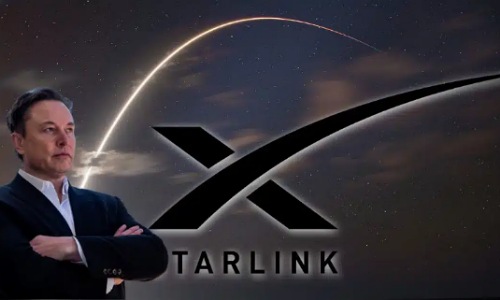
What was once hailed as a breakthrough in global internet access is now being exploited by cybercriminals across borders.
Elon Musk’s Starlink satellite network, designed to connect remote communities, has emerged as a vital tool for fraud syndicates and online scam factories operating in parts of Asia and Africa, investigations reveal.
From Myanmar’s lawless border towns to Cambodia and Laos, and even parts of West Africa, authorities have discovered Starlink terminals powering large-scale online fraud compounds.
SEE MORE: Elon Musk Pledges Millions To Boost Trump’s Presidential Bid
These facilities, often hidden behind guarded fences, host call centres where trafficked workers are forced to run romance scams, crypto fraud, and investment cons targeting victims worldwide.
Investigators say the syndicates rely on Starlink’s portable satellite dishes to bypass government restrictions and maintain high-speed connectivity, even in regions where authorities have shut down traditional networks.
“Starlink has become the digital backbone of these operations — fast, mobile, and almost impossible to trace,” said Erin West, a U.S. cybercrime prosecutor who tracks global online fraud.
Myanmar at the Centre of a Global Web
In Myanmar’s Myawaddy region, new drone footage and satellite imagery reveal a resurgence of cybercrime compounds once dismantled earlier this year.
Many of the newly constructed facilities now display Starlink dishes, even though the service remains unlicensed in Myanmar.
Despite a joint crackdown by China, Thailand, and Myanmar, AFP reports that scam operations have not only survived but expanded — aided by the satellite internet network.
“The speed of rebuilding after the crackdown is alarming,” said Nathan Ruser, a researcher at the Australian Strategic Policy Institute. “It shows how technology meant for good is now shielding one of the world’s largest criminal economies.”
Human Suffering Behind the Screens
Inside the compounds, victims of human trafficking are forced to work endless hours posing as investors, lovers, or recruiters online to deceive unsuspecting targets.
A survivor, identified only as Sun, told AFP that he was beaten and sold multiple times after being trafficked from China.
“If you didn’t meet your daily scam quota, they starved or tortured you,” he recalled.
The U.S. Treasury Department estimates that Americans alone lost over $10 billion in 2024 to these scams, with thousands of victims spread across North America, Europe, and Asia.
Pressure Mounts on SpaceX
California prosecutors warned SpaceX, which operates Starlink, about its service being misused by criminal groups as far back as 2024.
Yet, the company has not commented on new findings linking its technology to organized cyber fraud.
Now, U.S. lawmakers are calling for action. Senator Maggie Hassan has urged Musk’s company to enforce tighter registration controls and prevent Starlink terminals from being smuggled into sanctioned or high-risk regions.
A Congressional Committee has since opened an inquiry into Starlink’s role in facilitating the spread of global cybercrime.
A Growing Global Concern
Analysts warn that the misuse of satellite technology could expand beyond Asia if left unchecked.
In Africa, some online fraud groups are reportedly experimenting with Starlink to evade local internet monitoring and power cross-border scams.
“The same technology bringing internet access to rural communities is now empowering criminal syndicates worldwide,” said Ruser. “It’s a double-edged sword.”








Federal agents raided the Washington, D.C., home of Democratic Congresswoman Ilhan Omar early Monday morning as part of an ongoing federal criminal investigation, the United States Department of Justice (DOJ) has confirmed.
Homeland Security Investigations agents arrived at the Minnesota congresswoman’s residence at about 6:00 a.m. Eastern Time, according to a report by Fox News.
SEE MORE: Trump Sparks Outrage With Shock Proposal to Rename New Mexico
The report said both the Department of Homeland Security (DHS) and the DOJ are involved in the investigation.
A DOJ spokesperson confirmed the operation, stating: “Today in the Washington, D.C. area, Homeland Security Investigations executed a judicially authorized search warrant secured by the Department of Justice.”
The spokesperson added: “This enforcement action is part of an ongoing federal criminal investigation.”
Details later……….
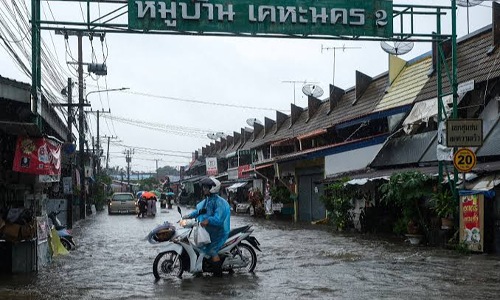
Heavy rains have triggered severe flooding across parts of Bangkok, Thailand, forcing nearly 4,900 residents to evacuate to shelters as floodwaters swept through roads and residential areas.
The flooding has disrupted movement across parts of the Thai capital, with motorists and pedestrians forced to navigate submerged roads and seek alternative routes.
SEE ALSO: NAFDAC Warns Nigerians As Fake Cowbell Milk Floods Market
According to the Bangkok Metropolitan Administration, about 52,000 households have been affected by the flooding, prompting authorities to declare a flood disaster and intensify emergency response efforts.
Emergency teams have been deployed to assist affected communities and move residents from vulnerable areas to safer locations as water levels rise.
Bangkok is accustomed to seasonal heavy rainfall, but intense downpours can overwhelm drainage systems, particularly in low-lying areas, resulting in widespread flooding and disruption.
Authorities are continuing to monitor affected locations while coordinating evacuations and other emergency measures.
For thousands of residents, the immediate priority remains securing safe shelter and protecting homes and livelihoods as authorities work to manage the situation and restore normal activities once the floodwaters recede.
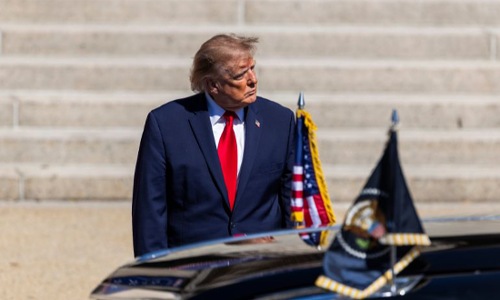
US President Donald Trump has explained his decision to reject Iran’s latest proposal to reopen the Strait of Hormuz, saying Tehran was seeking an agreement because it was losing revenue.
Speaking to reporters at the White House, Trump said Iran wanted to immediately reopen the strategically important waterway but argued that the proposal was not acceptable to his administration.
“They want to make a deal, and I think that’s fine. I like making a deal, too, but that deal would not be acceptable,” Trump said.
SEE ALSO: How the Strait of Hormuz Attack Could Trigger a Fresh Global Oil Shock
According to the US president, Iran’s push to reopen the strait was driven by the economic pressure it was facing.
“What they want to do is immediately open the Hormuz Strait. Do you know why? Because they are dying,” Trump said.
“You know why they’re dying? Because they have no money coming in, because they get their money from the Hormuz Strait.”
Trump also claimed that the US had established an unprecedented naval blockade against Iran, describing it as “a wall of steel.”
“So they outsmarted themselves. We put up the greatest blockade ever in military history. It’s a wall of steel,” he said.
“And guess what? They don’t have any money now because they wanted to close the strait.”
The Strait of Hormuz is a major global energy shipping route, and disruption to traffic through the waterway has significant implications for international oil markets and countries that depend on energy imports.
Trump’s remarks came amid continued tensions between Washington and Tehran over the reopening of the strategic waterway and negotiations involving Iran.






Tesla Aims for 2028 Commercial Production of Flying Car

Corruption Trials: EFCC, NJI Push Specialised Judges, Digital Evidence Reforms

‘It Is Morally Wrong’ — PDP Chieftain Questions North’s Bid for Another Eight Years

2027 Election: ‘Your Future Is More Valuable’ — IGP Warn Youths Against Political Violence

Tinubu Charges PCC Members to Deliver Wards

Marketers Eye Portion of FG’s Petrol Discount

Trump’s Family Unveils New Cryptocurrency Platform

Senate Denies Receiving Petitions Against Tinubu’s Ambassadorial Nominees

Dangote Cement Lights Up Benue Host Communities With CSR Initiatives

Reps Recommend 3-year Jail Term For Aviation minister

Tems Sets New Record On Billboard Hot 100 Chart

tbnff6