
International News
Trump Slaps New Tariffs On Wood, Furniture — Building Costs To Soar

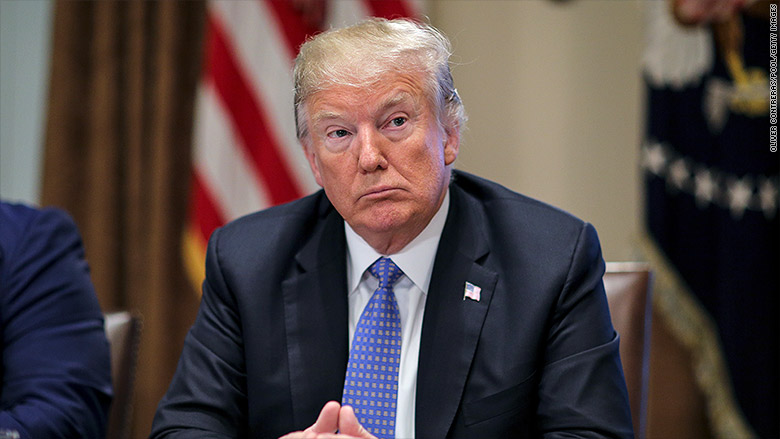
President Donald Trump has rolled out a fresh wave of tariffs targeting imported wood, furniture, and kitchen cabinets, a move expected to further strain the already fragile US housing market.
The new duties, which took effect on Tuesday, are part of Trump’s wider trade policy aimed at strengthening local industries and “protecting national security,” according to the White House.
The latest round introduces a 10 percent levy on softwood lumber imports and a 25 percent duty on specific types of upholstered furniture and kitchen cabinets.
ALSO READS: Kennedy Center To Host 2026 World Cup Draw As Trump Confirms Date
By January 1, 2026, the tariff on imported furniture is set to climb to 30 percent, while duties on kitchen cabinets and vanities will soar to 50 percent.
However, the US reached separate agreements with Britain, the European Union, and Japan, ensuring their products face lighter tariffs capped at 10 and 15 percent respectively.
The National Association of Home Builders (NAHB) has voiced strong opposition to the new measures, warning that they could worsen the affordability crisis facing American homebuyers.
“The new tariffs will create additional headwinds for an already challenged housing market by further raising construction and renovation costs,” said NAHB chairman Buddy Hughes.
Trump defended the tariffs, stating they were imposed after the Commerce Secretary concluded that “wood products are used in critical functions of the Department of War, including building infrastructure for operational testing.”
He added that the United States remains “import-dependent” because its domestic wood production is “underdeveloped.”
But NAHB’s Hughes argued that invoking national security to justify the tariffs “ignores the importance housing plays to the physical and economic security of all Americans.”
He urged the administration to pursue “deals that roll back tariffs on building materials” instead.
The new policy poses a particular challenge for Canada, the top supplier of lumber to the United States.
With the latest 10 percent tariff adding to existing anti-dumping and countervailing duties which Washington recently doubled to 35 percent Canadian lumber will now face total tariffs of 45 percent.
The BC Lumber Trade Council, representing British Columbia’s lumber producers, called the move “misguided and unnecessary,” saying it would “impose needless strain on the North American market, threaten jobs on both sides of the border, and make it harder to address the housing supply crisis in the United States.”
Economists warn that the increased costs will trickle down to consumers. Stephen Brown of Capital Economics estimated that a 10 percent tariff on lumber could raise the cost of constructing an average home by about $2,200.
He also noted that Vietnam, China, and Mexico could feel the ripple effects, as they collectively account for a large share of US furniture imports.
“The US gets 27 percent of its furniture imports from China and then almost 20 percent from both Vietnam and Mexico,” Brown said, adding that Vietnam could be the most affected since “furniture makes up 10 percent of its exports to the US.”
The tariffs were enacted under Section 232 of the Trade Expansion Act of 1962 — the same law Trump previously used to impose duties on steel, aluminum, and cars earlier this year.









Federal agents raided the Washington, D.C., home of Democratic Congresswoman Ilhan Omar early Monday morning as part of an ongoing federal criminal investigation, the United States Department of Justice (DOJ) has confirmed.
Homeland Security Investigations agents arrived at the Minnesota congresswoman’s residence at about 6:00 a.m. Eastern Time, according to a report by Fox News.
SEE MORE: Trump Sparks Outrage With Shock Proposal to Rename New Mexico
The report said both the Department of Homeland Security (DHS) and the DOJ are involved in the investigation.
A DOJ spokesperson confirmed the operation, stating: “Today in the Washington, D.C. area, Homeland Security Investigations executed a judicially authorized search warrant secured by the Department of Justice.”
The spokesperson added: “This enforcement action is part of an ongoing federal criminal investigation.”
Details later……….
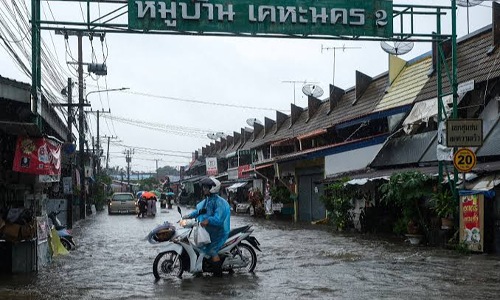
Heavy rains have triggered severe flooding across parts of Bangkok, Thailand, forcing nearly 4,900 residents to evacuate to shelters as floodwaters swept through roads and residential areas.
The flooding has disrupted movement across parts of the Thai capital, with motorists and pedestrians forced to navigate submerged roads and seek alternative routes.
SEE ALSO: NAFDAC Warns Nigerians As Fake Cowbell Milk Floods Market
According to the Bangkok Metropolitan Administration, about 52,000 households have been affected by the flooding, prompting authorities to declare a flood disaster and intensify emergency response efforts.
Emergency teams have been deployed to assist affected communities and move residents from vulnerable areas to safer locations as water levels rise.
Bangkok is accustomed to seasonal heavy rainfall, but intense downpours can overwhelm drainage systems, particularly in low-lying areas, resulting in widespread flooding and disruption.
Authorities are continuing to monitor affected locations while coordinating evacuations and other emergency measures.
For thousands of residents, the immediate priority remains securing safe shelter and protecting homes and livelihoods as authorities work to manage the situation and restore normal activities once the floodwaters recede.
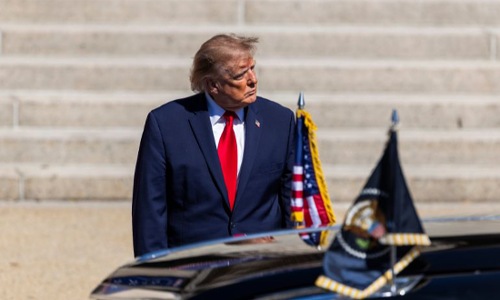
US President Donald Trump has explained his decision to reject Iran’s latest proposal to reopen the Strait of Hormuz, saying Tehran was seeking an agreement because it was losing revenue.
Speaking to reporters at the White House, Trump said Iran wanted to immediately reopen the strategically important waterway but argued that the proposal was not acceptable to his administration.
“They want to make a deal, and I think that’s fine. I like making a deal, too, but that deal would not be acceptable,” Trump said.
SEE ALSO: How the Strait of Hormuz Attack Could Trigger a Fresh Global Oil Shock
According to the US president, Iran’s push to reopen the strait was driven by the economic pressure it was facing.
“What they want to do is immediately open the Hormuz Strait. Do you know why? Because they are dying,” Trump said.
“You know why they’re dying? Because they have no money coming in, because they get their money from the Hormuz Strait.”
Trump also claimed that the US had established an unprecedented naval blockade against Iran, describing it as “a wall of steel.”
“So they outsmarted themselves. We put up the greatest blockade ever in military history. It’s a wall of steel,” he said.
“And guess what? They don’t have any money now because they wanted to close the strait.”
The Strait of Hormuz is a major global energy shipping route, and disruption to traffic through the waterway has significant implications for international oil markets and countries that depend on energy imports.
Trump’s remarks came amid continued tensions between Washington and Tehran over the reopening of the strategic waterway and negotiations involving Iran.






Thor Empowers Host Communities with 10 Cassava, Palm Oil Processing Plants

FG Puts Daily Gas Output at 8bcf

With Crude at $111, IEA Sees Prolonged Crisis

NCDMB Joins Hand with Manufacturers to Boost Local Oil, Gas Components Production

Dangote Preaches Ambition, Africa First to Nigerian Creatives

Protest Against Oil Company’s Vessel in Rivers Takes 10 Lives

Trump’s Family Unveils New Cryptocurrency Platform

Senate Denies Receiving Petitions Against Tinubu’s Ambassadorial Nominees

Dangote Cement Lights Up Benue Host Communities With CSR Initiatives

Reps Recommend 3-year Jail Term For Aviation minister

Tems Sets New Record On Billboard Hot 100 Chart

https://shorturl.fm/6eCL3
f285e1