
NEWS
20 Die In Cross River Over Boundary Disputes With Tiv Settlers

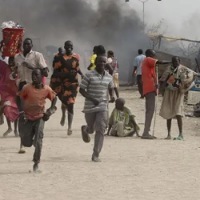
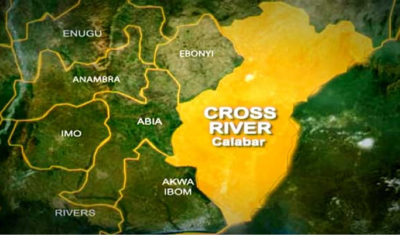
At least 20 individuals are believed to have lost their lives in a recent altercation on Sunday due to conflict that reignited between residents of Yache-Ijiegu community in Yala LGA of Cross River State and Tiv settlers from Benue State due to ongoing boundary disputes.
The exact count of casualties remains undetermined, with concerns that women and children may account for a significant portion. Reports indicate a substantial number of people have also suffered gunshot and machete wounds.
Furthermore, there are reports of multiple houses being set on fire on both sides, as confirmed by various sources.
A source in Yache, Augustine Odey, said the hostilities resumed on Thursday afternoon when their son, Ayeku Godwin Ochuole, went to his farm, where Tiv assailants allegedly attacked and killed him.
According to him, the incident allegedly resulted in the abduction of, at least, nine other persons who suffered various degrees of bullet wounds.
The violent boundary clashes started about two months ago when the Tiv settlers allegedly refused to continue the payments of royalties for their stay on Yache lands.
The Tiv settlers have claimed that they were being extorted forcibly by the natives, and that they have no other place to call their own, having settled there for over 100 years, intermarried and own properties.
Tiv leaders, including Mr Jacob Uswa, who claimed he was born 54 years ago and made a chief on the land after the death of his father, alleged that the Yache boys have continued to spring surprise attacks from the bushes, killing their own people.
“We can’t fold our arms and watch them continue to exterminate our people. We have to defend ourselves. They usually hide in the bushes to launch attacks. This is also our land. We are also from Cross River State,” he claimed
‘My father and his own father lived in this community for over 100 years. And I have lived here for over 50 years.
“I am surprised to hear from Yache people that we are not from here.
“We are indigenes of Cross River State, not Benue State. Despite this, we had succumbed to obeying their demands to pay royalties on lands and houses.”
According to him, it was the Yache boys who came to collect royalties that sparked the fight in July 2023, which has continued unabated despite government interventions and presence of the military.
Augustine Odey, a youth leader in Yache has blamed the governments of both states for being idle over the renewed killings and insecurity in Yache.
He also alleged that apart from the soldiers sent to keep the peace, they have proofs that other ‘armed soldiers’ moved with the Tiv settlers to unleash mayhem against them.
“The Cross River State and Benue State governments have continued to act like toothless bulldogs, allowing their citizens to die in a crisis they should have put an end to.
“The latest of the attacks resumed on Thursday through Sunday when the Tiv people of Benue State, accompanied by the military, successfully penetrated the Ijiegu-Yache Community and shot at Ijiegu people who went to farm. This resulted in the gruesome killing of an indigene of Ijiegu-Yache.”
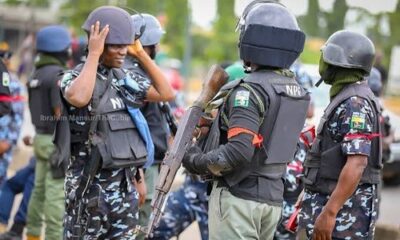
Reacting, one of the commanders of the security team, who gave his name as Lt. Alex as well as Lt. H. J. Enoibor, explained that they have tried their best to ensure peace return to Yache but, “Yache boys constantly indulge in attacks. The Tivs have listened to us by restraining.
“They killed one of my men yesterday, and I had to frown at it. The Yache boys would even move to the other side of Benue State, where soldiers are also keeping watch to attack.
“They have made our peace efforts difficult. We had thought we wouldn’t be here up to two weeks, but it’s going to months now. They should know that war is not good at all. Yache cannot withstand the Tivs.
“We have scheduled to hold a joint peace meeting with all stakeholders on Wednesday, hoping that it will finally bring about an amicable settlement.”








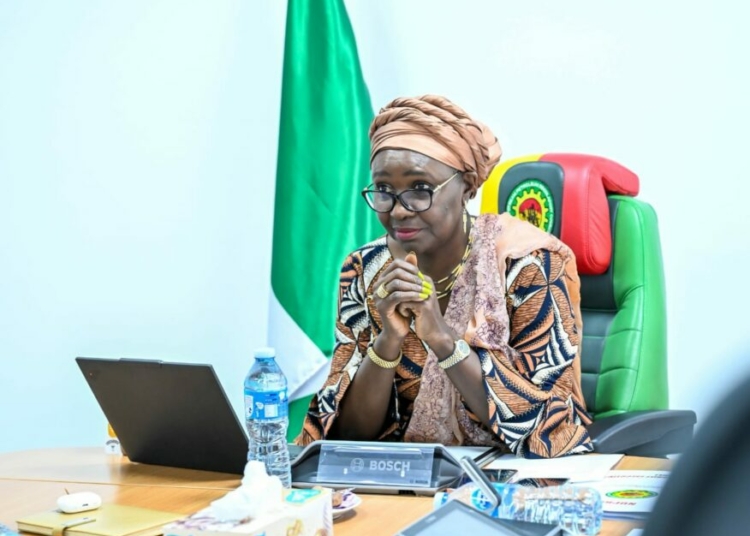
The Nigerian Upstream Petroleum Regulatory Commission (NUPRC), has set its priorities for the next phase of the industry to bring back more than 788,000 barrels per day of shut-in production, move offshore projects worth up to $50 billion to final investment decision, and push domestic gas delivery to full compliance.
The chief executive of the NUPRC, Oritsemeyiwa Eyesan, said this at the Commission’s fifth anniversary ceremony in Abuja.
“Our licensing will be regular and predictable. Our focus will be on what moves the numbers: restoring the more than 788,000 barrels per day of shut-in production identified across 63 operators; taking offshore projects valued at an estimated $30 billion to $50 billion to final investment decision; and raising domestic gas delivery from about two-thirds of the domestic obligation to full delivery,” she said.
READ ALSO: Nigeria Resorting to Gas for Speedy Industrialisation — Ekpo
Eyesan used the occasion to launch the Nigeria 2026 Licensing Round, which offers 40 blocks across land, shallow water and deep water terrains. She said the blocks are open to investors with the technical competence, the financial capacity and the commitment to develop Nigeria’s petroleum resources.
She said the guidelines, drawn up in line with the counsel of the Nigeria Extractive Industries Transparency Initiative (NEITI), will set out the evaluation methodology in full, provide for fuller publication of results, and require disclosure of the beneficial owners of every bidder.
In the coming days, the Commission will publish full details of the blocks, the qualification requirements and the participation procedures on its website and a dedicated licensing round portal.
“So, I invite qualified Nigerian and international investors to come and compete. Bring your best ideas, your best partners and your best bids. May the best bids win,” Eyesan said.
The event was themed “From Uncertainty to Stability: Unlocking the Next Phase of Investment.” Eyesan said the Petroleum Industry Act and President Bola Tinubu’s executive orders had brought transparency and predictability to the upstream sector over the past five years.
The launch was made with the approval of President Tinubu, who is also Minister of Petroleum Resources.
At the event, the NUPRC honoured past directors of the defunct Department of Petroleum Resources, its pioneer leadership, and former National Assembly leaders who helped pass the PIA, including former Senate President Ahmad Lawan and former Speaker Femi Gbajabiamila.
The Commission also unveiled a special edition of its magazine, The Upstream Gaze, and a documentary on its first five years.
President Tinubu was represented by Vice President Kashim Shettima. The OPEC Governor for Nigeria, Ademola Adeyemi Bero, delivered the lecture.
Others present were the chairman, Senate Committee on Gas, Senator Agom Jarigbe; the minister of State for Petroleum Resources (Oil), Senator Heineken Lokpobiri; the chairman of the NUPRC Board, Senator Magnus Abe; and the group chief executive officer of NNPC Ltd, Engr. Bayo Bashir Ojulari.

Nigeria’s hope of meeting her targeted production level of three million barrels a day (bpd) has been anchored on sustained drilling activities.
The Nigerian National Petroleum Company Limited (NNPC Ltd), has said that security web across exploration infrastructure has improved production in recent times, while the level of oil theft has also been reduced.
READ ALSO: Ndindi Nyoro Gives Ruto 14 Days to Disclose Dangote Refinery Deal
According to the NNPC Ltd, crude oil production has risen to 1.8 million barrels per day in the last month.
The Group Chief Executive Officer, Bayo Ojulari, gave the information on Thursday at the 2026 Association of Energy Correspondents of Nigeria (NAEC) Conference in Lagos.
Ojulari, who was represented by the Chief Communications Officer of the Company, Andy Odeh, noted that Nigeria’s crude oil production rose to 1.821 million barrels per day (bpd), including condensates, reflecting improved regulations and upstream activities.
According to Ojulari, the approach has helped to improve the operating environment and accelerate activities across the upstream sector.
“Today, we are doing 1.821 million barrels per day,” he said. “The country has recorded more than 80 per cent success in its efforts to improve production.”
The event was themed: ‘Access To Assets: Empowering Players & Driving Growth’.
Nigeria produced 1, 677,777 barrels of crude oil and condensate per day in the month of August 2026, representing an increase of 0.4 percent when compared to the month of July.
The 15th edition of the Practical Nigerian Content Forum (PNCF) is billed for Yenagoa, Bayelsa State from November 30.
This edition of the initiative of the Nigerian Content Development and Monitoring Board (NCDMB) would hold be in collaboration with the Bayelsa State Government as disclosed on Tuesday when a delegation of the NCDMB and DMG Events met with the Deputy Governor of Bayelsa State, Dr Peter Pereotubo Akpe, at the Government House, Yenagoa.
Leading the delegation, the General Manager, Corporate Communications Division of NCDMB, Dr Obinna Ezeobi, conveyed the appreciation of the Executive Secretary of the board, Felix Omatsola Ogbe, to the state government for its continued support for the forum.
He said, “We appreciate the Bayelsa State Government for its continued partnership and support for the PNC Forum”.
READ ALSO: 40 Oil Blocks up for Grabs as NUPRC Opens 2026 Bid Round
According to him, the Youth PNC was designed to expose young people in the Niger Delta to emerging opportunities in the oil and gas industry and the competencies required to build successful careers in other sectors of the economy.
Ezeobi added, “We have introduced new initiatives into this year’s programme to ensure that the PNC continues to deliver greater value to participants and address emerging issues in the Nigerian content space.”
The Senior Manager, Zonal Coordination, NCDMB, Mr Adebayo Joseph, spoke on plans for the Youth PNC, while the leader of the DMG Events delegation, Ms Olamide Oloko, outlined the major activities planned for the conference.
Oloko said the new initiatives would include a Local Content Roundtable and a two-day programme for Local Community Contractors aimed at helping them scale up their operations.
She added, “The 2026 edition will also feature a breakout session to collate stakeholders’ views on the future direction of Nigerian Content over the next decade.”
Responding, Akpe assured the NCDMB and DMG Events of the state government’s continued support for the PNC Forum.
Akpe said, “The Bayelsa State Government is committed to ensuring that the event is successful and that participants have a conducive and secure environment throughout their stay in the state.”
He said the initiative demonstrated the practical impact of the programme and urged the board to sustain efforts aimed at creating opportunities for young people in the region.






NUPRC Shares Priorities for Next Phase of Growth

Nigeria Resorting to Gas for Speedy Industrialisation — Ekpo
Adeshina Hinges Nigeria’s Energy Growth on Technical Expertise, Quality Investment

NNPC Ltd Anchors Meeting Crude Production Target on Sustained Drilling
World Bank Report: ‘Nigeria Needs 10% Growth for 20 Years to Reduce Poverty’ — Ekpo
Yenagoa Hosts NCDMB 2026 Content Forum

Trump’s Family Unveils New Cryptocurrency Platform

Senate Denies Receiving Petitions Against Tinubu’s Ambassadorial Nominees

Dangote Cement Lights Up Benue Host Communities With CSR Initiatives

Reps Recommend 3-year Jail Term For Aviation minister

Tems Sets New Record On Billboard Hot 100 Chart
