
NEWS
2021 budget implementation gets two months extension at the senate

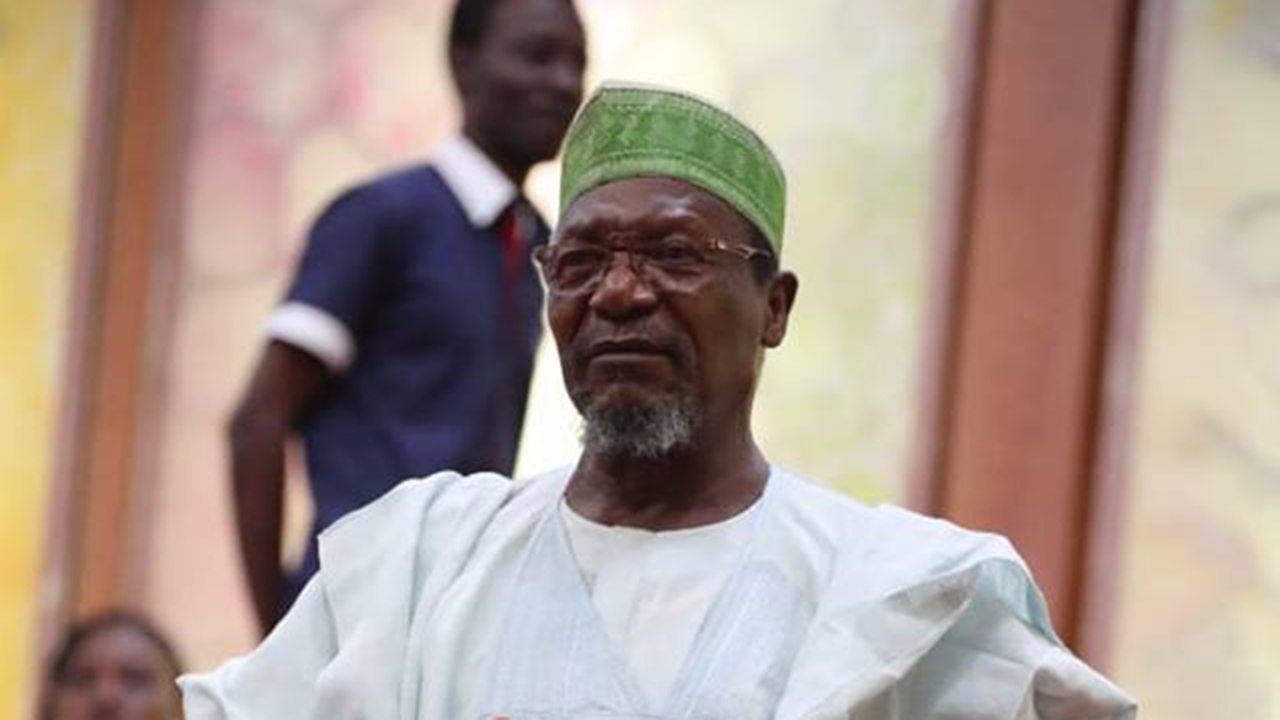
***Adeyemi links scarcity of diesel to non-completion of the projects
John Akubo
The Senate on Tuesday granted two extra months extension for the implementation of the 2021 Appropriation Act from 31st March to 31st May 2022.
The scarcity of diesel affected some of the capital projects captured in the 2021 budget as most of the earthmoving equipment could not be deployed to the site.
The extension got the upper legislative chamber’s approval following the consideration of a Bill to Amend the 2021 Appropriation Act.
The Senate before considering the bill suspended Rule 78(1) of the Senate Standing Orders 2022 (as amended), to enable the upper chamber to expeditiously introduce and pass the bill.
The bill was read on Tuesday for the first, second, and third time after the suspension of Rule 78(1).
The bill was sponsored by the Senate Leader, Senator Yayah Abdullahi (Kebbi North).
Leading debate on the bill, Senator Abdullahi, recalled that prior Appropriation Acts in the past were passed mid-year, with their implementation usually extended to the following year.
Read Also >> Obasanjo Led Kingmakers Screen Princes, Forward Recommendations To Gov Abiodun
The lawmaker noted that in previous Appropriation Acts, these extensions were usually covered by a Clause, in line with the provisions of Section 318 of the Constitution of the Federal Republic of Nigeria, that the Act runs for a period of 12 months, starting from the date it comes into effect.
He, however, observed on the contrary that Clause 12 of the provisions of Section 318 of the Constitution provides that the 12 month period starts from the 1st day of January to the 31st day of December 2021.
He recalled that the 2022 Appropriation Act was amended to extend the implementation year from 31st December 2021 to 31st March 2022.
Senator Abdullahi explained that the extension of the budget period became imperative in view of the need to complete ongoing projects nearing completion.
He said, “As you are aware, the 2021 Virement of the aggregate sum of N276 billion was approved for several MDAs by the National Assembly in December 2021 along with 100 percent release of the 2021 Capital Budget of the MDAs.
“A significant portion of the releases to the MDAs has been utilized following the extension to 31st March 2022.
“In view of the critical importance of some key projects nearing completion, it is expedient to grant further extension of the expiration clause to avoid compounding the problem of abandoned projects given that some of the projects were not provided for in the 2022 budget hence the need to extend the implementation year form 31 March 2022 to 31st May 2022.”
Senator representing Kogi West while supporting the bill said, “When President Muhammadu Buhari came to power he did what was unusual by going ahead to complete projects inherited. In essence, this government believes that projects must be completed.
“All the major projects that this administration inherited are actually completing them so it is going to be out of place if we allow projects to be abandoned.
“More importantly why this amendment is desired is to ensure that those projects that were captured in the 2021 budget are completed.
“Why this is so is the fact that in the last 2 to 3 months we had crises of diesel which is the main fuel for most earthmoving equipment, so many projects are at the very slow stage of completion because diesel is not available, where it is available it is adulterated.
The lawmaker said he had visited a number of sites and saw that many earth-moving equipments were abandoned so I think it is desirable we extend the 2021 appropriation so that all the projects would be completed.
According to him by so doing we will be improving the socio-economic development of our nation and put smiles on the faces of Nigerians who will be working there
The bill to amend the 2021 Appropriation Act was, thereafter, passed sequel to its consideration by the Committee on Supply.





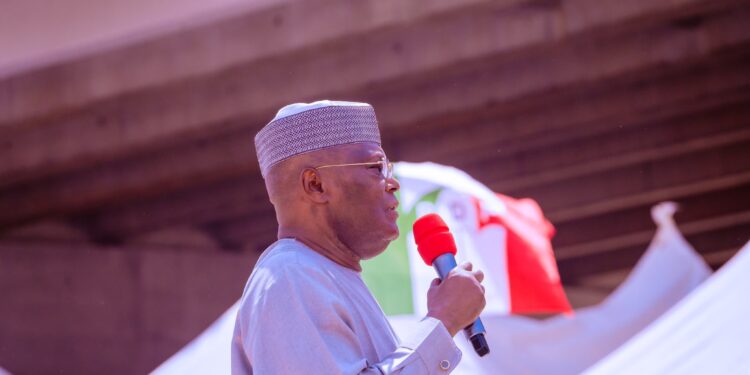
Former Vice President and African Democratic Congress (ADC) presidential candidate, Atiku Abubakar, has said Nigerians still deserve answers six years after the October 20, 2020, EndSARS shooting at the Lekki Toll Gate in Lagos.
Atiku made this known in a statement on Tuesday marking the sixth anniversary of the incident, in which he called for accountability over the shooting and criticised the Federal Government’s handling of the unresolved questions surrounding the tragedy.
He questioned who gave the order for the operation against protesters, insisting that the country could not continue to commemorate the victims without addressing the circumstances surrounding the incident.
RELATED NEWS: EndSARS Memorial: ‘We Must Never Normalise Injustice’ – Peter Obi
Atiku also recalled President Bola Tinubu’s remarks in October 2020, when he questioned the circumstances surrounding the casualties recorded during the shooting.
Tinubu had asked: “How were they there? How long were they there? What kind of characters are they?”
According to Atiku, the remarks appeared to focus on questioning the victims rather than demanding answers from those responsible for the violence against peaceful protesters.
He said the anger surrounding the anniversary reflected the unresolved grief of affected families and the distrust of young Nigerians who had demanded accountability and a better future.
“The APC has governed Nigeria through these six years. It cannot keep asking Nigerians to remember the dead while refusing to confront the unanswered questions,” Atiku said.
The ADC presidential candidate also linked the unresolved questions surrounding the Lekki shooting to the economic hardship confronting Nigerians, particularly young people struggling with rising living costs.
Citing petrol prices of ₦1,405 per litre, Atiku said transportation costs were making it increasingly difficult for Nigerians to afford basic necessities, including food, rent, education and commuting to work.
He illustrated the situation with the account of a young woman who reportedly resigned from her job because her salary could no longer cover her transportation expenses.
According to Atiku, one of his aides shared the woman’s experience earlier on Tuesday.
The woman reportedly said: “The pay no longer covers transport. Everything in Nigeria just dey increase in price. Feels like I’m working for Bolt guys.”
Atiku described the experience as an example of the difficulties faced by employed Nigerians whose earnings could no longer adequately cover the cost of getting to work.
He argued that the economic situation was affecting not only unemployed Nigerians but also workers struggling to survive on salaries weakened by rising costs.
The former vice president also highlighted his Economic Recovery Plan, which he said was designed to make Nigeria more affordable.
The proposed measures include providing support tied to fuel refined in Nigeria, passing savings on to consumers, increasing local production to create jobs, protecting minimum-wage earners, supporting students and cutting government waste rather than imposing additional taxes.
Atiku maintained that young Nigerians deserved answers about the Lekki shooting, a government that protects human life and an economy in which employment could provide a path to a better standard of living.
He added that Nigerians were entitled to question the APC’s record on accountability and economic opportunities six years after the incident.
The EndSARS protests began in October 2020, with young Nigerians demanding an end to police brutality and reforms to policing in the country. The shooting at the Lekki Toll Gate on October 20 became one of the most prominent events associated with the protests.
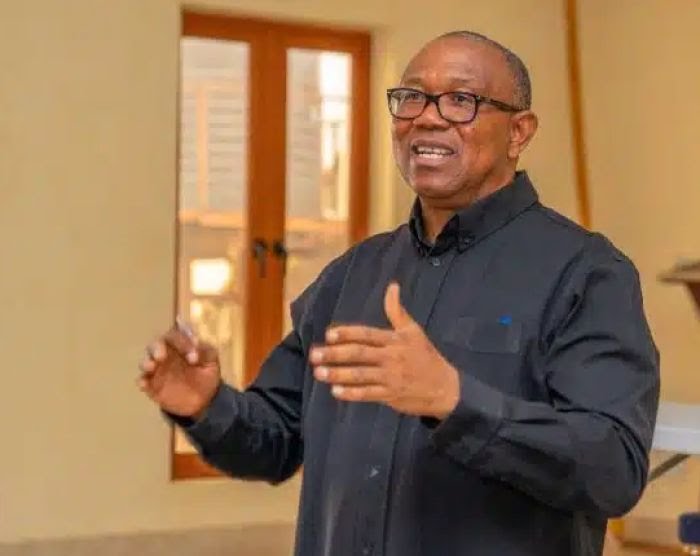
National Democratic Congress (NDC) presidential candidate, Peter Obi, has called on Nigerians never to normalise injustice as the country marks the sixth anniversary of the Lekki Toll Gate shootings during the #EndSARS protests.
Obi made the call in a statement posted on his X account on Tuesday, October 20, 2026, in which he reflected on the events of October 20, 2020, and renewed his call for a Nigeria where citizens’ rights are protected.
He expressed appreciation for Nigerian youths who participated in the protests, describing the anniversary as a painful reminder of the sacrifices made in the demand for a better country.
SEE ALSO: BREAKING: Activists Arrested For Commemorating #Endsars Released
According to him, peaceful #EndSARS protesters were met with gunfire at the Lekki Toll Gate on that fateful night, leaving people dead and others injured.
He noted that the incident raised questions about justice, accountability and respect for human life.
“We must never forget. We must never normalise injustice,” Obi said.
He also reaffirmed his belief that a New Nigeria is possible, describing it as a country where citizens are protected rather than brutalised, young people are heard rather than silenced, and government power is exercised responsibly and with respect for human rights.
The former Anambra State governor stressed that Nigeria must become a nation where no citizen is punished for demanding good governance and a better future.
As the country marks six years since the incident, Obi prayed for the repose of the souls of those who lost their lives and called for their sacrifices to strengthen efforts towards building a better nation.
“May the souls of the departed continue to rest in peace. May their sacrifice strengthen our resolve to build a Nigeria where this tragedy will never be repeated,” he stated.
He concluded by reiterating his belief in the possibility of a New Nigeria, insisting that the country must become one where every life matters.
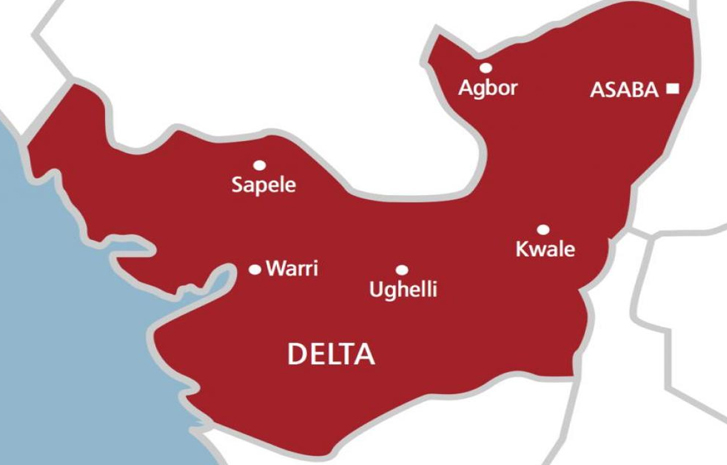
Former Delta State Governor, Dr Emmanuel Uduaghan, has reportedly died, according to sources said to be close to his family.
The sources confirmed the development on Monday, October 19, 2026, although details surrounding the circumstances of his death remained unclear as of the time of filing this report.
“Uduaghan is no more; he is dead,” one of the sources reportedly said.
SEE ALSO: Document reveals Akpoti-Uduaghan demanded N10b damages from husband before marriage, firm reacts
The reported death comes months after claims that the former governor had died circulated on social media before being dismissed by his media aide, Henry Unini.
In June, reports of Uduaghan’s alleged death spread across Facebook and WhatsApp, prompting Unini to publicly debunk the claims and assure the public that the former governor was alive.
“I can tell you for a fact that Dr. Emmanuel Uduaghan is alive,” Unini said at the time.
“Frankly, I don’t know where the writer got his information from. The death of someone is not something you take and write about casually,” he added.
Unini acknowledged at the time that Uduaghan had been experiencing health challenges but maintained that he was receiving medical attention.
“It is now common knowledge that Dr. Emmanuel Uduaghan has been sick, but he is receiving proper medical care,” the media aide said.
He also stated that the former governor was recuperating, assuring the public that there was no immediate cause for concern.
“There is no cause for alarm whatsoever,” Unini said.
The media aide thanked friends, well-wishers and residents of Delta State who contacted the family to verify the former governor’s condition. He also urged the public to avoid spreading unverified information.
“The rumour was uncalled for,” he said while addressing the earlier reports.
As of the time of filing this report, further details about the circumstances surrounding Uduaghan’s reported death had yet to emerge.





FG to Launch National Lead Poisoning Prevention Plan Wednesday

EndSARS Memorial: ‘Nigerians Still Deserve Answers’ – Atiku

EndSARS Memorial: ‘We Must Never Normalise Injustice’ – Peter Obi
Petrol Price Hike Looms as Oil Hits $110/barrel

NIPCO Gas Licences, NNPC Ltd Management Face Reps Probe
UNDC Assures on Readiness to Protect Oil, Gas Pipelines

Trump’s Family Unveils New Cryptocurrency Platform

Senate Denies Receiving Petitions Against Tinubu’s Ambassadorial Nominees

Dangote Cement Lights Up Benue Host Communities With CSR Initiatives

Reps Recommend 3-year Jail Term For Aviation minister

Tems Sets New Record On Billboard Hot 100 Chart
