
NEWS
Bala Wunti Debunks Allegations of Missing N210trn from NNPC Ltd Accounts

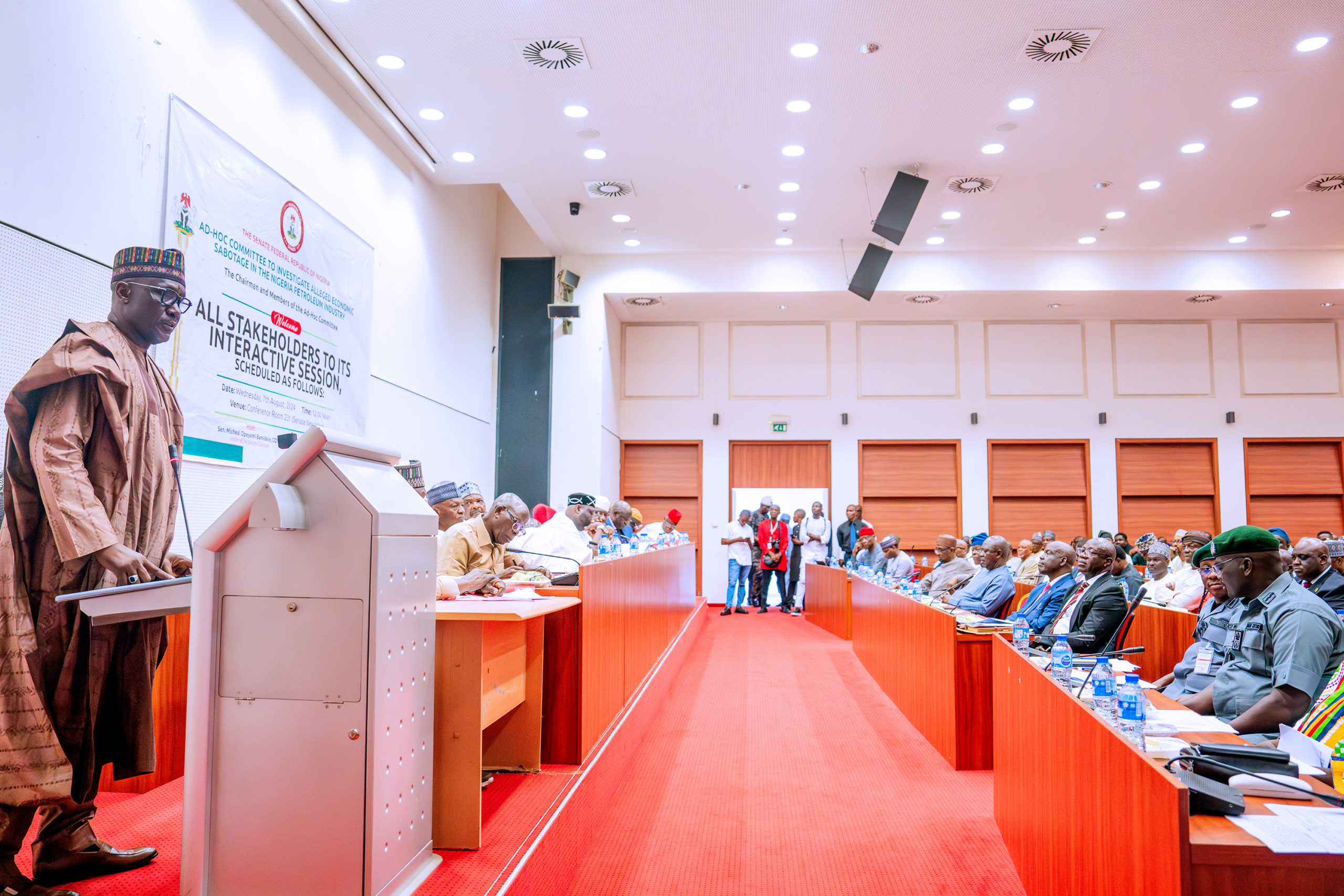
Allegations that N210 trillion is missing from the accounts of the Nigerian National Petroleum Company Limited (NNPC Ltd), have been waved-off as baseless.
Former Group General Manager of the National Petroleum Investment Management Services (NAPIMS), Bala Wunti, made the clarification at the Senate, maintaining that a detailed review of the oil major’s 2023 audited financial statements revealed no evidence of missing funds.
He shared his views before the Senate Committee reviewing the NNPC Ltd’s 2023 audited accounts on Tuesday. According to Wunti, the widely circulated claim was the result of a fundamental misunderstanding of accounting principles rather than proof of financial misconduct.
Addressing lawmakers, the former NAPIMS boss said his independent examination of the audited statements found no reference to the alleged missing N210 trillion.
“I have gone through this document page by page. I have not found where N210 trillion was mentioned,” Wunti told the committee.
ALSO READ: Dangote Refinery Shields Nigeria from Global Fuel Price Shock – S&P
He explained that the disputed amount emerged after two completely different balance-sheet entries were incorrectly combined and presented as missing money.
Wunti maintained that about N107 trillion represented sundry receivables—funds owed to NNPC Ltd by third parties—while another N103 trillion reflected accrued expenses, which are liabilities the company is obligated to pay.
He stressed that under globally accepted accounting standards, the two entries serve entirely different purposes and cannot be merged to suggest that funds had disappeared.
“Receivables are money other people owe you. Accrued expenses are money you owe other people. Accounting standards require these items to be reported separately. They cannot simply be added together and described as missing money,” he said.
Based on his review of the audited financial statements, Wunti declared under oath that there was no factual basis for allegations that N210 trillion had vanished from NNPC Ltd’s books.
The Senate committee had invited Wunti, who previously supervised upstream investments at the NNPC Ltd, to conduct an independent assessment of the company’s 2023 audited accounts and present his findings.
Although he noted that his tenure did not cover the entire period under review, Wunti said it substantially overlapped with the years captured in the audit, giving him firsthand knowledge of the accounting framework, financial reporting processes and operational structure of the national oil company.
He also sought to explain what he described as the unique accounting framework of national oil companies, saying NNPC Ltd’s financial reporting is more complex than that of conventional commercial enterprises.
According to him, unlike private corporations, NNPC Ltd simultaneously functions as a commercial business, serves as custodian of Nigeria’s oil and gas assets on behalf of the Federation and performs strategic national energy security responsibilities.
These multiple roles, he explained, require separate accounting records and reporting frameworks, making the company’s audited financial statements more intricate than those of ordinary corporate organisations.
Wunti recalled that before the enactment of the Petroleum Industry Act (PIA), the defunct Nigerian National Petroleum Corporation (NNPC) combined commercial, regulatory and policy responsibilities within a single organisation.
While the PIA separated many of those responsibilities, he pointed out that the NNPC Ltd still maintains distinct accounting records to reflect both its commercial activities and its management of assets belonging to the Federation.
The former NAPIMS chief, who headed the agency from March 2020 before serving as Chief Offshore Investment Officer of the NNPC Upstream Investment Management Services (NIUMS) until December 2024, maintained that no case of fraud or missing funds was reported during his time in office.
“There was no reported fraud or money missing throughout the period under my stewardship,” he told lawmakers.
Wunti also addressed another issue raised before the committee, disputing reports that N5.8 billion was spent to incorporate NNPC Ltd after the implementation of the PIA.
He explained that the actual statutory payments made to the Corporate Affairs Commission (CAC) and the Federal Inland Revenue Service (FIRS) for filing fees and stamp duties amounted to approximately N2.45 billion.
According to him, the larger N5.8 billion figure resulted from accounting entries recorded separately across different books because one arm of the organisation paid the statutory charges on behalf of government shareholders, while another reflected the same transaction in its reporting records.
“The only money paid was about N2.45 billion, and it went directly to government institutions. No third party received any payment,” he said.
To prevent similar controversies in future, Wunti urged stronger collaboration among the NNPC Ltd, the Office of the Accountant-General of the Federation and the Office of the Auditor-General of the Federation to deepen understanding of the company’s accounting framework and reporting procedures.
He also called for greater appreciation of the constitutional and statutory provisions governing NNPC Ltd, particularly the PIA, arguing that a proper understanding of the legal framework would lead to more accurate interpretation of the company’s financial statements and reduce public misconceptions.
Following the presentation, Chairman of the Senate Committee, Senator Ibrahim Dankwambo, said members would examine Wunti’s report alongside the audited financial statements before deciding whether further clarification would be required.
The committee subsequently adjourned proceedings to continue its review of the submissions.
The Senate’s ongoing scrutiny of NNPC Ltd’s 2023 audited accounts has drawn widespread public attention amid allegations of financial irregularities and conflicting interpretations of figures contained in the company’s audited financial statements.






The Transmission Company of Nigeria (TCN) has restored bulk power supply to its Katampe 330kV Transmission Substation in Abuja following an earlier disruption caused by a fault on the Shiroro–Katampe 330kV Line 1.
The development was disclosed in a statement released by TCN management on Friday, October 9, 2026.
SEE ALSO: Kainji–Birnin Kebbi Power Line: TCN Begins Final Phase of Restoration
According to the statement, bulk power supply was restored to the Katampe substation at 4:15 p.m. through the Gwagwalada–Katampe 330kV Line 1.
TCN explained that the Shiroro–Katampe 330kV Line 1 remains out of service due to a fault, necessitating the use of the Gwagwalada–Katampe line to restore supply to the substation.
The company also announced the suspension of planned maintenance work on the Gwagwalada–Katampe 330kV Line 1 to enable the line to continue supplying the Katampe substation.
The suspended maintenance work involved replacing defective line isolators and the associated earthing switch.
TCN apologised to electricity consumers in the affected areas for any inconvenience caused by the disruption and maintenance arrangements.
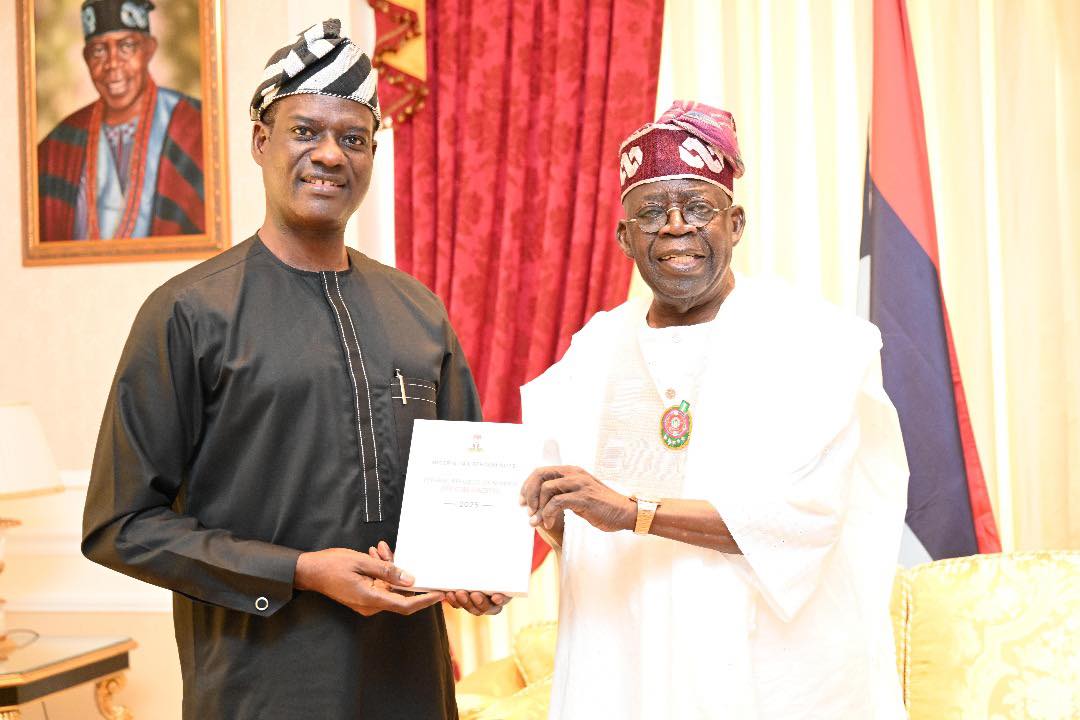
The Federal Government has warned politicians against making promises that could reverse Nigeria’s economic reforms, insisting that it will not restore fuel subsidy amid renewed debate over the Nigerian National Petroleum Company Limited’s (NNPC) petrol discount.
The Minister of Finance and Coordinating Minister of the Economy, Taiwo Oyedele, disclosed this during an interview on Channels Television on Friday, saying the government would not bring back subsidies on petroleum products.
“This government is not bringing back subsidy on fuel products. We need to be clear,” Oyedele said.
ALSO READ: NNPC Petrol Discount: Oyedele Explains How Lower Margins Could Boost Profits
The minister also criticised politicians who, according to him, make promises to win elections without fully considering the implications of implementing them.
He suggested that some politicians make sweeping promises during election campaigns only to offer excuses when confronted with the realities of governance.
“I think I would pardon people who say all manner of things because they want to get elected. It’s almost like ‘whatever I need to say, when I get there, I’ll give excuses.’ But we have the data,” he said.
Oyedele added that he felt a personal responsibility not to remain silent about the economic realities known to the government or allow populist positions to push Nigeria in the wrong direction.
“I feel the personal responsibility that I cannot see what I see and keep quiet, or populism to move our country in the wrong direction,” he said.
NNPC Petrol Discount Sparks Fresh Subsidy Debate
The minister’s remarks come amid renewed debate over fuel subsidy following the Federal Government’s announcement of a 30-day petrol discount at NNPC retail stations.
The initiative was introduced as a temporary measure to provide relief to Nigerians amid elevated global crude oil prices and concerns about the cost of petroleum products.
NNPC Retail had also announced a N66-per-litre petrol discount to mark Nigeria’s 66th Independence Anniversary, with the offer scheduled to run until October 31, 2026, across its retail stations nationwide.
The company maintained that the discount was a customer-relief initiative and did not represent a return to the petroleum subsidy regime.
The distinction has become central to the debate, with the government insisting that temporary price relief at NNPC stations does not amount to restoring the subsidy policy abolished in May 2023.
The administration has maintained that the current arrangement differs from the former subsidy system, under which the government intervened to cover part of the cost of petrol.
FG Defends Economic Reforms
During the interview, Oyedele also referred to a World Bank update, saying the institution had acknowledged a reduction in poverty levels and increased spending on infrastructure, particularly roads.
He urged Nigerians not to reverse the progress he said had been made, arguing that the country was approaching a point where the benefits of ongoing reforms should begin to emerge.

The Kaduna State Universal Basic Education Board (SUBEB) has commenced a promotion exercise for 24,000 eligible staff as part of efforts to clear outstanding teachers’ promotions dating back to 2021.
The development was disclosed on Friday as the administration of Governor Uba Sani intensifies efforts to address promotion backlogs, recognise teachers’ years of service and improve staff welfare across the state.
The exercise covers outstanding promotions from 2021 to 2026 and is expected to provide eligible teachers and other staff with opportunities for career progression.
SEE ALSO: Kaduna Clears N18bn Pension Arrears, Raises Agric Funding to N100bn
According to the announcement, eligible personnel will undergo an assessment process, after which promotions will be implemented for those who successfully meet the requirements.
The initiative is part of efforts to strengthen the education sector by recognising the contributions of teachers and supporting their professional development.
The state government has emphasised the importance of investing in teachers, noting that a motivated and valued teaching workforce is essential to building a stronger education system.
The exercise is also expected to address long-standing staff concerns relating to career advancement within the state’s basic education sector.






Domestic Flight delays, Cancellations Compound Air Travellers’ Woes

2027 Election Might Witness Voter-Apathy as Registered Voters Shun PVC Collection
TCN Restores Power Supply to Katampe Substation After Shiroro Line Fault

2027 Elections: FG Warns Politicians Against Promises on Fuel Subsidy

PETROAN Expects Fuel Discount to Combat Inflation

Kaduna Moves to Clear 5-Year Promotion Backlog for 24,000 Teachers

Trump’s Family Unveils New Cryptocurrency Platform

Senate Denies Receiving Petitions Against Tinubu’s Ambassadorial Nominees

Dangote Cement Lights Up Benue Host Communities With CSR Initiatives

Reps Recommend 3-year Jail Term For Aviation minister

Tems Sets New Record On Billboard Hot 100 Chart
