
NEWS
Adeleke Pledges Support for NAFDAC, Urges Whistleblowing Against Fake Drugs

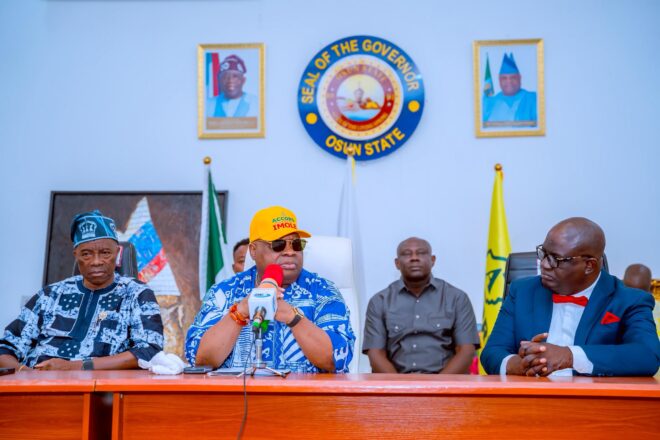
The desire for protection of public health, eliminating counterfeit and substandard products has seen the Osun State Governor, Senator Ademola Adeleke reaffirm commitment to working closely with the National Agency for Food and Drug Administration and Control (NAFDAC).
Gov Adeleke made his position public, at the Government House, Oke-fia, Osogbo, while receiving the State Coordinator of NAFDAC, Osun State Chapter, and members of the management team, on Thursday.
He congratulated the new coordinator on the appointment and described the visit as timely, stressing the importance of collaboration between federal agencies and state governments.
ALSO READ: Okonjo-Iweala Counsels Nigeria to Target Global Supply Chains
Gov Adeleke noted that the activities of NAFDAC remain critical to public health, consumer protection and economic stability, particularly in addressing the growing menace of fake drugs, substandard food items and unregulated consumables that pose serious risks to lives and undermine confidence in the healthcare system.
Commending NAFDAC’s ongoing efforts in enforcement, regulation and public sensitisation, the Governor emphasised that effective regulation cannot be achieved in isolation, but through strong cooperation, intelligence sharing and engagement with security agencies and local communities.
Assuring NAFDAC of full support, Gov Adeleke said Osun State would continue to partner with the agency to strengthen enforcement, improve public awareness and ensure compliance with regulatory standards in markets and healthcare facilities across the state.
On NAFDAC’s request for inclusion in the State Security Council, the Governor acknowledged the relevance of regulatory agencies to broader security and public safety concerns, noting that the request would be carefully examined within the existing framework to enhance coordination and effectiveness.
In addition, Gov Adeleke urged NAFDAC to intensify engagement with traders, manufacturers and residents, while calling on members of the public to act as whistleblowers by promptly reporting any outlet involved in the sale of fake drugs, stressing that the agency must carry out its duties diligently and transparently without compromise or inducement, in order to rid Osun State of fake drug dealers and safeguard lives.
Earlier, the State Coordinator of NAFDAC, Stephen Aina, expressed gratitude to the state governor for its support and partnership with NAFDAC.
He explained that NAFDAC remains committed to ensuring that people consume only standard and safe products, including drugs and other regulated items, while also commending the state for the prevailing atmosphere of peace that has aided the agency’s activities.
Aina further disclosed that the agency has been engaging in outreach programmes to educate and encourage young people to embrace entrepreneurship, advising them to always register their businesses as required by law. He, however, appealed to the government to further support the agency through the provision of logistics such as operational vehicles, staff quarters, and other essential needs to improve efficiency.





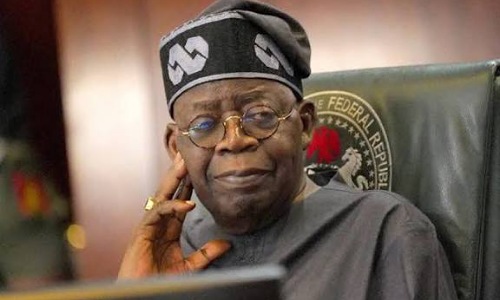
President Bola Ahmed Tinubu has congratulated Brazilian President Luiz Inácio Lula da Silva on his reported re-election for a fourth term, expressing his desire to strengthen Nigeria-Brazil relations across trade, investment, energy and other key sectors.
Tinubu conveyed his congratulations in a statement dated October 26, 2026, in Abuja, describing Lula as his friend and emphasising the historical ties between Nigeria and Brazil.
SEE ALSO: Peter Obi Demands Release of Rilwan Olawale, Accuses Tinubu of Undermining Democracy
The Nigerian president said Lula’s renewed mandate presents an opportunity for both countries to strengthen their longstanding friendship and expand cooperation in areas of mutual interest.
“Your renewed mandate offers an opportunity to strengthen the longstanding friendship and historical ties between Nigeria and Brazil,” Tinubu said.
He noted that Nigeria and Brazil, as leading nations of the Global South, could work together to promote economic integration and advance their shared interests amid a rapidly changing global order.
Tinubu said he looked forward to expanding cooperation between both countries in trade and investment, agriculture and food security, energy, oil and gas, manufacturing, science and technology, education, aviation and cultural exchange.
He also reaffirmed Nigeria’s commitment to strengthening multilateral cooperation with Brazil and advancing shared priorities across Africa, South America and the wider Global South.
“I affirm Nigeria’s continued commitment to working with Brazil to strengthen multilateral cooperation and advance shared priorities in Africa, South America, and across the Global South,” he said.
Tinubu, on behalf of the Nigerian people, wished Lula success in his new term in office.
“On behalf of the people of Nigeria, I wish you a successful new term in office,” the president added.

The Inspector-General of Police, Olatunji Rilwan Disu, has urged Nigerians to remain calm and vigilant following the Federal Government’s reported confirmation of an Ebola case in the Federal Capital Territory (FCT), warning against contact with the blood and body fluids of suspected patients.
Disu also called for strict adherence to preventive measures, improved personal hygiene and cooperation with public health authorities to protect lives and prevent further transmission of the disease.
SEE MORE: 2027 Election: ‘Your Future Is More Valuable’ — IGP Warn Youths Against Political Violence
In a statement issued on Monday, October 26, 2026, by the Force Public Relations Officer, CSP Ani Iniedu, the IGP emphasised the importance of public awareness and collective responsibility in combating the outbreak.
Know the Warning Signs
The Nigeria Police Force urged Nigerians to familiarise themselves with the symptoms associated with Ebola and seek medical guidance if they develop symptoms following possible exposure.
The warning signs highlighted in the police awareness campaign include: Fever,Severe, headache, Muscle pain, Weakness, Vomiting, Diarrhoea, Unexplained bleeding.
The public was cautioned not to wait until bleeding occurs before seeking medical assistance.
Anyone who suspects they may have been exposed to the virus should promptly contact health authorities for guidance.
How Ebola Spreads
According to the awareness information provided by the Nigeria Police Force, Ebola can spread through direct contact with the blood or body fluids of an infected person.
Transmission can also occur through contact with contaminated items or the body of someone who has died from the disease.
Members of the public were therefore advised to avoid direct contact with the blood, body fluids and personal items of suspected patients.
The police also warned against touching or washing the bodies of people suspected to have died from Ebola.
Preventive Measures Nigerians Should Follow
The IGP urged Nigerians to observe basic preventive measures to reduce the risk of infection.
The measures include washing hands regularly with soap and water, avoiding contact with suspected patients’ body fluids and staying away from potentially contaminated items.
The public was also advised not to handle the bodies of suspected Ebola victims and to cooperate with healthcare workers and contact-tracing teams.
According to the awareness poster, individuals who may have been exposed to the virus should avoid physical contact with others if they begin feeling unwell and contact health authorities for immediate guidance.
The poster further advised anyone experiencing symptoms following possible exposure to contact the Nigeria Centre for Disease Control and Prevention (NCDC) through its toll-free helpline, 6232.
IGP Directs Police Officers to Observe Safety Measures
Disu also directed police personnel to observe appropriate infection prevention measures while carrying out their duties and promptly refer suspected cases to qualified health professionals.
The police said suspected patients, contacts and healthcare workers must be treated with dignity and without discrimination.
The Force further called on Nigerians to cooperate with contact-tracing teams, provide accurate information when required and refrain from spreading unverified reports capable of causing unnecessary panic.
Members of the public were encouraged to rely on official updates from the Federal Ministry of Health and Social Welfare, the NCDC and other authorised public health agencies.
Police Warn Against Stigmatisation
The Nigeria Police Force assured Nigerians of its commitment to supporting relevant health authorities in protecting lives and maintaining public order throughout the period.
The Force also urged the public to share accurate information, remain vigilant and avoid stigmatising people affected by or suspected of having the disease.
The awareness campaign stressed that protecting public health is a shared responsibility and encouraged Nigerians to stay informed and follow appropriate preventive measures.
Members of the public should seek guidance from authorised health officials if they suspect exposure to Ebola.
Professor Stefan Dercon, a development economist at the University of Oxford, has warned that Nigeria cannot replicate China’s economic development model, urging the country to adopt pragmatic policies that reflect its own institutional realities.
Dercon made the remarks on Monday at the opening ceremony of the 32nd Nigerian Economic Summit (NES #32) in Abuja, where he highlighted the importance of leadership commitment, economic transformation and policies that promote sustainable growth.
According to him, Nigeria lacks the institutional structures that supported China’s development and must therefore identify an economic model suited to its own circumstances.
SEE MORE: China Grants 30-Day Visa-Free Entry To British, Canadian Travelers
“Nigeria does not have a Chinese state, and it can dream of it, but it doesn’t. But it also means it can’t do a China,” Dercon said.
He explained that China’s development was supported by a long history of meritocratic institutions, including a rigorous public examination system for civil servants that had existed for approximately 1,300 years.
The economist noted that many countries developed their state institutions through patronage and personal connections rather than merit-based systems, creating differences in their capacity to implement development policies.
Dercon, however, said Nigeria could still learn from successful economies by identifying approaches that fit its own circumstances rather than attempting to copy another country’s model.
He pointed to China’s shift away from an ideology-driven economy under former leader Mao Zedong towards a more pragmatic approach focused on economic growth and progress.
According to him, countries that achieve economic success share a commitment among their leadership to growth, regardless of the specific economic model they adopt.
“That’s actually what all countries that are successful, whatever the blueprint or the models they try to use, have in common. That’s an elite commitment to actually growth using a model that fits the context,” he said.
Dercon Calls for Economic Transformation
The Oxford economist urged Nigeria to demonstrate a serious commitment to transforming its economy, creating jobs and improving prosperity.
He argued that the country needed to move away from an economic system that benefits a limited group of people towards one that delivers broader opportunities and sustainable development.
“So what Nigeria needs is that. It needs a really serious commitment to begin to change this model,” Dercon said.
He added that the government must recognise its capabilities and limitations while identifying and correcting policies that undermine economic growth.
Dercon also emphasised the importance of learning from experience, testing policies and making necessary adjustments to achieve better results.
“But all these places, they learned, they tried, and they corrected, and then they made progress,” he said.
Indonesia Offers Lessons for Nigeria
Dercon also identified Indonesia as a country Nigeria could study for lessons on economic development, while acknowledging that the two countries have important differences.
He argued that economic growth should be treated as a national security priority because a stronger economy is essential to national development and stability.
“You need to grow the economy, you need to develop. That’s an issue of national security. I don’t think I have to explain that in Nigeria’s context either,” he said.
He advised Nigerian policymakers to maintain macroeconomic stability, remain consistent with sound economic policies and focus on practical measures capable of supporting long-term growth.
Dercon stressed that Nigeria’s priority should be to develop an economic strategy that reflects its institutional realities while promoting productivity, job creation and shared prosperity.






Dangote Refinery Pioneers Honeywell’s AI Technology

Standard Chartered Inks Deal for Shell Gas Sale

NALPGAM Preaches Innovation, Safety to LPG Operators

Tinubu Promises to Boost Local Production with NNPC Refineries

INEC Opens Online Access to Voters’ Register After Public Outcry

ADC Replies Alake, Says APC’s ‘Falsehood’ Cannot Hide Tinubu’s Failures

Trump’s Family Unveils New Cryptocurrency Platform

Senate Denies Receiving Petitions Against Tinubu’s Ambassadorial Nominees

Dangote Cement Lights Up Benue Host Communities With CSR Initiatives

Reps Recommend 3-year Jail Term For Aviation minister

Tems Sets New Record On Billboard Hot 100 Chart
