
Aviation
Aero resumes Lagos – Kaduna flights

LAGOS – Aero airline has commenced daily commercial flight operations on the Lagos – Kaduna route and promises to increase operations to twice daily with a promotional ticket fare of N13, 000 one way from August 29, 2013.
The flight which will be operated with the modern Q-400 aircraft will depart Lagos at 7am to arrive Kaduna at 08.25am and thereafter leave Kaduna at 08.55am to arrive Lagos at 10.20am.
The afternoon flight will depart Lagos at 3pm, to get into Kaduna at 4.25pm and leave Kaduna for Lagos at 5pm to arrive Lagos at 6.25pm.
 The airline announced suspension of flight operation into Kaduna and Jos effective from October 1, 2010.
The service into these two cities was launched in November 2009, but Aero says services into the cities would be suspended due to the state of revenue performance on the routes. the airline affirmed that it did not receive incentives from locals nor reduction in fees; which made flying the routes un profitable.
The airline claimed that its decision to resume to one of the North Central cities, Kaduna was borne out of the importance attached to the ‘Liberal State’ now ‘Centre of Education’ and Kaduna city which once served as the capital of old Northern Region of Nigeria.
Speaking on how the resumption of flight to Kaduna to further intensify its operations in the Northern part of Nigeria, the Managing Director of Aero, Hugh Fraser said; “These are indeed exciting times for us at Aero as our customers who use the Kaduna airport will now have more regular and timely flights between Lagos and Kaduna.”
The addition of Kaduna on our network is an indication of our commitment to the growth of Nigerian aviation. Moreover, Kaduna is Nigeria’s largest textile-manufacturing centre and has other major industries as well.
“We are resuming the route with two flights daily and as traffic increases on the route, we also anticipate increasing our frequency. The airline will be taking delivery of more aircraft any time from now to beef up its operations.”
With the resumption on the Kaduna route the airline remains the only airline to serve twice daily flights to Kaduna with a competitive fare in the market that appeals to families, students, business communities and leisure travellers.
The airline is the first domestic carrier in Nigeria to introduce online booking and payment, SMS booking with mobile phone payments, online check in, and automated customer care centre thereby making travel easier and convenient for the customers. It is also the first to acquire the aircraft maintenance organization (AMO) certificate which allows it to maintain its aircrafts and for other airlines.
At present, Aero operates over 55 flights a day to more than 13 destinations, including Lagos, Abuja, Calabar, Port Harcourt, Owerri, Warri, Benin, Uyo, Kano, Enugu, Accra and Douala with plans to open more routes.
Speaking on how the resumption of flight to Kaduna will further intensify its operations in the Northern part of Nigeria, the Managing Director of Aero, Hugh Fraser said; “These are indeed exciting times for us at Aero as our customers who use the Kaduna airport will now have more regular and timely flights between Lagos and Kaduna.
“The addition of Kaduna on our network is an indication of our commitment to the growth of Nigerian aviation. Moreover, Kaduna is Nigeria’s largest textile-manufacturing centre and has other major industries as well.
“We are resuming the route with two flights daily and as traffic increases on the route, we also anticipate increasing our frequency. The airline will be taking delivery of more aircraft any time from now to beef up its operations.”

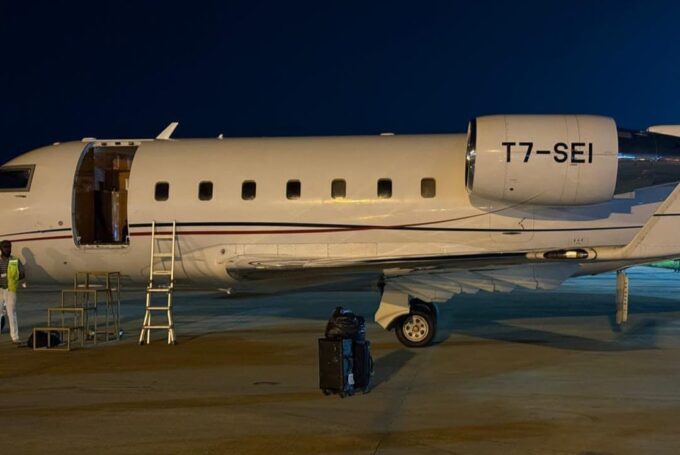
The Nigeria aviation community heaved a sigh of relief on Thursday, after CL60 aircraft operated by Triton Aviation lost a door mid-air, yet managed to land safely.
The incident had forced the crew to declare an emergency shortly after take-off from the Nnamdi Azikiwe International Airport, Abuja, which panicked the aviation industry.
It was gathered that the aircraft, with registration number T7-SEI and flight identification DWC052, was en route to the Murtala Muhammed Airport, Lagos, when the incident occurred at about 4:20 pm.
According to the incident report, the crew informed the air traffic control tower that a door had opened in flight, prompting the approach radar controller to direct the aircraft back to Abuja for an emergency landing.
READ MORE: Two Suspected Bandits in Police Net in Katsina
The report further showed that the aircraft took off from Runway 22 at 4:17 pm UTC. It was “about three nautical miles from the airport, climbing through 3,000 feet, when the crew transmitted a distress call: ‘Mayday, Mayday, Mayday.’”
Following the distress call, airport fire and emergency personnel, as well as the medical team, were immediately alerted and placed on standby. Fire and rescue teams were also directed to designated positions to prepare for the aircraft’s return.
The incident report stated that at about 4:29 pm UTC, while in contact with the Abuja control tower, the crew asked whether the controllers could confirm if the door was open.
“The duty air traffic controller attempted to observe the aircraft using binoculars, but could not establish the door’s condition because of the aircraft’s position. The crew was subsequently informed that the controller could not confirm the situation visually,” the report said.
The aircraft eventually landed safely on Runway 22 at approximately 4:34 pm UTC, about 14 minutes after the Mayday call.
Following the landing, the duty controller observed that the aircraft’s door was missing from the fuselage, confirming the seriousness of the incident.
The jet was subsequently taxied to the international apron extension and parked with the assistance of a marshaller.

Shell Nigeria Exploration and Production Company Limited (SNEPCo) has welcomed efforts to promote safe helicopter services across Africa in a proposed Regional Action Plan (RAP).
The plan, according to a company statement, is the highlight of a workshop organised in Lagos within the week by the Aviation subcommittee of the International Association of Oil and Gas Producers (IOGP) in partnership with London-based safety advocacy group, HeliOffshore.
Biztellers reports that the two-day Offshore Helicopter Industry Safety Workshop (OHISW) with the theme “Developing a Regional Action Plan,” followed on from a similar session last year which SNEPCo sponsored.
READ ALSO: Ikire Killings: Adeleke Establishes Commission for Coroner Inquiry by Executive Order
It also provided administrative and logistical support for this year’s conference which was sponsored by ExxonMobil. SNEPCo, which pioneered Nigeria’s deepwater production at Bonga in 2005, relies on helicopter shuttles for operations and supports the workshop as part of its contributions towards safe services in Nigeria.
In an address at the opening session delivered by General Manager Contracting and Supply Chain, Charles Oranyeli, Managing Director SNEPCo, Ronald Adams said: “By developing a regional action plan, we can move beyond dialogue to alignment, ensuring that the safety leadership, industry standards, and collaborative approaches championed last year are embedded in a common roadmap for collective improvement. The most effective solutions will come not from isolated efforts, but from partnership, standardization, and coordinated action across the region.”
The workshop was attended by more than 80 representatives from oil and gas companies, the Nigerian Content Development and Monitoring Board (NCDMB), the Nigeria Civil Aviation Authority (NCAA), the Nigerian Safety Investigation Bureau (NSIB), helicopter operators and original equipment manufacturers.
The event concluded with participants deciding action items for the proposed Regional Action Plan including Search and Rescue (SAR) initiatives, implementation of IOGP Report 690 standards and establishment of formal industry leadership forums.
The IOGP has been active for over 50 years, supporting its more than 90 members around the world to promote “excellence in safe, efficient and sustainable energy.”
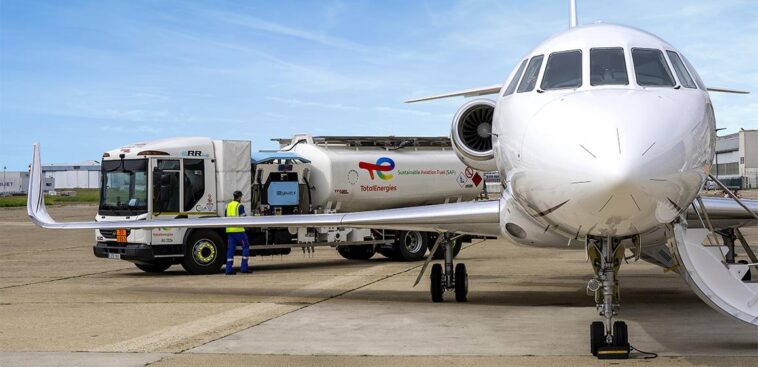
The Airline Operators of Nigeria (AON) has declared that airlines operating in Nigeria have come under financial pressure following a sharp increase in the price of Jet-A1, also known as aviation fuel.
According to the group, the price of aviation fuel, has surged to about N1,800 per litre in many parts of the country, from about N1,000 per litre two weeks ago. This amounts to almost an 80 per cent increase within a short period.
Aviation fuel remains the largest cost component in airline operations, accounting for about 30 to 35 per cent of total operating expenses.
Industry stakeholders have linked the latest spike to the ongoing conflict in the Middle East, which has pushed up global energy prices.
ALSO READ: Shell Completes Turnaround Maintenance on FPSO, Resumes Production at Bonga
Speaking on Channels Television on Friday, the spokesperson for the Airline Operators of Nigeria, Prof Obiora Okonkwo, said the surge had placed airlines under severe financial strain.
According to him, most carriers have so far refrained from immediately transferring the additional cost burden to passengers, despite the pressure on their operations.
“Two weeks ago, we were getting Jet-A1 at about N1,000 per litre, which today is about N1,800, and even more in some stations. We have experienced an increase of about 80 per cent. That’s quite a spike,” Okonkwo said.
He explained that airlines were currently absorbing the losses in order to avoid worsening the economic burden on the travellers.
“We are not in a business where you can easily adjust your ticket price. Right now what we are doing is that we are bleeding. We are taking the blow. We are selling tickets at very non-profitable prices. We are losing a lot of money,” he said.
Okonkwo warned that the situation might not be sustainable if fuel prices continue to rise without government intervention.
“Obviously, adjustments will be expected anytime soon. But again, we are very sensitive to the economic situation of Nigerians and our travellers,” he added.
He noted that developments in the global oil market, particularly the recent release of reserve crude oil, could influence fuel prices in the coming weeks.
Okonkwo also urged the Federal Government to explore engagement with the Dangote Refinery as part of efforts to stabilise aviation fuel supply locally.
“We were more hopeless in a situation where there was no refinery in Nigeria in the last two years. Now that we have a refinery, we are hopeful that we can find a solution around it,” he said.
According to him, if the spike persists, some airlines may struggle to continue absorbing the losses associated with the rising cost of aviation fuel.
Meanwhile, the AON spokesperson also reacted to the decision by the Federal Competition and Consumer Protection Commission to sanction about five airlines over alleged price fixing.
Okonkwo said while the commission has regulatory powers, the aviation sector remains deregulated, making coordinated price fixing unlikely.
“There is no meeting of airlines where they agree to fix prices. Fixing prices would mean operating as a cartel, and that is not the case,” he said.
He explained that airline ticket pricing varies widely because different aircraft types attract different operating costs.
“Each airline determines its fares based on its own operational costs,” he said.
Okonkwo added that airlines must also demonstrate financial viability to regulators as part of the conditions for maintaining their operating licences.
“At every point in time, you must prove to the regulators that you are financially viable and capable of sustaining operations,” he said.
He urged regulators to take into account the fragile nature of the aviation industry when making policy decisions affecting airlines.






Dangote Refinery Pioneers Honeywell’s AI Technology

Standard Chartered Inks Deal for Shell Gas Sale
NALPGAM Preaches Innovation, Safety to LPG Operators

Tinubu Promises to Boost Local Production with NNPC Refineries

INEC Opens Online Access to Voters’ Register After Public Outcry

ADC Replies Alake, Says APC’s ‘Falsehood’ Cannot Hide Tinubu’s Failures

Trump’s Family Unveils New Cryptocurrency Platform

Senate Denies Receiving Petitions Against Tinubu’s Ambassadorial Nominees

Dangote Cement Lights Up Benue Host Communities With CSR Initiatives

Reps Recommend 3-year Jail Term For Aviation minister

Tems Sets New Record On Billboard Hot 100 Chart
