
International News
‘Any Attack On Supreme Leader Will Spark War’ – Iran Warns World

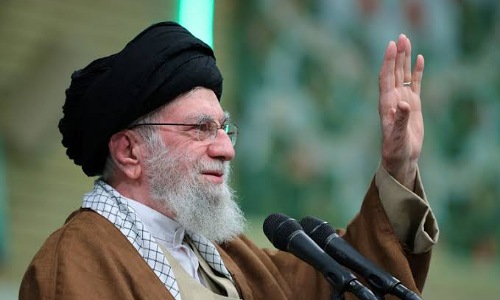
Iran has issued a stark warning to the world, declaring that any attack on Supreme Leader Ayatollah Ali Khamenei would be considered a declaration of war.
The statement came from Iranian President Masoud Pezeshkian amid growing speculation that former US President Donald Trump might attempt to remove or assassinate Khamenei.
In a post on X, Pezeshkian said, “An attack on the great leader of our country is tantamount to a full-scale war with the Iranian nation.”
Pezeshkian also blamed the United States for the deadly protests that have rocked Iran over the past two weeks.
ALSO READ: Iran, Russia, Others Condemn US’ Attack on Venezuela
Tens of thousands have been affected, and thousands of demonstrators have been killed.
“If there are hardships and constraints in the lives of the dear people of Iran, one of the main causes is the longstanding hostility and inhumane sanctions imposed by the US government and its allies,” he said.
Trump, in an interview with Politico on Saturday, called for an end to Khamenei’s nearly 40-year rule, labeling him “a sick man who should run his country properly and stop killing people.”
The unrest began on December 28 over soaring inflation, a collapsing currency, and economic hardship, spreading from Tehran to cities across the country.
Demonstrations quickly transformed into anti-government protests demanding regime change. In response, Iranian authorities shut down most internet and phone services on January 8, effectively cutting off global communication and independent reporting.
Last week, Trump encouraged Iranians to continue protesting and to “take over your institutions,” raising fears of imminent US military action.
Reports indicate that the US was close to launching strikes on Iran but ultimately pulled back following regional and diplomatic pressure.
Israeli Prime Minister Benjamin Netanyahu and Saudi Crown Prince Mohammed bin Salman reportedly urged Trump to exercise restraint to avoid destabilizing the region.
The protests have claimed at least 5,000 lives, including about 500 security personnel, according to Iranian officials.
Khamenei acknowledged the fatalities during a speech last Thursday, blaming the US for supporting the demonstrations and calling for strict punishment of protesters.
Partial internet access has been restored over the weekend, allowing some Iranians to reconnect online.
The heaviest clashes and highest death tolls occurred in north-western Kurdish areas, where separatist flare-ups have fueled violence.
Human Rights Activists report that over 24,000 protesters have been arrested since the crackdown began.
Although street protests have subsided, anti-Khamenei slogans continue to echo from the windows of homes in Tehran, Shiraz, and Isfahan, reflecting lingering dissent and tension in Iranian society.








Federal agents raided the Washington, D.C., home of Democratic Congresswoman Ilhan Omar early Monday morning as part of an ongoing federal criminal investigation, the United States Department of Justice (DOJ) has confirmed.
Homeland Security Investigations agents arrived at the Minnesota congresswoman’s residence at about 6:00 a.m. Eastern Time, according to a report by Fox News.
SEE MORE: Trump Sparks Outrage With Shock Proposal to Rename New Mexico
The report said both the Department of Homeland Security (DHS) and the DOJ are involved in the investigation.
A DOJ spokesperson confirmed the operation, stating: “Today in the Washington, D.C. area, Homeland Security Investigations executed a judicially authorized search warrant secured by the Department of Justice.”
The spokesperson added: “This enforcement action is part of an ongoing federal criminal investigation.”
Details later……….
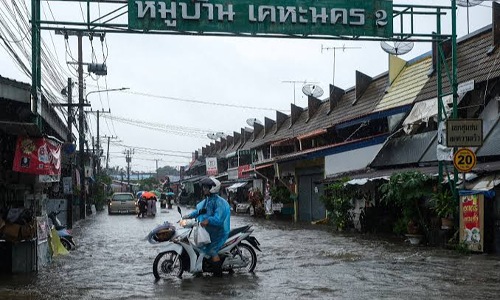
Heavy rains have triggered severe flooding across parts of Bangkok, Thailand, forcing nearly 4,900 residents to evacuate to shelters as floodwaters swept through roads and residential areas.
The flooding has disrupted movement across parts of the Thai capital, with motorists and pedestrians forced to navigate submerged roads and seek alternative routes.
SEE ALSO: NAFDAC Warns Nigerians As Fake Cowbell Milk Floods Market
According to the Bangkok Metropolitan Administration, about 52,000 households have been affected by the flooding, prompting authorities to declare a flood disaster and intensify emergency response efforts.
Emergency teams have been deployed to assist affected communities and move residents from vulnerable areas to safer locations as water levels rise.
Bangkok is accustomed to seasonal heavy rainfall, but intense downpours can overwhelm drainage systems, particularly in low-lying areas, resulting in widespread flooding and disruption.
Authorities are continuing to monitor affected locations while coordinating evacuations and other emergency measures.
For thousands of residents, the immediate priority remains securing safe shelter and protecting homes and livelihoods as authorities work to manage the situation and restore normal activities once the floodwaters recede.
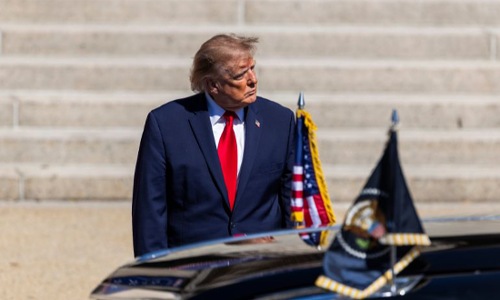
US President Donald Trump has explained his decision to reject Iran’s latest proposal to reopen the Strait of Hormuz, saying Tehran was seeking an agreement because it was losing revenue.
Speaking to reporters at the White House, Trump said Iran wanted to immediately reopen the strategically important waterway but argued that the proposal was not acceptable to his administration.
“They want to make a deal, and I think that’s fine. I like making a deal, too, but that deal would not be acceptable,” Trump said.
SEE ALSO: How the Strait of Hormuz Attack Could Trigger a Fresh Global Oil Shock
According to the US president, Iran’s push to reopen the strait was driven by the economic pressure it was facing.
“What they want to do is immediately open the Hormuz Strait. Do you know why? Because they are dying,” Trump said.
“You know why they’re dying? Because they have no money coming in, because they get their money from the Hormuz Strait.”
Trump also claimed that the US had established an unprecedented naval blockade against Iran, describing it as “a wall of steel.”
“So they outsmarted themselves. We put up the greatest blockade ever in military history. It’s a wall of steel,” he said.
“And guess what? They don’t have any money now because they wanted to close the strait.”
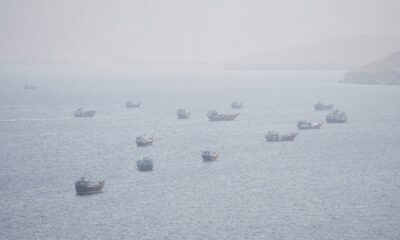
The Strait of Hormuz is a major global energy shipping route, and disruption to traffic through the waterway has significant implications for international oil markets and countries that depend on energy imports.
Trump’s remarks came amid continued tensions between Washington and Tehran over the reopening of the strategic waterway and negotiations involving Iran.





FG Withdraws Charges Against ‘Fake Agency’ DG, Adeniyi Adeyemi

Shell Identifies Keys to Nigeria’s Energy Future

Nigeria Records Biggest Rise in Multidimensional Poverty Among Five Countries – UN

Katsina Students Get ₦689.79m Bursary as Gov Radda Doubles Allowances
DOJ Confirms Federal Criminal Investigation After Agents Raid Ilhan Omar’s Home

Peter Obi Slams Tinubu Over ₦7.7tn Debt Interest Against ₦6.2tn Revenue

Trump’s Family Unveils New Cryptocurrency Platform

Senate Denies Receiving Petitions Against Tinubu’s Ambassadorial Nominees

Dangote Cement Lights Up Benue Host Communities With CSR Initiatives

Reps Recommend 3-year Jail Term For Aviation minister

Tems Sets New Record On Billboard Hot 100 Chart
