
NEWS
Cash Crunch Hunts FCT With Shortfall In Allocation From NN59b to N13.5b – FCT Minister

By John Danjuma
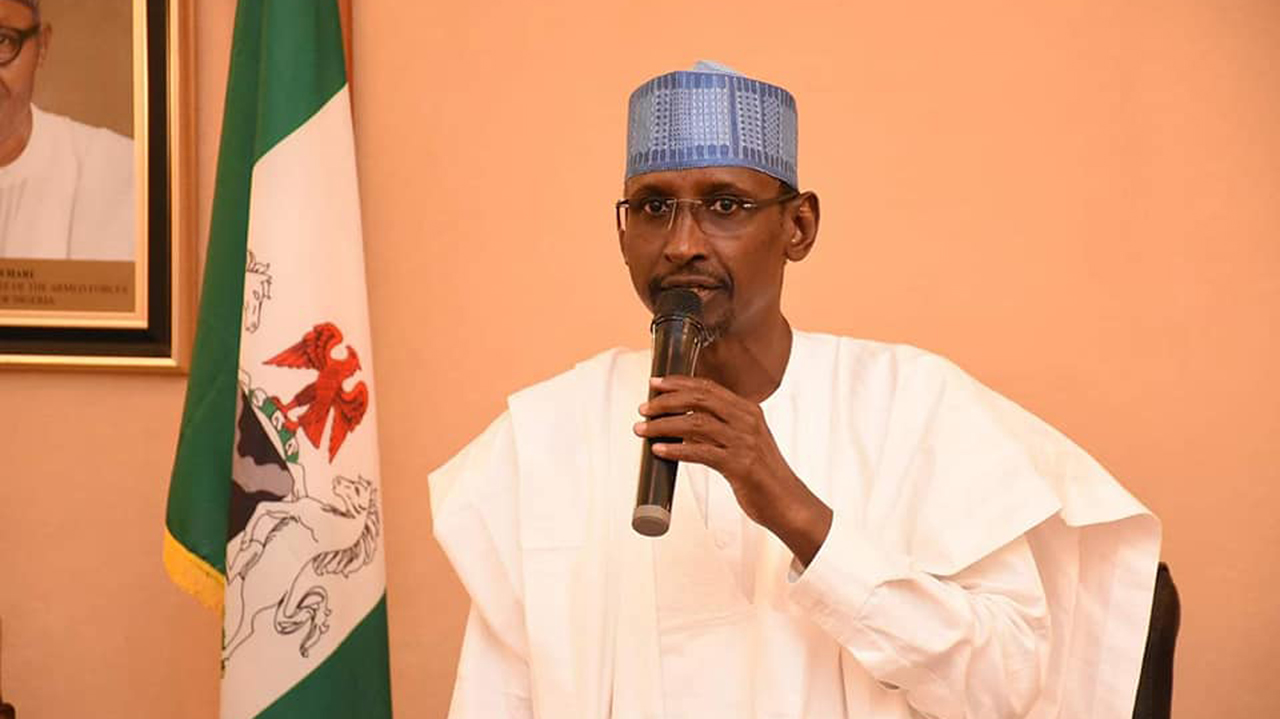
The Minister of the Federal Capital Territory (FCT) Mallam Muhammad Musa Bello has expressed apprehension over an imminent cash crunch that is hunting the Nigerian Federal Capital Territory.
 The minister spoke on Thursday during the defence of the N607.9billion 2022 budget before the National Assembly joint Committee on FCT.
The Minister while making a presentation before the committee indicated that while N59billion was earmarked for the Territory from its 1% allocation from the federal budget in the 2022 fiscal year, the allocation has been slashed to N13.5billion for the 2023 fiscal year.
He said even from the N59billion allocated for it from the federal government portion of the federation account in the 2022 fiscal year, only N19billion has been released to date
“The FCT budget has two components, One is yearly allocation from 1% of the federal government share of the federation account and the second one is internally generated revenue which has over the years been the main sustenance of governmental operations in FCT.
“In the N607.9billion 2022 budget of FCT, the federal allocation is just N59billion out of which only N19billion has been released.
“For the 2023 fiscal year, the projected federal allocation has been drastically slashed to N13.5billion despite the increase in the number of planned projects from 20 in the 2022 fiscal year to 22 in the 2023 fiscal year” he stated.
He explained further to the committee members that out of the proposed N607.9billion 2022 budget, N76.6billion is for personnel cost, N138billion for overhead cost and the remaining balance of N393.2billion is for capital projects.
Read Also >> Obi Suspends Campaign, Urges Tinubu, Atiku, Others To Join In Helping Flood Victims
According to him, one of the critical projects the capital votes are to be used on is the Greater Abuja Water Project, planned to provide portable water for 29 additional districts within the territory.
He said as a result of huge financial demands, the territory is now adopting integration of indigenes into newly opened districts as against the resettlement policy that has been causing crisis over the years.
“System of re-settlement earlier put in place has not worked, making us adopt the policy of integration as presently being done in Kabusa “, he said.
However, the Committee led by its Chairman, Senator Smart Adeyemi ( APC Kogi West), urged the Minister to start implementation of property tax in FCT for required revenue generation.
Senator Adeyemi said implementation of property tax in FCT, will not only give the administration, N200billion to N250billion in a year but also helped in preventing crime and criminality within the territory.
“It is only in Nigeria that people are allowed to build Houses or Estates without renting them out for many years, which invariably serve as hideouts for criminally minded ones.
“With the enforcement of payment of property tax, such practice will stop”, he said.
On security, he disclosed to the Committee members that 60vehicles worth N2billion would be distributed to various security agencies like the Nigeria Police, the Army, Civil Defence etc, next week Thursday.
Other members of the committee who commented, tasked the Minister to come up with a framework for regulation of the public transportation system within the territory as well as provision of required infrastructure in satellite areas, as they set for oversight visitation on Tuesday and Wednesday next week.




NEWS
JUST IN: Oluremi Tinubu Arrives BATICC for APC Women’s Pre-Inaugural Ceremony Arrives BATICC for APC Women’s Pre-Inaugural Ceremony

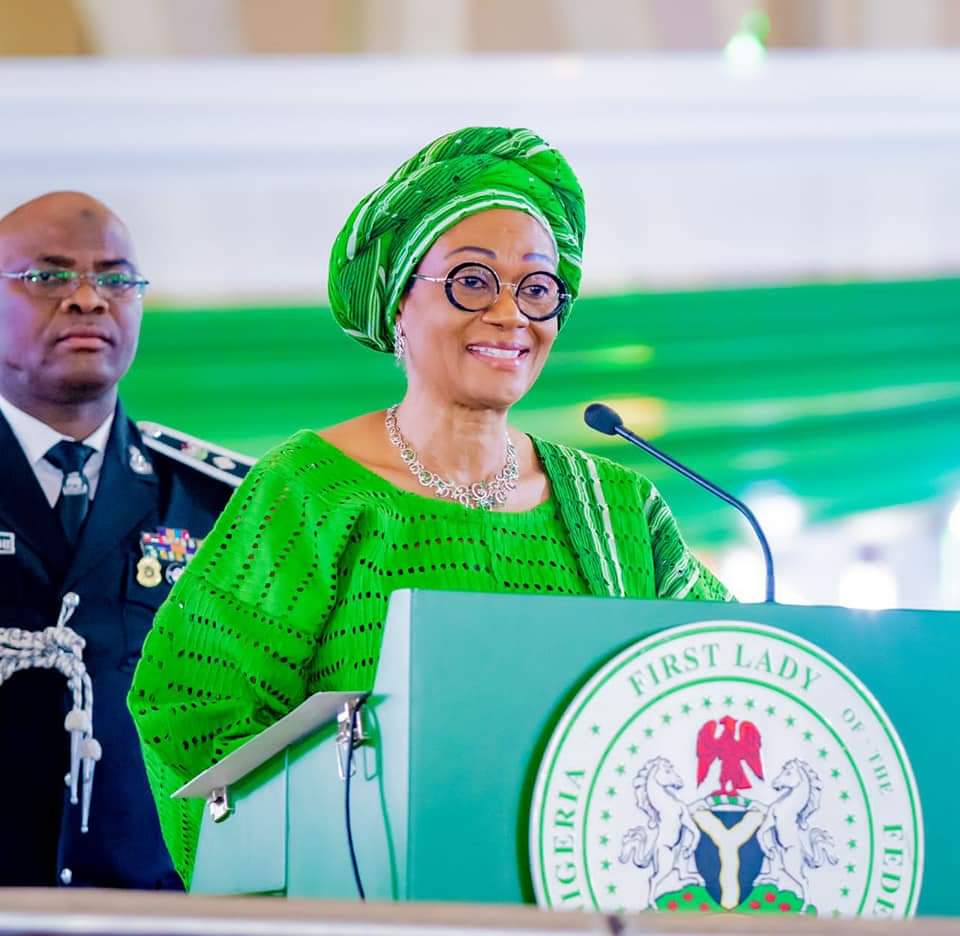
Nigeria’s First Lady, Senator Oluremi Tinubu, has arrived at the Bola Ahmed Tinubu International Conference Centre (BATICC) in Abuja for the All Progressives Congress (APC) Women Stakeholders’ Mobilisation and Empowerment Pre-Inaugural Campaign Roll-Out.
The First Lady arrived at the conference centre on Monday, October 5, for the women-focused political gathering organised by the Women Mobilisation Directorate of the APC Presidential Campaign Council ahead of the 2027 general elections.
The event is themed “Renewed Hope Agenda 2.0: From Reforms to Prosperity,” with the mobilisation message, “One Voice, One Movement, One Choice, One Mandate 2027.”
SEE ALSO: Tinubu Gov’t Does Not Engage, Everybody Is Its Enemy — Ajaero
The gathering is expected to bring together thousands of women from across the country, including women leaders, professionals, entrepreneurs, political stakeholders, community representatives and grassroots organisers.
20,000 women expected
The arrival follows a report published on Sunday, October 4, which said Oluremi Tinubu was expected to lead a major mobilisation of women stakeholders in Abuja.
According to the report, more than 20,000 women were expected to attend the Women Stakeholders’ Mobilisation and Empowerment Pre-Inaugural Campaign Roll-Out scheduled for 8am at BATICC.
The APC Women Mobilisation Directorate has also announced an ambitious target of mobilising 40 million women’s votes for President Bola Tinubu and Vice-President Kashim Shettima ahead of the 2027 presidential election.
Director of the Women Mobilisation Directorate of the APC Presidential Campaign Council, Dr Betta Edu, disclosed the target ahead of the gathering and said the structure was expanding its grassroots mobilisation across the country.
Speaking ahead of the event, a member of the APC Presidential Campaign Council Women Mobilisation Planning Committee, Princess Gloria Akobundu, highlighted programmes including the Nigerian Education Loan Fund (NELFUND), CREDICORP, infrastructure projects, cash-transfer programmes and youth empowerment initiatives.
Akobundu urged women in Imo State and across the South-East to strengthen their mobilisation structures and take the Renewed Hope Agenda message to communities across the region.
She said, “We are calling on our women across the South-East to strengthen their mobilisation and ensure that the message of the Renewed Hope Agenda reaches every community and locality.”

Former Vice President Atiku Abubakar has criticised the Federal Government over the continued exposure of Nigerians to kidnappers, questioning the impact of savings from fuel subsidy removal on national security.
Atiku disclosed this in a statement on Monday while reacting to the abduction of 20 travellers, including prospective National Youth Service Corps (NYSC) members, in Imo State.
He described the abduction as “heartbreaking,” noting that although some of the victims had been rescued, others remained in captivity.
SEE ALSO: Fuel Subsidy: Atiku Showing Symptoms of Desperation — Afegbua
Atiku urged the Federal Government, Imo State Government and security agencies to act with urgency to secure the release of all those still being held.
He also raised concern over more than 70 pupils and students abducted from Mussa and Lassa in Borno State who, according to him, have remained in captivity for months.
“These children must not be forgotten. Their families deserve clear updates, and the public deserves answers,” he said.
The former vice president questioned the government’s handling of insecurity, recalling President Bola Tinubu’s promise that savings from the removal of fuel subsidy would help fund security.
“Yet Nigerians remain exposed to kidnappers on our roads, in our communities and around our schools,” Atiku said.
He said young Nigerians were facing danger at different stages of their lives, from secondary school to university and now while travelling to NYSC camps.
“Young people face danger in secondary school, struggle with unaffordable fees at university, and are now targets on their journeys to NYSC camps. This is a generation being failed at every stage,” he said.
Atiku also criticised the award of what he described as huge pipeline security contracts to politically connected companies, while ordinary Nigerians continue to face criminals.
“The first duty of government is to protect lives,” he stated.
He called for the immediate and safe rescue of every abducted young person and the return of those still unaccounted for.
Atiku also reaffirmed his commitment to building a safer and more affordable Nigeria where young people can create, build and prosper.
“My promise to build a safer and more affordable Nigeria, where young people can create, build and prosper, remains unshakable,” he said.

The Nigeria Revenue Service (NRS) has warned members of the public against a fraudulent recruitment notice circulating on social media and other platforms, purportedly advertising job vacancies with the former Federal Inland Revenue Service (FIRS).
The warning was contained in a public notice signed by the management of the Nigeria Revenue Service on Monday.
ALSO READ: NNPC/Shell Vision First Initiative Impact over 10,000
According to the Service, the fake notice, titled “Federal Inland Revenue Service – FIRS Job Vacancy – Replacement,” claims to be recruiting graduates for a 2026/2027 job replacement exercise and directs interested applicants to submit their curriculum vitae and applications to [email protected].
The NRS stated categorically that the recruitment notice did not originate from the Service and urged Nigerians to disregard it.
The Service also reminded the public that the Federal Inland Revenue Service has been succeeded by the Nigeria Revenue Service, warning that any purported recruitment advertisement issued in the name of FIRS should be treated with caution and independently verified.
“For the avoidance of doubt, the NRS has not authorised or commenced the recruitment exercise referenced in the notice and has not appointed or authorised any individual, agent, consultant or third party to conduct any recruitment exercise on its behalf,” the Service stated.
The fake advertisement had claimed that the purported recruitment was aimed at addressing unemployment and invited Nigerians with qualifications including ND, NCE, first degree and HND to apply.
It also listed requirements such as a NYSC discharge certificate or exemption letter for degree and HND holders, a valid NIN, means of identification, birth certificate or declaration of age, passport photograph, functional phone number and email address.
The fraudulent notice further gave October 24, 2026 as the application deadline and directed applicants to submit their applications through the email address provided.
However, the NRS warned Nigerians not to respond to the advertisement or provide personal and financial information.
The Service specifically advised members of the public not to make payments, disclose sensitive personal or financial information, or submit certificates, identification documents or other documentation in response to the purported recruitment exercise.
The NRS said any genuine recruitment exercise by the Service would be formally announced through its official website and authorised communication channels.
It urged Nigerians to verify recruitment-related information through those channels before taking any action and encouraged members of the public to report suspicious recruitment communications to the appropriate authorities.






JUST IN: Oluremi Tinubu Arrives BATICC for APC Women’s Pre-Inaugural Ceremony Arrives BATICC for APC Women’s Pre-Inaugural Ceremony

‘Nigerians Still Exposed to Kidnappers Despite Subsidy Savings for Security’ – Atiku

NRS Warns Nigerians Against Fake FIRS Recruitment Notice

The Guardian’s Abuja GM Passes On

Global Oil Market Gets Breather from G7 Oil Release

Petrol Tanker Fire Ravages Houses, Vehicles in Calabar

Trump’s Family Unveils New Cryptocurrency Platform

Senate Denies Receiving Petitions Against Tinubu’s Ambassadorial Nominees

Dangote Cement Lights Up Benue Host Communities With CSR Initiatives

Reps Recommend 3-year Jail Term For Aviation minister

Tems Sets New Record On Billboard Hot 100 Chart
