
International News
COP29: Climate Summit Faces Deadlock Over Vague Funding Proposals For Vulnerable Nations

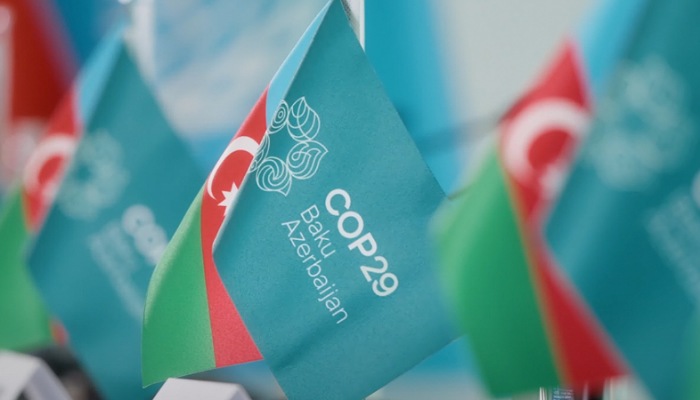
As the 29th United Nations Climate Change Summit (COP29) nears its conclusion, tensions are rising over a newly published funding proposal aimed at assisting developing nations in addressing climate-induced crises.
The proposal, released by the United Nations Framework Convention on Climate Change (UNFCCC) on Thursday, has sparked widespread debate among delegations, activists, and observers at the summit.
The document, spanning ten pages, outlines funding options to support developing countries in implementing their Nationally Determined Contributions (NDCs) under the 2015 Paris Agreement.
READ ALSO: Osun Explains N75,000 New Minimum Wage
However, it fails to specify how much wealthier nations are required to contribute annually—a key sticking point that has drawn criticism from the Global South and climate advocates.
Ambiguity in Funding Commitments
Critics argue that the absence of concrete figures undermines the credibility of the proposed framework.
Mohamed Adow, Founder and Director of Power Shift Africa, described the proposal as “a blank piece of paper,” highlighting the lack of clarity on financial commitments.
“This is the ‘finance COP.’ We came here to talk about money. The way you measure money is with numbers. We need a cheque, but all we have right now is a blank piece of paper,” Adow remarked during an interview.
The Global South, led by African delegations, is demanding at least $1.3 trillion annually by the end of the decade to adapt to climate change impacts and transition to sustainable energy systems.
Yet, developed nations have yet to commit to a specific annual figure, raising concerns over the summit’s ability to deliver tangible outcomes.
Key Provisions and Concerns
The new text acknowledges the disproportionate impact of climate change on developing nations and the financial barriers they face, including high costs of capital and limited fiscal space.
READ ALSO: NNPCL Launches Utapate Crude Oil Blend, Eyes Production Expansion In 2025
It proposes the establishment of a New Collective Quantified Goal (NCQG) for climate finance, suggesting a framework of “at least USD [X] trillion annually” from 2025 to 2035.
However, the absence of defined numbers has led to frustration among negotiators.
David Tong, Global Industry Campaign Manager at Oil Change International, emphasized the critical role of finance in achieving meaningful progress.
“Without finance, there is no phase-out [of fossil fuels], no energy transition, no adaptation. The ambitious options are simply missing,” Tong stated during a press briefing.
Rising Frustration from the Global South
Delegates from the Global South have expressed dissatisfaction with what they perceive as weak commitments from developed nations.
Many fear that without concrete financial pledges, the summit’s outcomes may fall short of expectations.
“This summit is about delivering justice to those who suffer most from climate impacts. Wealthy nations must step up and provide the necessary funding,” said an African negotiator, speaking on condition of anonymity.
A Critical Juncture
With less than 48 hours remaining in the summit, the stakes are high. The COP29 negotiations in Baku, dubbed the “finance COP,” are expected to set a precedent for addressing the financial needs of vulnerable nations.
Delegates are calling on world leaders to finalize an ambitious NCQG target and bridge the growing divide between developed and developing nations.


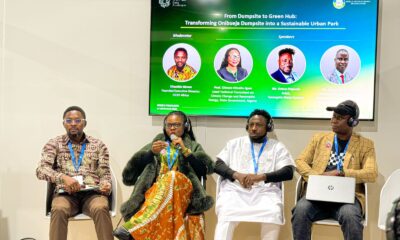



Ferrari’s first fully electric car, the Luce, has made automotive history after a bespoke version of the vehicle sold for a record $40 million at a charity auction in California.
The tailor-made Ferrari Luce “Chassis 0” was sold during Monterey Car Week on Saturday, becoming the most expensive new car ever sold at auction, according to collector car auction company RM Sotheby’s.
The winning bid was 36 times the car’s original estimate of $1.1 million.
SEE MORE: Police Arrest Man For Driving Fake Ferrari In Italy
Ferrari USA celebrated the landmark sale in an Instagram post, saying, “The bids kept climbing. Then, history was made,” while describing the transaction as a new record for the highest-priced new car ever sold at auction.
The sale comes months after Ferrari unveiled the Luce in May. The electric model features a distinctive bubble-like design that differs significantly from the Italian automaker’s traditional angular styling and has received mixed reactions from some Ferrari enthusiasts.
Ferrari previously described the Luce as “a different sort of Ferrari for a different sort of Ferrari client.”
The Luce is powered by four electric motors, with one motor driving each of its four wheels.
The exclusive “Chassis 0” features a pearl-like semi-gloss finish with a personalised pigment that produces changing reflections ranging from green to violet when struck by light.
Its interior is equally distinctive, featuring Perla Le Mans metallic leather and black design elements against a predominantly white background.
Ferrari said proceeds from the record-breaking auction will go to The Ferrari Foundation to support educational initiatives.
Following the auction, the vehicle will return to Maranello, northern Italy, where it was built, before being delivered to the unnamed winning bidder in the first quarter of 2027.
Meanwhile, deliveries of the regular Ferrari Luce, priced at about €550,000 ($640,000), are expected to begin in the fourth quarter of 2026.
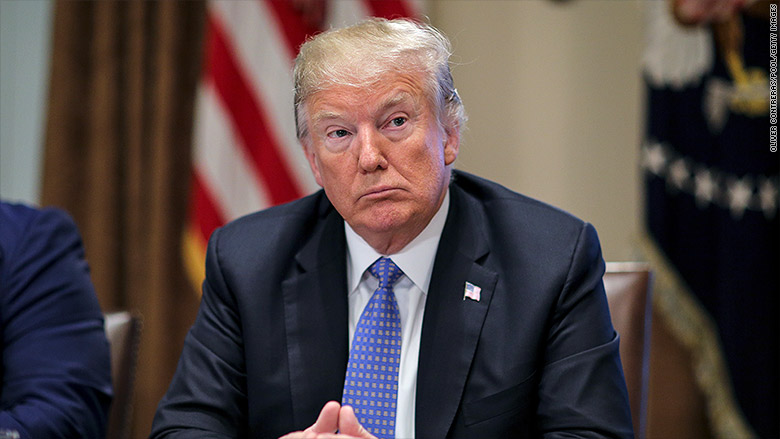
US President Donald Trump has threatened to bomb Oman if the country obstructs efforts to reach a deal with Iran over the Strait of Hormuz.
Trump made the threat on Monday during an interview with Fox News journalist Trey Yingst, amid ongoing discussions between Oman and Iran concerning control and navigation through the strategic waterway.
SEE MORE: Trump Decrees Lower Petrol Prices
“If Oman gets in the way, we’ll bomb the shit out of them,” Trump told Yingst, referring to the talks between Oman and Iran while the United States pursues its own discussions with Tehran.
Iranian and Omani officials have been negotiating for weeks over future maritime navigation arrangements through the Strait of Hormuz. Iran’s foreign ministry said on Monday that both sides were working towards a joint declaration.
The Strait of Hormuz has become a major flashpoint amid the ongoing Middle East conflict. Iran effectively restricted traffic through the waterway at the beginning of the war on February 28, while Trump has repeatedly insisted that the strategic route should be under US control.
On Friday, Trump said he could even declare the Strait of Hormuz part of US territory. Iran rejected the position, insisting that the crucial waterway would “remain Iranian.”
Before the outbreak of the US-Israeli war against Iran, the Strait of Hormuz was regarded as an open international waterway. The route is critical to global energy supplies and carries significant volumes of oil and other commodities.
Iran has used its control over the strait as leverage against US-led efforts to weaken its military capabilities and force Tehran to abandon its controversial nuclear programme.
Trump also called on Iran to surrender, saying Tehran should “put up the white flag of surrender.”
Despite the growing tensions and the political pressure surrounding the conflict ahead of the November midterm elections in the United States, Trump said he was not in a hurry to reach a deal.
He further disclosed that his administration maintains a direct back-channel with officials of Iran’s Revolutionary Guard.
“They’re good poker players, but they’re dying,” Trump was quoted as saying.
Colombia’s outgoing President, Gustavo Petro, has warned that the country could descend into civil war following what he described as widespread fraud in the recent presidential election.
Speaking at a press conference on Monday, Petro claimed that the June presidential runoff was tainted by “algorithmic, systemic electoral fraud” involving a massive number of votes, insisting the results were manipulated against his political ally, Ivan Cepeda.
SEE MORE: Osun Election: Gunmen Invade PVC Centre, Cart Away Voter Cards
“We are facing fraud and an undoubtedly profound institutional problem, namely the inauguration of an illegitimate president,” Petro said.
The outgoing leader alleged that “foreign money and foreign companies with the capacity to manipulate algorithms” interfered in Colombia’s electoral process, accusing external actors of influencing the outcome of the election.
Petro’s remarks come just days before president-elect Abelardo de la Espriella is due to be sworn into office on Friday in the southwestern city of Cali, a departure from the longstanding tradition of holding presidential inaugurations before Congress in the capital, Bogota.
The Colombian leader also claimed that De la Espriella, who received the endorsement of United States President Donald Trump before the election, plans to extradite him to the United States on what he described as false charges.
Warning of the potential consequences, Petro said, “It’s crystal clear what a civil war in Colombia could look like,” arguing that public resistance to the incoming administration’s actions could trigger widespread unrest.
The political crisis has deepened further after the left-wing bloc in Congress, led by Cepeda, announced it would boycott De la Espriella’s inauguration and called for nationwide mobilization against the president-elect.
Observers have also raised concerns that Colombia could witness a return to violent street protests similar to those experienced between 2019 and 2021, which left dozens dead.
Despite having no prior political experience, De la Espriella has pledged to boost private investment, shrink the size of government by 40 percent, and intensify military operations against guerrilla groups and drug cartels as the country battles its worst surge in violence in a decade.
His inauguration is scheduled for Friday amid heightened political tensions and growing uncertainty over Colombia’s future.






FG, NADDC Empower NYSC Members in South-East with CNG Conversion Skills

TotalEnergies Urges Nigeria to Aim for Bankable Projects with Gas Reforms

Shell Reinforces Safety Commitment at CEO Contractors Forum
Lokpobiri Inspects NCDMB Host Community Projects in Bayelsa

Citizens Agitation Threaten Resumption of Oil Exploration in Ogoniland

Osifo Calls for Stronger Regulatory Stability for Oil, Gas Sector

Trump’s Family Unveils New Cryptocurrency Platform

Senate Denies Receiving Petitions Against Tinubu’s Ambassadorial Nominees

Dangote Cement Lights Up Benue Host Communities With CSR Initiatives

Reps Recommend 3-year Jail Term For Aviation minister

Tems Sets New Record On Billboard Hot 100 Chart
