
Business
COVID-19 Loan Beneficiaries Groan As CBN Demands Repayment


The Central Bank of Nigeria (CBN) has announced its intention to begin the process of recovering loans that were extended to Nigerians as part of the Targeted Credit Facilities (TCF) initiative in 2020, aimed at mitigating the economic impact of the COVID-19 pandemic.
However, there is growing apprehension among some recipients of these loans regarding the abruptness of this recovery effort.
One such beneficiary, Fatimah Alli, has voiced her concerns, stating that the sudden initiation of the loan recovery process for her N500,000 COVID-19 loan has exacerbated her existing financial difficulties.
She said “I got a loan of N500,000 in 2020 to cushion the economic effects of COVID-19. At that time, we were assured that we would not be required to repay the money. But recently, all the money in my bank account was removed by the CBN as part of the loan recovery drive.”
Abbas Sule, who benefited from the Targeted Credit Facilities (TCF) initiative, expressed dissatisfaction with what he described as arbitrary deductions from his bank account linked to the loan.
He said “When I was granted the loan facility in 2020, the bank official that processed the release through NIRSAL Microfinance Bank (NMFB) got a commission of N50,000, and I was paid N450,000. Now they want me to repay N500,000; that is not fair,”
As reported by NAN, the NMFB has issued a call for the repayment of COVID-19 loans that were provided to households and business operators across Nigeria.
Reca that in March 2020, the Central Bank of Nigeria (CBN) introduced the N50 billion Targeted Credit Facility (TCF) program to offer support to households and Micro, Small, and Medium-sized Enterprises (MSMEs) severely affected by the COVID-19 pandemic.
These loans were distributed to eligible beneficiaries through the NIRSAL Micro Finance Bank, an institution owned by the CBN. The loans carried an interest rate of five percent and came with a moratorium period that extended until February 28, 2021.
Upon the conclusion of the moratorium period, the interest rate for the facility reverted to nine percent starting from March 1, 2021.
NMFB, on its official X handle, stated: “We have played our part. It is now your turn.”
The microfinance bank disclosed that it had disbursed loans totaling N503 billion to over 881,081 individuals and business operators with the aim of alleviating the pandemic’s impact.
In an advisory to beneficiaries, NMFB emphasized that these funds were not provided as grants and urged recipients to initiate repayment.
They directed, “You are required to visit the nearest NIRSAL branch to obtain a loan repayment schedule, and it is vital to maintain sufficient funds in your loan account.”









Nigeria’s telecommunications space can boast of more than 1,000 fifth-generation network sites in 2026 from one of the top service providers.
The Chief Executive Officer of Airtel Nigeria, Dinesh Balsingh, made the disclosure on Friday in Lagos, pointing out that the telco has been expanding its infrastructure to meet growing demand for faster mobile connectivity and improve service quality across the country.
Balsingh spoke during the launch of Airtel Open Network, a new feature on the My Airtel Africa app that gives subscribers greater visibility into network performance and a digital channel to report service issues.
It was gathered that the expansion forms part of the company’s broader network investment programme, which has taken its total number of network sites beyond 17,000, following the addition of more than 1,050 sites in the last financial year.
READ ALSO: INEC Chairman Assures on 2027 Elections
The deployment comes as telecommunications operators face increasing pressure to improve network capacity and coverage amid rising demand for mobile data, digital financial services and other internet-dependent activities.
According to Balsingh, the company’s infrastructure investments were aimed at extending connectivity and improving the experience of customers who rely on mobile networks for business transactions, education, communication and other daily activities.
“During the last financial year, Airtel Nigeria added more than 1,050 new sites and has surpassed 17,000 sites nationwide. This year, 2026 alone, Airtel has added more than 1,000 5G sites to date, expanding access to high-speed connectivity across the country,” he said.
Alongside network expansion, the operator is introducing digital tools to improve how it identifies and responds to service complaints.
The newly launched Open Network feature allows subscribers to engage with information about their network experience and submit feedback that could help the company’s technical teams identify the location and nature of connectivity problems.
Balsingh noted that conventional complaint channels, including call centres and physical customer service outlets, sometimes made it difficult to obtain sufficiently precise information about network challenges.
He explained that the digital platform would provide more detailed feedback, helping engineers investigate reported problems and direct attention to areas where improvements were needed.
However, he cautioned that the platform would not automatically repair network faults or eliminate service disruptions, describing it instead as an additional channel for gathering information and improving the company’s response.
Airtel is also expanding its physical customer service network, with more than 225 premium experience stores, and plans to increase the number to 500. It operates over 9,000 exclusive shops across local government areas and has more than 73,000 retail agents nationwide.
The launch builds on the company’s deployment of an artificial intelligence-powered spam alert service in March 2025.
Balsingh added that the service flagged more than 9.6 million suspected spam messages within its first two months.

Guinness Nigeria Plc is focused on sustaining growth through wider product availability, commercial expansion and disciplined pricing.
Managing Director and Chief Executive Officer, Guinness Nigeria, Girish Sharma made the disclosure in an interview with CNBC Africa, in which he outlined the priorities expected to shape the company’s performance in the coming quarters.
According to Sharma, the company would keep focusing on making its products more accessible to consumers while strengthening its presence across markets and distribution channels.
“The strategy has always been growing by being available at more places, having our beer, having our products cold in a lot of places and ensuring that we are playing at the right price points,” he said.
READ ALSO: Osun Tackles Sanitation with Adhoc Road Sweepers
Sharma explained that the company’s approach was centred on expanding its reach rather than relying on price increases to drive growth.
He said Guinness Nigeria had increased the number of locations and cities in which its products were available, alongside growth in its distributor network.
He maintained that the company’s commercial expansion is part of a longer-term plan that will continue over the next three to five years.
“In terms of number of touch points where we’re available to the Guinness Nigeria products, number of cities where we’re available today, number of distributors that we have that distribute our products today, on every single count we have grown multi-fold,” Sharma said.
He described the expansion as a significant undertaking for the business, noting that the effort began with his first 100-day plan and remains a key part of the company’s direction.
Sharma also pointed to operational discipline and improvements made over the past year as important foundations for the business. He said earlier decisions to address the balance sheet, adjust pricing and make fundamental corrections were now supporting the company’s growth trajectory.
He added that teams across operations and procurement were working to keep price increases to a minimum while increasing output, while a more stable currency environment had also been helpful.
Looking ahead, Sharma said the company would focus on maintaining consistency rather than promising a particular growth rate for the next quarter.
“I’m not here to stand and say that we’re going to do better than the third quarter, but what I see is we will be consistent in terms of delivering healthy results,” he said. “Consistency is the word.”
He also highlighted the importance of the final quarter of the year to the beverage industry, citing increased consumer activity around the festive season. Guinness Nigeria, he said, had strategic partnerships planned across the period, with some extending into the first quarter of the following year.
Sharma said the company’s broader ambition was to build a stronger business capable of funding its growth, rewarding shareholders and sustaining performance over time.
“The business is sturdy, business is strong, business is good, and I’m confident that we will continue to grow sustainably,” he said.
His comments underline Guinness Nigeria’s focus on extending its market reach, strengthening execution and building consistency as it pursues its longer-term growth ambitions.
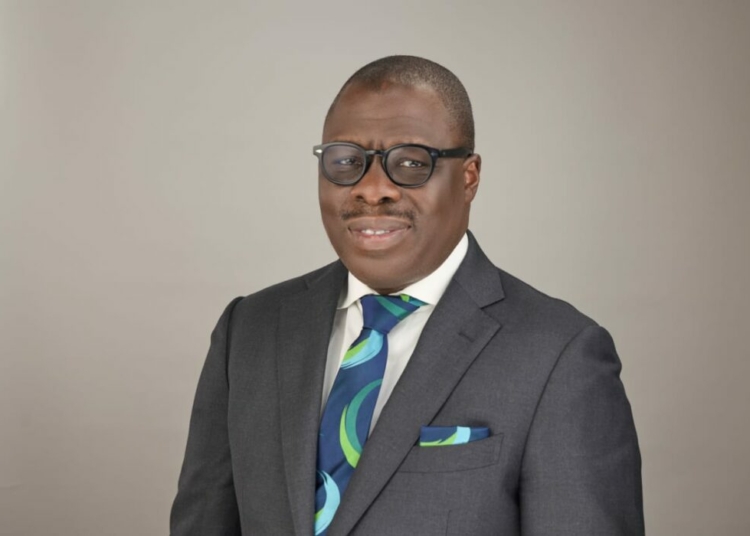
Nigeria must be surefooted to attract the right investment to harness her full potential in the oil and gas industry.
At the 32nd Nigerian Economic Summit (NES) during a panel session titled, “Unlocking Nigeria’s Oil Potential: The Push for More Oil”, in Abuja, the Managing Director and Chief Executive Officer of NLNG, Adeleye Falade, decried the lack of certainties in the investment environment in Nigeria’s oil industry.
He traced Nigeria’s inability to attract sufficient financing for major oil and gas projects to uncertainties over investment terms, project execution and guaranteed markets for output.
According to Falade, investors and lenders must be confident that contractual agreements will be honoured, projects will deliver as planned and buyers will be available to purchase production before committing billions of dollars to capital-intensive energy developments.
READ ALSO: OTL Africa Urges ECOWAS to Adopt Regional Standardisation
He cited the financing of NLNG’s Train 7 expansion as evidence that investment certainty, a proven delivery record and credible commercial agreements could unlock substantial funding, even under challenging global economic conditions.
Falade explained that projects requiring huge upfront capital and 20 to 30 years to recover investments depend on confidence that the terms underpinning them will remain stable throughout their lifespan.
According to him, lenders assess not just the quality of an oil or gas resource but also the durability of the investment framework, the predictability of future earnings and the capacity of project sponsors to meet their obligations.
Falade pointed to the $3 billion in external financing secured from 31 local and international financial institutions for Train 7 in 2020, at the height of the COVID-19 pandemic, as proof of the importance of a credible investment proposition.
The project is being financed through a combination of internally generated cash flows and external funding, underpinned by NLNG’s record of developing six operating trains and repaying the loans used to finance their construction.
He said that track record gave lenders tangible evidence of the company’s capacity to execute complex projects and honour financial commitments, reducing the uncertainty that often discourages investment in capital-intensive developments.
He noted that each successful expansion strengthened NLNG’s credibility and positioned it to secure subsequent financing on more competitive terms.
He identified three fundamental questions that lenders seek answers to before financing major energy projects: “Who buys the product? Who carries the risk? Who stands behind the project?”
For NLNG, he said, long-term sales and purchase agreements, some spanning 20 years, provide the commercial foundation required to secure funding before a final investment decision is taken.






Nigeria Gets More 1,000 5G Sites, Courtesy Airtel

INEC Chairman Assures on 2027 Elections

Tinubu Hails EFCC as FBI Commends Nigeria Over International Child Sextortion Crackdown

Atiku Raises Alarm Over Attacks on Sowore, ADC Governorship Candidate, Accuses APC of Intimidation

ADC Accuses Tinubu of Using N50,000 Cash Relief to Woo Voters Ahead of 2027
FRSC Begins Five-Day Nationwide Crackdown on Fake, Obsolete Number Plates

Trump’s Family Unveils New Cryptocurrency Platform

Senate Denies Receiving Petitions Against Tinubu’s Ambassadorial Nominees

Dangote Cement Lights Up Benue Host Communities With CSR Initiatives

Reps Recommend 3-year Jail Term For Aviation minister

Tems Sets New Record On Billboard Hot 100 Chart
