
NEWS
Crude Races Towards $100 as US Steps Hard on Iran

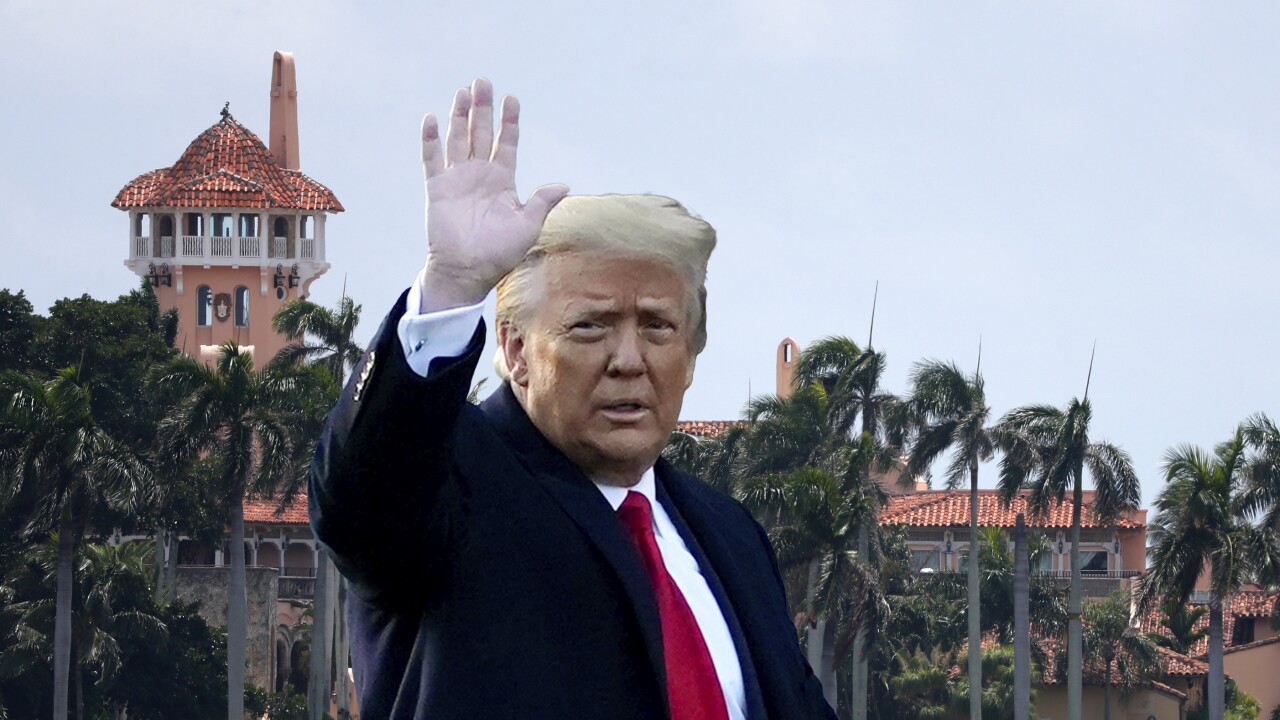
Renewed tensions in the Middle East have seen crude prices push towards $100 per barrel riding on the back of US sanctions and a blockade of Iranian oil exports, which have escalated the Asian country’s economic woes.
Consequently, the Brent crude, the international benchmark, climbed to $97 per barrel on Thursday before declining to $95.50, as reported at Oilprice.com.
On its part, Reuters reported that the surge in oil prices came as Washington intensified its campaign to cut off Iran’s access to international financing and prevent the country from circumventing sanctions.
Three senior Iranian sources reportedly told Reuters that the latest measures were proving increasingly difficult for Tehran to withstand, with the country facing dwindling channels for securing foreign currency and importing essential goods.
READ ALSO: Dangote Investments are Catalysts for Africa’s Economic Growth – AFC
The pressure has also severely affected Iran’s oil exports.
Iranian crude loadings have fallen to about 260,000 barrels per day this month, from around 1.7 million bpd a year earlier, according to commodity analytics firm Kpler.
The development has raised fresh concerns over the impact of the sanctions on global oil markets, particularly as the conflict has disrupted energy supplies and shipping through the Strait of Hormuz.
While some energy continues to flow through the strategic waterway, the US blockade of Iranian oil exports has effectively cut off Tehran’s main source of revenue, Reuters reported.
Iran’s economic problems have been compounded by a sharp collapse in its currency and accelerating inflation. The rial has fallen from about one million rials to the dollar a year ago to more than 2.2 million rials currently.
Official figures put Iran’s 12-month average inflation at 69.9 percent, while prices of food, beverages and tobacco have risen at nearly twice that rate.
The squeeze has also affected Iran’s ability to maintain its sanctions-evasion networks, with front companies, unregistered tankers and smuggling operations becoming increasingly expensive.
The country’s trade has fallen by between 25 and 35 percent, with imports hit harder than exports, Iranian President Masoud Pezeshkian said.
The United Arab Emirates (UAE) has also disrupted a major channel for Iranian commerce, announcing on 19 August that all commercial exchange and financial dealings with Tehran had been halted until further notice.
These have plunged Iran’s domestic fuel situation into some sort of turbulence.
One senior Iranian source told Reuters that the country has only about two months’ supply of petrol, which it needs to import despite its domestic oil production because of limited refining capacity.
The deteriorating economic conditions are also placing severe pressure on Iranian households. Average monthly salaries are estimated at about $125, compared with basic household spending requirements of roughly $450, according to official data.
The economic squeeze comes as fighting between Iran and the United States has intensified, with attacks and retaliatory strikes raising fears of further disruption to oil supplies and shipping.
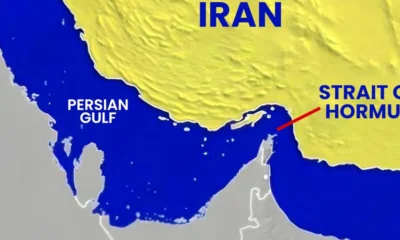










The Secretary to the Adamawa State Government, Awwal D. Tukur, has identified intelligence gathering, timely information sharing and proactive security strategies as key priorities for tackling Nigeria’s evolving security challenges.
Tukur stated this while delivering a welcome address on behalf of Governor Ahmadu Umaru Fintiri at the opening ceremony of the Federal and State Security Administrators’ Meeting in Yola, Adamawa State on Thursday.
Welcoming delegates to the state, he said, “It is my honor and privilege to welcome you all on behalf of the government and the good people of Adamawa State to the capital city of Yola for this federal and state security administrators’ meeting.”
He described the gathering as an important platform for collaboration between federal intelligence institutions and state and local government administrations.
ALSO READ: ASUU strike: We are losing students to incessant killings — Students union
“As a premier security engagement forum, the FSSAM plays an indispensable role. It provides a unique, highly collaborative platform where federal intelligence frameworks meet the practical day-to-day realities of state and local government administration,” Tukur said.
The Adamawa SSG noted that Nigeria faces evolving security challenges, including insurgency, cross-border criminality and internal civil cleavages.
“No doubt, our nation is facing evolving and fast-moving security challenges, ranging from complex insurgency and cross-border criminality to internal civil cleavages. The mandate of this initiative is therefore, the more pressing,” he said.
Tukur outlined three key tasks for participants during the two-day meeting, stressing the need to identify emerging threats, improve intelligence sharing and develop practical strategies to address security challenges.
“To my mind, the collective task of this forum over the next two days is clear,” he said.
He listed the priorities as identifying and evaluating emerging security indicators; reviewing methods for generating actionable intelligence and sharing it with relevant authorities in a clear, precise and timely manner; and proposing practical strategies to anticipate and contain present and future security threats within communities.
Tukur also highlighted Adamawa State’s efforts to prioritise intelligence gathering under Governor Fintiri’s leadership.
“Under the dynamic and visionary leadership of His Excellency, Governor Ahmadu Umaru Fintiri, Adamawa State has consistently prioritized intelligence in the sector. Community-centered intelligence networks and robust logistical support for our security formation,” he said.
He added that hosting the meeting reflected the state’s commitment to supporting national security efforts.
“Host of this meeting reflects the test part of the commitments on unwavering commitment to contributing meaningfully to the national security architecture,” Tukur said.
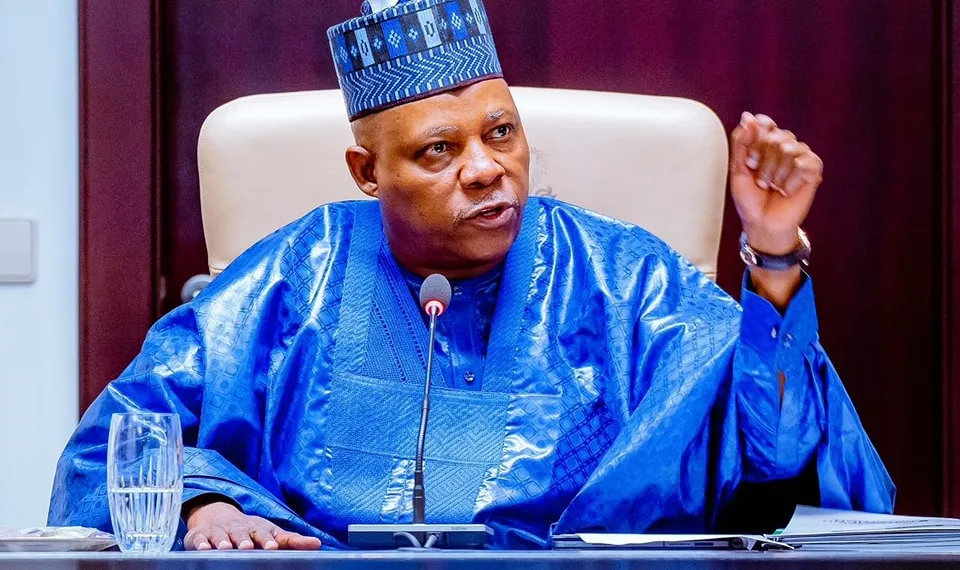
Vice President Kashim Shettima has urged Nigerians to celebrate President Bola Tinubu, saying his leadership saved the country from a potential implosion.
Shettima said Nigeria’s economy had been teetering on the edge of collapse before Tinubu’s intervention, adding that the country could have faced a different situation.
“The economy was teetering on the edge of collapse, we were on a cliff edge,” the Vice President said.
ALSO READ: Subsidy Removal, FX Reforms Driving Fresh Oil Sector Investment – Shettima
“So he literally saved the nation from an implosion. That could have been the scenario. So, instead of demonizing him, Nigerians ought to celebrate this poor man.”
Shettima also called for a return to the drawing board, expressing confidence in the leadership’s commitment and the prospects for the 2027 elections.
“I believe on the bottom of my heart that with this presentation I have seen, and with the commitment of our leadership, by the grace of God, we are going to win,” he said.
Speaking about the 2027 elections, the Vice President reminded his audience that social media platforms should not be mistaken for actual polling stations.
“There are no polling stations on Facebook or Instagram,” he said.
Shettima also expressed gratitude for the efforts made towards promoting the cause of the 2027 elections.
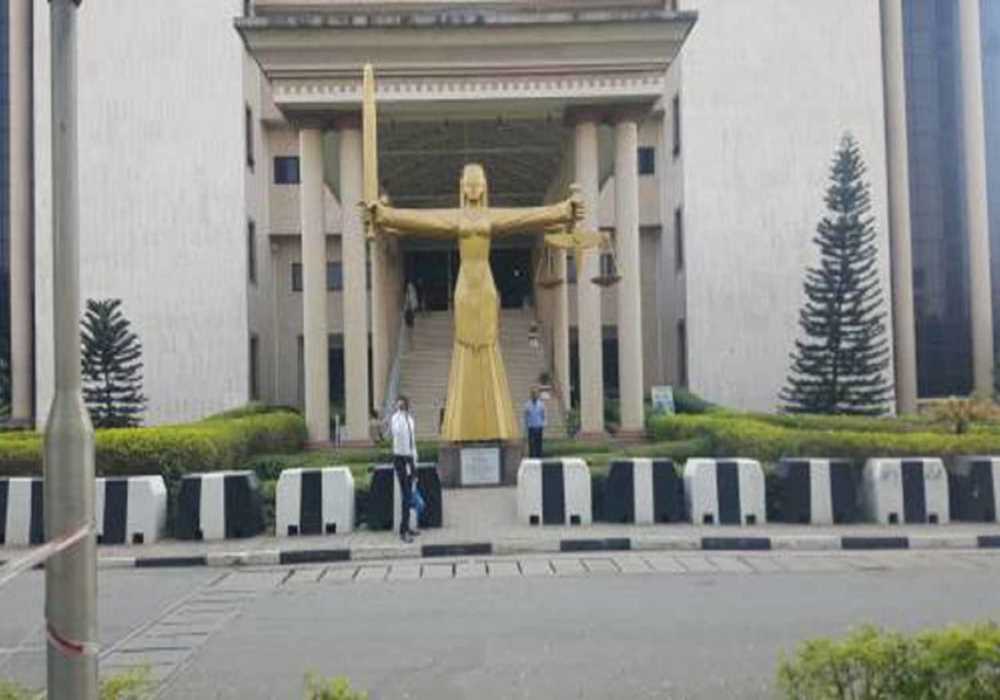
Following observed mis-steps, the Federal Government of Nigeria has withdrawn the eight-count criminal charge brought against the alleged fake Director General (DG) of the Presidential Foreign Intervention Promotion Council (PFIPC), Adeniyi Adeyemi.
Biztellers reports that the matter, in accordance with the counsel of the Attorney General of the Federation (AGF) and Minister of Justice, Prince Lateef Olasunkanmi Fagbemi, (SAN), the matter will be filed at the High Court of the Federal Capital Territory (FCT), instead of the Federal High Court (FHC).
Consequently, upon an unopposed application for termination by the prosecution counsel and Director of the Public Prosecution of the Federation (DPPF), Rotimi Oyedepo (SAN), on Monday, Justice Mohammed Umar of a Federal High Court, Abuja on Monday, struck out the matter.
READ ALSO: Shell Identifies Keys to Nigeria’s Energy Future
In a motion for the termination of the charges, Oyedepo informed the court that the Attorney General of the Federation (AGF) and Minister of Justice has carried out a review of the case file of Adeyemi and the charge filed by the Inspector General of Police (IGP) and found some loopholes.
The DPPF added that the documents allegedly forged by Adeyemi during his operations of the fake agency are those that can be prosecuted by the High Court of the Federal Capital Territory (FCT).
He also informed the court that a new charge has been filed at the High Court of the FCT and that Adeyemi would be expeditiously arraigned afresh.
He therefore urged the judge to strike out the charge as required by law.
Following no objections from Ibrahim Angulu (SAN), who stood in for Adeyemi, Justice Umar subsequently terminated the charge.
Adeniyi, 38, was being tried alongside two others whose whereabouts are unknown, on charges bordering on conspiracy and forgery.
The two others said to be at large were identified as Femi (surname unknown) and Anu (surname unknown).
The charge marked: FHC/ABJ/CR/25/2025, was entered against the defendant by the DPPF.






Atiku Launches ‘Ask AA’ Portal, Invites Nigerians to Question His Record
Adamawa SSG Identifies Three Priorities for Tackling Nigeria’s Security Challenges

Ebonyi 2027: Gov Nwifuru Jittery Over My Candidacy, Violating Constitution — Odii

Small Investors Take Centre Stage as Dangote IPO Nears Close

Sahara Champions Global Shipping Collaboration for $20m Mercy Ships Healthcare Impact

30 Nigerians Bag Postgraduate Scholarship from NNPC Ltd, Eni

Trump’s Family Unveils New Cryptocurrency Platform

Senate Denies Receiving Petitions Against Tinubu’s Ambassadorial Nominees

Dangote Cement Lights Up Benue Host Communities With CSR Initiatives

Reps Recommend 3-year Jail Term For Aviation minister

Tems Sets New Record On Billboard Hot 100 Chart
