
Energy
CSR: NCDMD Donates ICT Centre To Sec Sch In Oyo State


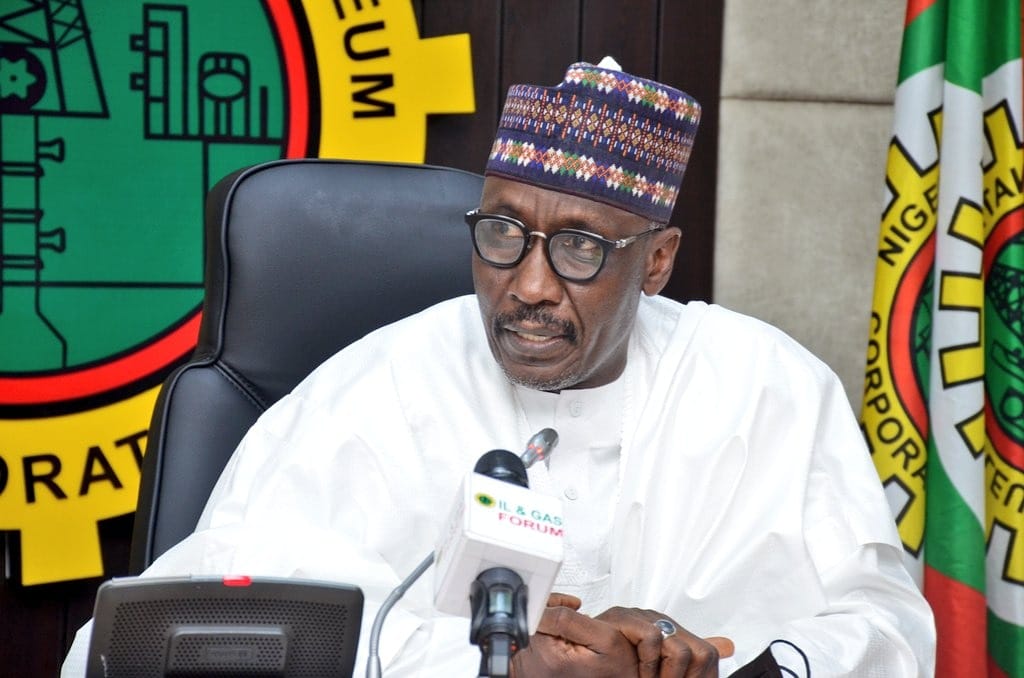
In line with its corporate social responsibility (CSR) policy, the Nigerian Content Development and Monitoring Board (NCDMB) made a donation of an Information Communication Centre to Community Secondary School Badeku, Ona Ara Local Government Area in Oyo State.
The project was commissioned and handed over to the school on Monday, according to information put on the verified X handle of the NCDMB.
During the handing over, the Executive Secretary, NCDMB, Engr. Simbi Kesiye Wabote, noted that the project was in line with “the Board’s mandate of promoting local capacity and building Human Capacity in the oil and gas sector”.
Engr Wabote was represented at the event by the General Manager, Corporate Communications and Zonal Coordination, NCDMB, Madam Angela Okoro.
In a series of tweets, the Board charged the management of the school to protect the facility and make the best use of the equipment.
Manager, Zonal Coordination, NCDMB and other staff of the Board also graced the event.




The attack on Saudi Arabia’s key crude oil pipeline, which led to closure and the disruption of a crucial route for avoiding the Strait of Hormuz during the US-Iran war, have pressured the global market into higher prices.
Consequently, the Nigerian oil and other major oil contracts moved northward and Brent gained as high as 3.7% to more than USD 108 a barrel.
Bonny Light traded above $115 per barrel over the weekend on macro energy strength/grand-dated Brent proxies. Light, sweet Nigerian grades maintain a healthy-to-positive quality premium over heavy/sour peers amid continued European and Mediterranean refinery appetite for low-sulfur yield.
READ ALSO: DPRP IPO: Dangote Rings Opening Bell at NGX
However, regional freight and prevailing prompt liquidity fluctuations impose a ceiling. Price metrics remain highly sensitive to macro geopolitical risk cues (Middle East supply concerns lift benchmark Brent into the $107/bbls territory).
The Nigerian National Petroleum Company Limited (NNPC Ltd) would be deploying between 50 and 70 smart, self-service filling stations across the country within the next six months.
The Executive Vice President, Downstream, NNPC Limited, Mumuni Dagazau, made the disclosure on Thursday in Abuja while speaking at the commissioning of a technology-driven service station with an electric vehicle charging facility.
READ ALSO: DPRP Uses Court to Restrain NMDPRA from Meddlesomeness
The initiative, he added, is part of a broader plan to transform its conventional retail outlets into modern energy and mobility hubs offering petrol, electric vehicle charging, liquefied petroleum gas, compressed natural gas and other services.
It was gathered that a model of the mega station is located along Bill Clinton Drive, Airport Road, Abuja.
Dagazau noted that the newly commissioned station was the first of several smart outlets to be introduced nationwide, adding that the concept was aimed at moving beyond traditional petrol retailing to provide customers with multiple energy and mobility services at a single location.
He said, “This is the first of many smart stations that we are going to have around the country. What the whole concept is, we are trying to turn from a filling station to an energy hub, and we are rolling out a lot of stations. I think even in Abuja, for this type of station, we have about four or five. We have another two that we’re launching out in Kano. This sort of smart stations that we’re doing.
“We are hoping to roll out a significant number, probably about 50 to 70 of these types of stations within the next six months. So this is what you’ll be seeing going forward from NNPC.
“So what you see here is that we are using all sorts of energy available to us, including EV, electric energy. We are going to be using gas; we are going to be using petrol. So it’s a centre where you can come, and we are going to be calling it our energy hub.”
The new model will allow customers to dispense petrol themselves, including at night, through a digital payment system, although attendants will remain at the stations to assist customers.
Dagazau dismissed concerns that the introduction of self-service pumps would result in job losses, arguing that the expanded services would require more workers to operate and support the technology.
“Well, you saw all of the pumps have attendants. So I really don’t know what they’re talking about when it comes to jobs. What NNPC does is create jobs. What this does is create a job.
“You have an energy hub today. If you look at the average filling station and you look at the energy hub, you’ll find more people in the energy hub than you would find in the filling stations, right? So what we are doing is creating jobs for that. Somebody has to support the integration.
“Somebody has to support the automation. The EVs, we have to be here to support people. So nothing really changes for us. What we’re doing is just what the delivery to the customer is. The guarantee, the comfort of the customer, that’s really what we’re after. That’s what the smart delivery is all about.”
On his part, the Executive Director, Retail Operations and Mobility, NNPC Limited, Shettima Baba-Kukawa, said the Abuja station had a storage capacity of 180,000 litres of Premium Motor Spirit (PMS) and 45,000 litres of Automotive Gas Oil (AGO).
The facility has 16 PMS pumps, two AGO pumps and six electric vehicle charging points installed in partnership with African Motor Works. It is powered entirely by solar energy through a system with a capacity of more than 200 kilowatts.
Baba-Kukawa said the outlet would also feature a quick-service restaurant, coffee shop, automated car wash, modern service bay and LPG dispensing facilities, while CNG and a vehicle conversion centre were also planned.
He said, “The station is going to run 24 hours. And it is fully self-service. So for customers who want to trust themselves and dispense themselves, they can actually do that. Transactions are done on their phone app and concluded by dispensing the exact amount of fuel they purchased into their tanks.”
Despite the digital system, he said customers unable to use the application would not be excluded, as staff would be available to assist them.
Dagazau also disclosed that the NNPC Ltd had begun plans to modernise its existing stations, stressing that the company was responding to changing customer expectations.
He said, “We’re going to modernise our station. That’s the word that we’re going to say.
“You don’t want to be going into the same station every day, every day, every day. You are demanding, so our modernisation is a demand from what the customer wants. The customer deserves a better quality of service, and we are delivering that quality of service.”
He said the company hoped that most of its stations would eventually adopt the new model, although the pace would depend on customer demand and the investment required.
Similarly, the Managing Director, NNPC Retail, Huub Stokman, said the transformation was necessary as the downstream petroleum market evolved following deregulation and the commencement of operations at the Dangote Refinery.
He said consumers were increasingly demanding quality products, competitive prices, faster services, digital payments and alternative energy options such as EV charging and CNG.
“Above all, especially the younger generation, they want us to deliver it sustainably, hence the fact that you also see that this station is completely solar-powered,” Stokman said.
In a goodwill message at the commissioning, the Comptroller-General, Nigeria Immigration Service, KN Nandap, commended the NNPC Ltd for combining conventional fuel retailing with electric vehicle charging and other modern services.
Nandap said the facility reflected Nigeria’s growing adoption of technology, cleaner energy and smart mobility, adding that such investments could create opportunities for employment, skills development and industrial growth.
The development comes as Nigeria’s downstream sector undergoes significant changes, with deregulation, increased domestic refining capacity and the emergence of alternative fuels reshaping how petroleum products are sold and consumed.
The NNPC Ltd said its smart-station programme was intended to position its retail network for the changing market by combining conventional fuel sales with cleaner energy, digital services and other consumer-focused offerings.
The Dangote Group’s upstream subsidiary, West Africa Exploration and Production Company (WAEP) is stepping up efforts to unlock more than 1.6 billion barrels of oil in place across its Nigerian assets, while targeting sustained production and gas monetisation within the next 24 months.
The company’s Managing Director and Chief Executive Officer, Olajumoke Cecilia Ajayi, said WAEP had adopted a phased strategy to revive production from its brownfield assets, generate early cash flow and reinvest the proceeds in wider field redevelopment.
Speaking at the AOW Energy Conference in Accra, Ghana, during a session titled “The Future of the African Operator: Building the IOCs of Tomorrow,” Ajayi said the company’s Oil Mining Leases 71 and 72, previously operated by Shell, represented a substantial resource opportunity, with more than 1.6 billion barrels of oil in place and about 1.9 trillion cubic feet of gas, based on discoveries to date.
The session, which also featured Olumide Ogunfowora, Adegbola Adesina, Temitope Edun and Uduakobong Equere, examined how African owned exploration and production companies can develop the technical, financial and institutional capacity required to compete at scale and take a larger role in the continent’s upstream industry. Ajayi, who is also President of the Nigerian Association of Petroleum Explorationists (NAPE), later moderated a separate session, “The Nigerian Upstream Opportunity: Unpacking Nigeria’s Basins.”
For WAEP, she said, the immediate priority is to extract value from existing production opportunities while building the foundation for long term redevelopment. “The first thing is to look at the low hanging fruit, the short term oil gains, generate cash flow from that, put it back into the assets and start redevelopment. And that’s exactly what is happening currently,” Ajayi said.
READ ALSO: President Faye Commends Sahara’s Commitment to Senegal’s Energy Security
The strategy is already moving into the execution phase as Ajayi noted that WAEP had signed contracts for three jack up rigs, with drilling expected to begin in December as the company seeks to increase production and unlock additional value from the OML 71 and OML 72 portfolio. “We will be drilling to ramp up production and also bring out the value in the asset,” she said. The drilling campaign is being supported by six field development plan studies currently under way, which Ajayi said would provide the basis for a series of “back to back developments” across the portfolio.
The combination of near term production opportunities, development drilling and field planning is expected to create a pipeline of activity beyond the initial drilling campaign. A potentially significant element of WAEP’s strategy is its relationship with Dangote Petroleum Refinery and Petrochemicals, which Ajayi identified as a potential domestic market for the company’s crude.
“One of the shareholders, one of the partners on this asset, is the owner of the largest refinery in Africa, Dangote Petroleum Refinery and Petrochemicals. So the oil would definitely be needed by the refinery,” she said.
The relationship could strengthen the link between Nigerian upstream production and domestic refining at a time when the country is seeking to retain more value from its crude within the domestic energy system.
Ajayi said WAEP was also working towards establishing a dedicated terminal to support crude evacuation as production increases. The proposed terminal could potentially serve not only WAEP but other producers seeking to aggregate and evacuate crude, creating an additional commercial opportunity around the company’s infrastructure.
Ajayi said the evolution of African independent operators would ultimately depend on their ability to transform asset ownership into sustained production and value creation. For companies taking over mature or brownfield assets from international oil companies, she said, the challenge extends beyond reserves and licences to include technical expertise, capital deployment, operational discipline and the ability to sustain production.
That capability, she said, was central to WAEP’s strategy. “We need to put round pegs in round holes. We need to put the right skill and competence in the different units,” Ajayi said. She said the company had been deliberate about strengthening its technical and organisational capabilities as it prepares for the next phase of development.
Within the next 24 months, she expects the company to have significantly ramped up production while putting gas monetisation infrastructure and arrangements in place. “Between now and the next 24 months, gas monetisation would have been in place. We would have ramped up production consistently,” she said. “Not produce today, tomorrow you are down. Consistent, sustained production.”






Dangote Refinery IPO: Why Nigerians Are Being Urged to Own a Stake in Oil Business — Madaki Ameh

2027: ‘Let Tinubu Finish the Good Work’ — Oba of Benin Backs President

Shettima Returns To Nigeria After High-Stakes BRICS Summit In India
Tension in Sokoto as Govt Shuts Mosque After Cleric’s Stabbing

Africa’s Biggest IPO: Dangote Promises Strong Returns, Generational Wealth for Investors

Saudi Pipeline Disruption Pushes Nigeria’s Crude Beyond $115/barrel

Trump’s Family Unveils New Cryptocurrency Platform

Senate Denies Receiving Petitions Against Tinubu’s Ambassadorial Nominees

Dangote Cement Lights Up Benue Host Communities With CSR Initiatives

Reps Recommend 3-year Jail Term For Aviation minister

Tems Sets New Record On Billboard Hot 100 Chart
