
Energy
NNPC Ltd Will Use Gas To Trigger Nigeria’s Industrialisation, Economic Devt. – EVP Upstream, Eyesan

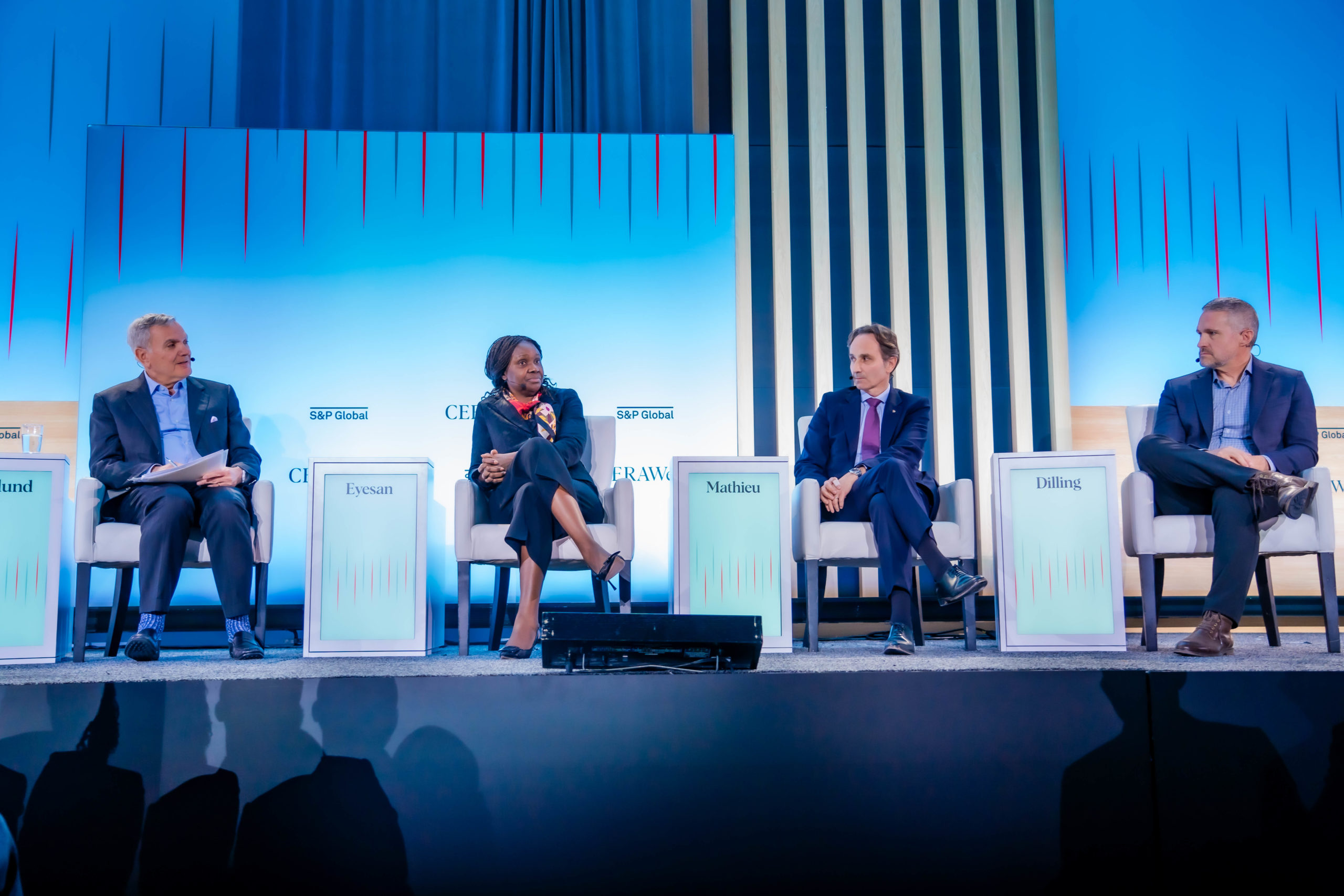
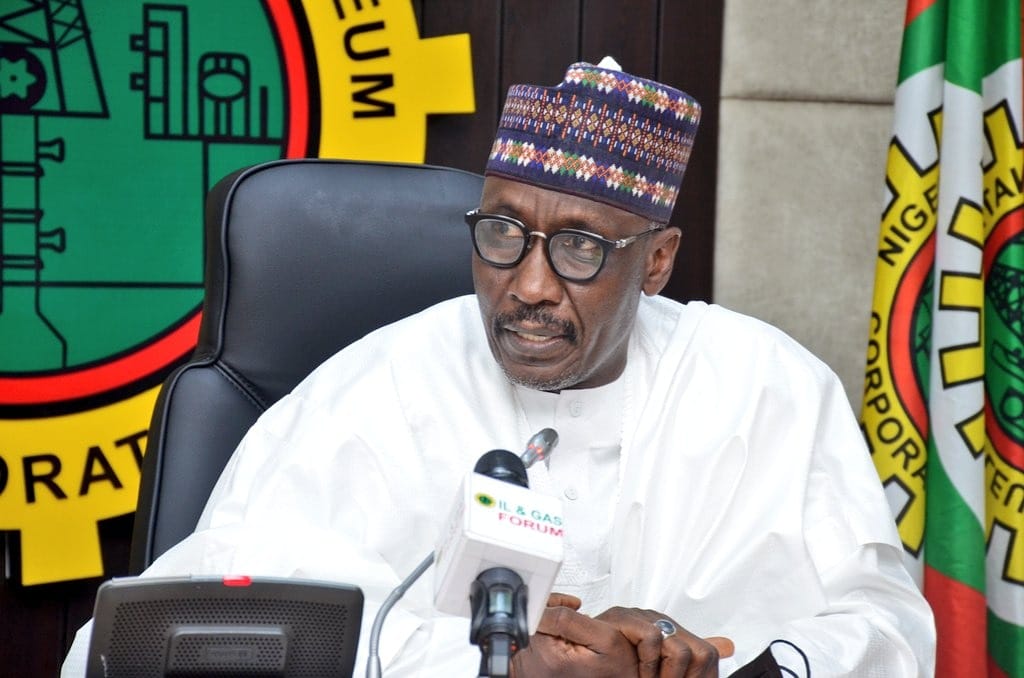
The Nigerian National Petroleum Company (NNPC) Ltd has reiterated commitment towards utilizing Nigeria’s abundant gas resources to trigger Nigeria’s industrialisation and economic development.
The company’s Executive Vice President, Upstream, Oritsemeyiwa Eyesan disclosed this during a Panel Session at the ongoing 2024 CERAWeek Conference in Houston, the United States on Tuesday.
At the session, which addressed the theme, “What are the Choices for Upstream Strategies?”, Eyesan said Nigeria was a predominantly gas-rich country which boasts of over 200TCF of gas that can be leveraged for the industrialisation and economic development.
She noted that NNPC Ltd was poised to deepen gas utilization domestically for industrialization and ensuring that the entire country embraced optimal use of the resource.
She said the company was vigorously opening avenues for infrastructural gas development through various gas projects spread across Nigeria.
In her words, “Our focus is how do we move from predominantly oil player to gas player and not just for gas for the sake of gas but gas for power generation and for industrialization.”
According to Eyesan the NNPC Ltd is also focused on emission reduction and gas flare-out.
“We want to capture all gas flared, utilize it and for domestic use and ultimately, increase our energy transition footprints,” she added.
On strategic thrust, Eyesan explained that the “NNPC is keying into the government agenda of using gas as a transition fuel and for us, we want to ensure not only the domestic gas market, but we also expand that to the region and internationally.”
While calling on African countries to collaborate with one another in order to ensure even distribution of energy resources, Eyesan identified collaboration as key because not all countries within the sub-region are endowed with equal proportion of energy resources.
“For us to ensure that we continue to subsist within the sub-region, we must be willing to work collaboratively and ensure that there is even distribution of energy resources we have across the sub-region,” she pointed out.
On energy transition, Eyesan stated that the subject evolved over the years, noting that for Sub-Saharan Africa, the narrative had been on how to address the energy poverty issue. She opined that for Nigeria, the NNPC Ltd. would continue to look at areas of her competitive advantage to define the strategy.
Other energy experts on the panel were the Chief Upstream Strategist, Energy, S&P Global Commodity Insights, Bob Fryklund; President of Pathways Alliance, Kendall Dilling and the Executive Vice President, Exploration and Production International, Equinor, Philippe Mathieu.





There are indications that the Nigeria-Libya Gas Pipeline would go from the drawing board to reality, as it has emerged as a major option to help Nigeria break into new markets for her gas reserves.
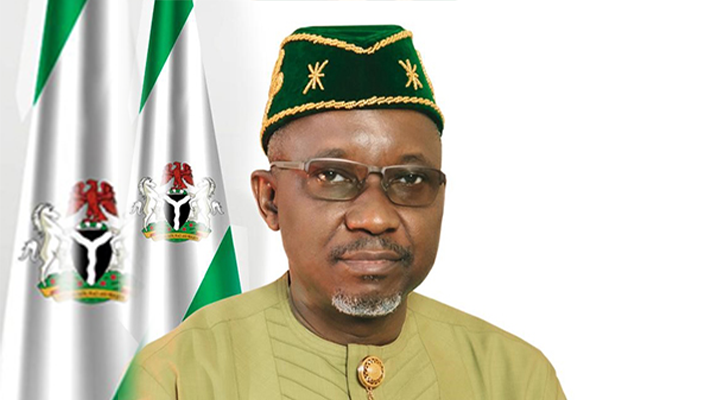
The Minister of State for Petroleum Resources (Gas), Ekperikpe Ekpo, disclosed this at Gastech 2026 in Bangkok, Thailand, during a high-level engagement with global energy companies, investors and governments on expanding Nigeria’s gas production, infrastructure, domestic utilisation and export markets.
The renewed push for the Nigeria-Libya pipeline topped the agenda for the meeting between Ekpo and Libya’s Minister of Oil and Gas, Dr Khalifa Rajab Abdulsadek.
Under the proposed framework, Nigeria and Libya are expected to explore a Memorandum of Understanding (MoU) and establish a joint technical team to assess the feasibility, financing, infrastructure requirements, security considerations and commercial viability of the project.
READ ALSO: ‘Obi Has Nowhere to Hide’ — APC Campaign Council Tackles Peter Obi Over Anambra Record
The NNPC Limited is expected to spearhead Nigeria’s participation in the bilateral initiative. If developed, the pipeline would provide another potential route for transporting Nigerian gas through North Africa to European markets, giving Nigeria an additional platform to monetise its gas resources beyond existing LNG channels.
According to Ekpo, the Federal Government was determined to create an investment environment capable of attracting the capital, technology and strategic partnerships required to convert the country’s gas reserves into economic growth, industrial development and jobs.
“Nigeria is open for business. We have put in place the right fiscal policies and operating environment, and the security of investors and their investments is guaranteed,” he said.
He revealed that the NNPC Limited would play a central role in translating Nigeria’s bilateral energy engagements into commercially viable projects, strategic investments and sustainable development.
The minister’s engagements also revealed plans by major industry players to significantly ramp up domestic gas production and infrastructure.
Gas producers must stop treating methane reduction as an environmental cost, because methane released into the atmosphere represents lost gas, lost revenue and lost energy that could otherwise be recovered and sold.
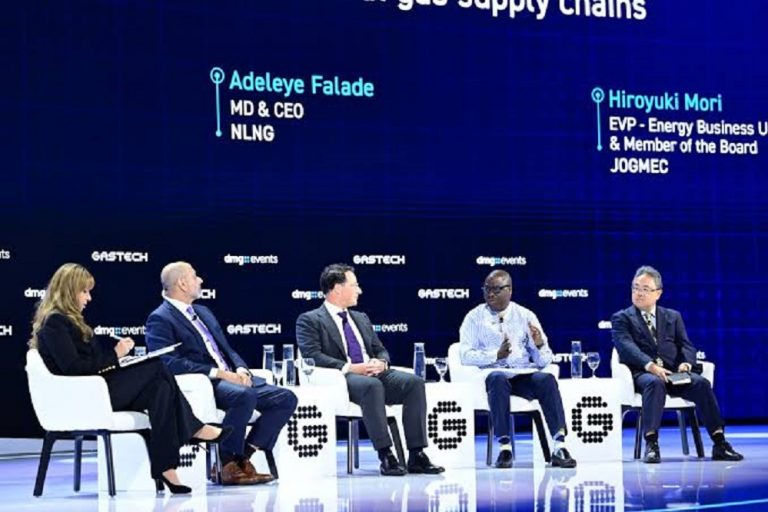
The Managing Director and Chief Executive Officer of Nigeria LNG Limited (NLNG) Adeleye Falade, made the declaration during a panel titled “Capturing the Lost Opportunity: Driving Global Alignment on Methane Abatement Across Natural Gas Supply Chains,” at the Gastech 2026 Exhibition and Conference in Bangkok, Thailand.
READ ALSO: Spike in Petrol Price Moves NLC to Demands Emergency Palliatives
Taking from the company’s experience, he highlighted that investments in methane abatement could pay for themselves while improving plant efficiency and asset reliability.
The NLNG CEO said the commercial value of recovering lost gas should become a central part of the global industry’s approach to methane management.
“Every tonne emitted is lost product, lost revenue and lost energy; gas we could have sold. Every molecule of methane avoided is both an emissions reduction and a recovered energy resource.”
According to him, the NLNG’s new boil-off gas compressor and start-up gas recovery project demonstrate the business case for methane reduction, with each project expected to deliver methane reductions of about 10–15 percent while also recording positive projected net present values. “The most compelling business case is the simplest one: the projects that cut our methane also pay for themselves.
“The same discipline that reduces methane also improves asset reliability and plant efficiency. The returns show up in more places than the emissions ledger,” Falade said.
He added that the starting point for methane abatement was credible measurement of gas losses, which enables companies to identify where methane is being lost, channel investment towards the right interventions and independently verify the results.
According to Falade, the NLNG had demonstrated that producers in developing economies could meet globally recognised standards for emissions measurement and reporting, despite infrastructure and other constraints.
He disclosed that the NLNG had achieved Gold Standard recognition under the Oil and Gas Methane Partnership (OGMP) 2.0 and became the first company in Africa to attain Level 5 methane emissions reporting.
Its measurement, reporting and verification system is independently assured by DNV in line with ISO 14064.
The NLNG’s methane-management programme includes site-wide optical gas imaging, a structured Leak Detection and Repair programme, as well as phased deployment of continuous monitoring and real-time emissions dashboards across its plant and vessels.
Falade said methane reduction was also being incorporated into the design of Train 7, which is expected to raise the NLNG’s LNG production capacity from 22 million tonnes per annum to 30 million tonnes.
The commercial case for emissions abatement was not new to Nigeria, he added, pointing to the NLNG’s longstanding role in converting gas that would otherwise have been flared into a marketable product.
According to him, the company’s activities have contributed to reducing Nigeria’s gas-flaring rate from above 65 percent to below 20 percent.
Beyond its own operations, Falade revealed that the NLNG was extending methane-management requirements across its supply chain through its Scope 3 Advocacy Plan.
The company engages feed-gas suppliers and contractors to measure, disclose and reduce emissions, while verified upstream emissions data and emissions-related criteria are incorporated into supplier selection and evaluation.
Falade also called for greater consistency in methane measurement and reporting requirements across jurisdictions, arguing that divergent standards make enforcement uneven and complicate meaningful comparisons between producers.
“The industry does not need weaker standards; it needs stronger, shared ones backed by real measurement,” he said.
On the tension between emissions reduction, energy access and affordability, Falade said developing economies should not be forced to choose between economic development and climate action.
“Developing economies cannot be asked to choose between economic development and emissions reduction. Both must progress together,” he said.
Other panellists were Zubin Bamji of the World Bank, Niels Dijksman of Brunei LNG and Hiroyuki Mori of JOGMEC.
The session was moderated by energy economist Dr Carole Nakhle of Crystol Energy.
Expectations are high that the $10 billion Train 7 project of the Nigeria Liquefied Natural Gas Limited (NLNG) would go into operation by the end of 2027.
Managing Director of NLNG, Adeleye Falade, made the disclosure on the side-lines of the Gastech conference, yesterday, in Bangkok, Reuters reported.
This is part of a grand strategy by the company to raise production and address persistent gas supply constraints.
READ ALSO: Banks Caution Against Scammers over Dangote IPO
Train 7 project, located on Bonny Island, Rivers State, is expected to increase NLNG’s production capacity to 30 million metric tonnes per annum (mtpa), from the current 22 mtpa.
The project has suffered repeated delays, including disruptions associated with the COVID-19 pandemic and the Russia-Ukraine war.
Falade also disclosed that NLNG remained under a force majeure declared in 2022 following widespread flooding that disrupted gas supplies to the company.
According to him, the company would lift the force majeure when it reaches a 90 per cent utilisation rate, with the plant currently operating at between 82 per cent and 83 per cent.
“We still have a delta of about 15 per cent that we need to close,” Falade said. “Operationally, we are able to do that, but our biggest constraint is gas supply, and we’re working with all the relevant people, including the government, to be able to get more gas to flow into the plant,” he added.
He said NLNG was focused on meeting its existing contractual obligations to buyers while the company worked to increase production.
Falade added that interest in additional LNG volumes and spot cargoes had increased after exports through the Strait of Hormuz were curtailed by the Iran war.
“People are looking at more diversified, reliable sources of supply,” he said.
“Our priority currently is to continue to make sure that we fulfil our obligations to our existing customers and maximize as much production opportunity as possible that we have,” he added.
The NLNG is majority-owned by the Nigerian National Petroleum Company Limited (NNPC Ltd), while Shell, TotalEnergies and Eni are its international partners.






Refineries, Exports Lift Nigeria’s Foreign Reserves over $55bn

Nigeria-Libya Gas Pipeline as FG Eyes New LNG Markets

Who Is Running Nigeria? ADC Demands Answers Over Tinubu, Shettima’s Absence

‘We’ll Bring Back Subsidy in Our Own Way’ — Kwankwaso

Stop Exporting Raw Minerals, Start Building Wealth From Your Resources – Tinubu to Africa

Adeleke Celebrates First Lady Oluremi Tinubu

Trump’s Family Unveils New Cryptocurrency Platform

Senate Denies Receiving Petitions Against Tinubu’s Ambassadorial Nominees

Dangote Cement Lights Up Benue Host Communities With CSR Initiatives

Reps Recommend 3-year Jail Term For Aviation minister

Tems Sets New Record On Billboard Hot 100 Chart

339851 545856You produced some decent points there. I looked on the net towards the issue and discovered a lot of people goes together with along along with your web site. 954393
384720 265558Hmm is anyone else having problems with the images on this blog loading? Im trying to figure out if its a difficulty on my finish or if it is the blog. Any responses would be greatly appreciated. 913822
11323 101414An fascinating discussion may be worth comment. I believe you must write on this subject, it may well definitely be a taboo subject but normally individuals are not enough to dicuss on such topics. To a higher. Cheers 711037
455848 122935This internet site is typically a walk-through you discover the details it suited you about this and didnt know who need to have to. Glimpse here, and you will undoubtedly discover it. 160257