
Business
Dangote Cement Increases Capacity With New Plants In West Africa


Dangote Cement PLC has concluded plans to expand its production capacity through the construction of a new 6Mt integrated cement plant in Itori, Ogun State.
In a related development, the cement manufacturing giants will soon deploy grinding plants in Ghana and Cote d’Ivoire to ensure cement becomes available in all African countries.
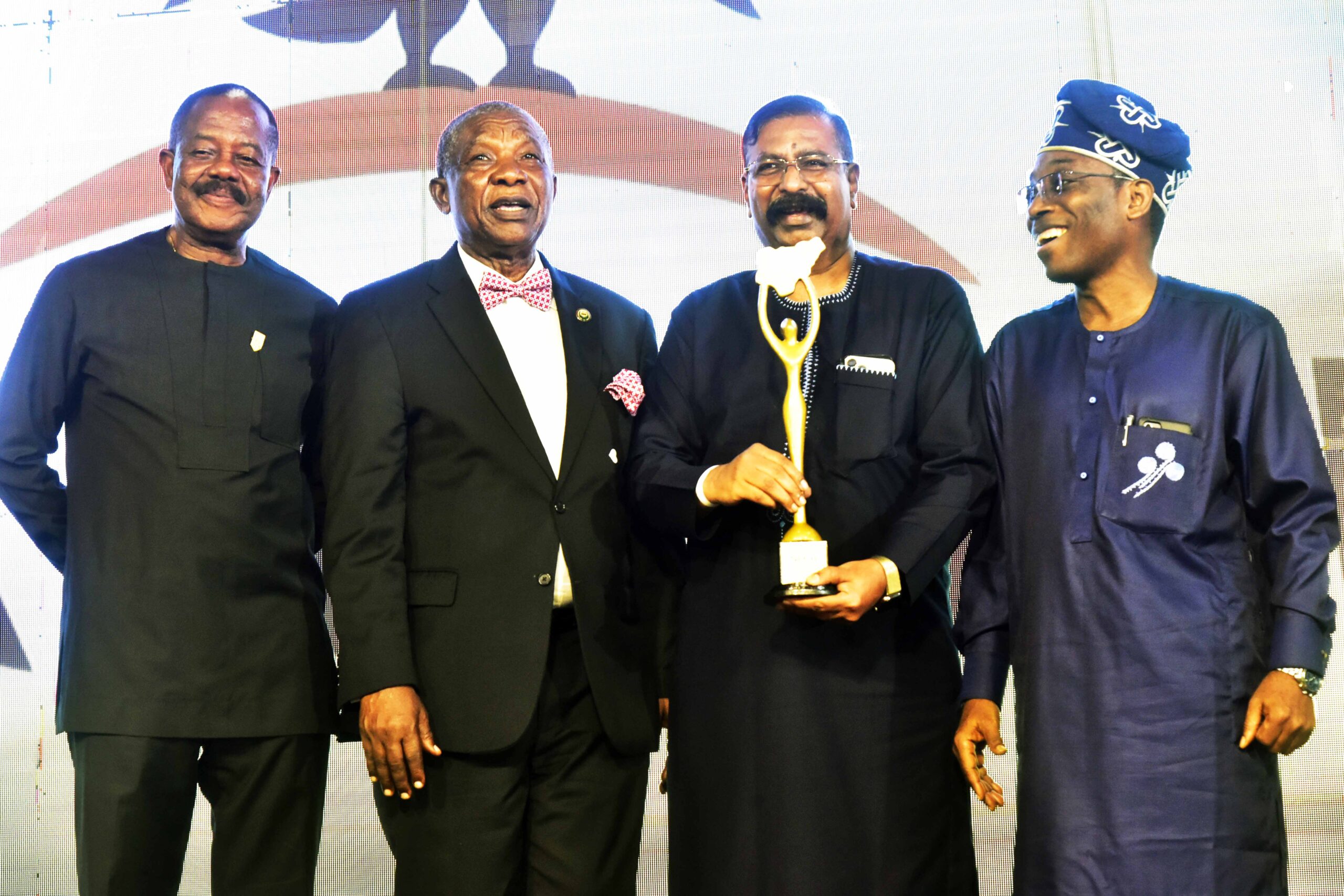
Group Managing Director, Dangote Cement, Arvind Pathak, made the disclosure at the Closing Gong Ceremony on the Trading Floor of the Nigerian Exchange Ltd (NGX), which also served to introduce him as the new Group Managing Director of Dangote Cement to the dealing members of the Exchange.
He divulged that these form part of his company’s strategy to strengthen local production of Dangote Cement across the African market.
He said, “We have successfully completed our 0.4 million tonnes grinding plant in Ghana and are on track to complete our 1.5 million tonnes grinding plant in Cote d’Ivoire.
“In addition, we are strengthening our local production capacity efforts to meet future demand with a 6Mt integrated cement plant in Itori, Ogun State.”
According to him, with the Itori plant, Nigeria can now look forward to increased exportation of cement with the potential of enabling more diversification and foreign exchange inflows for the economy.
He maintained that Dangote Cement was proud of its strong ties with the NGX and would always look forward to embracing new ways to engage and foster this partnership.
The Exchange, he opined, “is very important to Dangote Cement as it provides a platform for our stock to be traded, as well as the means to raise funds through the capital market”.
Pathak described the NGX as “one of the regulatory bodies which we comply with. Dangote Cement has made great strides in our debt capital market journey, from the issuance of our maiden ₦100 billion 5-year bond in 2020 to another landmark bond issuance, where we raised ₦116 billion.”
He added that Dangote Cement has also received numerous recognitions from capital market regulators and players, including the best issuer in terms of the fixed income listings by the Nigerian Exchange Limited (NGX) in 2022.
Earlier, Chief Executive Officer, Nigerian Exchange Limited, Temi Popoola welcoming the delegation from Dangote Cement lauded the company on its 2022 full-year financial results.
He expressed joy at the opportunity to welcome the largest listed company on the Exchange and called for more collaborations that would help to deepen the capital market.
Popoola said that the NGX through its activities and initiatives has boosted investors’ confidence which can be seen in the appreciation of listed equities adding that the goal of the Exchange is to innovate and help more businesses to grow.
Part of the innovation he disclosed is the new USSD scheme that makes it possible to access the NGX services on mobile phones.








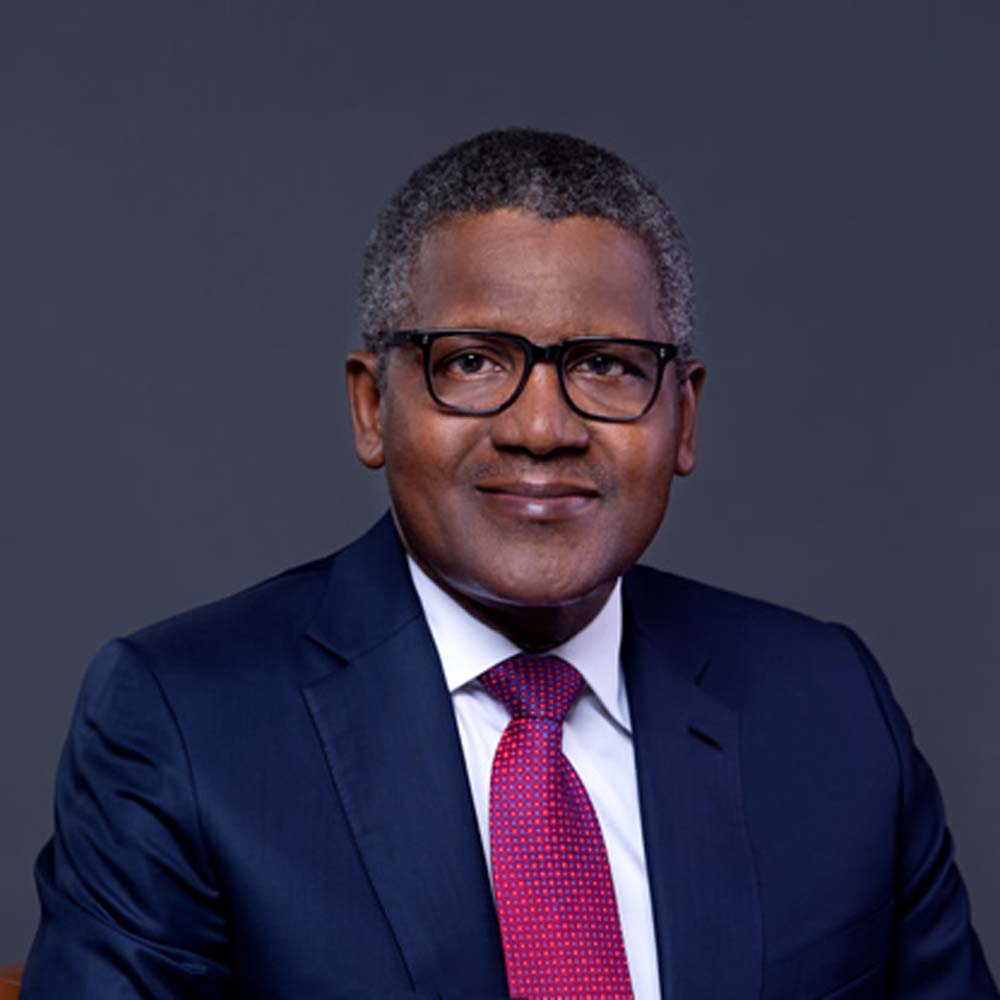


President and Chief Executive of Dangote Industries Limited (DIL), Aliko Dangote, has announced plans for the Aliko Dangote Foundation (ADF) to collaborate with state governments to empower vulnerable women across Nigeria through participation in the Dangote Petroleum Refinery and Petrochemicals Limited (DPRP) Initial Public Offering (IPO).
Dangote made the announcement in New York during the 81st United Nations General Assembly (UNGA) while responding to a question from the Secretary to the Yobe State Government, Dr. Goje Mohammed.
The discussion focused on how partnerships between government and the private sector can help conflict-affected communities, particularly widows, build sustainable financial futures through investment opportunities.
READ ALSO: NGX Invest Expands Primary Market Access with WhatsApp Subscription Channel
According to Dangote, the Foundation will work closely with state governments to ensure that women from vulnerable groups, including widows and victims of conflict, can take advantage of the refinery’s share offering and begin building long-term wealth through equity ownership.
The initiative is designed to expand access to Nigeria’s capital market by giving women who might otherwise be excluded the opportunity to become shareholders in one of Africa’s largest industrial enterprises.
Speaking on the programme, Dangote revealed that the Foundation plans to provide additional support to participating women by donating shares to complement their investments.
“We are partnering with state governments to ensure that widows and other vulnerable women are able to buy shares in the refinery,” he said.
He explained that women who purchase shares under the IPO will receive an additional allotment of shares from the Foundation, helping them establish a long-term financial asset.
“Beyond enabling them to buy shares, the Foundation will also support them by donating additional shares that they can hold as savings for the future,” Dangote noted.
The programme targets up to two million women nationwide, making it one of the largest financial inclusion and women’s empowerment initiatives linked to Nigeria’s capital market.
“We are looking at reaching about two million women through this initiative,” he added.
The proposed intervention forms part of the broader objectives of the Dangote Refinery “People’s IPO,” which seeks to democratise ownership of the landmark refinery and enable more Nigerians to share in the value created by one of the country’s most significant private-sector investments.
The initiative is expected to have particular significance for conflict-affected states such as Yobe, where many widows and vulnerable households continue to face economic challenges resulting from years of insecurity. By facilitating access to investment opportunities, the partnership aims to provide a pathway to sustainable wealth creation and long-term financial security.
Dangote emphasized that collaboration between the Foundation and state governments will create a structured framework for supporting vulnerable women to participate in the IPO, reinforcing the role of investment and equity ownership as tools for economic empowerment, financial inclusion and social development.
Through this initiative, the ownership opportunity presented by the Dangote Refinery IPO will be extended to some of Nigeria’s most vulnerable women, helping them build assets, secure their futures and participate directly in the growth of a landmark national enterprise.
The Nigerian Exchange Group (NGX Group) has expanded access to its NGX Invest platform with the launch of a WhatsApp subscription channel.
Biztellers reports that it provides investors with an additional, convenient way to participate in public offers.
A statement from the company has it that investors can begin the subscription process by sending “Invest” to NGX Invest on WhatsApp at +234 812 731 9521. They can then follow the prompts to view eligible offers and complete the required subscription steps without downloading a separate application. As part of the process, investors will select a stockbroker through whom their application will be processed, ensuring that brokers remain an integral part of the investment journey.
READ ALSO: Dangote IPO Will Spread Wealth Across Nigeria – Emir Sanusi
The new channel extends NGX Invest’s growing distribution ecosystem, which connects issuers to investors through more than 100 distribution channels, including stockbrokers, banks, fintechs, mobile operators and other financial institutions via API connectivity.
By integrating WhatsApp into NGX Invest, the NGX Group is reducing friction in the investment process and bringing primary-market opportunities closer to investors through a platform they already use every day. For issuers, the integration provides an additional route to reach a broader pool of potential investors and support more efficient capital raising.
The development forms part of NGX Group’s broader strategy to use technology, partnerships and open distribution infrastructure to widen participation in Nigeria’s capital market.
Security remains central to the design of the investor journey. While WhatsApp provides the interface through which investors can access the service, subscriptions are processed through NGX Invest’s secure, regulated infrastructure. Investors are encouraged to interact only with the official NGX Invest WhatsApp number and should never share passwords, PINs, OTPs or other sensitive credentials with third parties.
As digital participation in Nigeria’s capital market grows, NGX Group remains focused on ensuring that increased access is supported by secure, transparent and regulated market infrastructure. The addition of WhatsApp combines the convenience of a familiar consumer channel with the safeguards required for participation in regulated public offers.
With WhatsApp now part of its distribution ecosystem, NGX Invest is further expanding the infrastructure through which investors can discover and participate in primary-market opportunities, while enabling issuers to reach a wider investing public.
The $800m Final Investment Decision (FID) on the Ima Gas Project (IGP) has been warmly welcomed as a major milestone in efforts to unlock Nigeria’s gas resources for industrialisation, job creation and economic growth.
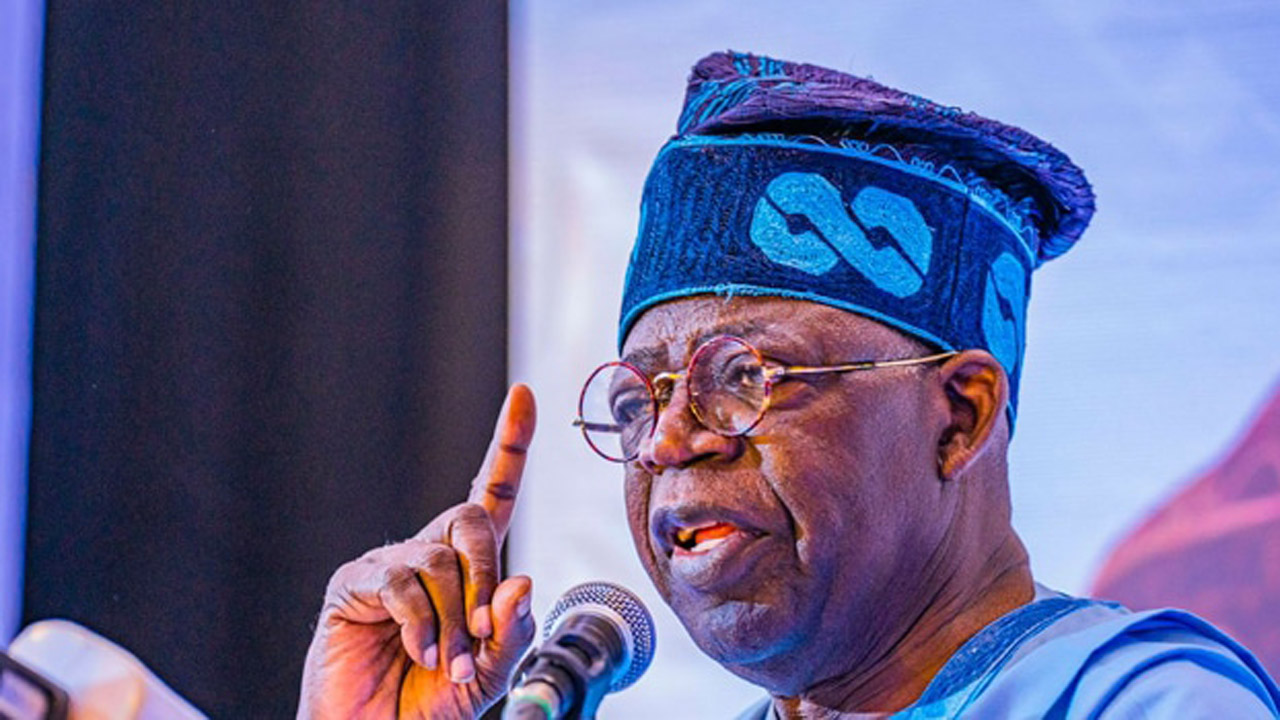
President Bola Tinubu applauded the development, according to the Special Adviser to the President on Information and Strategy, Bayo Onanuga, in a statement in Abuja, on Wednesday.
READ ALSO: Refineries, Exports Lift Nigeria’s Foreign Reserves over $55bn
The statement has it that the project, developed by Nigerian independent exploration and production company, AMNI International, in partnership with TotalEnergies, is expected to produce about 300 million standard cubic feet of gas per day at peak.
It added that the Ima gas resource, located offshore in Oil Mining Leases 112 and 117, was discovered in 1973 but remained undeveloped for more than five decades.
The FID, announced on Wednesday, is expected to pave the way for the development of the resource, which has the potential to provide feedgas for the Nigeria LNG Limited.
According to the statement, Tinubu said the development demonstrated the impact of creating a predictable and competitive environment for investors.
He stated, “For more than fifty years, the gas beneath Ima remained a resource with enormous potential, but potential alone does not create jobs, finance businesses or improve the lives of our people.
“Our responsibility has been to create the conditions that turn Nigeria’s natural resources into productive investments and economic opportunities.”
The President added, “The Final Investment Decision on Ima demonstrates what is possible when we provide investors with a competitive, predictable and enabling environment.
“We are determined to unlock more of Nigeria’s gas resources to power our industries, expand our exports, create jobs and build lasting prosperity for our people.”
The President said that for decades, Nigeria has had one of Africa’s largest gas resource bases, although significant volumes have remained undeveloped.
He added that this administration’s gas strategy is focused not only on increasing gas production but also on putting the resource to productive use by supporting LNG exports and foreign exchange earnings, providing feedstock for industries, enabling fertiliser and petrochemical production, improving power supply and creating opportunities for Nigerian businesses and workers.
“Natural resources have value only when they are converted into opportunities for our people.
“Our goal is to ensure that Nigeria’s gas powers Nigerian prosperity,” the President said.






Dangote to Support Two Million Women with Refinery IPO Share Ownership
NGX Invest Expands Primary Market Access with WhatsApp Subscription Channel

Kainji–Birnin Kebbi Power Line: TCN Begins Final Phase of Restoration

2027 Polls: ‘Poor Funding Could Undermine Election Security, Logistics’ — INEC Chairman Warns

N4bn Compensation Dispute Threatens Ikot Abasi Power Project

Organised Labour Supports Workers’ Demand for N500 PMS Price, N500,000 Minimum Wage

Trump’s Family Unveils New Cryptocurrency Platform

Senate Denies Receiving Petitions Against Tinubu’s Ambassadorial Nominees

Dangote Cement Lights Up Benue Host Communities With CSR Initiatives

Reps Recommend 3-year Jail Term For Aviation minister

Tems Sets New Record On Billboard Hot 100 Chart
