
Business
Dangote Growing SMEs In Nigeria – Fatima Wali-Abdurrahman

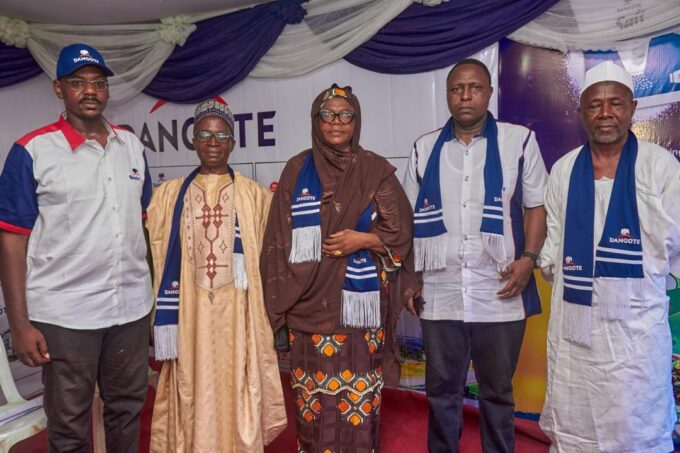
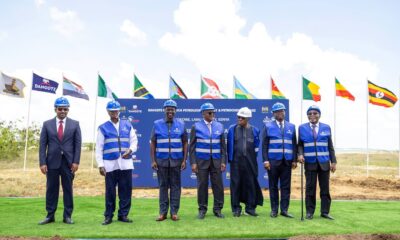
The Dangote Industries Limited (DIL) is partnering critical stakeholders in the economy to grow Micro, Small, and Medium Enterprises (MSMEs) across Nigeria.
The view was shared by the Senior Adviser to the President of Dangote Group, Fatima Wali-Abdurrahman, at the Dangote Special Day at the ongoing 2025 Nasarawa Trade Fair Exhibition in Lafia.
According to her, the participation of the company and partnership with the Nigeria Association of Small-Scale Industrialists (NASSI), Nasarawa State Chapter, will help create awareness and scale up small businesses.
The Senior Adviser, who was represented by Hon. Dr. Shuaibu Abdullahi, the company’s National Assembly Liaison Lead, said Dangote Group will continue to partner government and private sectors to develop small businesses.
ALSO READ: Okpebholo Marks Half Year As Governor
She said: “I am pleased to inform you that in alignment with theme of this year’s Trade Fair, the Aliko Dangote Foundation and the Bank of Industry (BoI) had entered a Memorandum of Understanding (MoU) and established a N5 billion fund dedicated to supporting micro, small, and medium enterprises (MSMEs) across Nigeria.
“This initiative aimed to create at least one million direct jobs by providing financial support to entrepreneurs engaged in manufacturing, agro-processing, and the merchandising of goods made wholly in Nigeria.”
She added that the MoU, which benefitted micro-enterprises included: cassava processors, aluminum artisans, poultry farmers, calabash carving groups, small traders, cattle rearing groups, vegetable sellers, market women and artisan groups, among others.
She said as part for its support for Small and Medium Scale Enterprises (MSMEs) in Nigeria, the company had supported Jakura Marble Industry Ltd (JMIL) in electrification.
She added that in line with the company’s commitment to supporting small businesses, agriculture, and job creation in Nigeria, Dangote Fertiliser Limited had initiated a comprehensive training programme targeting over one million farmers across Nigeria.
“This programme, integral to our agricultural extension services, encompasses Spot Demonstrations, Result Demonstrations, Field Demonstrations, and Soil Sample Collections.
“The training is designed to educate farmers on best practices in fertiliser application, aiming to enhance crop yields and promote sustainable farming techniques. By providing hands-on demonstrations and soil analysis, we strive to empower farmers with the knowledge and tools necessary to improve their productivity and livelihoods.
“This programme shows our dedication to fostering agricultural development and economic growth in Nigeria.”
According to her, the company’s supports for “Fostering Economic Development Through Mineral and Agricultural Cottage Industrialization” are numerous.
“May I also inform this esteemed audience that our sponsorship of numerous Trade Fairs—including this one organized by the Nigerian Association of Small-Scale Industrialists (NASSI)—is a key component of our commitment to fostering the growth of trade and small businesses across Nigeria.
“By supporting this Trade Fair, we aim to provide micro, small, and medium enterprises (MSMEs) with platforms to showcase their products, network with potential partners, and access new markets, thereby contributing to the nation’s economic development.
“As a company, we are therefore joining NASSI and NACCIMA to call on the public and private sector stakeholders to prioritize MSMES in Nigeria. This is key to our industrialization effort in Nigeria.”
According to her, some of the Strategic Business Units that are participating from the Dangote Group are: Dangote Fertilser Limited (DFL), Dangote Peugeot Automobiles Nigeria Limited (DPAN), Dangote SinoTruck, Dangote Sugar Refinery (DSR), Dangote Salt (NASCON) and Dangote Cement Plc.
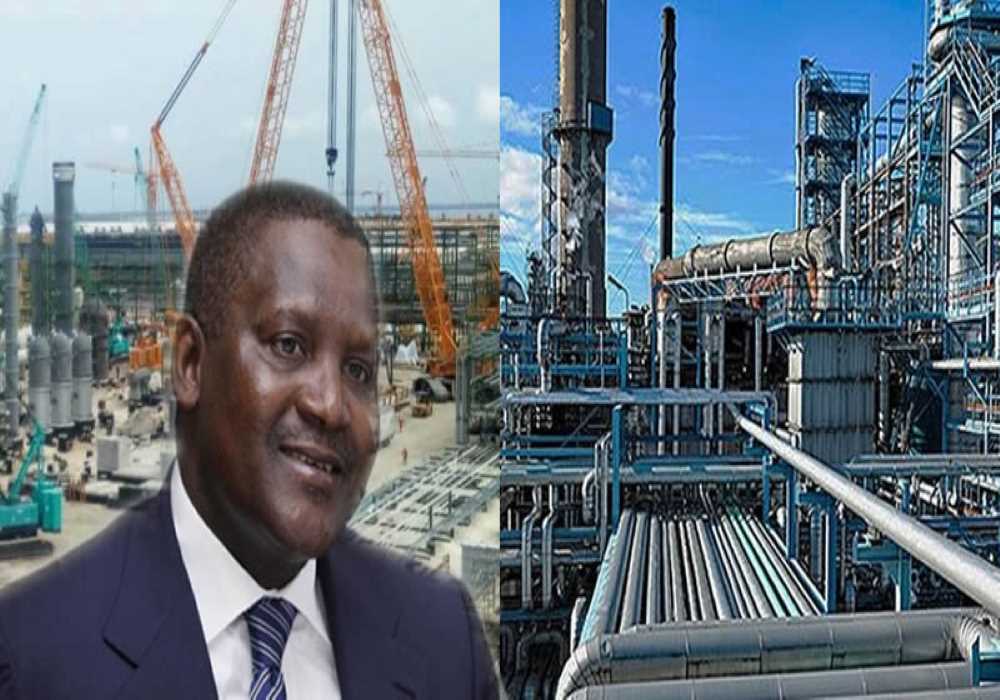








Shell Nigeria Gas Limited has called on the Federal Government to accelerate the development of domestic gas pipeline infrastructure in line with Nigeria’s Decade of Gas initiative. According to the company, expanding pipeline connectivity is critical to enabling manufacturers across the country to access and benefit from Nigeria’s abundant natural gas resources.
The company said Nigeria has 215.19 trillion cubic feet of proven-plus-probable gas reserves, but manufacturers continue to spend heavily on alternative energy because of limited access to reliable pipeline gas.
It disclosed that manufacturers spent approximately N1.34tn on alternative energy in 2025, adding that expanding pipeline infrastructure would help reduce energy costs and improve industrial competitiveness.
READ ALSO: Dangote Deploys Football to Unite Ibese, Okpella Host Communities
In a presentation titled ‘Gas for Manufacturing: Closing the Pipeline Infrastructure Gap to Improve Manufacturing Competitiveness’, delivered at the Manufacturers Energy Security & Energy Efficiency Summit held in Lagos recently, the company identified inadequate gas pipeline infrastructure as a major constraint to unlocking the full potential of Nigeria’s gas resources for manufacturing and industrial production.
The Managing Director of Shell Nigeria Gas Limited, Ralph Gbobo, represented by Asset Reliability and Integrity Manager, Samuel Ojo, said, “Despite Africa’s abundant natural gas resources, Europe has more than 10 times the gas transmission pipeline infrastructure per capita. Closing this infrastructure gap is essential to improving manufacturers’ access to reliable, affordable, and cleaner energy, reducing dependence on liquid fuels, and enabling greater use of natural gas for both electricity generation and industrial processes such as boilers, steam systems and kilns. This will enhance industrial competitiveness and support economic growth across Nigeria and Africa.”
He said on the potential cost benefits, Shell presented an illustrative comparison showing that pipeline gas has an electricity cost index of 30 per cent, “compared with 100 per cent for diesel-powered self-generation and 62 per cent for grid electricity combined with diesel backup.”
The comparison means that those using gas for power will reduce their energy costs by 70 per cent when compared with what they should spend using diesel to generate energy.
However, the company said actual savings depend on viable pipeline connections and dependable gas supplies, adding that costs vary from one industrial location to another.
Regarding ongoing infrastructure developments, Shell highlighted the Obiafu-Obrikom-Oben pipeline as a critical link connecting Nigeria’s eastern and western gas networks, enabling more efficient transportation across the country
The company also identified the Ajaokuta-Kaduna-Kano Pipeline as a strategic project for extending gas access to northern Nigeria and unlocking new industrial and manufacturing demand centres. In addition, Shell highlighted the Escravos-Lagos Pipeline System II which expanded the system’s design gas transmission capacity from approximately 1.1 billion to 2.3 billion standard cubic feet per day, strengthening gas supply to existing and future industrial customers.
The company added that government initiatives, including the Decade of Gas programme, the Midstream and Downstream Gas Infrastructure Fund, and other gas-sector investment incentives are helping to catalyse investment in the critical infrastructure needed to unlock Nigeria’s potential.
Meanwhile, Shell Nigeria Gas said it has continued to invest in gas distribution infrastructure to support manufacturing and industrial clusters across Ogun, Abia and Rivers states.
The company disclosed that it had built more than 150 kilometres of pipeline infrastructure and currently supplies natural gas to over 140 manufacturers. According to Shell, these investments demonstrate the role of gas infrastructure in improving energy reliability, reducing operating cost, and enhancing the competitiveness of Nigerian Manufacturers.
SNG added that its gas supply to the industries stands at 60 million standard cubic feet per day, equivalent to 300 megawatts of power, explaining that its distribution system connects trunkline supplies to factories through pressure reduction and metering facilities, distribution pipelines and factory connections.
To accelerate the expansion of gas infrastructure, the company urged the Federal Government to complete and commission trunklines, streamline permitting processes, and channel eligible financing towards commercially viable infrastructure projects.
Shell further urged the Manufacturers Association of Nigeria and business owners to aggregate demand across industrial clusters, establish their consumption requirements and equipment readiness, and enter credible offtake agreements to support infrastructure investment.
According to Shell, a more extensive and reliable gas network would not only enhance manufacturing competitiveness but also strengthen critical sectors such as food processing, fertiliser production, and cold-chain logistics. The company stressed that improving energy security is increasingly becoming a prerequisite for broader economic resilience and national security.
Midstream and Downstream Gas Infrastructure Fund (MDGIF) has said that indigenous companies seeking to partner with it and access its equity must show secured gas supply and a confirmed buyer, because no gas project is bankable without both.
The Fund was established under the Petroleum Industry Act (PIA), and designed as the “master key” for unlocking gas processing, infrastructure and bankability.
Deputy Director at MDGIF in the Nigerian Midstream Downstream Petroleum Regulatory Authority (NMDPRA), Engr Elvis Duruji made this known at the OTL Africa Downstream Energy Week in Lagos. He spoke at a session on: “Scaling Energy Options: Unlocking Gas and Renewables through Processing and Infrastructure.”
READ ALSO: UN Engages NCDMB to Deepen Female Access to $40m Oil, Gas Fund
Expatiating further, Duruji said the two conditions decide whether the fund takes an equity stake in a project, since they determine its returns and viability, insisting that the security of the gas feedstock is very important. He further noted that project operators must locate their sites at a gas processing plant or close to a CNG mother station.
The Fund, he added, has used N671 billion to catalyse N1.6 trillion from private Nigerians.
“The Fund has partnered on 31 projects covering 205 infrastructure assets at different stages of execution. Of these, 127 are at different levels of project management, and 10 have been commissioned.
Duruji cited Topline Limited’s mini-LNG plant in Delta State as a success story. “For three years, a Nigerian company, Topline, was looking for a credit facility from InfraCredit, and no one was able to loan them money because they are Nigerian,” he said. “They came to the fund and we partnered with them.”
He said Topline is now the first indigenous mini-LNG operator in Nigeria, with commissioning due before December.
He also cited a programme to convert 20 university campuses to CNG through daughter stations.
“Three CNG stations are operational and 14 more are to be commissioned before December. Duruji added that the fund is working with fuel-station partners, including Ibile Oil and Gas Corporation, which is delivering 15 CNG stations across Lagos.
“These are our success stories,” he said.
He said, for CNG projects, proximity to the gas processing plant “is very important. You must have security of gas supply. We also ensure that you have a gas supply agreement with producers. What is the volume and price that the producer is willing to give to our would-be equity partner? This always affects their credit returns and internal rate of return. This is what will determine the project viability, and this is key,” he said.
Duruji also noted that offtake is equally critical adding that. “We need to know the offtakers and the regasification facility. The same thing for CNG, you need to get a compressor,” he said.
According to him, the MDGIF intervenes in gas projects where commercial lenders will not, because “most Nigerian companies are in trading and operating marginally at the downstream level because the sector is highly capital intensive,” adding that no Nigerian bank would give single-digit loans for exploration and production.
“Nigerian Banks lends at as much as 30 per cent interest, whereas, foreign firms coming into Nigeria to explore, by contrast, have access to cheap loans in single digits from their home country financial institutions,” he said.
The MDGIF, he further explained, intervenes “by pricing the risk, coming up with mitigation and catalytic equity, which we now use to bring that barrier to a level to allow Nigerians who are interested to come into the midstream to partner through the equity finance that we will provide without interest.”
“We bring in the catalytic equity, which is about 49 percent, because we want to allow you to be the operator. We will stay with the private investor and walk them through all that,” he added.
He said MDGIF brings “minority equity, due diligence and risk governance” and uses these as catalytic capital “to make the projects bankable, to make them balanced capital structure that will attract private confidence.”
He identified processing plants, transport, storage and last-mile distribution as the main gaps. Non-associated gas, he said, is “very expertise and capital intensive,” and pipeline networks are needed to move gas from the reserve to the last mile.
“The more gas infrastructure we roll out, the more we are helping the energy system where renewables cannot,” he said.
Duruji identified three mandates of the MDGIF: to increase domestic gas consumption, to aggregate flared gas and bring it into the domestic market, and to mobilise private investors who lack the funds to play in the midstream.
“The MDGIF has three mandates: increase domestic gas consumption, aggregate flared gas and bring it into the domestic market, that is key,” he said. “The other mandate is to mobilise private investors that do not have the funds to be able to play in the midstream, bring their funds.”
He added: “We also have the mandate to reduce gas flare in Nigeria exploration and production sites.”
Easing access to the dedicated $40 million Women in Oil and Gas Fund is the focus of ongoing strategic conversation between the United Nations Entity for Gender Equality and the Empowerment of Women (UN Women), and the Nigerian Content Development and Monitoring Board (NCDMB).
Biztellers reports that the two bodies are keen to collaborate to ensure that more women-owned businesses and professionals benefit from industry’s opportunities and consequently play a stronger role across the sector’s value chain.
READ ALSO: APC Defends Tinubu Over Electricity Promise, Says President Is Tackling Sector’s Challenges
Recall that in April 2021, the NCDMB established a $20 million fund dedicated to supporting women-owned and women-led businesses in the oil and gas sector, which the Nigerian Export-Import Bank (NEXIM) complemented by matching the fund with an additional $20 million.
However, despite this significant commitment and favorable loan terms, the uptake of the scheme has remained below expectations to date.
The discussions were advanced last week when the UN Women’s Country Representative to Nigeria and the Economic Community of West African States (ECOWAS), Ms. Beatrice Eyong, led a delegation to the NCDMB’s Abuja liaison office.
The team was received by the Board’s General Manager of Corporate Communications, Dr. Obinna Ezeobi, on behalf of the Executive Secretary, Engr. Felix Omatsola Ogbe.
The meeting explored proposed capacity-building initiatives for NCDMB personnel, aimed at mainstreaming gender perspectives into the Board’s project planning, budgeting, and execution frameworks.
Other key areas of discussion included vendor development schemes to better position women-led oil and gas businesses for industry opportunities, strategies to raise awareness of available financing options, and potential affirmative procurement measures designed to expand the participation of women-owned companies across the oil and gas value chain.
The UN official commended NCDMB for its ongoing gender inclusion efforts, noting that the Board is already implementing several measures consistent with its mandate.
She proposed conducting a study to identify the reasons women face challenges in accessing the financing facility, including potential barriers related to documentation, business registration, tax compliance, and limited awareness.
She further highlighted key initiatives currently being undertaken by the UN Office, such as programmes on women’s economic empowerment, leadership development, and the elimination of gender-based violence, among others.
Ezeobi welcomed the proposals and affirmed the Board’s readiness to partner with UN Women. He highlighted several innovative initiatives already implemented by the Board to create opportunities for women to participate, grow, and lead in Nigeria’s oil and gas industry.
These include the establishment of a dedicated funding scheme with NEXIM Bank that enables women-owned or women-led firms to access financing at a highly competitive 5 per cent interest rate, as well as the creation of a Diversity Sectoral Working Group within the Nigerian Content Consultative Forum (NCCF), designed to mainstream women’s issues into local content policy and decision-making processes.
The Board also supports associations of women who work across the Energy Industry value chain, where they network, build confidence and links to progress their careers or businesses.
Ezeobi noted that NCDMB has also invested significantly in capacity-building programs for women entrepreneurs and business leaders, covering critical areas such as business sustainability, corporate governance, and strategic management.
The Board has further supported women’s participation in technical occupations while encouraging young girls to pursue careers in science, technology, engineering, and mathematics (STEM).
He acknowledged that women remain underrepresented in the oil and gas industry, citing limited access to technical education, finance, and commercial opportunities, as well as entrenched perceptions of the sector as predominantly male.
Ezeobi reiterated NCDMB’s willingness to collaborate with UN Women to address these challenges and recommended strategies to accelerate the Board’s support for UN Women’s programmes, thereby advancing gender inclusion across the industry.
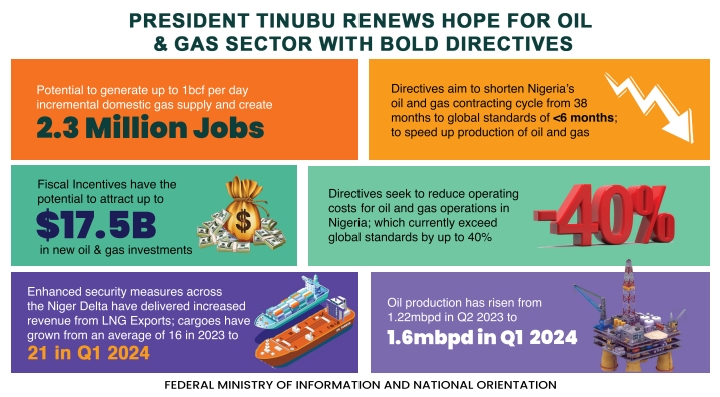

Shell Advocates for Expansion of Gas Pipelines for Industries

Dangote Deploys Football to Unite Ibese, Okpella Host Communities

FCT Police Warn Motorists Against One-Way Driving, Reject Calls From VIPs

Shettima Heads to Ebonyi for APC Presidential Campaign Rally
Flamingos Return To Abuja After Historic U-17 World Cup Triumph

FCT Police Chief Inspects Worship Centres, Commends Residents for Peaceful Conduct

Trump’s Family Unveils New Cryptocurrency Platform
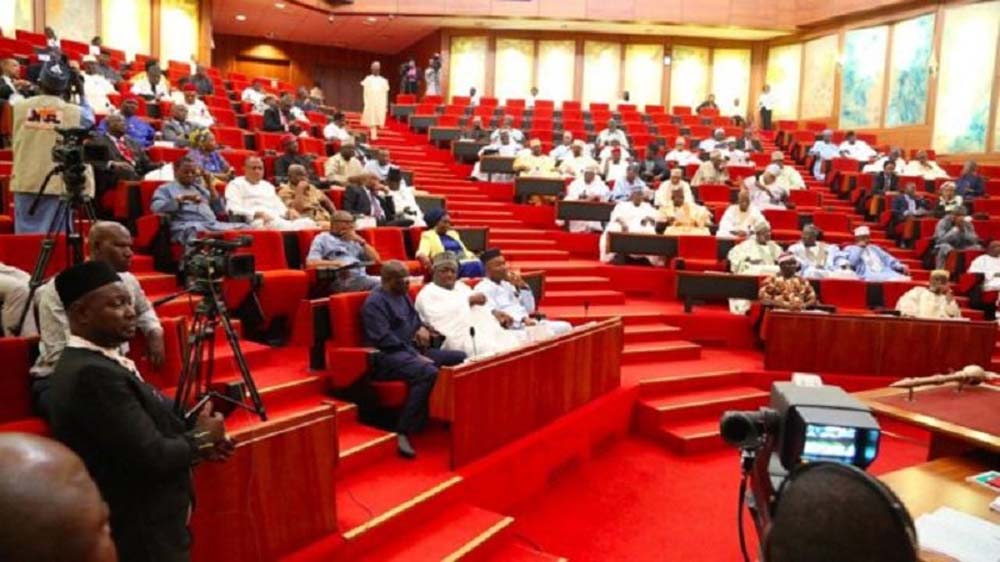
Senate Denies Receiving Petitions Against Tinubu’s Ambassadorial Nominees

Dangote Cement Lights Up Benue Host Communities With CSR Initiatives

Reps Recommend 3-year Jail Term For Aviation minister

Tems Sets New Record On Billboard Hot 100 Chart
I like this blog very much, Its a rattling nice billet to read and get info .
Nice blog! Is your theme custom made or did you download it from somewhere? A design like yours with a few simple adjustements would really make my blog stand out. Please let me know where you got your design. Cheers
Hi, i think that i saw you visited my site thus i came to “return the favor”.I am attempting to find things to enhance my web site!I suppose its ok to use a few of your ideas!!
It is in reality a great and useful piece of information. I am happy that you just shared this useful info with us. Please keep us up to date like this. Thanks for sharing.
With every little thing that appears to be developing inside this specific subject material, your points of view tend to be quite exciting. Having said that, I appologize, because I do not subscribe to your whole idea, all be it refreshing none the less. It looks to everybody that your comments are actually not completely justified and in simple fact you are generally your self not really thoroughly confident of your point. In any event I did appreciate examining it.
Oh my goodness! an incredible article dude. Thank you Nevertheless I am experiencing challenge with ur rss . Don’t know why Unable to subscribe to it. Is there anybody getting an identical rss drawback? Anyone who is aware of kindly respond. Thnkx
Adorei este site. Pra saber mais detalhes acesse o site e descubra mais. Todas as informações contidas são conteúdos relevantes e diferentes. Tudo que você precisa saber está está lá.
Great goods from you, man. I have take into account your stuff prior to and you are simply extremely great. I really like what you’ve acquired here, really like what you are stating and the way by which you assert it. You’re making it enjoyable and you still care for to stay it wise. I can not wait to read much more from you. That is really a wonderful site.
Hi my friend! I wish to say that this post is amazing, nice written and include approximately all significant infos. I’d like to see more posts like this.
We absolutely love your blog and find many of your post’s to be exactly I’m looking for. can you offer guest writers to write content for yourself? I wouldn’t mind creating a post or elaborating on most of the subjects you write concerning here. Again, awesome web site!
Hi my friend! I want to say that this post is awesome, nice written and include approximately all significant infos. I’d like to see extra posts like this .
Nice blog! Is your theme custom made or did you download it from somewhere? A design like yours with a few simple tweeks would really make my blog shine. Please let me know where you got your design. Appreciate it
Simply want to say your article is as surprising. The clearness in your post is simply nice and i can assume you’re an expert on this subject. Well with your permission let me to grab your RSS feed to keep up to date with forthcoming post. Thanks a million and please carry on the enjoyable work.
Great write-up, I’m regular visitor of one’s web site, maintain up the excellent operate, and It’s going to be a regular visitor for a lengthy time.
I love your blog.. very nice colors & theme. Did you design this website yourself or did you hire someone to do it for you? Plz reply as I’m looking to create my own blog and would like to find out where u got this from. thank you
I dugg some of you post as I thought they were very beneficial handy
I am always looking online for posts that can help me. Thx!